SMM Berita 7 Agustus:
Pasar Logam:
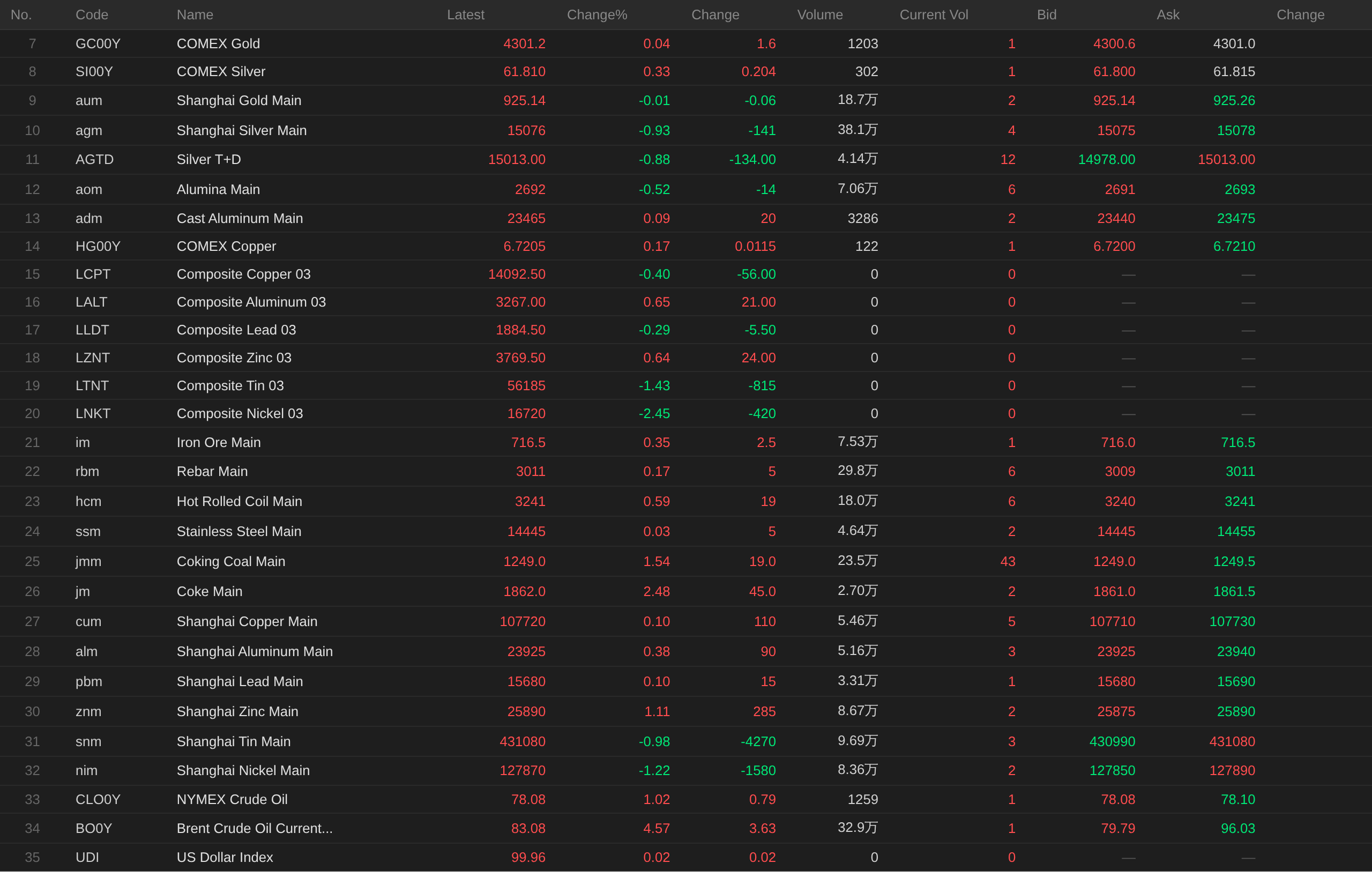
Semalam, logam dasar di pasar domestik naik secara luas. Tembaga SHFE naik tipis 0,1%. Aluminium SHFE menguat 0,38%. Timbal SHFE naik tipis 0,1%. Seng SHFE naik 1,11%, sementara timah SHFE turun 0,98%. Nikel SHFE turun 1,22%. Selain itu, kontrak berjangka alumina paling aktif naik tipis 0,09%, sedangkan kontrak aluminium cor paling aktif turun 0,52%.
Semalam, logam ferro semuanya naik. Baja tahan karat naik tipis, bijih besi menguat 0,35%, dan rebar naik 0,17%. Baja canai panas (HRC) meningkat 0,59%. Untuk batubara kokas dan kokas: kontrak berjangka batubara kokas paling aktif naik 1,54%, dan kontrak kokas paling aktif menguat 2,48%.
Semalam, di pasar luar negeri, logam dasar LME sebagian besar turun. Tembaga LME melonjak ke level tertinggi intrahari $14.369,5/mt, level yang tidak terlihat sejak 29 Januari, sebelum akhirnya ditutup dengan penurunan 0,4%. Aluminium LME menguat 0,65%. Timbal LME turun 0,29%. Seng LME naik 0,64%. Timah LME turun 1,43%. Nikel LME turun 2,45%.
Logam Mulia Semalam : Emas COMEX turun 0,15%, dan perak COMEX turun 0,81%. Semalam, kontrak berjangka emas SHFE paling aktif turun 0,01%, dan kontrak perak SHFE paling aktif turun 0,93%.
Harga penutupan per pukul 07:03 pagi, 7 Agustus:
Berita Makro
Berita Domestik (China):
[Guangdong: Dorong Integrasi Pasar Berjangka dan Fisik Komoditas Utama seperti Bijih Besi, Minyak Mentah, dan Karet untuk Tingkatkan Pengaruh Penetapan Harga Komoditas Massal] "Rencana Lima Tahun ke-15 untuk Pembangunan Zona Perdagangan Bebas Percobaan China (Guangdong) (Draf untuk Komentar)" dirilis untuk komentar publik. Rencana itu menyebutkan perluasan keterbukaan keuangan secara tertib. Lembaga keuangan internasional akan didorong untuk mendirikan kantor pusat di zona tersebut, mempromosikan pengembangan keuangan lintas batas, keuangan inovatif, modal ventura dan investasi, manajemen kekayaan, perdagangan berjangka, manajemen aset, keuangan khusus, dan layanan lepas pantai. Rencana ini bertujuan untuk mempercepat implementasi proyek-proyek seperti Bank Komersial Internasional Wilayah Teluk Besar Guangdong-Hong Kong-Makau dan Pusat Layanan Asuransi GBA. Ini mendukung perluasan skala perdagangan komoditas dan mendorong integrasi pasar berjangka dan fisik untuk komoditas utama seperti bijih besi, minyak mentah, dan karet guna meningkatkan pengaruh penetapan harga. Rencana ini akan mendorong peningkatan kualitas dan eskalasi pilot regulasi fintech serta memperluas skenario aplikasi yuan digital. Ini mendukung program percontohan untuk inovasi keuangan lintas batas seperti keuangan lepas pantai dan keuangan hijau, serta akan mendorong perluasan pilot seperti Wealth Management Connect lintas batas dan pembayaran lintas batas yuan digital. Lembaga di dalam zona akan didukung untuk mengembangkan produk khusus seperti pembiayaan rantai pasok lintas batas dan pembiayaan dengan jaminan kekayaan intelektual, serta entitas pasar akan diarahkan untuk mengembangkan produk keuangan komposit. Pilot untuk transfer aset kredit lintas batas dan rekening terintegrasi multi-mata uang akan diperdalam guna mendorong pengakuan timbal balik dan konektivitas yang lebih luas atas produk keuangan lintas batas. (Departemen Perdagangan Guangdong)
[CAAM: Nilai Impor dan Ekspor Komoditas Otomotif Juni Capai $31,82 Miliar, Naik 35,5% YoY] Menurut data dari Administrasi Umum Kepabeanan yang dihimpun oleh Asosiasi Produsen Otomotif Tiongkok (CAAM), total nilai impor dan ekspor komoditas otomotif pada Juni 2026 adalah $31,82 miliar, naik 8,0% MoM dan naik 35,5% YoY. Nilai impor sebesar $3,39 miliar, turun 6,1% MoM dan turun 18,7% YoY; nilai ekspor sebesar $28,43 miliar, naik 10,0% MoM dan naik 47,2% YoY. Dari Januari hingga Juni 2026, kumulatif nilai impor dan ekspor komoditas otomotif nasional mencapai $164,74 miliar, naik 25,5% YoY. Nilai impor sebesar $19,25 miliar, turun 11,8% YoY; nilai ekspor sebesar $145,49 miliar, naik 33,0% YoY. (Aplikasi Data Jin10)
Dolar AS:
Semalam, indeks dolar AS naik 0,26% menjadi 99,95. Meningkatnya ketegangan geopolitik membebani saham dan obligasi AS, menyebabkan keduanya turun. Harga minyak melonjak, memicu kembali kekhawatiran inflasi menjelang laporan ketenagakerjaan AS yang krusial. Fokus pasar kini beralih ke laporan ketenagakerjaan AS hari Jumat untuk mencari petunjuk baru tentang jalur kebijakan Federal Reserve. Data tenaga kerja yang lebih kuat dari perkiraan dapat memperkuat argumen untuk suku bunga yang lebih tinggi lebih lama, sementara eskalasi ketegangan di Timur Tengah dapat mendorong kenaikan harga energi dan memperparah fluktuasi pasar. Analis UBS Ulrike Hoffmann mencatat: "Risiko jangka pendek tetap ada, terutama jika data AS tetap solid, harga minyak terus memicu kekhawatiran inflasi, atau pasar terus memperhitungkan jalur suku bunga Fed yang lebih hawkish."" Ekonom Senior Interactive Brokers José Torres menyatakan: "Wall Street kembali berbalik dari kenaikan kuat baru-baru ini karena kurangnya kejelasan terkait Selat Hormuz menyebabkan investor mempertanyakan apakah reli kuat awal pekan ini dapat dibenarkan." (Aplikasi Data Jin10)
Menurut perangkat CME "FedWatch": Probabilitas The Fed mempertahankan suku bunga tidak berubah hingga September adalah 45%, sementara probabilitas kenaikan kumulatif 25 basis poin adalah 55%. Probabilitas The Fed mempertahankan suku bunga tidak berubah hingga Oktober adalah 31%, sementara probabilitas kenaikan kumulatif 25 basis poin adalah 51,9%, dan kenaikan kumulatif 50 basis poin adalah 17,1%. (Aplikasi Data Jin10)
Menurut laporan oleh Financial Times Inggris Raya, bahkan setelah keputusan untuk tidak mengungkapkan terlalu banyak detail strategi suku bunga memicu aksi jual tajam obligasi pemerintah, Ketua The Fed Warsh tetap pada gaya komunikasinya yang ringkas seperti biasa. Orang-orang dekat Warsh mengatakan ia mengakui melakukan beberapa kesalahan selama 10 minggu pertamanya memimpin bank sentral terpenting dunia, termasuk gagal memperkuat pesan kuncinya tentang stabilitas harga dan menciptakan kebingungan mengenai apakah rencana jangka panjangnya untuk mereformasi The Fed dapat memengaruhi keputusan kebijakan jangka pendek. Namun, mereka bersikeras bahwa kesalahan-kesalahan itu tidak cukup untuk menggagalkan rencana reformasi Warsh untuk The Fed. Sumber-sumber yang mengetahui masalah ini juga mengungkapkan bahwa Warsh siap menaikkan suku bunga pada pertemuan September jika data inflasi yang akan datang ternyata kuat dan ekspektasi pasar terhadap biaya pinjaman yang lebih tinggi meningkat. Sumber tersebut menambahkan bahwa sementara Ketua The Fed mengangkat kemungkinan penyusutan neraca bank sentral senilai $6,7 triliun untuk memperketat kebijakan moneter, suku bunga tetap menjadi alat utama untuk saat ini dan akan digunakan pada pertemuan mendatang jika diperlukan. (Aplikasi Data Jin10)
Peristiwa Makro:
Rilis data hari ini mencakup tingkat pengangguran ILO kuartal kedua Prancis, output industri Jerman Juni yang disesuaikan secara musiman (bulan-ke-bulan), neraca perdagangan Jerman Juni yang disesuaikan secara musiman, indeks harga rumah Halifax Inggris Raya Juli yang disesuaikan secara musiman (bulan-ke-bulan), neraca perdagangan Prancis Juni, indeks kepercayaan konsumen Swiss Juli, perubahan lapangan kerja Kanada Juli, tingkat pengangguran AS Juli, non-farm payrolls AS Juli yang disesuaikan secara musiman, pendapatan per jam rata-rata AS Juli (tahun-ke-tahun), pendapatan per jam rata-rata AS Juli (bulan-ke-bulan), ekspektasi inflasi 1 tahun Federal Reserve New York Juli, neraca perdagangan Tiongkok Juli dalam denominasi dolar AS, cadangan devisa Tiongkok Juli, dan data neraca perdagangan Tiongkok Juli. Pemantauan: Anggota pemilih FOMC 2028 dan Presiden Fed St. Louis Musalem berbicara tentang ekonomi dan kebijakan moneter AS; anggota pemilih FOMC 2027 dan Presiden Fed Richmond Barkin menyampaikan pernyataan.
Minyak Mentah:
Semalam, kedua kontrak berjangka minyak naik, dengan minyak AS naik 4% dan minyak Brent melonjak 4,57%. Risiko geopolitik kembali memanas, menyebabkan harga minyak melonjak tajam.
Wall Street CN menyebutkan bahwa perjanjian navigasi baru untuk Selat Hormuz, yang diusulkan untuk ditandatangani oleh Iran dan Oman, kembali mengungkapkan rincian penting, yang menunjukkan upaya Iran untuk menguasai selat tersebut. Selain itu, Iran telah mengambil tindakan, menyerang "target musuh" di dekat selat itu. Kantor Berita Fars Iran (FARS) melaporkan pada Kamis, 6 Agustus waktu setempat, bahwa parlemen Iran sedang meninjau perjanjian ini. Berdasarkan perjanjian tersebut, kapal-kapal AS dan Israel akan dilarang melintasi Selat Hormuz, dan negara-negara yang "telah menyebabkan kerusakan pada Iran" juga akan ditolak izin lintasnya. Menyusul berita ini, kekhawatiran atas risiko transportasi energi global dengan cepat meningkat di pasar. (Wall Street CN)
Arab Saudi memangkas harga minyak mentah utamanya untuk Asia seiring berlangsungnya negosiasi perjanjian yang bertujuan meredakan tekanan pelayaran di Selat Hormuz. Pemangkasan harga ini terjadi meskipun ancaman Houthi membahayakan rute minyak alternatif ke timur melalui Laut Merah. Menurut daftar harga, perusahaan minyak negara Saudi Aramco menurunkan harga minyak mentah Arab Light untuk pengiriman ke klien Asia bulan depan sebesar $0,50 per barel, menetapkannya pada diskon $2/barel terhadap patokan regional. Survei sebelumnya menunjukkan pedagang memperkirakan Saudi Aramco akan mempertahankan harga minyak andalannya tidak berubah. Harga minyak mentah patokan global Brent turun tajam minggu ini dan kini diperdagangkan mendekati $80/barel. (Jin10 Data APP)
Selama dua bulan terakhir, UEA telah mengangkut lebih banyak minyak mentah melalui Selat Hormuz dibandingkan produsen lainnya, menyediakan penyangga pasokan penting bagi pasar global yang menderita akibat krisis energi bersejarah. Menurut firma data energi Kpler, sebuah Kapal Tanker Minyak Mentah Sangat Besar (VLCC) yang memuat kargo Emirat muncul di Teluk Oman pada hari Selasa setelah mematikan sinyal Sistem Identifikasi Otomatis (AIS) pada akhir Juli. Kapal tanker itu mengangkut minyak mentah dari Perusahaan Minyak Nasional Abu Dhabi. Ini hanyalah satu dari puluhan kapal tanker serupa yang telah meninggalkan Teluk Persia sejak Abu Dhabi National Oil Company (ADNOC) mulai menerapkan strategi penjualan baru. Menurut sumber perdagangan yang mengetahui masalah ini, sejak awal Juni, ADNOC telah menjual lebih dari 130 juta barel minyak mentah melalui tujuh tender yang belum pernah terjadi sebelumnya. (Aplikasi Jin10 Data)
![SHFE timah ditutup di 412.910 pada sesi malam, turun 0,70%, karena posisi jual bertambah. Level 410.000 sedang diperebutkan oleh pembeli dan penjual [SMM Tin Morning News]](https://imgqn.smm.cn/usercenter/reOma20251217171751.jpg)
![SHFE timah semalam naik 0,76% hingga berada di atas 418.000; probabilitas kenaikan suku bunga September turun menjadi 50,4% [Ringkasan Rapat Pagi Timah SMM]](https://imgqn.smm.cn/usercenter/JnZMp20251217171752.jpg)
![Stok sosial berbalik meningkat; harga timbal tetap stagnan di level tinggi dengan perlambatan kenaikan [Ringkasan Rapat Pagi Timbal SMM]](https://imgqn.smm.cn/usercenter/lIHfM20251217171721.jpeg)