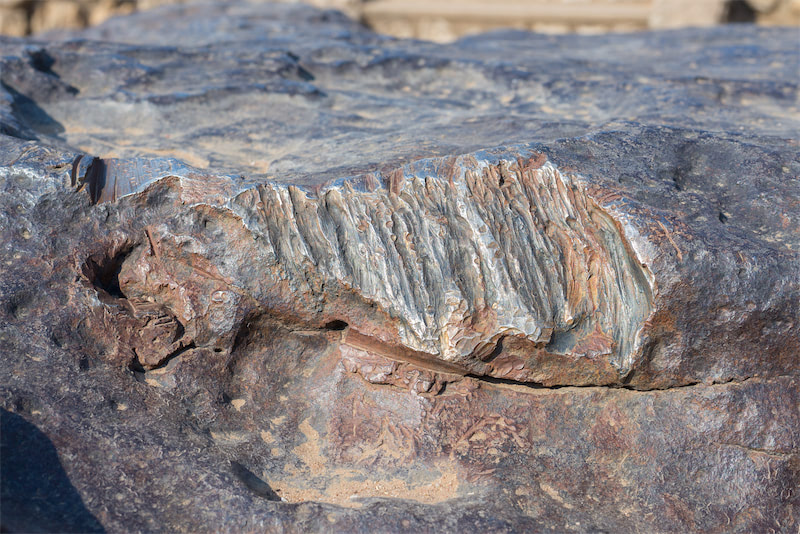
Contexte : l’affaire de Pangkalpinang a déclenché un examen plus approfondi des terres rares
Le récent problème d’inspection des éléments de terres rares (REE), ou Logam Tanah Jarang (LTJ), en Indonésie semble avoir été provoqué par un contrôle gouvernemental plus strict après l’affaire de Pangkalpinang. La première affaire était liée à des irrégularités présumées portant sur environ 390 tonnes de matériaux contenant des REE et impliquait PT Putraprima Mineral Mandiri, PT Sucofindo et le bureau des douanes de Pangkalpinang. Cela a soulevé une question réglementaire plus large : lorsqu’un produit minier contient des terres rares ou des éléments radioactifs en tant que contenu associé, doit-il toujours être traité comme son principal produit d’exportation, ou doit-il être soumis aux restrictions d’exportation liées aux terres rares ?
Ce problème a rapidement affecté l’ensemble de la chaîne d’exportation minière indonésienne. Des produits tels que le NPI, le ferronickel, le MHP, l’alumine et les produits à base d’étain ne sont pas exportés comme produits de terres rares. Cependant, ils peuvent contenir des traces de REE ou d’éléments radioactifs associés. En conséquence, les inspecteurs et les douanes sont devenus plus prudents, ce qui a entraîné des retards dans la délivrance des LS et le dédouanement pour certaines cargaisons.
Pour l’industrie du nickel, le problème est devenu une préoccupation immédiate, car les exportations de NPI/ferronickel et de MHP ont été affectées par des exigences de tests supplémentaires. Les retours du marché indiquaient que certaines cargaisons étaient temporairement bloquées et que les perturbations ne se limitaient pas à une seule entreprise. Certains négociants ont également signalé que les cargaisons liées à QMB ne pouvaient pas être expédiées normalement pendant la période de perturbation.
Pourquoi les REE sont importantes : l’Indonésie s’efforce de protéger la valeur des minéraux critiques avant l’exportation
Les REE sont importantes car les terres rares sont des matériaux stratégiques utilisés dans des industries à haute valeur ajoutée telles que les véhicules électriques, les aimants permanents, l’électronique, les énergies renouvelables et les matériaux liés à la défense. Pour l’Indonésie, l’enjeu n’est pas seulement le dédouanement à l’exportation, mais aussi le contrôle de la valeur des ressources. Le gouvernement se concentre de plus en plus sur l’identification et la protection de la valeur des minéraux critiques avant qu’elle ne quitte le pays.
Le défi est que les REE n’apparaissent souvent pas comme un produit autonome, mais comme un élément associé ou à l’état de traces dans d’autres produits miniers. Si tout produit contenant une faible teneur en REE est traité comme une exportation de terres rares soumise à restrictions, les expéditions normales de minéraux pourraient être retardées. Cependant, si la teneur en terres rares (REE) n’est pas du tout surveillée, l’Indonésie risque de perdre le contrôle de la valeur des minerais stratégiques.
Les 17 éléments de terres rares comprennent généralement le lanthane, le cérium, le praséodyme, le néodyme, le prométhium, le samarium, l’europium, le gadolinium, le terbium, le dysprosium, l’holmium, l’erbium, le thulium, l’ytterbium, le lutétium, l’yttrium et le scandium. Lors des récentes discussions sur le marché, il était entendu que les tests couvraient ces 17 éléments de terres rares, tandis que les éléments radioactifs comme le thorium et l’uranium faisaient également partie des préoccupations d’inspection.
Le problème est que les éléments de terres rares ne sont souvent pas produits comme produits autonomes. Ils peuvent apparaître comme éléments associés dans d’autres produits miniers. Cela crée une zone grise réglementaire. Si chaque produit exporté contenant des traces de REE devait être traité comme une exportation de terres rares, de nombreuses expéditions normales de minerais pourraient être retardées. Mais si la teneur en REE associée n’est pas du tout contrôlée, l’Indonésie risque de perdre le contrôle de la valeur des minerais stratégiques.
Par conséquent, la préoccupation du marché ne porte pas seulement sur le blocage des exportations de nickel. La question plus large est de savoir si l’Indonésie entre dans une nouvelle phase où les exportations de produits miniers nécessitent une vérification plus détaillée de leur composition chimique.
Ce qui s’est passé sur le marché : les retards des rapports LS et les tests supplémentaires ont perturbé les expéditions de minerais
Selon les informations de marché de SMM, la récente exigence d’inspection a temporairement affecté les exportations de plusieurs produits miniers indonésiens transformés. Pour les produits à base de nickel, l’impact s’est principalement manifesté dans trois domaines.
- L’émission des rapports LS a ralenti. Le rapport LS est un document d’exportation clé, de sorte que les retards ont directement affecté le dédouanement et la libération des expéditions. Selon les informations de SMM au 24 juillet, environ 102 rapports de surveyor auraient été retardés en raison de divergences d’interprétation concernant les contrôles des REE lors de la vérification à l’exportation.
- Certaines cargaisons sont restées temporairement bloquées dans les ports. Les acteurs du marché ont signalé des retards dans les expéditions de NPI et de MHP, tandis que certains négociants ont également mentionné que les cargaisons liées à QMB ont rencontré des obstacles similaires.
- Les exportateurs ont dû organiser des tests supplémentaires. Le gouvernement a exigé des contrôles sur 17 éléments de REE et éléments radioactifs dans certains produits. Certaines entreprises attendaient encore les résultats des tests ou des clarifications des surveyors et des douanes.
- Par conséquent, il ne s’agissait pas d’une interdiction directe d’exportation des produits à base de nickel. C’était principalement un goulot d’étranglement administratif et de test temporaire causé par des normes de mise en œuvre imprécises pour les REE et les éléments radioactifs associés.
Impact sur le marché du nickel : les exportations de NPI et d’autres produits à base de nickel affectées principalement par des retards d’expédition
Pour le marché du NPI et du ferronickel, l’impact à court terme s’est principalement reflété dans le calendrier des expéditions plutôt que dans la production. Certaines cargaisons en attente dans les ports ont été retardées car les rapports LS et le dédouanement ont été affectés. Selon les dernières informations de marché de SMM, les rapports LS sont actuellement délivrés par lots, et certaines cargaisons de NPI de haute qualité dans les ports ont commencé à être libérées.
Étant donné que la perturbation actuelle s’est principalement produite lors du processus de documentation et de dédouanement à l’exportation, l’impact direct sur la production de NPI a été limité. Si l’émission des rapports LS et le dédouanement continuent de se normaliser, l’impact sur l’ensemble du marché du NPI devrait rester limité. À ce stade, le problème est davantage lié à une perturbation temporaire des procédures d’exportation qu’à une restriction structurelle confirmée des exportations de NPI.
Pour le marché du MHP, certaines expéditions ont également été affectées par l’exigence d’inspection liée aux REE. Selon les retours du marché, certaines cargaisons de MHP n’ont temporairement pas pu être expédiées normalement pendant la période de perturbation. Comme pour le NPI, le problème clé était principalement lié à l’émission des rapports LS, aux exigences de test et au dédouanement plutôt qu’à une restriction directe de la production de MHP.
Le dernier résultat de coordination du gouvernement a précisé que les procédures d’exportation doivent se référer au produit minier principal et à ses dérivés, plutôt que de traiter automatiquement les REE ou les éléments radioactifs associés comme base de restriction à l’exportation.
Retours du marché et préoccupations de l’industrie : l’absence de normes techniques a créé de l’incertitude pour les exportateurs
Les retours du marché montrent que l’exigence d’inspection liée aux REE a créé une perturbation pratique pour la chaîne d’exportation minière indonésienne. Selon le président de la FINI, Arif Perdanakusumah, au moins 120 navires de marchandises n’ont pas pu appareiller ou quitter les ports en raison de l’obligation de tester la teneur en éléments de terres rares. Il a noté que la situation a causé des pertes non seulement pour les entreprises, mais aussi pour le gouvernement, principalement parce qu’il n’y avait toujours pas de réglementation claire fournissant des orientations techniques sur les limites de teneur en REE.
Les associations industrielles comprennent généralement que cette politique s’inscrit dans les efforts du gouvernement pour améliorer la gouvernance minière. Cependant, elles ont également souligné que la mise en œuvre technique doit être réexaminée, d’autant que de nombreux produits miniers contiennent des REE uniquement comme éléments associés ou à l’état de traces, et non comme produit principal. Cette distinction est importante pour les matières premières telles que le nickel, la bauxite, l’étain et le cuivre, où les entreprises sont autorisées et conçues pour produire la matière première principale, tandis que la teneur en REE peut naturellement apparaître comme sous-produit ou élément associé.
L’industrie de la bauxite a également soulevé des préoccupations similaires. Le président de l’ABI, Ronald Sulistyanto, a déclaré que la question des REE devait être ramenée à son cadre technique de base et traitée par le ministère de l’Énergie et des Ressources minérales, car ce ministère possède l’expertise pertinente en matière d’exploitation minière et de minéraux. Il a insisté sur le fait que la question clé est de savoir si les REE constituent le produit principal ou seulement un élément associé. S’il s’agit du produit principal, des restrictions spécifiques à l’exportation peuvent alors s’appliquer. Cependant, s’il ne s’agit que d’un élément associé, la question nécessite des clarifications techniques plus détaillées plutôt qu’une perturbation générale des exportations.
La directrice exécutive de l’IMA, Sari Esayanti, a également souligné que la plupart des sociétés minières sont actuellement orientées vers leur principale matière première autorisée et la conception de traitement existante. Dans de nombreuses matières premières comme l’étain, la bauxite, le nickel et le cuivre, les REE apparaissent généralement comme un élément associé. Elle a également noté que la plupart des sociétés minières ne disposent pas encore d’installations ou de technologies suffisantes pour identifier, séparer ou valoriser économiquement les éléments de REE. Par conséquent, de nouvelles interprétations concernant la déclaration des REE ou les obligations d’exportation ont créé de l’incertitude pour les acteurs économiques.
Du point de vue de l’industrie, le besoin le plus urgent est la sécurité technique. Les entreprises ont besoin de paramètres plus clairs, d’une méthodologie de test et de mécanismes de déclaration afin que tous les exportateurs, surveyors et autorités douanières appliquent la même norme. Sans orientations techniques cohérentes, des retards d’expédition similaires pourraient se reproduire même si le goulot d’étranglement actuel est progressivement résolu.
Mise à jour gouvernementale et résolution
La mise à jour la plus importante est venue de la lettre de coordination du gouvernement indonésien datée du 31 juillet 2026. Selon cette lettre, le ministère coordinateur des Affaires économiques indonésien a tenu une réunion de coordination le 30 juillet pour discuter des obstacles à l’exportation liés à la teneur en REE et/ou radioactive dans les produits miniers et leurs dérivés.
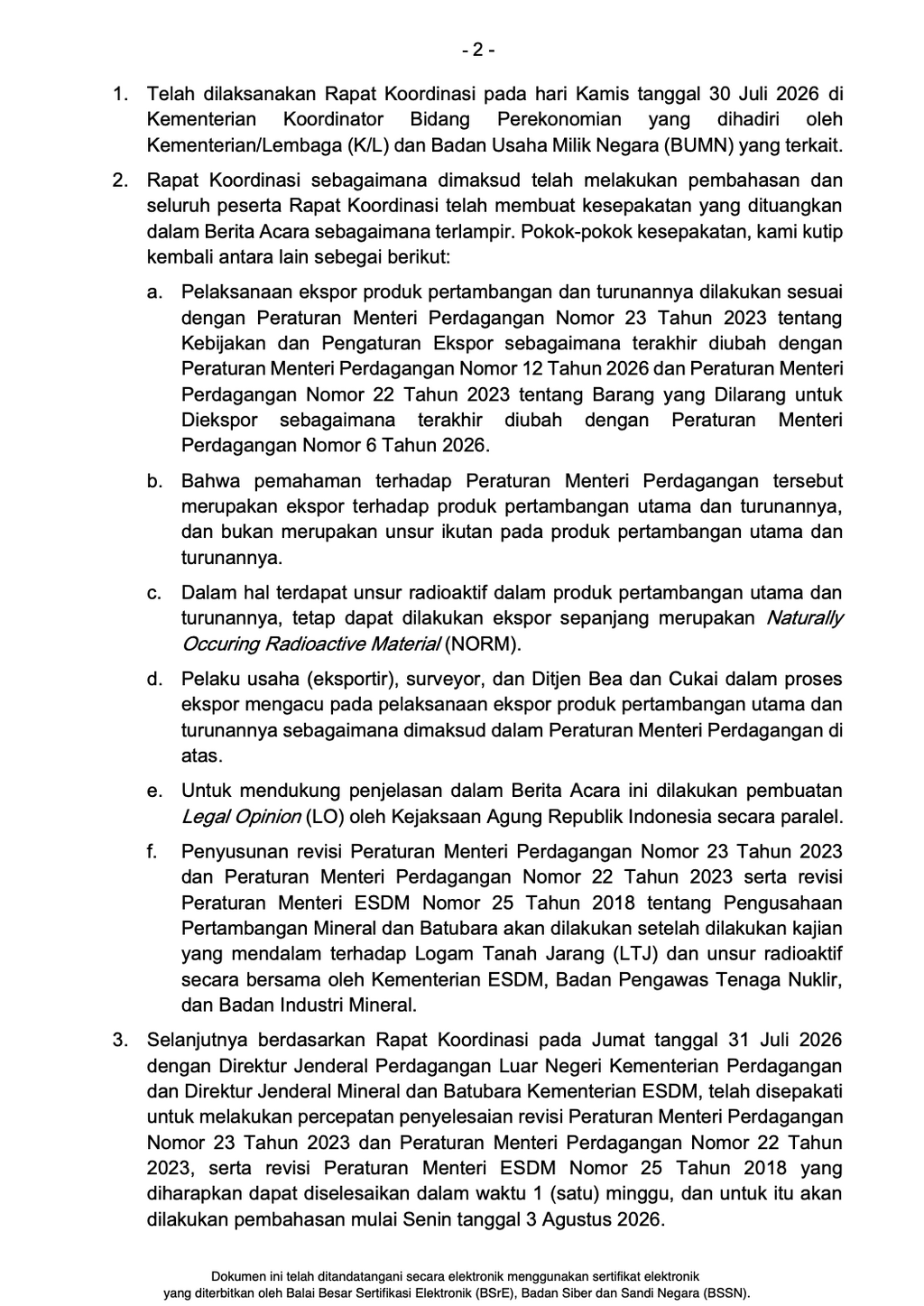
Points clés du résultat de la coordination gouvernementale :
- Les exportations doivent continuer à suivre la réglementation commerciale existante, y compris le règlement du ministre du Commerce n° 23/2023 sur les politiques et les dispositions d’exportation, et le règlement du ministre du Commerce n° 22/2023 sur les marchandises d’exportation interdites, tel que modifié par les règlements ultérieurs.
- La réglementation doit s’appliquer au produit minier principal et à ses dérivés, et non automatiquement aux éléments associés contenus dans ces produits. C’est la clarification la plus importante pour le NPI, le ferronickel, le MHP, l’alumine et d’autres produits miniers transformés.
- Les produits contenant des éléments radioactifs peuvent encore être exportés si leur teneur est classée comme matière radioactive naturelle (NORM). Cela contribue à réduire le risque que les teneurs radioactives à l’état de traces bloquent automatiquement les exportations.
- Les exportateurs, les surveyors et les douanes doivent se référer à la classification du produit principal lors du traitement des exportations.Cela fournit une base pour que l’émission des rapports LS et le dédouanement reprennent progressivement.
- Un avis juridique du bureau du procureur général sera préparé en parallèle pour appuyer la clarification réglementaire.
- Le gouvernement prévoit d’accélérer les révisions du règlement du ministre du Commerce n° 23/2023, du règlement du ministre du Commerce n° 22/2023 et du règlement du ministre de l’ESDM n° 25/2018. Les discussions devraient commencer le 3 août 2026, avec un objectif d’achèvement d’environ une semaine.
Avis de SMM : perturbation à court terme des exportations, mais signal à plus long terme d’une supervision plus stricte des minerais
SMM estime que le problème de l’inspection des REE est une perturbation à court terme, mais aussi un signal politique important. À court terme, l’impact sur les exportations de NPI et de MHP devrait s’atténuer progressivement à mesure que les rapports LS sont délivrés et que l’interprétation des douanes devient plus claire. Si le dédouanement des cargaisons continue de se normaliser, l’impact sur l’équilibre global de l’offre et de la demande de nickel devrait rester limité.
Cependant, l’événement montre que l’Indonésie renforce la surveillance de la teneur en minerais critiques, de la documentation d’exportation et de la protection de la valeur des ressources. Même après la résolution de la perturbation actuelle, les exportateurs pourraient être confrontés à des tests plus stricts, à des exigences de déclaration plus claires et à une coordination plus étroite entre les surveyors, les douanes, l’ESDM, le ministère du Commerce et d’autres agences.
À l’avenir, le marché devra surveiller :
-
si tous les rapports LS retardés peuvent être entièrement traités ;
-
si les expéditions futures nécessiteront des tests complets de la teneur en REE et en éléments radioactifs ;
-
si le gouvernement fixera des seuils clairs pour les REE, le thorium, l’uranium et la classification NORM ;
-
si les réglementations révisées distinguent clairement les principaux produits d’exportation des éléments traces associés ;
-
si le NPI, le ferronickel, le MHP, l’alumine et les produits liés à l’étain seront soumis à des normes de mise en œuvre différentes.
Dans l’ensemble, cet événement ne doit pas être interprété comme une interdiction directe des exportations de NPI ou de MHP. Il s’agit plus précisément d’un processus de clarification réglementaire déclenché par l’attention accrue de l’Indonésie sur la teneur en éléments de terres rares et radioactifs dans les produits miniers. Si la mise en œuvre devient rapidement claire, l’impact restera temporaire. Si les règles restent vagues, des retards d’expédition et des frictions administratives pourraient réapparaître.
![[SMM Analysis] Bruxelles surveille le Brésil, mais le ferronickel manquant de l'Europe est parti ailleurs](https://imgqn.smm.cn/usercenter/WNjzM20251217171732.jpeg)