WIP Material Mismatch: The Core Bottleneck for Sulfide All‑Solid‑State Batteries

Published: Jul 29, 2026 17:56
Jiuwu Hi‑Tech’s LATP Solid Electrolyte Passes 4.62V Overcharge Test; Ceramic‑Membrane Leader Advances Dual‑Track Solid‑State Battery Strategy

The key success factors are:

Turnkey line + process co‑development (highest priority) – not just selling hardware.

Deep ties with top battery/car makers – long validation cycles (2–3 years) create high switching costs.

Machine performance – only an entry ticket.


Industry Pace:
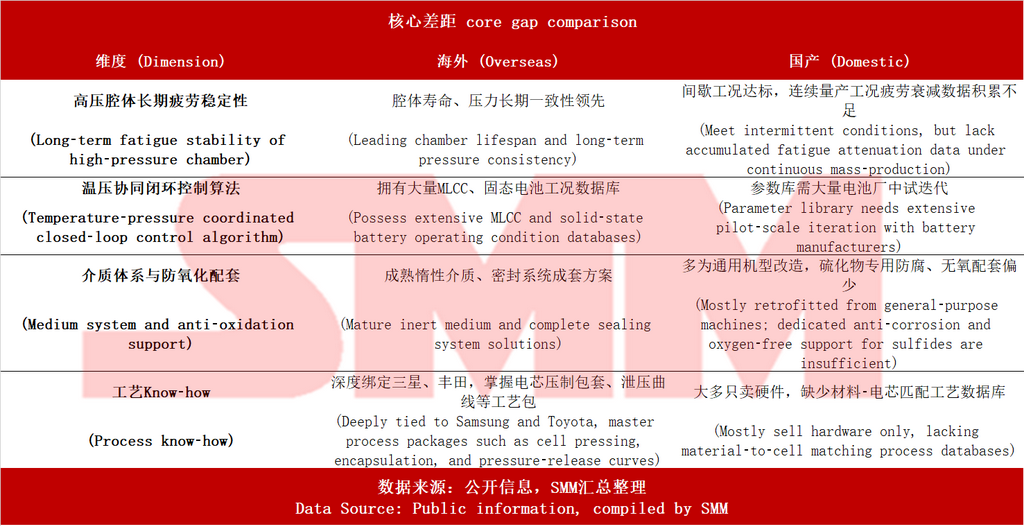

Industry Pace:

Demand scale: Pilot lines (0.5–2 GWh) currently drive demand, with 2–4 medium‑large WIP units at RMB 30–80 million each. Per GWh production line equipment accounts for 12–14% of total investment. WIP equipment is ~13% of all ASSB equipment value; global market for ASSB equipment is estimated at RMB 12 billion in 2026, with WIP exceeding RMB 6 billion by 2030.
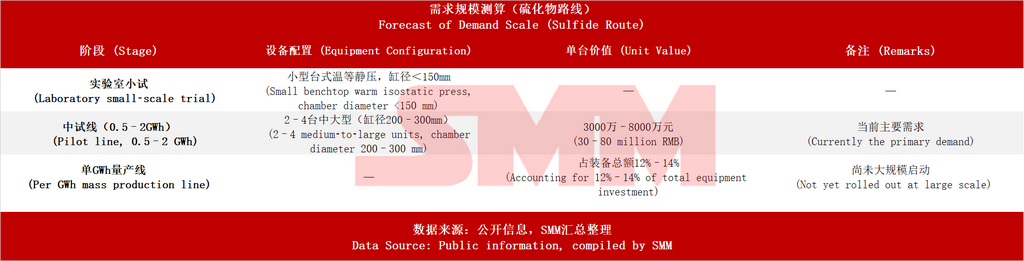
Overseas vs. China: Japan/Korea (Toyota, Samsung SDI) follow planned, phased procurement with imported machines; China is more flexible, faster, and heavily using domestic units for pilot validation. 2026–2027 is the peak for pilot equipment purchases, with over ten major players (CATL, BYD, Weilan, Qingtao, etc.) building/expanding pilot lines.

Mass Production Timeline:
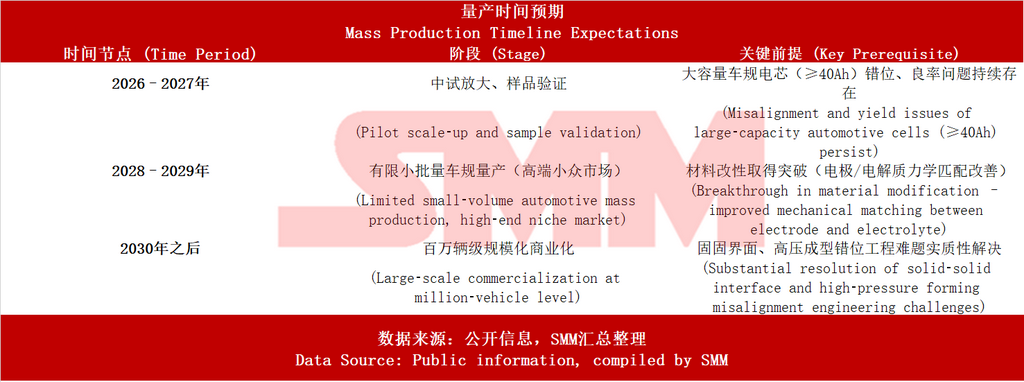
 

Robin Zeng (CATL) rates current ASSB technology at TRL 4 (out of 9) and states that “million‑unit deployment before 2030 is very unlikely.” He emphasises an event‑driven, not time‑driven, breakthrough – only after key scientific and engineering hurdles are overcome.

Key Risk: If alternative low‑pressure or in‑situ curing routes emerge, the current high‑value WIP equipment investment thesis could be fundamentally disrupted.

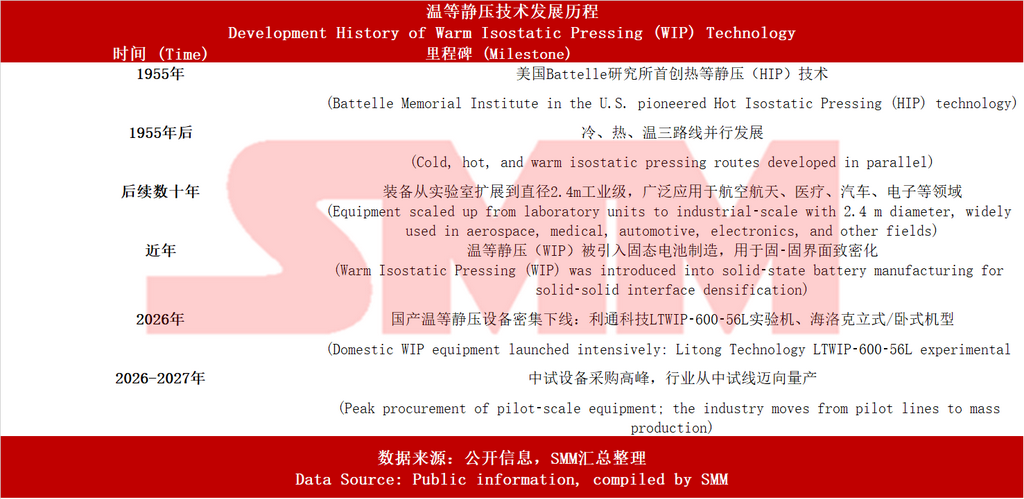
Historical Milestones (WIP):
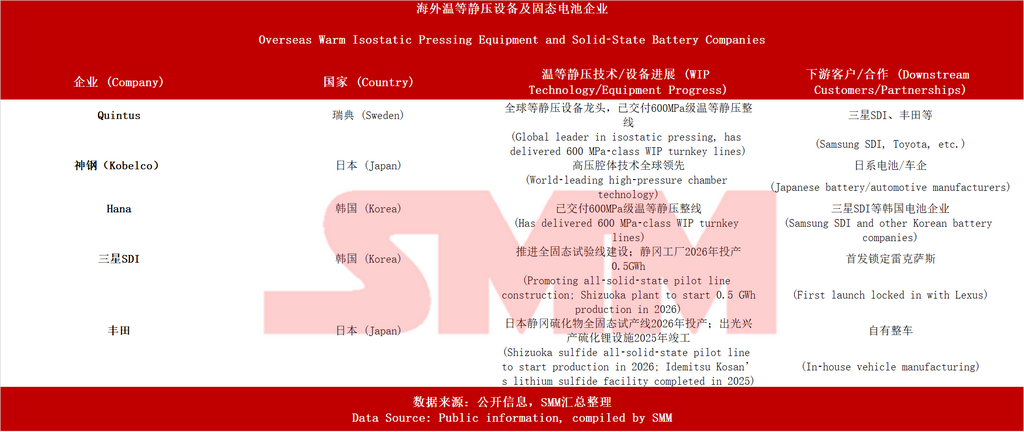
Key Players (Overseas):
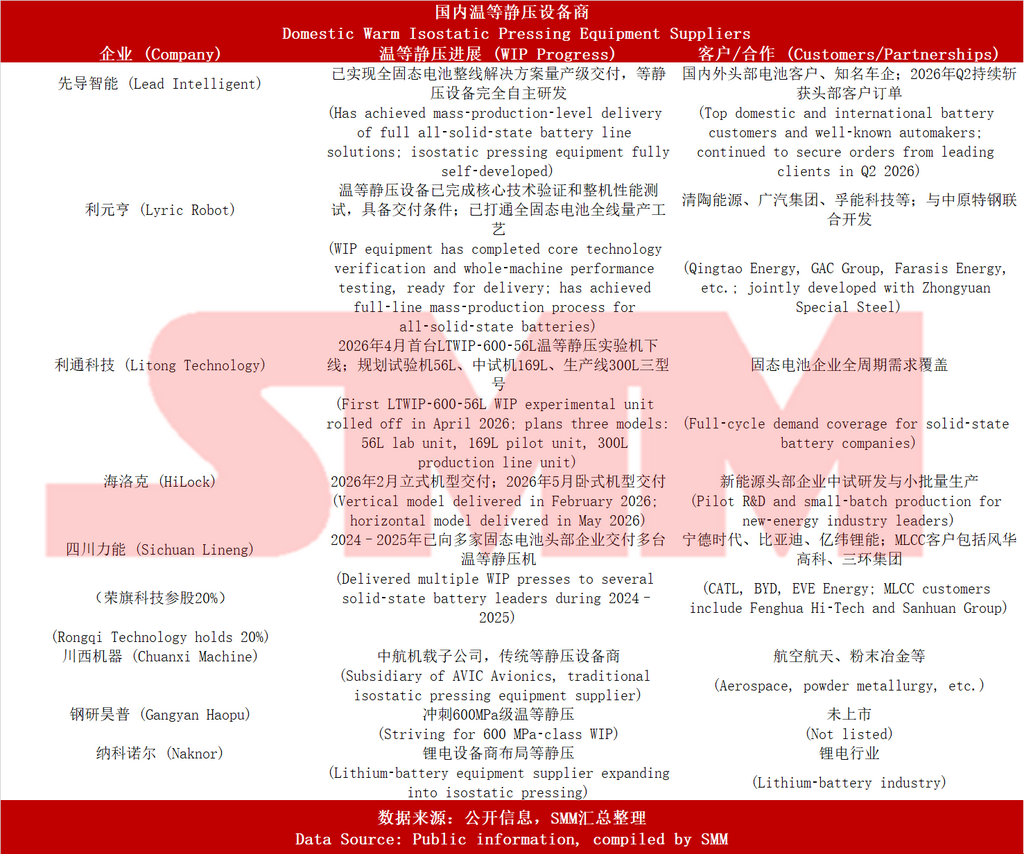
Key Players (Domestic – WIP suppliers):
Six State‑Subsidised ASSB Enterprises (key tech partnerships & procurement):
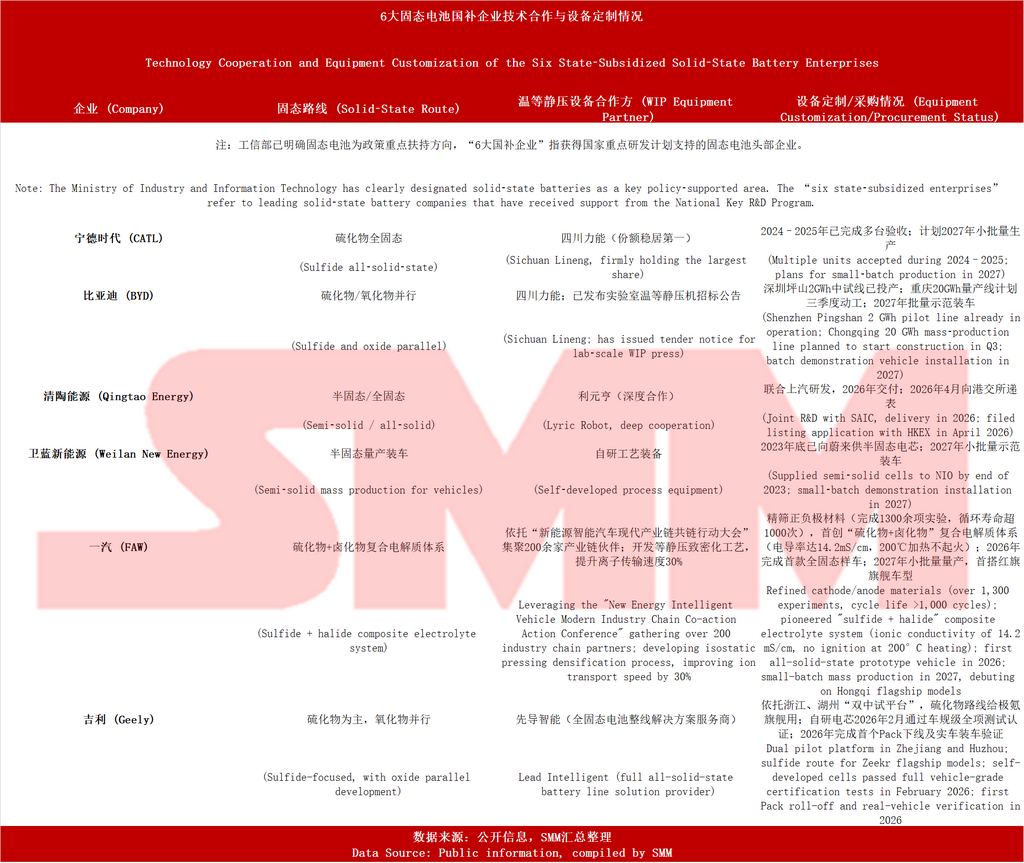
Conclusion:
The root cause of WIP material mismatch is mechanical incompatibility. The priority is clear: material modification > process optimisation > equipment upgrade. Domestic hardware is closing the gap, but process databases and integrated solutions remain weak. The industry is now in a pilot‑equipment procurement window, with China iterating faster than overseas. Long‑term success for equipment makers hinges on turnkey solutions and anchoring top clients – standalone machine performance is merely a qualifier. Given the material mismatch bottleneck, achieving million‑unit ASSB deployment before 2030 is extremely challenging, as Zeng Yuqun noted – this is an event‑driven breakthrough, not a time‑driven one.


**Note:** For further details or inquiries regarding solid-state battery development, please contact:
Phone: 021-20707860 (or WeChat: 13585549799)
Contact: Chaoxing Yang. Thank you!
 

Data Source Statement: Except for publicly available information, all other data are processed by SMM based on publicly available information, market communication, and relying on SMM's internal database model. They are for reference only and do not constitute decision-making recommendations.

For any inquiries or for more information, please contact: lemonzhao@smm.cn
For more information on how to access our research reports, please contact:service.en@smm.cn
Related News
Solid-State Battery July 2026 : Policy Standardization +  Hundred-Ton-Level Production Lines + Semi-Solid Batteries
13 hours ago
Solid-State Battery July 2026 : Policy Standardization +  Hundred-Ton-Level Production Lines + Semi-Solid Batteries
Read More
Solid-State Battery July 2026 : Policy Standardization +  Hundred-Ton-Level Production Lines + Semi-Solid Batteries
① Policy: China's first national standard for vehicle solid-state batteries (GB/T43568-2026) took effect, paired with a consumption tax exemption; ② Materials: multiple hundred-ton-level sulfide production lines commenced commissioning in Q3, with a leading EV manufacturer completing a 1‑ton electrolyte tender (awarded below RMB 2 million/ton), signaling the industry's shift to "ton‑level transactions"; ③ Products :SVOLT Energy's hybrid solid-liquid batteries entered volume production in Q3,
13 hours ago
[Solid-State Battery: Shandong Chuanglu Advanced Battery Technology’s Complete Series Solid-State Electrolytes and Lithium-Rich Manganese-Based Cathode Materials Completed Pilot-Scale Validation]
19 hours ago
[Solid-State Battery: Shandong Chuanglu Advanced Battery Technology’s Complete Series Solid-State Electrolytes and Lithium-Rich Manganese-Based Cathode Materials Completed Pilot-Scale Validation]
Read More
[Solid-State Battery: Shandong Chuanglu Advanced Battery Technology’s Complete Series Solid-State Electrolytes and Lithium-Rich Manganese-Based Cathode Materials Completed Pilot-Scale Validation]
[Solid-State Battery: Shandong Chuanglu Advanced Battery Technology’s Complete Series Solid-State Electrolytes and Lithium-Rich Manganese-Based Cathode Materials Completed Pilot-Scale Validation]
[Solid-State Battery: Shandong Chuanglu Advanced Battery Technology’s Full Range of Solid-State Electrolytes and Lithium-Rich Manganese-Based Cathode Materials Complete Pilot-Scale Verification] July 30, 2026, information from Chuanglu’s official account. The full range of solid-state electrolytes and lithium-rich manganese-based cathode materials of Shandong Chuanglu Advanced Battery Technology Co., Ltd. have completed pilot-scale verification, with batch stability and mass production processes fully meeting standards. Among them, the production line with an annual capacity of 150 mt of solid-state electrolyte has been installed and commissioned, and the kt-scale cathode material production line has entered the trial production stage. The core products are about to officially enter the stage of large-scale industrialisation, providing stable and reliable bulk supply and customized material solutions for downstream diverse scenarios such as 3C digital products, construction machinery, power batteries, and all-solid-state batteries, and facilitating the commercialisation of all-solid-state batteries. Chuanglu’s solid-state electrolyte routes: sulphide and oxide routes.
19 hours ago
Warm Isostatic Pressing Material Misalignment: The "Achilles' Heel" of Mass Production of Sulphide Solid-State Batteries [SMM Analysis]
Jul 29, 2026 17:45
Warm Isostatic Pressing Material Misalignment: The "Achilles' Heel" of Mass Production of Sulphide Solid-State Batteries [SMM Analysis]
Read More
Warm Isostatic Pressing Material Misalignment: The "Achilles' Heel" of Mass Production of Sulphide Solid-State Batteries [SMM Analysis]
[SMM Analysis: Warm Isostatic Pressing Material Misalignment: The "Achilles' Heel" of Sulfide Solid-State Battery Mass Production] Warm isostatic pressing is the core process for solid–solid interface densification in sulfide all-solid-state batteries. However, the substantial differences in compressive modulus and plastic deformation among cathode and anode active materials, solid-state electrolyte, and copper and aluminum current collectors cause non-uniform creep and interlayer slip within the multi-layer structure under 600 MPa isotropic high pressure. This is tolerable in small laboratory cells, but when scaling up to large-capacity automotive-grade cells, the yield crashes. The solution priorities are clear: material modification (addressing the root cause) > process optimization (providing relief) > equipment upgrade (limited symptom treatment with a clear ceiling). The hardware gap for China's warm isostatic pressing equipment continues to narrow, but shortcomings remain in process databases and turnkey solutions. The industry is now in a window period for pilot-scale equipment procurement, and China's iteration pace is faster than that outside China. The long-term success of equipment suppliers depends on turnkey line solutions and partnerships with leading clients, while standalone machine performance is merely the entry barrier. Constrained by the material misalignment bottleneck, achieving full-scale solid-state battery integration at the million-unit level before 2030 is extremely difficult, with only small-batch demonstrations in high-end car models likely to appear from 2027 to 2029.
Jul 29, 2026 17:45
WIP Material Mismatch: The Core Bottleneck for Sulfide All‑Solid‑State Batteries - Shanghai Metals Market (SMM)