SMM, ngày 24 tháng 7:
Số liệu hải quan cho thấy, nhập khẩu tinh quặng kẽm lũy kế của Trung Quốc đạt 2,7616 triệu tấn trong tháng 1-6 năm 2026, tăng 8,98% so với cùng kỳ năm ngoái, nhìn chung tăng nhẹ so với năm trước.
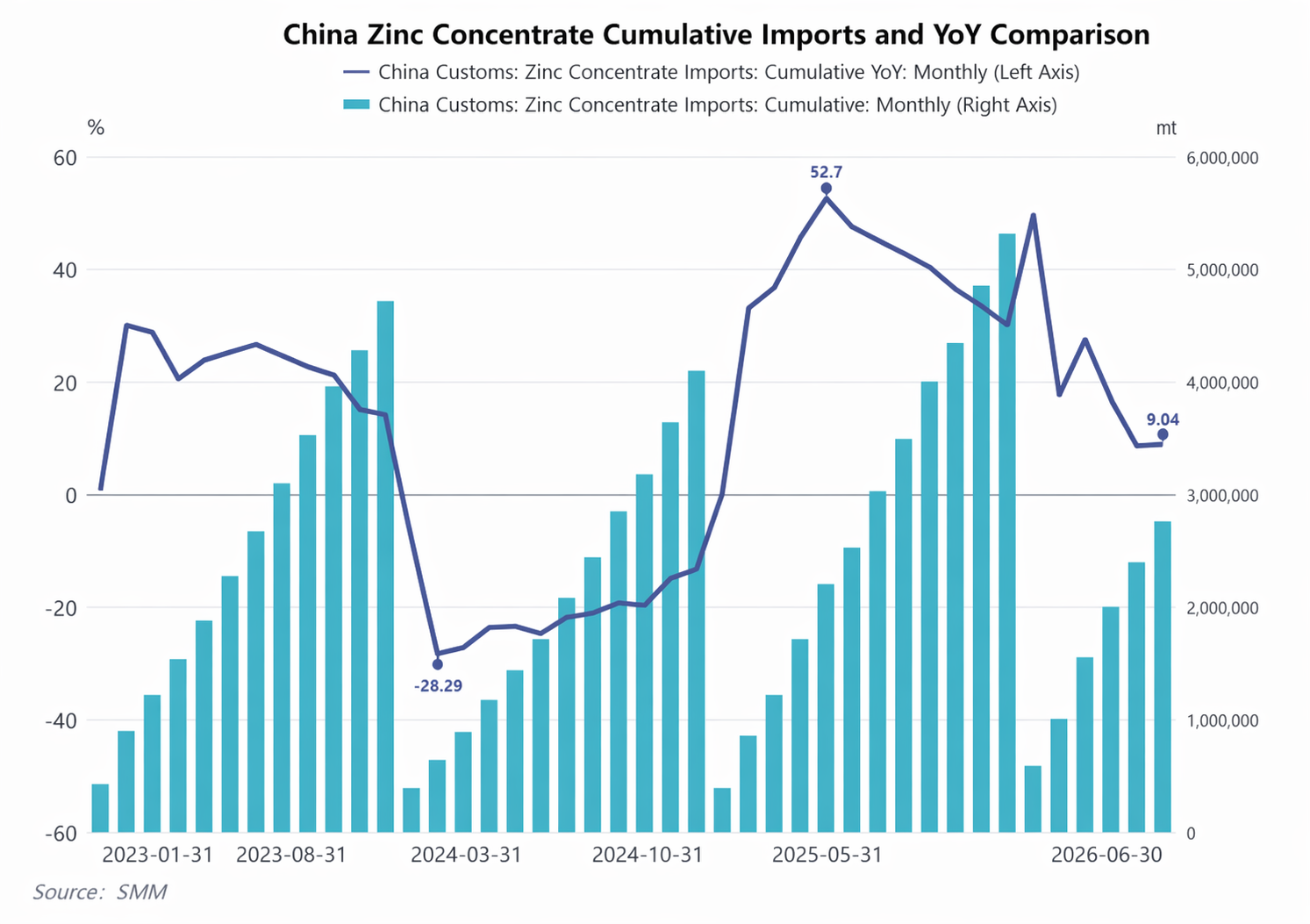
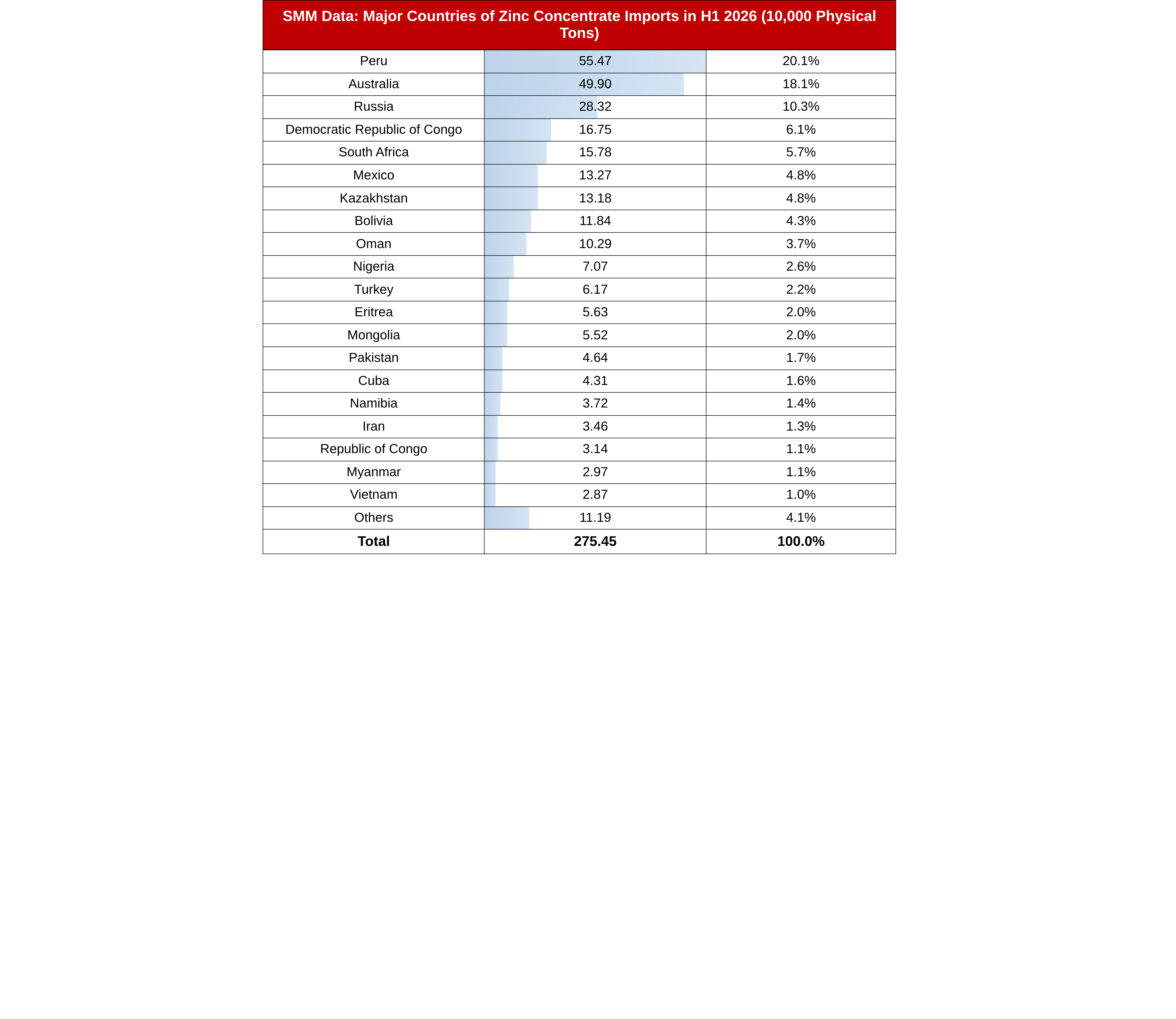
I. Đánh giá thị trường nhập khẩu tinh quặng kẽm nửa đầu năm: DRC trở thành động lực tăng trưởng chính
Theo quốc gia xuất xứ, nhập khẩu tinh quặng kẽm của Trung Quốc trong nửa đầu năm 2026 vẫn tập trung từ Peru, Australia và Nga. Nhập khẩu từ Peru đạt 554.700 tấn, chiếm 20% tổng lượng; Australia: 499.000 tấn, 18%; và Nga: 283.200 tấn, 10,3%. Ba quốc gia này cộng lại chiếm gần một nửa tổng nhập khẩu của Trung Quốc.
So với cùng kỳ năm ngoái, DRC là nước đóng góp lớn nhất vào tăng trưởng nhập khẩu nửa đầu năm, với nhập khẩu lũy kế tăng 92.300 tấn so với cùng kỳ, chiếm phần lớn mức tăng nhập khẩu tinh quặng kẽm của Trung Quốc. Ngoài ra, nhập khẩu từ Peru, Nga và Mexico cũng tăng ở các mức độ khác nhau, bổ sung nguồn cung nhập khẩu. Ngược lại, nhập khẩu từ Australia giảm 40.200 tấn, là nguồn sụt giảm chính.
II. Đánh giá thị trường nhập khẩu tinh quặng kẽm nửa đầu năm: Nhu cầu luyện kim tăng trưởng bền vững hỗ trợ nhập khẩu tăng so với cùng kỳ
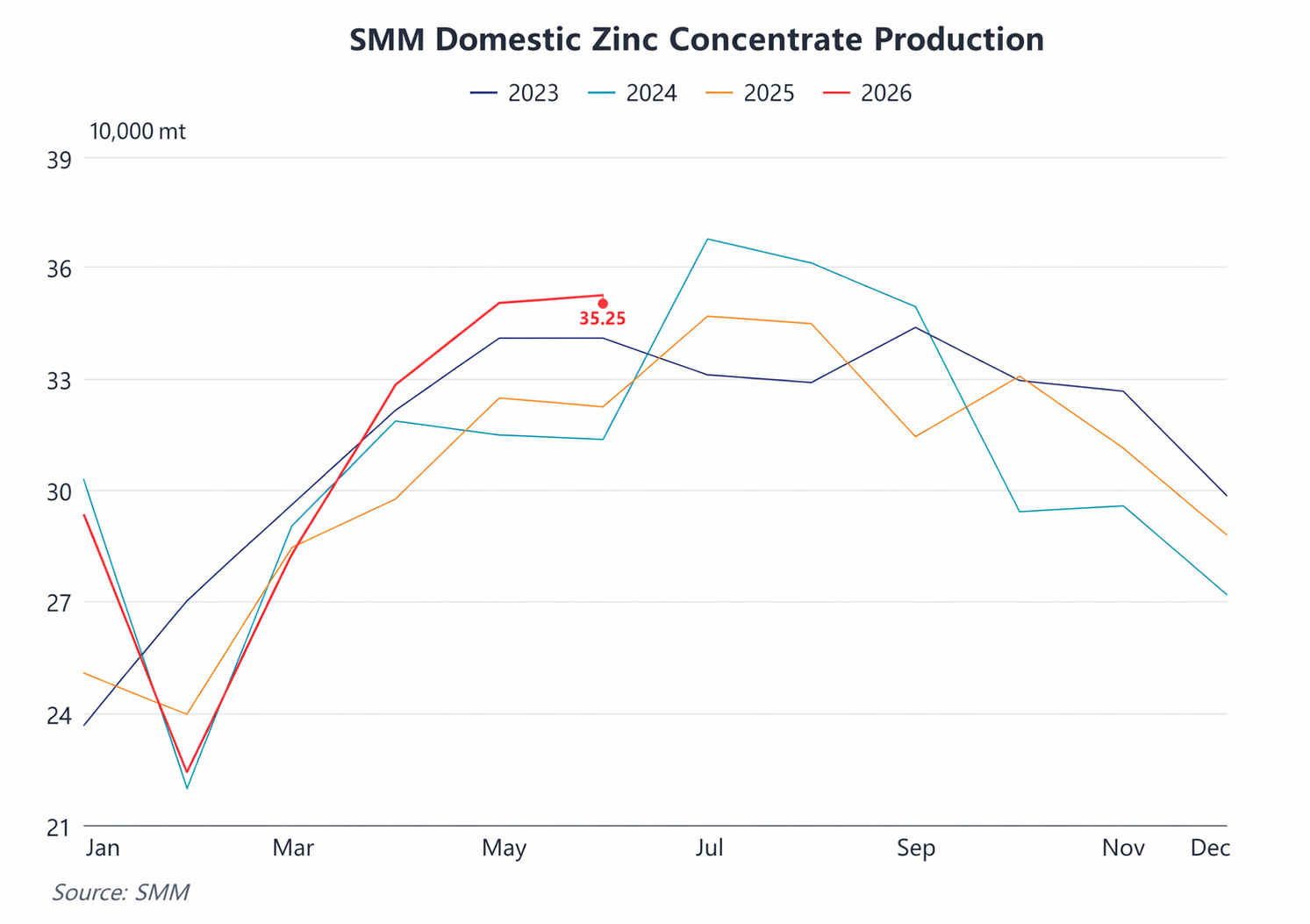
Xét về cung cầu nội địa, nguồn cung tinh quặng kẽm của Trung Quốc tiếp tục tăng trong nửa đầu năm 2026, nhưng nguồn cung mới chủ yếu tập trung ở một số mỏ lớn.
Theo thống kê của SMM, sản lượng tinh quặng kẽm nội địa tăng khoảng 6,5% so với cùng kỳ trong tháng 1-6 năm 2026, mức tăng đáng kể. Tuy nhiên, xét về cơ cấu tăng trưởng, sản lượng mới trong nửa đầu năm chủ yếu đến từ mỏ Huoshaoyun, trong khi phần lớn công suất mỏ mới còn lại sẽ được đưa vào dần trong nửa cuối năm. Trong khi đó, do hàm lượng quặng thô suy giảm tại một số mỏ lâu năm, sản lượng tinh quặng kẽm nội địa ở một số khu vực đã giảm so với cùng kỳ. Do đó, ngoài mỏ Huoshaoyun, nguồn cung tăng thêm thực tế lưu thông trên thị trường Trung Quốc khá hạn chế.
Về phía nhu cầu, công suất luyện kẽm của Trung Quốc liên tục mở rộng trong những năm gần đây, với một số dự án luyện mới đi vào hoạt động năm 2025 tiếp tục gia tăng sản lượng trong năm nay. Ngoài ra, một số công suất luyện kim mới đã đi vào hoạt động trong nửa đầu năm, tiếp tục thúc đẩy nhu cầu tiêu thụ tinh quặng kẽm tại Trung Quốc. Dữ liệu của SMM cho thấy sản lượng kẽm tinh luyện trong nước tăng khoảng 4% so với cùng kỳ trong giai đoạn tháng 1-6/2026, với nhu cầu nguyên liệu từ ngành luyện kim duy trì đà tăng trưởng.
Trong bối cảnh nguồn tăng thêm từ quặng trong nước hạn chế và nhu cầu luyện kim liên tục mở rộng, tinh quặng kẽm nhập khẩu trở thành nguồn bổ sung quan trọng cho nguồn cung nguyên liệu trong nước, qua đó duy trì mức tăng trưởng nhập khẩu so với cùng kỳ trong nửa đầu năm.
III. Triển vọng thị trường nửa cuối năm: Lượng tinh quặng kẽm nhập khẩu trong nửa cuối năm đối mặt rủi ro suy giảm
Nhìn về nửa cuối năm, lượng nhập khẩu tinh quặng kẽm của Trung Quốc dự kiến sẽ ít tăng trưởng và thậm chí có thể gặp một số rủi ro suy giảm.
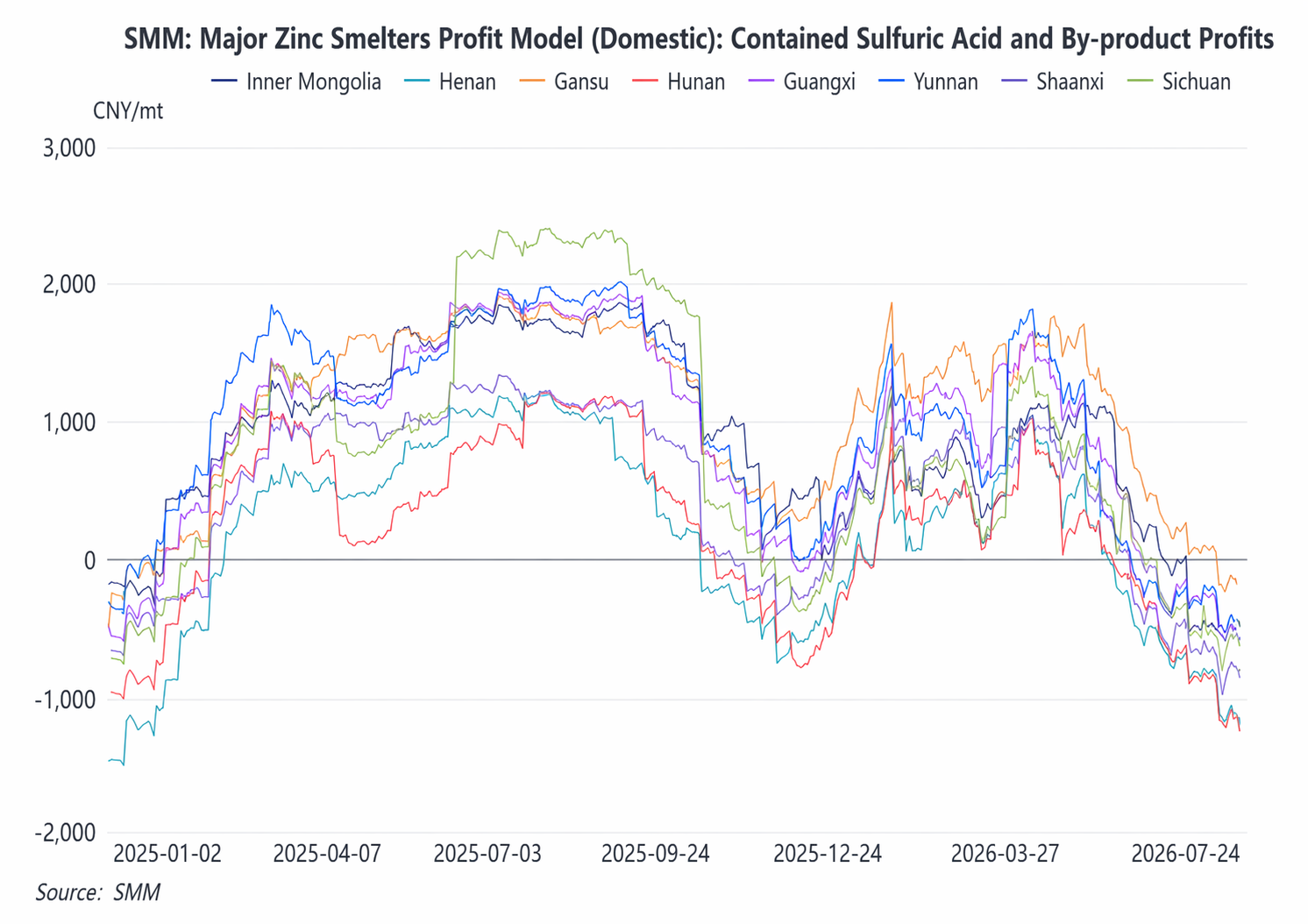
Một mặt, cán cân cung cầu tinh quặng kẽm toàn cầu lại thắt chặt, với phí gia công (TCs) tiếp tục giảm nhanh và lợi nhuận luyện kim trong nước bị thu hẹp đáng kể. Theo tính toán của SMM, tính đến ngày 23 tháng 7, nếu không tính đến doanh thu từ axit sulfuric và kim loại phụ, lợi nhuận tiền mặt từ luyện kẽm của Trung Quốc đã ghi nhận lỗ hơn 4.000 nhân dân tệ/tấn; ngay cả khi tính cả doanh thu từ axit sulfuric và kim loại đi kèm, lợi nhuận tổng thể của các nhà máy luyện kim tại hầu hết các khu vực ở Trung Quốc hiện đã chuyển sang âm. Đồng thời, quý 3 theo truyền thống là mùa bảo dưỡng của ngành luyện kẽm Trung Quốc, và nhu cầu chung của thị trường đối với tinh quặng đã suy yếu phần nào.
Mặt khác, kể từ giữa năm 2025, cửa sổ nhập khẩu đối với tinh quặng kẽm liên tục đóng, với tỷ giá SHFE/LME duy trì ở mức thấp trong thời gian dài, khiến nguồn cung nhập khẩu khó có lợi thế về giá. Dự kiến tỷ giá SHFE/LME khó cải thiện rõ rệt trong nửa cuối năm; với cửa sổ nhập khẩu duy trì trạng thái đảo ngược, các nhà máy luyện kim trong nước sẽ tiếp tục ưu tiên mua tinh quặng kẽm nội địa, và sẵn sàng mua hàng nhập khẩu giao ngay dự kiến vẫn yếu.
(Thông tin nêu trên dựa trên việc thu thập dữ liệu thị trường và đánh giá tổng hợp của nhóm nghiên cứu SMM. Các thông tin được cung cấp ở đây chỉ nhằm mục đích tham khảo. Bài viết này không đưa ra lời khuyên đầu tư trực tiếp hoặc khuyến nghị ra quyết định nghiên cứu. Khách hàng nên đưa ra quyết định một cách thận trọng và không dùng điều này để thay thế cho đánh giá độc lập của chính họ. Mọi quyết định của khách hàng không liên quan đến SMM.)