В I полугодии 2026 г. импорт и экспорт серебряного сырья и аффинированного серебра в Китае демонстрировали разнонаправленную динамику. Импорт серебряной руды продолжал расти на фоне высоких цен на серебро и доминирования продавцов, при этом совокупный рост составил 35,5% г/г. Экспорт аффинированного серебра оставался стабильным, по итогам полугодия практически без изменений год к году, тогда как в июне рост к предыдущему месяцу ускорился до 26%. В целом, импорт руды значительно вырос, а экспорт аффинированного серебра сохранил устойчивость. Динамика во II полугодии будет зависеть от изменения ценовых спредов и темпов конечного потребления.
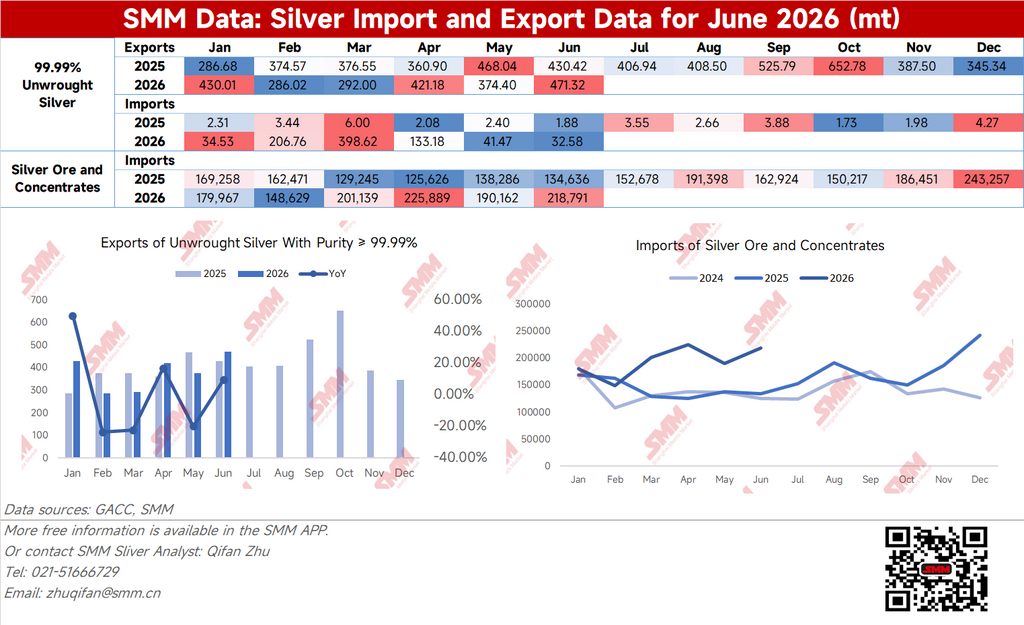
Экспорт аффинированного серебра в июне вырос на 26% м/м, по итогам полугодия практически без изменений г/г.
В июне 2026 г. экспорт необработанного серебра чистотой 99,99% из Китая составил 471 т, увеличившись на 26% м/м и на 9,5% г/г. Совокупный экспорт за I полугодие достиг 2 275 т, снизившись на 0,97% г/г. В разрезе видов торговли на переработку давальческого сырья пришлось около 95% экспорта в I полугодии.
Две основные причины лежат в основе стабильного роста экспорта аффинированного серебра. Во-первых, в период открытия экспортного окна в мае-июне премия в Гонконге относительно LBMA оставалась на уровне дисконта 20-30 центов за унцию. Поскольку внутренняя торговля котировалась с дисконтом к фьючерсам SGE T+D, готовность заводов выбирать экспортные поставки возросла, что привело к значительному росту экспорта во II квартале. Во-вторых, мировой спрос оставался в целом стабильным, с устойчивыми потребностями со стороны ювелирной отрасли, электронных компонентов и инвестиционного сектора.
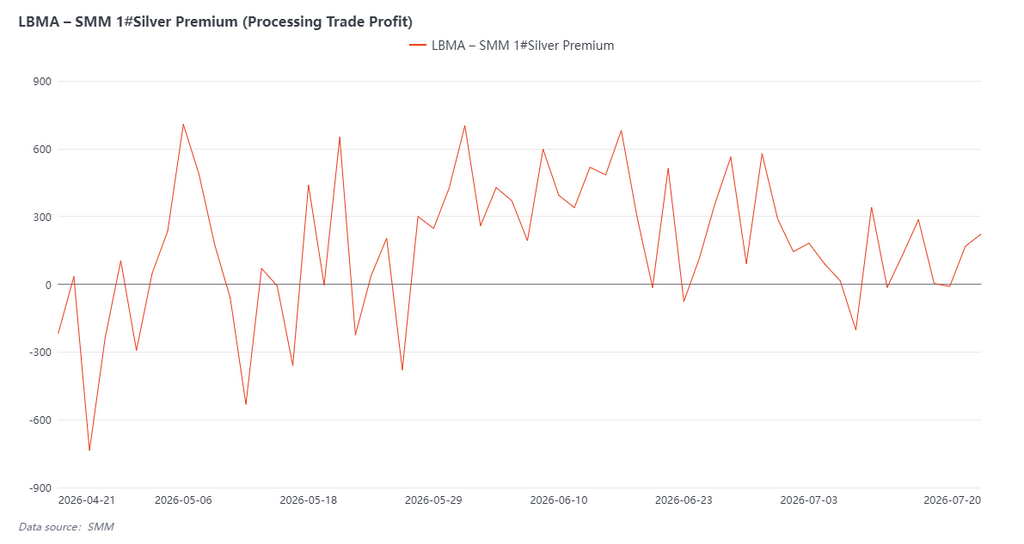
Что касается импорта, в июне импорт аффинированного серебра составил 32,58 т, сократившись на 21% м/м. Совокупный импорт за I полугодие достиг 847 т, взлетев на 2 241% г/г. Хотя импортное окно недавно слегка приоткрылось, в целом потоки торговли серебряными слитками постепенно возвращаются в норму.
С января по апрель 2026 г. на рынок поступили большие объемы импортных серебряных слитков, что привело к заметному накоплению запасов в Шэньчжэне и других регионах. Поставщики импортного серебра, продающие по низким ценам, постоянно нарушали нормальные котировки торговли серебряными слитками. В сочетании со слабым промышленным спросом это привело к постоянному росту социальных запасов серебряных слитков. С конца июня по июль, по мере постепенного сокращения предложения по низким ценам и незначительного оживления конечного потребления, спекулятивные позиции последовательно сокращались, а спотовые цены стабилизировались. Однако рынку по-прежнему следует опасаться возможных потрясений из-за высоких запасов дешевого предложения.
В перспективе II полугодия ожидается, что рынок экспорта аффинированного серебра сохранит динамику роста, наблюдавшуюся в июне, и объемы экспорта, вероятно, продолжат расти. По мере постепенного восстановления спроса на таких рынках, как Индия и Тайвань, и при сохранении высокой маржи экспорта по толлинговым схемам, экспорт по итогам года, как ожидается, немного увеличится по сравнению с прошлым годом.
Импорт серебросодержащей руды в июне вырос на 15% м/м, рост за полугодие составил 35,5%.
В июне 2026 г. импорт серебросодержащей руды в Китай составил 219 000 т, увеличившись на 15% м/м и на 62,5% г/г. Совокупный импорт за I полугодие достиг 1,165 млн т, увеличившись на 35,5% г/г.
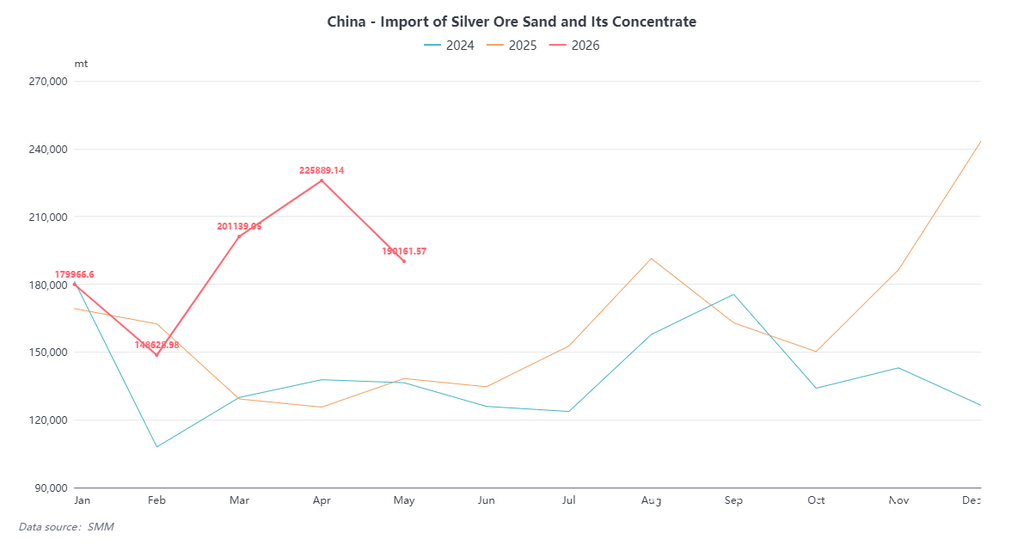
По видам торговли на обычную торговлю пришлось 47%, на переработку давальческого сырья — 38%. По источникам импорта Перу принадлежала доля 57%, оставаясь крупнейшим поставщиком.
В краткосрочной перспективе импорт серебросодержащей руды в июне продолжал расти, отчасти из-за того, что долгосрочные контракты, заключенные продавцами в период высоких цен в феврале-марте, все еще исполняются. В долгосрочной перспективе рынок серебросодержащей руды в этом году был ориентирован на продавцов. Содержание серебра в медных и свинцовых концентратах теперь оценивается отдельно, что делает попутное серебро основным источником прибыли для плавильных заводов. Под влиянием высоких цен на серебро большие объемы серебросодержащей руды продолжают поступать на китайский рынок, при этом особенно заметен импорт высококачественной руды из Южной Америки. Однако устойчивость конечного потребления вызывает осторожность. Хотя часть серебросодержащей руды может быть экспортирована по толлинговым схемам, продукты аффинажа серебра могут столкнуться с давлением накопления запасов на фоне слабого спроса на ювелирные изделия и инвестиционные активы.
Ожидается, что в 2026 г. импорт серебросодержащей руды вырастет более чем на 50% г/г, но по мере постепенного охлаждения рыночного энтузиазма во II полугодии импорт может незначительно сократиться.