Copper Price Trends in H1 2026
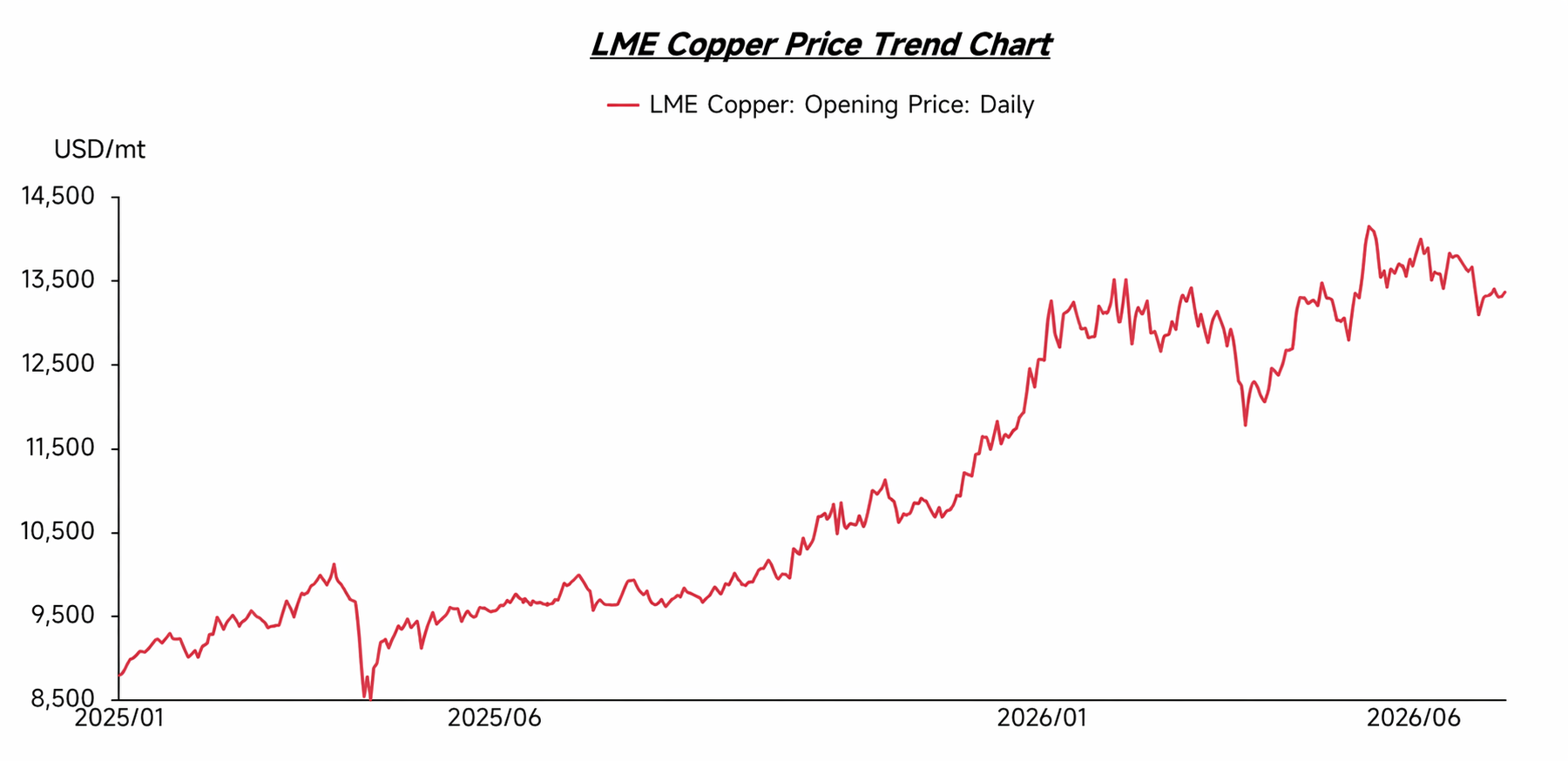
In Q1 2026, copper prices stayed high overall, consolidating around $13,000/mt. A temporary pullback occurred only late in Q1, but prices resumed an uptrend in Q2 and repeatedly hit new highs. Behind this, support came from tight copper ore supply, while the siphoning effect on global copper resources triggered by US tariff expectations further amplified market concerns over supply. At the same time, rapid growth in new copper-consuming sectors—such as NEVs, new energy power, power grid construction, and data centers—continued to fuel expectations for copper demand. With supply growth struggling to match demand growth, copper prices found strong support.
The tight supply of copper units also pushed enterprises to look beyond the mine side toward supplementary sources, significantly elevating the importance of copper scrap. As copper prices surged, copper scrap prices rose in tandem, and structural changes driven by copper resource scarcity started to shift the scrap market’s pricing logic, which had previously been dominated by consumption and price spreads.
Supply Side
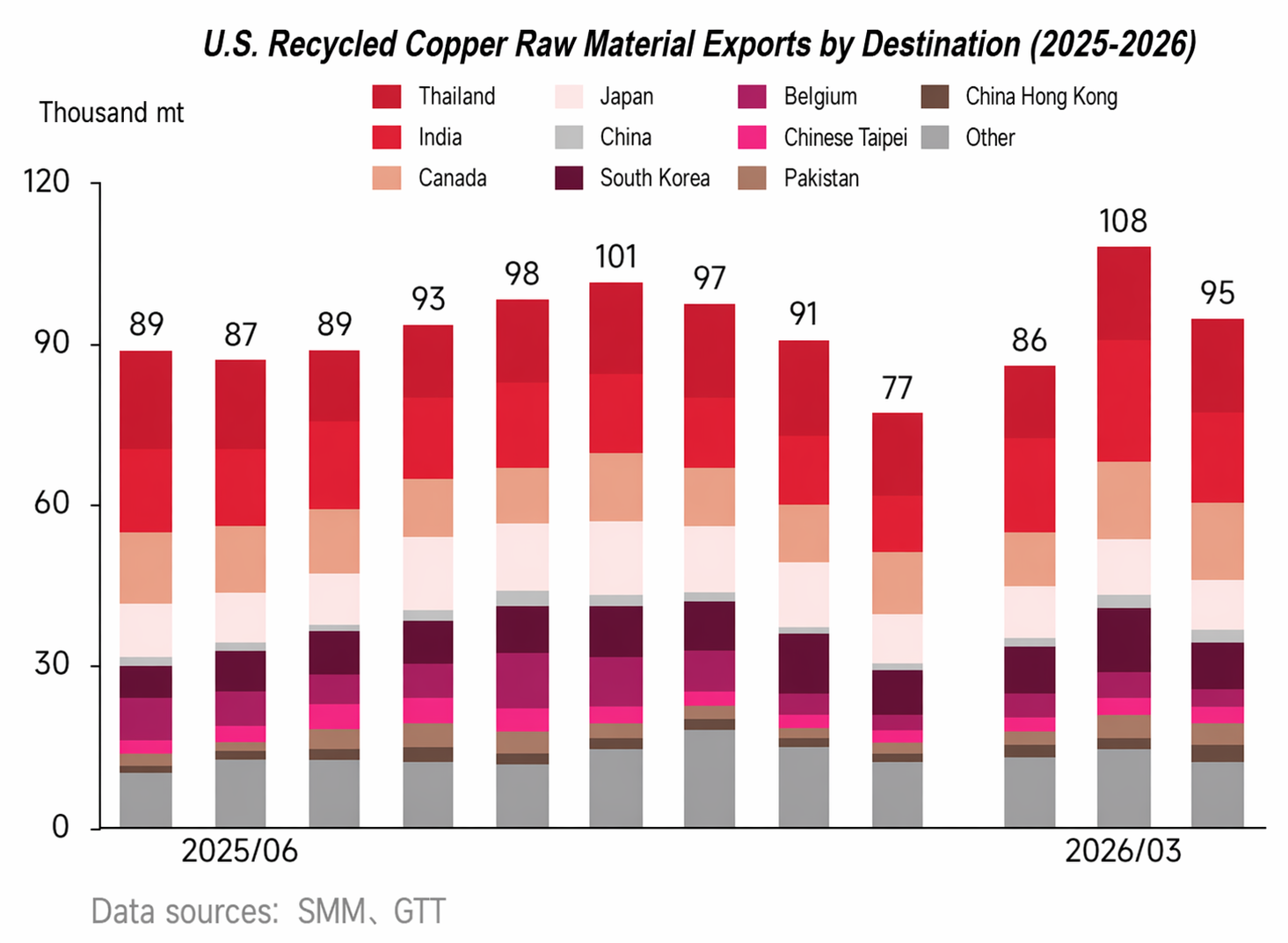
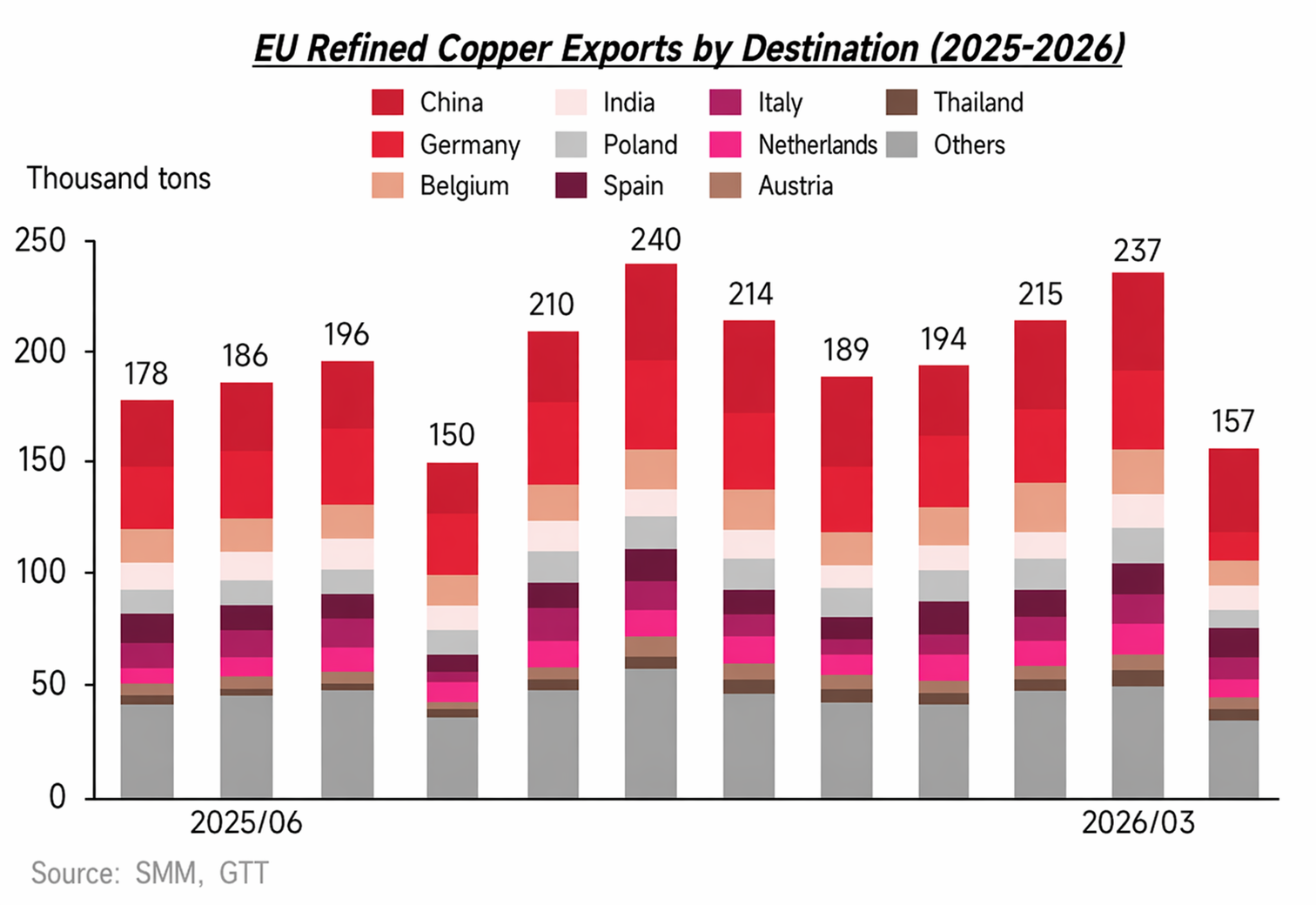
Supply side, the overseas copper scrap market is in an overall tight state. Although high copper prices have to some extent stimulated recycling and willingness to sell, available spot cargoes outside China remain limited because market inventories were continuously depleted from Q4 2025 to Q1 2026. According to feedback from some overseas scrap yards, shipping cycles after placing orders have lengthened significantly, with some orders requiring a 3–4 week wait before shipment, reflecting that the tight supply situation has not been effectively eased.
Meanwhile, traditional copper scrap exporting regions such as Europe and the US are actively promoting manufacturing reshoring, and local demand for secondary copper processing and smelting has increased, further weakening the supply elasticity of traditional export markets. Under the combined effect of reduced exportable resources, stronger local absorption capacity, and intensified competition for high-grade scrap, the tight overseas supply situation persists.
Demand Side
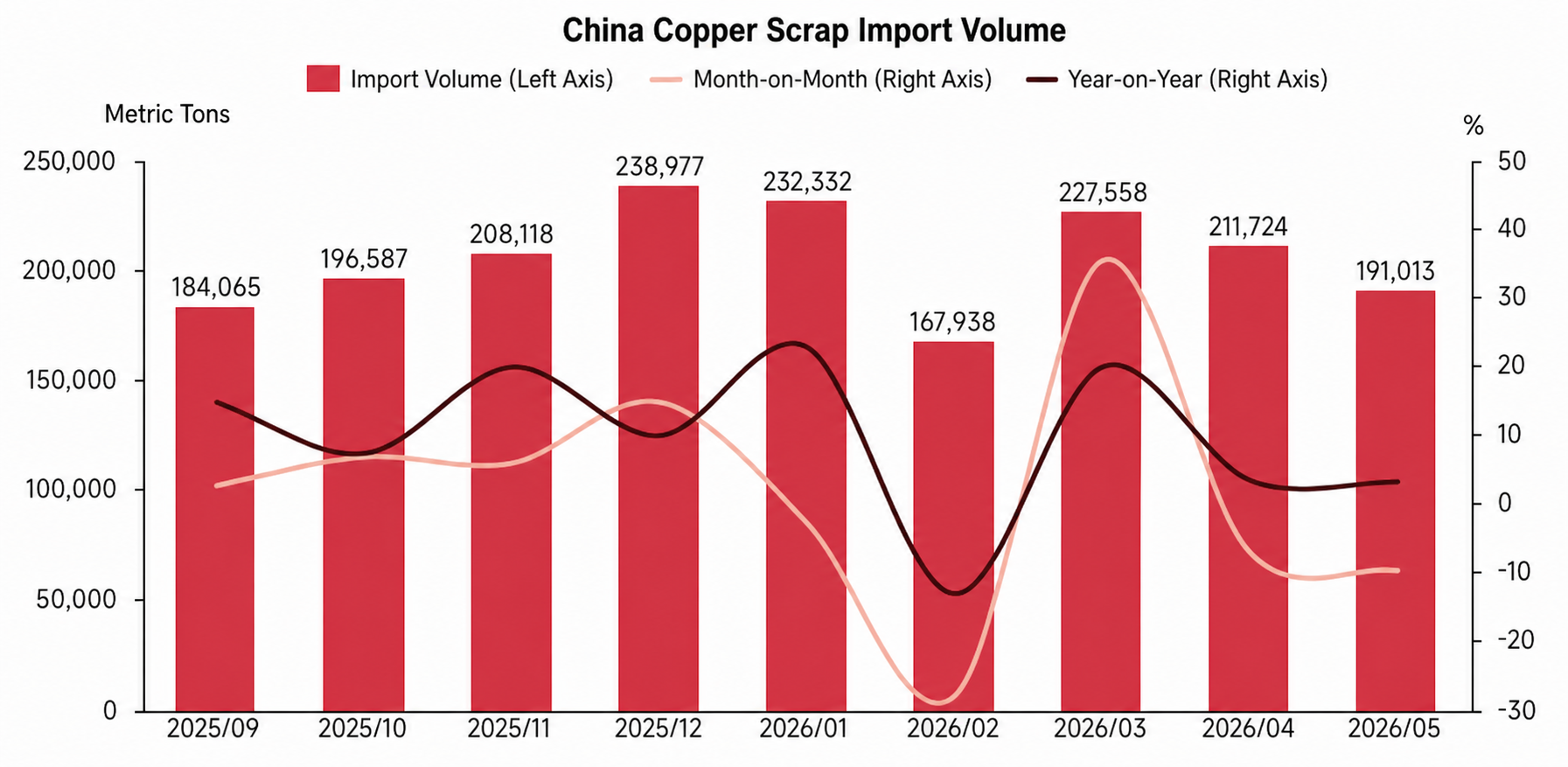
As the world’s largest consumer market for copper scrap, China’s imports have long accounted for approximately one-third of global copper scrap trade volumes. Since the start of 2026, influenced by domestic policies and tax compliance requirements, the circulation and use of untaxed copper scrap in the Chinese market have been restricted, driving domestic enterprises to steadily increase their procurement of imported taxed copper scrap. In H1 2026, China’s copper scrap imports stayed high overall. Except for a temporary pullback in February due to the Chinese New Year holiday and high copper prices, imports in all other months grew compared to the same period in 2025, reflecting that strong rigid demand from the Chinese market for overseas copper scrap continues to provide support.
Outside China, India, Southeast Asia, and some Middle Eastern regions have also been strengthening their capacity to absorb medium- and low-grade copper scrap. After entering these regions, some low-grade scrap is reprocessed through dismantling, crushing, sorting, or smelting, and then flows into local consumption or regional markets. Thus, demand for copper scrap outside China is no longer determined solely by Chinese imports but has gradually evolved into a competitive landscape involving China, India, Southeast Asia, and local markets in exporting countries.
Meanwhile, with expectations of tighter copper supply in the future, global competition for copper scrap resources is intensifying further. Smelters and related industry-chain enterprises in various regions are actively expanding channels for copper scrap resources, and some countries have begun reinforcing the retention of local secondary metal resources. Coupled with the reshoring of manufacturing in Europe and the US driving a rebound in local secondary copper processing and smelting demand, the outflow capacity of copper scrap from traditional exporting regions outside China has weakened to some extent. Under the combined influence of Chinese import demand, local absorption demand outside China, and the trend of resource retention, global copper scrap demand has shown a climbing trend overall.
Copper Scrap Prices
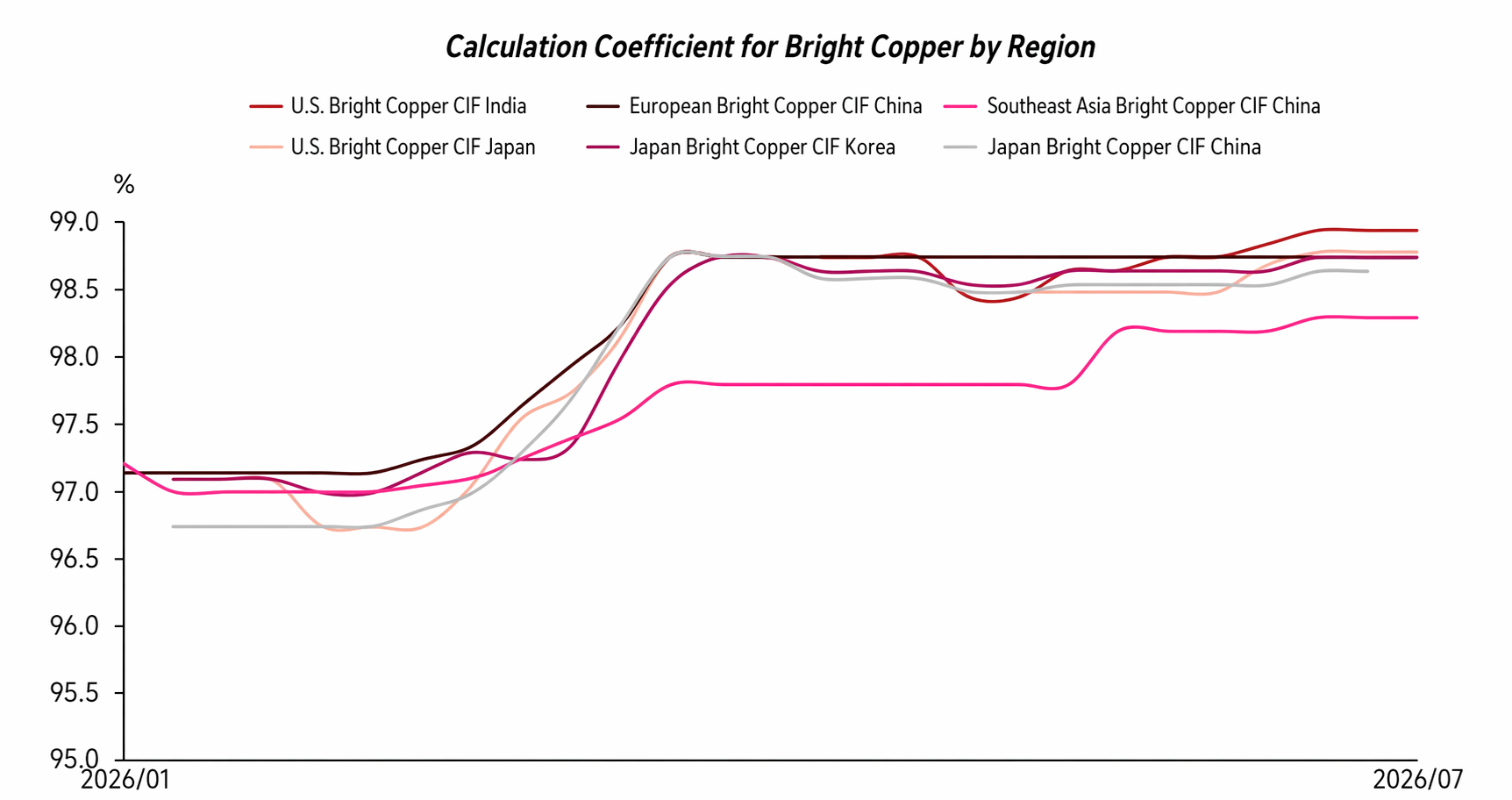
Against the backdrop of tight supply-demand conditions and intensified regional competition, the payable indicator for copper scrap outside China has shown an overall upward trend. Since the start of 2026, copper prices have continued to consolidate at highs, overall quotations for bare bright copper have also been at relatively high levels, and transaction discount rates have mostly stayed around 97.5%–98%. After copper prices saw a phase of pullback in March, the payable indicator for copper scrap climbed further accordingly, and the quotation range for bare bright copper once rose to 98.5%–99%. However, as copper prices ended their pullback and re-entered an uptrend in Q2, even repeatedly breaking historical highs, the payable indicator for copper scrap did not pull back significantly as might have been expected based on past pricing logic, but instead continued to stay high. This shift reflects that, underpinned by tight raw material supply and rigid procurement demand, even with copper prices at high levels, the payable indicator for copper scrap outside China remains highly resilient, with limited downside room for prices.
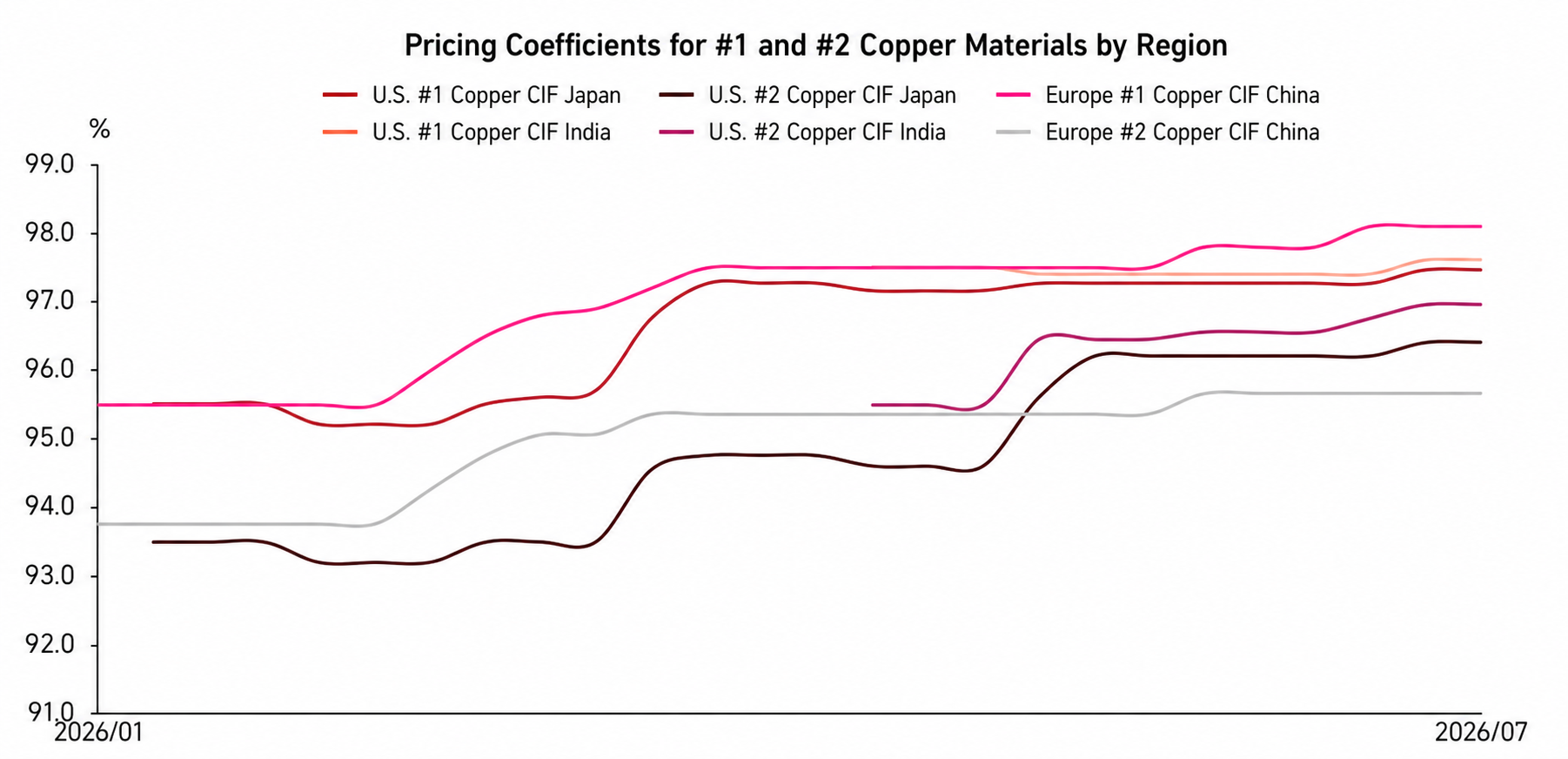
This trend is also reflected in prices for No. 1 copper and No. 2 copper. Since the start of 2026, the transaction discount rate for No. 1 copper has climbed continuously, from around 95.5%–96% at the beginning of the year to the current range of 97%–98%. Prices for No. 2 copper have also risen significantly, and the divergence in current market quotations has intensified further. Due to the continued high precious metal prices, smelters have become significantly more accepting of prices for No. 2 copper with high gold and silver content, with some high precious-metal-content cargoes being quoted as high as 97.5%–98.5%, even exceeding prices of some No. 1 copper.
From the supply structure perspective, No.2 copper semis with high gold and silver content mainly come from the Americas, so the overall quotations for Americas-origin No.2 copper semis are notably higher than those from other regions. In contrast, No.2 copper semis from Japan and South Korea and Southeast Asia, due to generally lower gold and silver content, see relatively pressured price performance, with transaction discounts mostly concentrated in the 95%–96% range. This suggests that the pricing logic in the copper scrap market has undergone a significant shift, no longer simply following the traditional pattern of "copper prices rising, payable indicators pulling back." With tightening raw material supply, intensifying resource competition, and widening structural differences in supply origins, copper scrap prices are increasingly influenced by multiple factors such as copper content, precious metal content, source region, smelting demand, and destination purchasing capacity, further highlighting the trend of price divergence.
Policy Front
The policy front has always been an important variable affecting overseas copper scrap trade. In recent years, as expectations of tight copper supply-demand balance continue to ferment, countries have been attaching increasing importance to copper scrap as a strategic secondary resource, and major economies have been steadily strengthening regulations on scrap metal exports, imports, and local recycling.
Take the EU as an example. It is expected to officially implement new regulatory requirements on scrap metal exports from May 2027. By then, exports of copper scrap to non-OECD countries will need to meet two conditions: the destination country must be on the EU whitelist, and the destination processing plant must pass an independent third-party audit. This policy aims to raise the threshold for scrap metal exports, restrict the outflow of insufficiently processed secondary metal resources, and encourage more copper scrap to remain in Europe for local recycling and utilization. In the US, the copper industry has also advanced the proposal to include copper/secondary copper in the 45X tax credit to the congressional legislative level, hoping to strengthen the competitiveness of domestic manufacturing and secondary copper processing through tax incentives, thereby further enhancing local resource retention.
In addition, as the world's largest consumer market for copper scrap, changes in China's policy front also have a significant impact on the global copper scrap trade landscape. The Chinese market is actively promoting the standardized development of the secondary resource industry. For a long time, when some enterprises purchase domestic copper scrap, the lack of input invoices from upstream collectors has caused difficulties in tax accounting and compliant usage. In recent years, China has been steadily advancing the "reverse invoicing" mechanism, where the purchaser issues invoices to sellers that are unable to do so, in order to complete the input documentation system. However, due to operational difficulties in actual implementation, to meet the requirements for production with tax-inclusive raw materials and compliant operations, some enterprises have further increased their procurement demand for imported tax-inclusive copper scrap, providing strong support for overseas copper scrap demand.
In Southeast Asia, countries represented by Malaysia and Thailand have long served as transit and preliminary processing hubs for low-grade recycled metal raw materials. However, with growing environmental awareness and increasing demand for industrial upgrading, these countries have tightened inspection and supervision of low-end recycled metal raw material imports, and some categories even face stricter restrictions or bans. The aim of such policies is to drive the transformation of domestic industries toward higher value-added segments while reducing environmental pollution and social issues caused by improper handling of low-end recycled metal raw materials. As a result, more low-grade copper scrap may need to undergo more thorough sorting, dismantling, and pre-processing before export, or be redirected to new transit and processing regions, which will further push up compliance and circulation costs in global copper scrap trade.
Overall, the global copper scrap trade will no longer depend solely on price levels but will be increasingly influenced by factors such as policy compliance, environmental requirements, resource retention, and local processing capacity. For traders, being able to consistently supply high-grade, low-impurity shipments with complete compliance documentation will be more competitive than relying solely on low prices.
Outlook for H2 2026
Looking ahead to H2 2026, first, available supply is unlikely to ease significantly. After sustained inventory drawdowns, new scrap releases outside China are limited; coupled with rising local secondary copper processing demand and resource retention intentions in traditional exporting regions such as Europe and the US, exportable supply from ex-China is expected to see limited significant growth. Among them, mainstream categories such as bare bright copper, No.1 copper, and No.2 copper semis will remain tight.
Second, multi-region competition on the demand side will continue to support copper scrap prices. China’s import demand remains a key support for the ex-China copper scrap market, while markets in India, Southeast Asia, Japan and South Korea, and Europe and the US are also strengthening their absorption capacity for copper scrap. Global copper scrap demand will exhibit a multi-region competitive landscape, and competition for resources across regions will also support copper scrap payables, making a sharp decline unlikely.
Against the backdrop of tight supply and intensifying competition for resources, the payable indicator for ex-China copper scrap is expected to stay high in H2. The payables for bare bright copper and No.1 copper will have strong downside support, while No.2 copper semis prices will continue to be influenced by differences in gold and silver content, origin regions, and smelting demand, maintaining a clear divergence in quotes.
Furthermore, high copper prices will continue to elevate trade risks. As copper prices fluctuate at highs, per-shipment cargo values rise correspondingly, increasing traders’ capital occupancy, exposure to exchange rate fluctuations, and costs for logistics, warehousing, inspection, and compliance. Therefore, even with rigid demand support in the market, actual transactions may become more cautious, and buyers and sellers will pay increasing attention to price lock-in, quality stability, and shipment cycles.
Overall, the overseas copper scrap market in H2 2026 is expected to maintain its keynote of “tight supply, high discount rates, price divergence, and rising trade costs.”
![2026 China's Copper Anode Market H1: Supply Contraction Reverses the Pattern [SMM Analysis]](https://imgqn.smm.cn/usercenter/YIaMU20251217171711.jpg)
![2026 China Copper Foil Industry Half-Year Summary and Outlook [SMM Analysis]](https://imgqn.smm.cn/usercenter/kvwSZ20251217171710.jpg)
![[SMM Analysis] Indonesia's May Sulphur and Sulphuric Acid Import and Export Data](https://imgqn.smm.cn/usercenter/BdFZr20251217171712.jpg)