SMM, June 30:
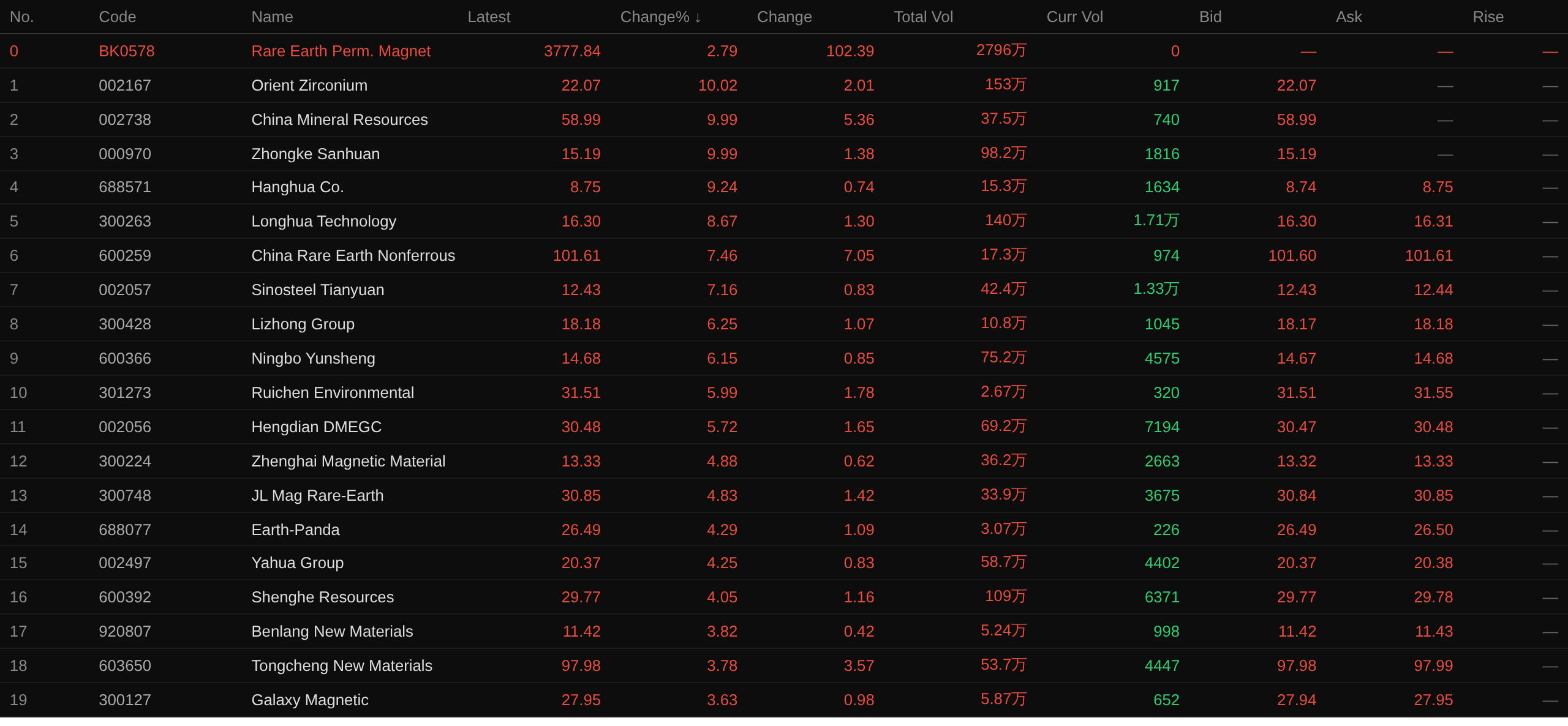
Although market procurement demand remained mediocre, spot prices for Pr-Nd oxide recorded a second consecutive increase, supported by fluctuations in futures, difficulty in finding low-priced cargo in the market, some large manufacturers entering procurement, and a MoM decline of about 6% in Pr-Nd oxide production in June. On the demand side, long-term demand expansion expectations in the new energy industry chain such as robotics, along with the upcoming Q3 downstream concentrated procurement season in China and rising market expectations for subsequent demand recovery, bolstered the rare earth permanent magnet concept to strengthen on June 30, with the concept rising 2.79% by the close on June 30. In terms of individual stocks: Dongfang Zirconium Industry, Sinomine Resource Group, and Zhong Ke San Huan hit the daily limit up, while Hanghua Co., Ltd., Longhua Co., Ltd., Zhongxi Nonferrous, Sinosteel NMC, and Ningbo Yunsheng led the gains.
Pr-Nd Oxide Spot Prices See Second Consecutive Increase; June Production Declines MoM
In the spot market, on June 30, the average price of Pr-Nd oxide extended its upward trend from the previous trading day, rising another 0.68%.
Currently, overall prices in the rare earth market remain stable. The increase in Pr-Nd oxide futures prices drove a simultaneous rise in supplier spot offers, making low-priced oxides hard to find in the market. However, metal enterprises were cautious in procurement due to unsatisfactory inquiries for metals, leading to generally moderate market trading activity. In the metal market, inquiry activity picked up slightly on the afternoon of the 30th, mainly driven by tender procurement from major magnetic material manufacturers, but most magnetic material enterprises remained on the sidelines, resulting in overall poor transactions. In the short term, Pr-Nd product prices may move sideways without significant improvement in downstream demand.
On the supply side, further providing price support logic: in terms of production, according to SMM's latest survey, overall rare earth oxide production declined MoM in June, with Pr-Nd oxide seeing the most prominent decrease, shrinking approximately 6% MoM.
Institutional Views
SDIC Securities emphasized that heavy rare earths are accelerating inventory depletion due to a cliff-like decline in imports from Japan, opening a window for domestic substitution, with prices of dysprosium oxide and terbium oxide rebounding strongly. Materials such as AI high-capacity MLCCs, high-end ceramic substrates, and dental zirconia all require the addition of heavy rare earths. Growing demand combined with hard supply constraints is driving the price centers of both light and heavy rare earths upward together. Meanwhile, inflation trends in AI upstream materials such as MLCC dielectric powder, Low CTE electronic fabrics, M9 copper foil, and tantalum metals are clear, and the medium and long-term outlook is positive for the allocation value of strategic metals like rare earths, tungsten, copper, tin, molybdenum, antimony, germanium, gallium, tantalum, niobium, uranium, rhenium, and lithium.
A research report from China Securities stated that domestic dental zirconia enterprises have confirmed "receipt of a notice from Japan's Tosoh Corporation regarding the suspension of zirconia powder supply," marking a shift in raw material shortages from expectations to reality following overseas rare earth supply restrictions. Yttria-stabilized nano zirconia (YSZ) is a high-performance ceramic material with yttrium oxide added as an additive. Due to restricted rare earth supply outside China, the price spread between Chinese and overseas markets has reached hundreds of times at its peak. The domestic price spread for yttrium oxide between Chinese and overseas markets is huge. Rare earths are indispensable additives for high-end materials and high-end manufacturing. As overseas rare earth supply tightens and the price spread between Chinese and overseas markets widens, domestic high-end materials containing rare earths are expected to gain a larger share of the global market, benefiting the upstream, midstream, and downstream segments of the rare earth industry chain.
Recommended reading: