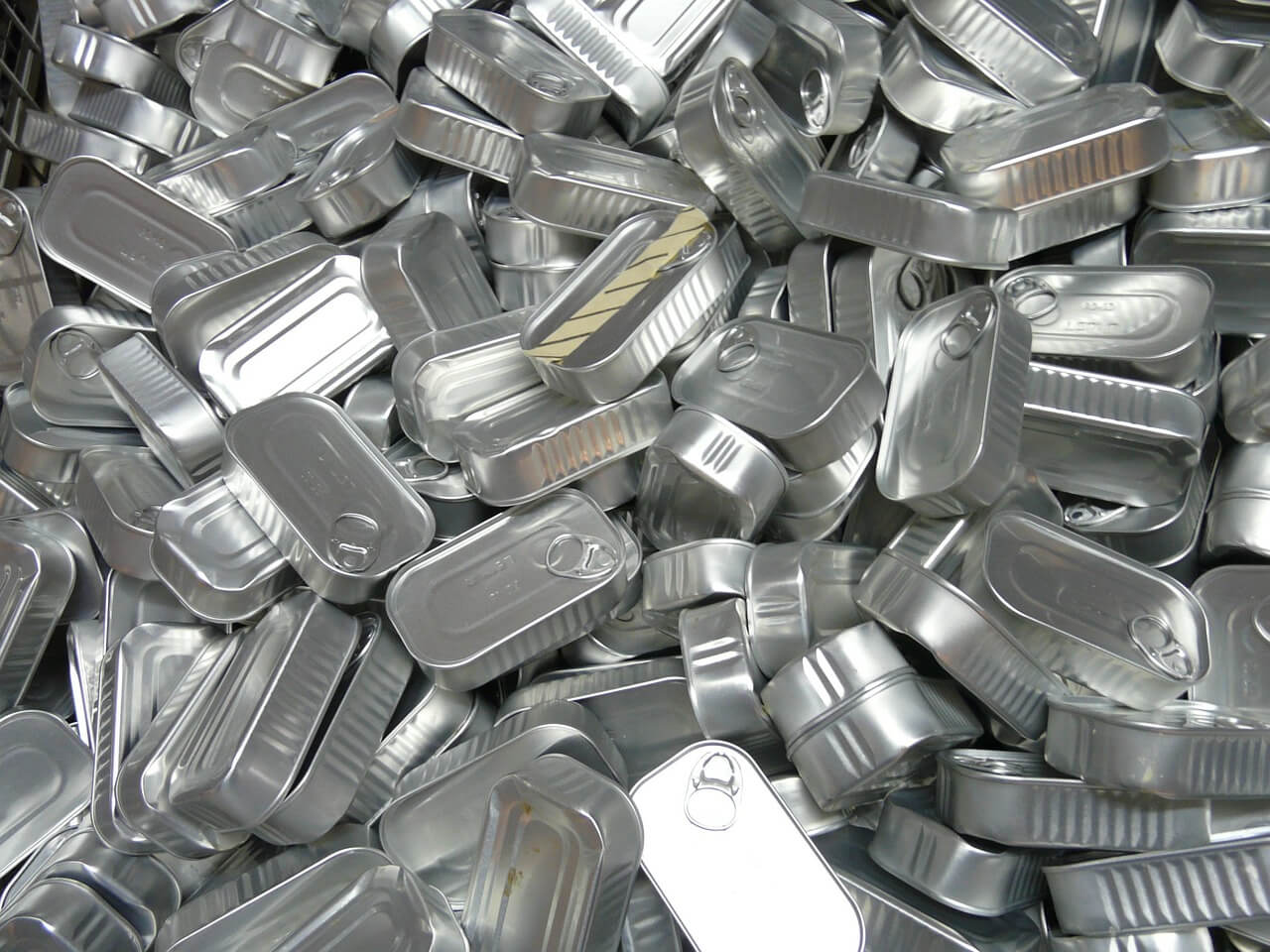
Pasar berjangka: Pada bulan Mei, kontrak paduan aluminium cor yang paling banyak diperdagangkan berfluktuasi liar dengan pusat harga bergerak lebih rendah. Kontrak diperdagangkan dalam kisaran 22.800–23.800 yuan/mt sepanjang bulan, berulang kali mundur setelah kenaikan cepat dan menyentuh dasar, gagal membentuk tren satu arah. Rata-rata bergerak secara bertahap menyatu, dan kontrak tetap bergerak dalam kisaran secara keseluruhan.
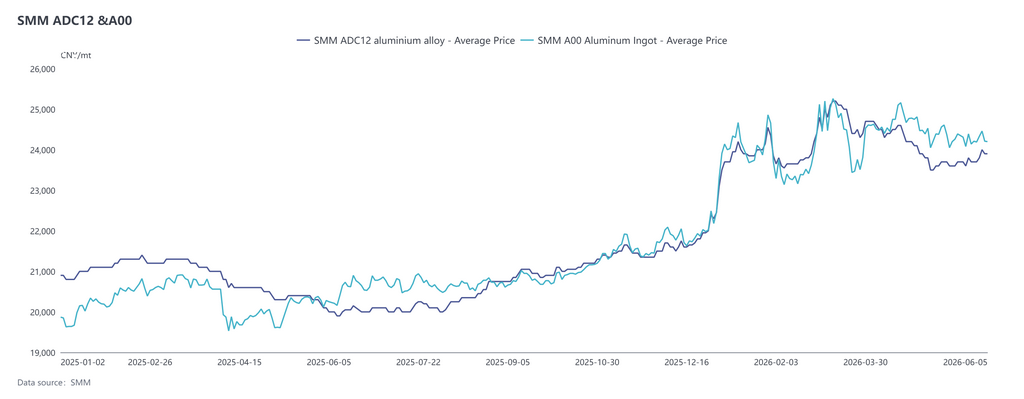
Pasar spot: Di awal bulan, terseret oleh libur Hari Buruh dan musim sepi, harga ADC12 tertekan dan turun. Di pertengahan dan akhir bulan, kebijakan yang terus diperketat memperkuat ekspektasi kelangkaan bahan baku dan pemangkasan produksi, memperkuat dukungan di level bawah. Harga spot bergerak mendatar di sekitar 23.700 yuan/mt. Pusat harga bergeser lebih tinggi di bulan Juni. Per 5 Juni, SMM ADC12 tercatat pada 23.900 yuan/mt, naik 100 yuan/mt dari awal Mei.
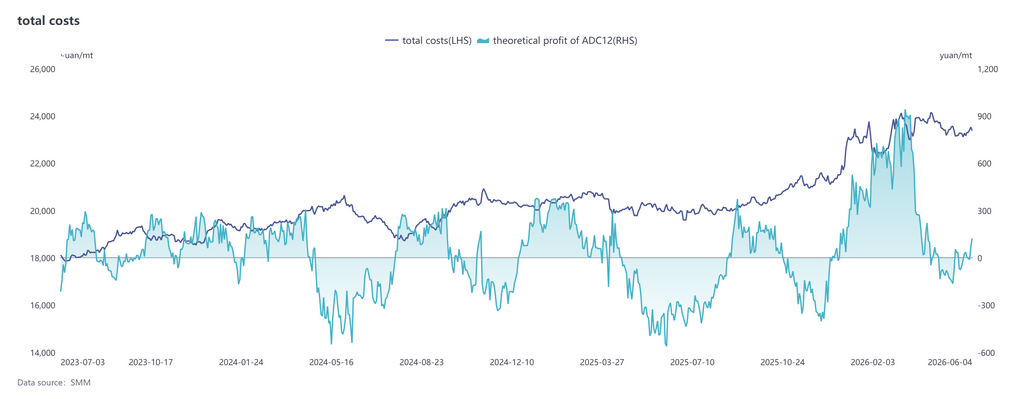
Dari sisi biaya, menurut data SMM terbaru, total biaya teoretis industri ADC12 dari Januari hingga Mei 2026 meningkat 14,0 poin persentase dari 2025 menjadi 23.305 yuan/mt. Berdasarkan komponen, biaya skrap aluminium sekitar 21.070 yuan/mt, menyumbang 90,4%; biaya tembaga 836 yuan/mt, 3,6%; dan biaya silikon 475 yuan/mt, 2,1%. Pangsa biaya skrap aluminium dan tembaga terus meningkat, sementara biaya silikon melanjutkan penurunannya. Sejak Mei, sisi bahan baku secara keseluruhan tetap ketat, menjadi faktor inti pendukung pasar. Meskipun harga skrap aluminium berfluktuasi mengikuti harga aluminium, penurunan aktual terbatas oleh pemasok yang menahan penjualan. Harga skrap aluminium di luar Tiongkok tetap tinggi, membuat jendela impor tertutup untuk waktu yang lama dan secara signifikan melemahkan peran tambahannya bagi pasar Tiongkok. Pada saat yang sama, regulasi terhadap 'ekonomi berbasis faktur' terus diperketat, membuat perolehan faktur masukan semakin sulit. Beban pajak dan biaya kepatuhan perusahaan secara pasif meningkat, menyebabkan laba teoretis industri menjadi negatif. Pasokan faktur yang ketat dan pengawasan kepatuhan yang lebih ketat tidak mungkin mereda dalam jangka pendek. Biaya pengadaan skrap aluminium dan beban pajak diperkirakan tetap tinggi di bulan Juni.
Sisi permintaan, pada bulan Mei, pasar terus menunjukkan karakteristik musim sepi. Pesanan dari perusahaan pengecoran tekan hilir tetap lesu, pengadaan terutama berdasarkan kebutuhan pokok dan dalam jumlah kecil, dan keinginan untuk memburu pembelian di tengah kenaikan harga tidak mencukupi, menjaga aktivitas perdagangan pasar tetap rendah sepanjang waktu. Konsumsi penggunaan akhir hanya menunjukkan sedikit perbaikan nyata, dengan sisi permintaan terus menekan ruang kenaikan harga.
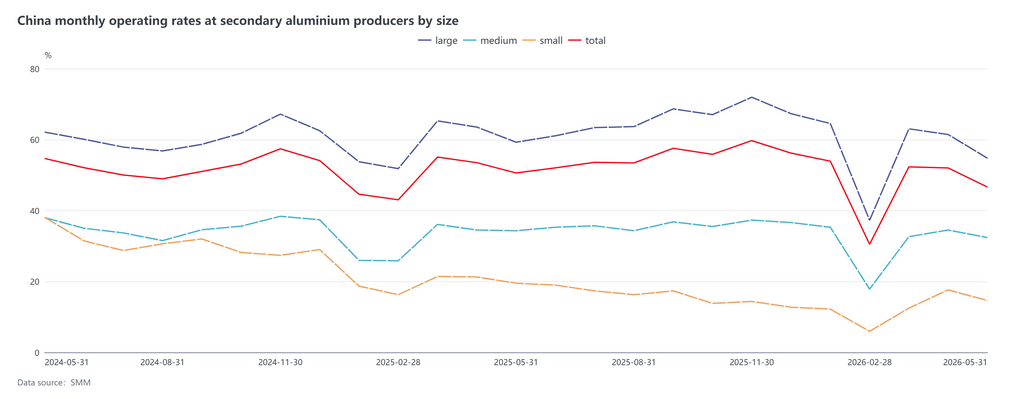
Sisi pasokan, pada bulan Mei, tingkat operasi industri paduan aluminium sekunder adalah 46,6%, turun 5,4 poin persentase MoM dan turun 4,0 poin persentase YoY. Produksi perusahaan umumnya menyusut, terutama karena dua faktor bearish. Pertama, libur Hari Buruh disertai dengan melemahnya permintaan penggunaan akhir menyebabkan penyusutan pesanan. Kedua, regulasi yang lebih ketat terhadap "faktur balik" meningkatkan biaya kepatuhan daur ulang skrap aluminium, membuat pasokan dengan faktur menjadi ketat, dan perusahaan menghadapi dilema "kekurangan faktur" dan kerugian. Tingkat operasi di bulan Juni diperkirakan melanjutkan tren penurunannya, terutama dibatasi oleh melemahnya permintaan di musim sepi dan biaya kepatuhan kebijakan yang tinggi.
Memasuki Juni, harga paduan aluminium sekunder akan tetap stabil secara umum dengan sedikit kenaikan. Dari sisi biaya, pasokan faktur yang ketat dan pengawasan kepatuhan yang lebih ketat tidak mungkin mereda secara signifikan dalam jangka pendek, dan biaya beban pajak perusahaan diperkirakan tetap tinggi. Dari sisi pasokan, jika kekurangan faktur dan ketatnya pasokan bahan baku terus meningkat, cakupan pemangkasan produksi di industri akan semakin meluas. Ditambah dengan terus tertutupnya jendela impor, pola pasokan spot yang ketat diperkirakan akan bertahan, memberikan dukungan kuat bagi harga. Dari sisi permintaan, pola musim sepi berlanjut, dengan hilir didominasi oleh pengadaan tepat waktu, sehingga momentum kenaikan tidak mencukupi. Namun, pengetatan pasokan mengimbangi tekanan musim sepi, membatasi ruang penurunan harga. Secara keseluruhan, pusat harga ADC12 di bulan Juni diperkirakan naik dibandingkan Mei, menunjukkan tren stabil secara umum dengan sedikit kenaikan dan bergerak dalam kisaran. Ke depan, perhatian harus diberikan pada perubahan pasokan bahan baku yang patuh, implementasi pemangkasan produksi di industri, dan laju pemulihan permintaan penggunaan akhir.
![Dukungan Biaya ADC12 Berlanjut, Permintaan Pra-Liburan Sedikit Meningkat [Tinjauan Mingguan Skrap Aluminium dan Aluminium Sekunder]](https://imgqn.smm.cn/usercenter/XUnxM20251217171723.jpeg)
![Tingkat operasi terus meningkat, produksi tetap tinggi, dan pola penumpukan inventaris alumina kemungkinan tidak akan berubah dalam jangka pendek [Tinjauan Mingguan Alumina SMM]](https://imgqn.smm.cn/usercenter/EVjRH20251217171653.jpg)
![Survei Libur Hari Nasional 2026 tentang Penghentian Operasi Perusahaan Pengolahan Aluminium – Ekstrusi Aluminium [Analisis SMM]](https://imgqn.smm.cn/usercenter/RLjGN20251217171652.jpg)