
Hợp đồng tương lai thép không gỉ chuẩn của Trung Quốc tăng vọt lên mức cao nhất kể từ năm 2023 trong tuần giao dịch cuối cùng trước kỳ nghỉ lễ 1/5, được thúc đẩy bởi hàng loạt gián đoạn nguồn cung nguyên liệu thô chủ chốt. Tuy nhiên, đà tăng chưa tìm được sự hỗ trợ thuyết phục từ nhu cầu thực tế, tạo tiền đề cho một phiên mở cửa trở lại đầy biến động.
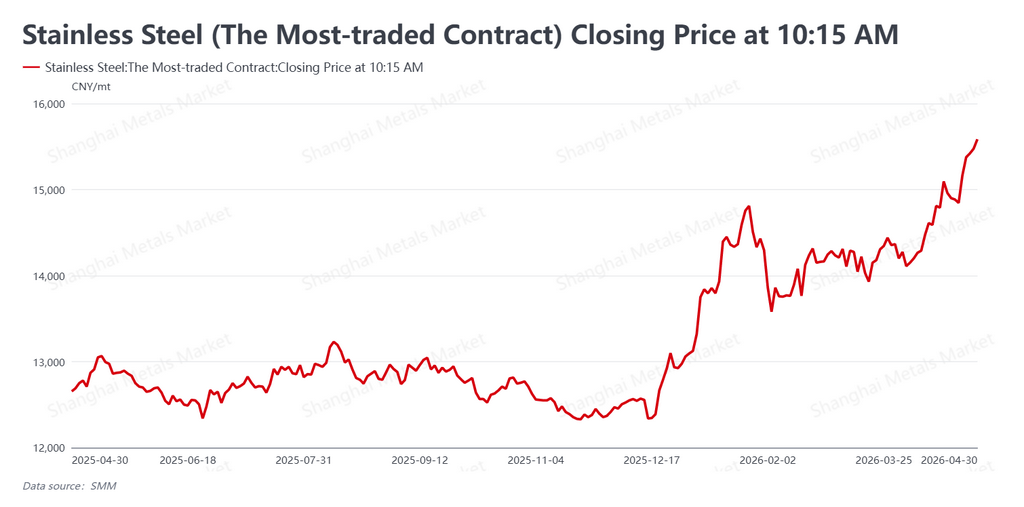
Hợp đồng thép không gỉ giao dịch nhiều nhất trên SHFE (SS2606) đóng cửa ở mức khoảng 2.278 USD/tấn (15.585 NDT/tấn) vào ngày 30/4, tăng khoảng 61 USD/tấn (420 NDT/tấn) trong tuần. Biến động này gần như hoàn toàn do yếu tố đẩy chi phí — gián đoạn đột ngột nguồn cung phế liệu và việc cắt giảm sản lượng của một nhà sản xuất niken-coban lớn — chứ không phải do cải thiện tiêu thụ hạ nguồn.
Bối cảnh vĩ mô: nội địa tích cực, bên ngoài thận trọng
Môi trường vĩ mô cho thấy bức tranh trái chiều. Trong nước, Cục Thống kê Quốc gia Trung Quốc báo cáo lợi nhuận doanh nghiệp công nghiệp quy mô lớn tăng 15,5% so với cùng kỳ trong quý I, củng cố câu chuyện phục hồi sản xuất vững chắc. Dữ liệu thu thuế từ Bộ Tài chính cũng phản ánh xu hướng tương tự.
Bên ngoài, bức tranh kém hỗ trợ hơn. Fed giữ nguyên lãi suất như dự kiến, nhưng ý kiến bất đồng theo hướng diều hâu từ ba thành viên bỏ phiếu — báo hiệu phản đối cắt giảm trong ngắn hạn — cùng bất ổn địa chính trị đang gây áp lực lên định giá kỳ hạn của hàng hóa nói chung. Tuy nhiên hiện tại, câu chuyện nguồn cung nội địa Trung Quốc đang lấn át các trở ngại bên ngoài.
Đà tăng hợp đồng tương lai vượt xa thị trường hiện vật
Bất chấp biến động mạnh trên sàn tương lai, thị trường giao ngay cho thấy câu chuyện thận trọng hơn. Theo SMM (Shanghai Metals Market), tổng tồn kho thị trường giảm nhẹ xuống 945.900 tấn trong tuần, giảm khiêm tốn 3.500 tấn. Giảm tồn kho tiếp tục nhưng với tốc độ chậm chạp.
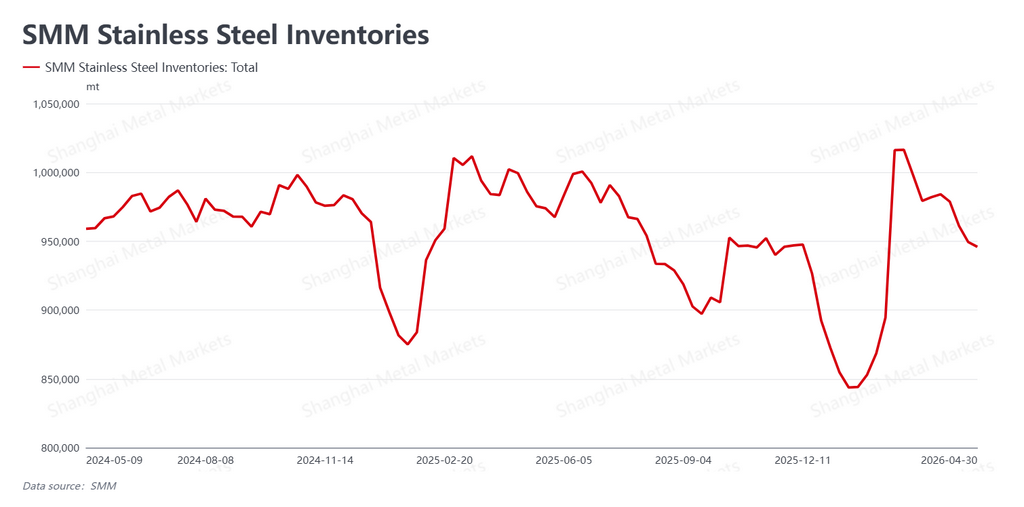
Đáng chú ý hơn, giao dịch thực tế yếu. Giá tương lai tăng quá nhanh khiến giá giao ngay không theo kịp, và khi chênh lệch giá nới rộng, người mua hạ nguồn phần lớn chọn đứng ngoài. Ngoài đợt mua ngắn đầu tuần, khối lượng giao dịch suy giảm. Các hoạt động gia công — cắt xẻ, cán phẳng và các trung tâm dịch vụ khác — báo cáo kinh doanh trầm lắng, không có dấu hiệu tích trữ trước kỳ nghỉ vốn đặc trưng của cuối tháng 4. Thanh khoản giao ngay hiện có chủ yếu do giao dịch chênh lệch cơ sở thay vì nhu cầu thực từ người dùng cuối.
Tóm lại, hợp đồng tương lai đã phản ánh kịch bản tăng giá nguyên liệu mà thị trường hiện vật chưa xác nhận.
Động lực thực sự: cú sốc nguồn cung nguyên liệu
Biến động giá trong tuần được neo bởi hai diễn biến phía chi phí.
Thứ nhất, thị trường phế liệu thép không gỉ Trung Quốc ngày càng thắt chặt. Các biện pháp kiểm soát hóa đơn và tuân thủ thuế nghiêm ngặt hơn đối với giao dịch phế liệu đang gây lo ngại trung và dài hạn về nguồn cung phế liệu, đẩy các nhà máy Trung Quốc tăng phụ thuộc vào Gang Niken (NPI) làm nguyên liệu thay thế.
Thứ hai — và tác động trực tiếp hơn — một nhà sản xuất niken-coban hàng đầu Trung Quốc thông báo tạm ngừng sản xuất một phần hoạt động từ ngày 1/5, viện dẫn chi phí vật liệu phụ trợ tăng và áp lực từ tỷ lệ vận hành cao kéo dài. Việc ngừng hoạt động dự kiến ảnh hưởng khoảng 50% sản lượng công ty. Điều này phát tín hiệu thu hẹp nguồn cung rõ ràng qua toàn bộ chuỗi nguyên liệu.
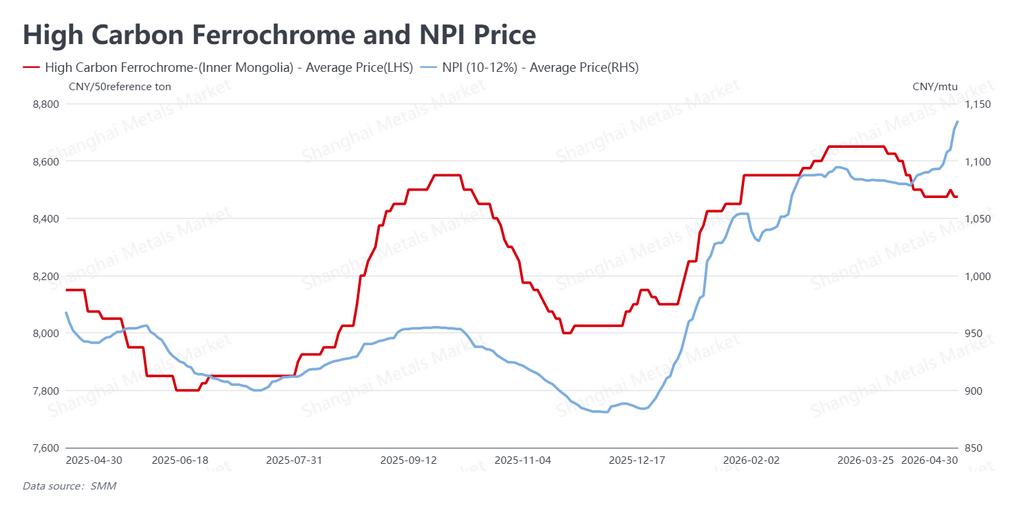
Đáp lại, giá chào NPI tăng lên khoảng 166 USD/điểm niken (1.135 NDT/điểm Ni) trong tuần. Ferrochrome carbon cao giữ ổn định ở khoảng 1.239 USD/50 tấn cơ sở (8.475 NDT/50 tấn cơ sở). Sự dịch chuyển lên của sàn chi phí tạo neo cơ bản cho đà tăng tương lai, dù nhu cầu giao ngay vẫn tụt lại.
Triển vọng: kỳ vọng chi phí so với thực tế nhu cầu
Thị trường thép không gỉ Trung Quốc khép lại tháng 4 — vốn được gọi là "Tháng Tư Bạc" — trên nền tảng vững chắc, được hỗ trợ bởi sự hội tụ của hạn chế nguồn cung phế liệu và cắt giảm sản xuất tại một nhà sản xuất thượng nguồn lớn. Các yếu tố này đã nâng đáng kể kỳ vọng chi phí ngắn hạn.
Nhưng sự chênh lệch giữa giá tương lai cao và nhu cầu giao ngay yếu tạo ra căng thẳng cần được giải quyết. Khi giao dịch nối lại sau kỳ nghỉ 1/5, thị trường đối mặt bài kiểm tra rõ ràng: liệu người mua thực tế có thể hấp thụ hàng ở mức giá cao hơn, hay thiếu sự theo đuổi từ hạ nguồn sẽ buộc phải điều chỉnh?
Đối với các bên tham gia ngành, rủi ro chính khi bước vào tháng 5 là biến động giá cao tại các mức đỉnh hiện tại. Cần theo dõi sát mức độ nhanh — hay chậm — mà người dùng cuối bắt đầu tiếp nhận hàng giá cao trên thị trường hiện vật. Cho đến khi điều đó xảy ra, đà tăng vẫn là biến động do chi phí đẩy đang tìm kiếm xác nhận từ phía nhu cầu.
Tác giả: Bruce Chew
Chuyên viên phân tích Niken & Thép không gỉ, Shanghai Metals Market
Email: bruce.chew@metal.com
ĐT: +601167087088
![[SMM Analysis] Nhu cầu mua ngoài từ hạ nguồn yếu; giá muối niken giảm trong tuần này](https://imgqn.smm.cn/usercenter/KFwsY20251217171734.jpg)
![[SMM Nhận định giữa phiên về niken] Giá niken phục hồi đáng kể vào ngày 3 tháng 9. Dữ liệu việc làm ADP tháng 8 của Mỹ yếu bất ngờ, phần nào hạ nhiệt kỳ vọng tăng lãi suất vào tháng 9.](https://imgqn.smm.cn/usercenter/qLeLR20251217171733.jpg)