

26 января 2026 года
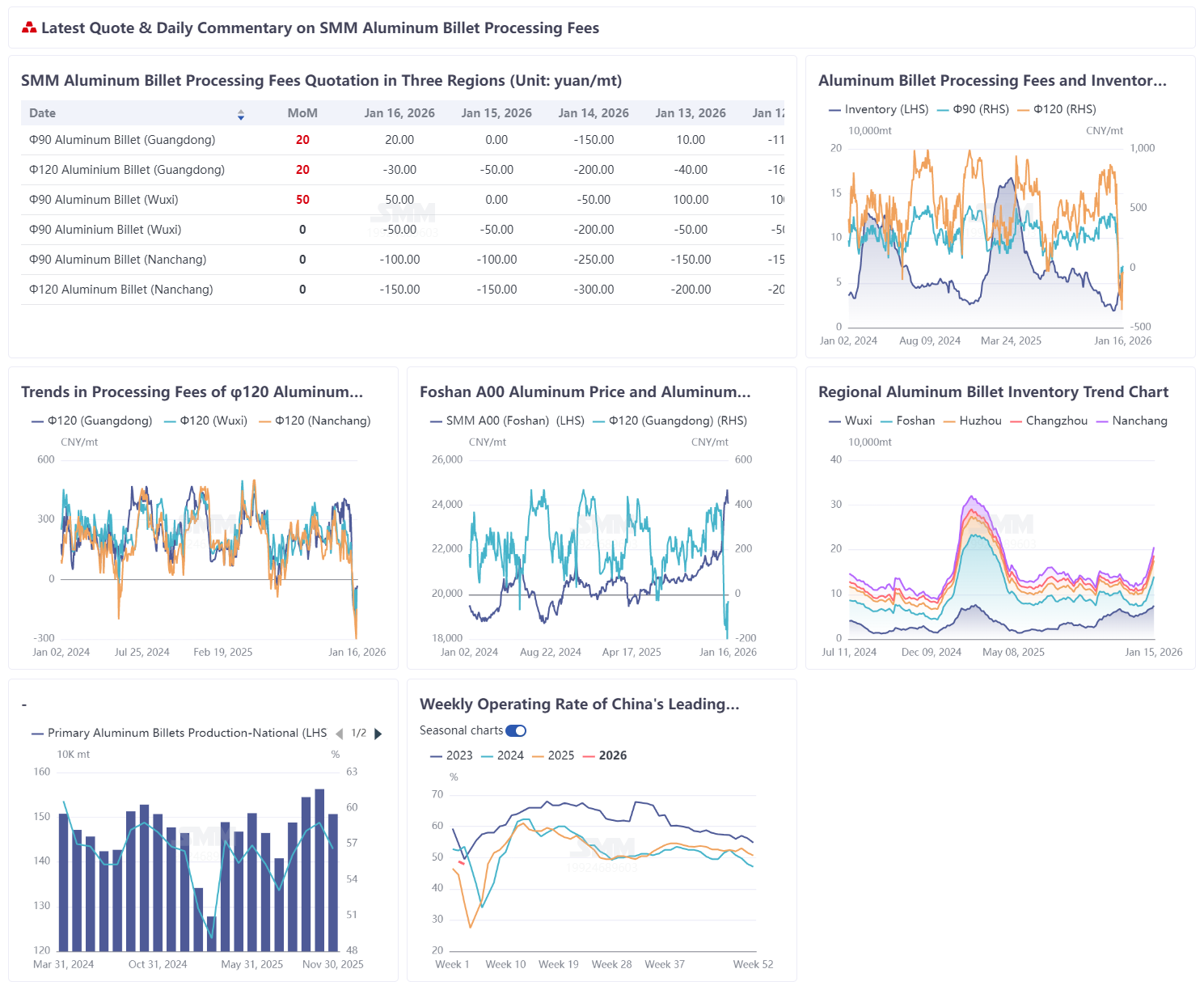
5 января 2026 года, в первый торговый день после новогодних праздников, цена алюминия SMM A00 подскочила на 850 юаней за тонну за один день, превысив максимальное суточное повышение за любой день 2025 года. В результате плата за обработку алюминиевых слитков по регионам быстро снизилась, в целом на 0–160 юаней за тонну, но осталась выше нулевой отметки. Однако на следующий день, 6 января 2026 года, цена алюминия взлетела ещё на 600 юаней за тонну, положив начало экстремальной рыночной тенденции, которая продлилась почти две недели — плата за обработку алюминиевых слитков опустилась ниже нуля и ушла в отрицательную зону.
На фоне того, что себестоимость производства алюминиевых слитков обычно составляла 200–300 юаней за тонну, почему возникли «отрицательные сборы за обработку»? Действительно ли производители работали «из любви к искусству», соглашаясь на убытки? Чтобы понять эту аномалию, необходимо проанализировать ситуацию с точек зрения как производителей алюминиевых слитков, так и трейдеров.
Во-первых, с точки зрения производителей алюминиевых слитков их можно разделить на два типа:
Один тип — это предприятия с собственной мощностью по производству алюминия, способные напрямую использовать самопроизведённый жидкий алюминий для литья слитков; другой тип нуждается во внешних закупках алюминия в качестве сырья, как правило, используя модель расчёта «среднемесячная цена алюминия + дисконт на местный жидкий алюминий».
Для первых, по расчётам SMM, текущие общенациональные взвешенные полные затраты на алюминий составляют приблизительно 16 000–16 500 юаней за тонну. Исходя из цены алюминия A00 после праздников, прибыль за тонну достигает 7 000–8 500 юаней. Даже после вычета затрат на обработку в 200–300 юаней за тонну остаётся существенная прибыль. Следовательно, у этих предприятий есть сильный стимул снижать плату за обработку, чтобы ускорить продажи, быстро вернуть средства и зафиксировать прибыль.
Для вторых (закупающих сырьё извне) ситуация сложнее. Если на заводских складах находятся алюминиевые слитки, произведённые в период с 26 ноября 2025 года по 25 декабря 2025 года, рассчитанные по средней цене SMM A00 на тот момент в 21 800 юаней за тонну, то даже без хеджирования при текущих высоких ценах на алюминий уже сформировалась скрытая прибыль в 1 500–2 800 юаней за тонну. Из-за давления необходимости реализовать прибыль эти предприятия также склонны активно снижать плату за обработку и быстро распродавать запасы. Для новых слитков, произведённых в январе, рентабельность остаётся неопределённой и будет зависеть от итоговой среднемесячной цены в период с 26 декабря 2025 года по 25 января 2026 года. Однако под двойным давлением нехватки денежных средств и накопления запасов производители всё равно выбирают следование рыночному ритму и дальнейшее снижение платы за обработку, чтобы смягчить давление на финансовый оборот.
Во-вторых, с точки зрения трейдеров их действия также способствовали формированию отрицательной платы за обработку.
На рынке в основном представлены три типа типичных трейдеров:
Трейдеры, принимающие поставки по модели «среднемесячная цена + фиксированная плата за обработку»: их логика схожа с логикой производителей, закупающих сырьё извне. Если хеджирование проведено не полностью, то низкозатратные запасы с более раннего периода при текущей высокой базовой цене принесли значительную прибыль от спреда, поэтому они стремятся реализовать прибыль;
Трейдеры, принимающие спотовые заказы и одновременно хеджирующие фьючерсами: эти участники после ухода комиссии за обработку в отрицательную зону активно скупали низкозатратные запасы, фиксируя риски на фьючерсном рынке, и ожидали восстановления комиссии для продажи с целью получения ценовой разницы;
Спекулятивные трейдеры, действующие в одностороннем порядке без хеджирования: их стратегия относительно проста — накопление запасов по низким ценам перед праздниками и продажа по высоким после, извлечение прибыли из спотовой разницы благодаря росту цен на алюминий.
В итоге, устойчивые отрицательные комиссии за обработку алюминиевых слитков обусловлены не только дисбалансом спроса и предложения, но и результатом коллективной реализации прибыли множеством участников и ускорения оборота денежных средств в условиях высокодоходного фона.
Когда завершится этот раунд «отрицательных комиссий за обработку»?
В настоящее время начинают появляться признаки восстановления. По состоянию на 16 января 2026 года комиссии за обработку алюминиевых слитков в Фошане составили -30/20 юаней/т, увеличившись на 20 юаней/т по сравнению с предыдущим днём; в Уси — -50/50 юаней/т (для слитков φ90), рост на 50 юаней/т; в Наньчане комиссии сохранились на уровне -150/-100 юаней/т, оставаясь стабильными. Хотя показатели остаются отрицательными, комиссии в различных регионах в целом выросли на 150–170 юаней/т с предыдущих минимумов, постепенно приближаясь к нулевой отметке.
По мере постепенного поглощения рынком высокодоходных запасов стремление участников к фиксации прибыли ослабнет. В сочетании с непрерывным снижением операционной загрузки производителей алюминиевых слитков и сокращением нового предложения темпы накопления запасов, как ожидается, замедлятся. Под влиянием как продавцов, так и покупателей комиссии за обработку, вероятно, вернутся к reasonable диапазону 0–200 юаней/т в ближайшей перспективе.
![Цены на алюминий теряют поддержку скользящей средней, находятся под давлением и откатываются; предложение и спрос на глинозём остаются слабыми [Краткий комментарий SMM по фьючерсам на алюминий]](https://imgqn.smm.cn/usercenter/PerRJ20251217171650.jpg)