[SMM Analysis] Downstream Producers Cut Output to Cope with Record-high Copper Prices

Published: Dec 26, 2025 20:04
Source: SMM
Copper prices surged significantly, leaving downstream semi-finished copper product enterprises generally facing challenges such as high costs, pressured processing fees, and shrinking profits. Struggling to survive under pressure from both sides—continuously rising raw material costs and persistently difficult-to-increase processing fees—these enterprises are caught in a difficult situation.

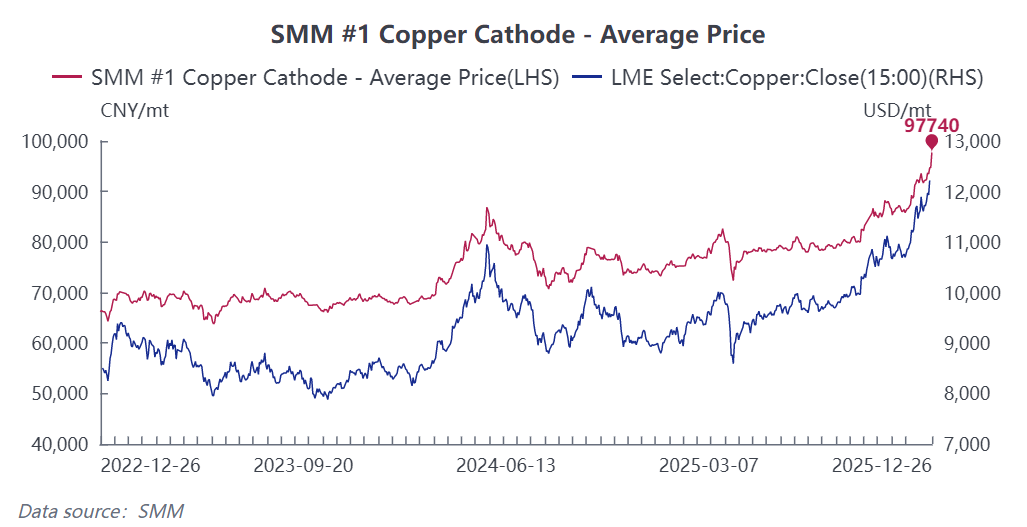
This round of sharp copper price increases resulted from ore supply tightness, the reshaping of global copper cathode trade, the emergence of new demand, and macro-financial resonance. As of December 26, 2025, the SMM spot copper price reached 97,740 yuan/mt, up 33% from the beginning of the year; by the close of that day, the most-traded SHFE copper contract closed at 98,720 yuan/mt, up 34.7% from the start of the year. Downstream semi-finished copper product enterprises generally face challenges such as high costs, pressured processing fees, and shrinking profits. Under pressure from both "continuously rising raw material costs and persistently difficult in raising processing fees," they are struggling to survive. Below are the core reasons for the rise in copper prices and the impact of high copper prices on downstream processing enterprises:

Supply Side: Expanding Ore Supply Deficit and Imbalanced Copper Cathode Inventory Distribution Spark Supply Concerns

1. Frequent disruptions at mines: Incidents such as the accident at Chile's El Teniente mine, the mudslide at Indonesia's Grasberg, and the mine earthquake in the DRC have increased the global mine disruption rate. According to SMM data, the YoY growth rate of global sulfide ore production in 2025 was only 0.13%, significantly lower than the demand growth rate. Additionally, mine grades continue to decline, and the cycle for new mine capacity has extended to 7-8 years. Global copper concentrate supply and demand are expected to remain tight over the next 3-4 years.

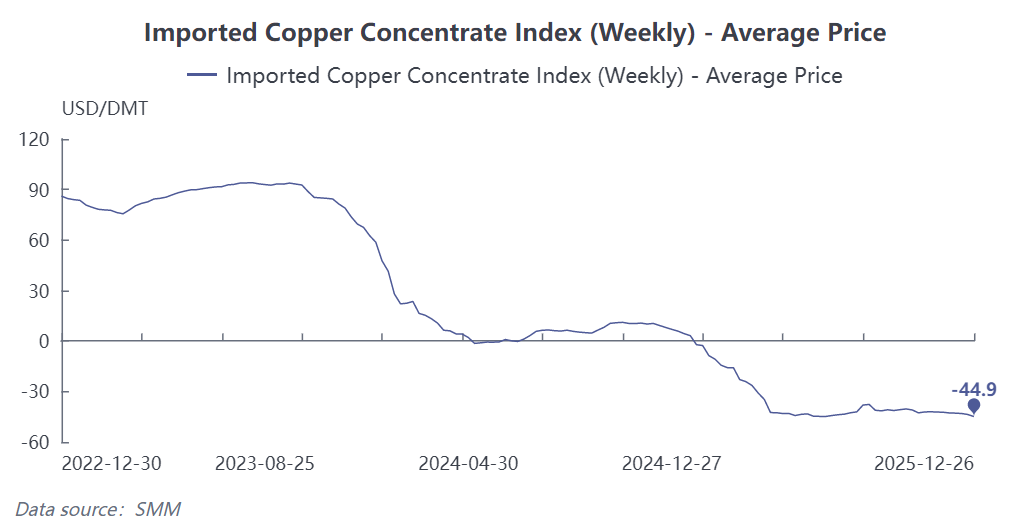
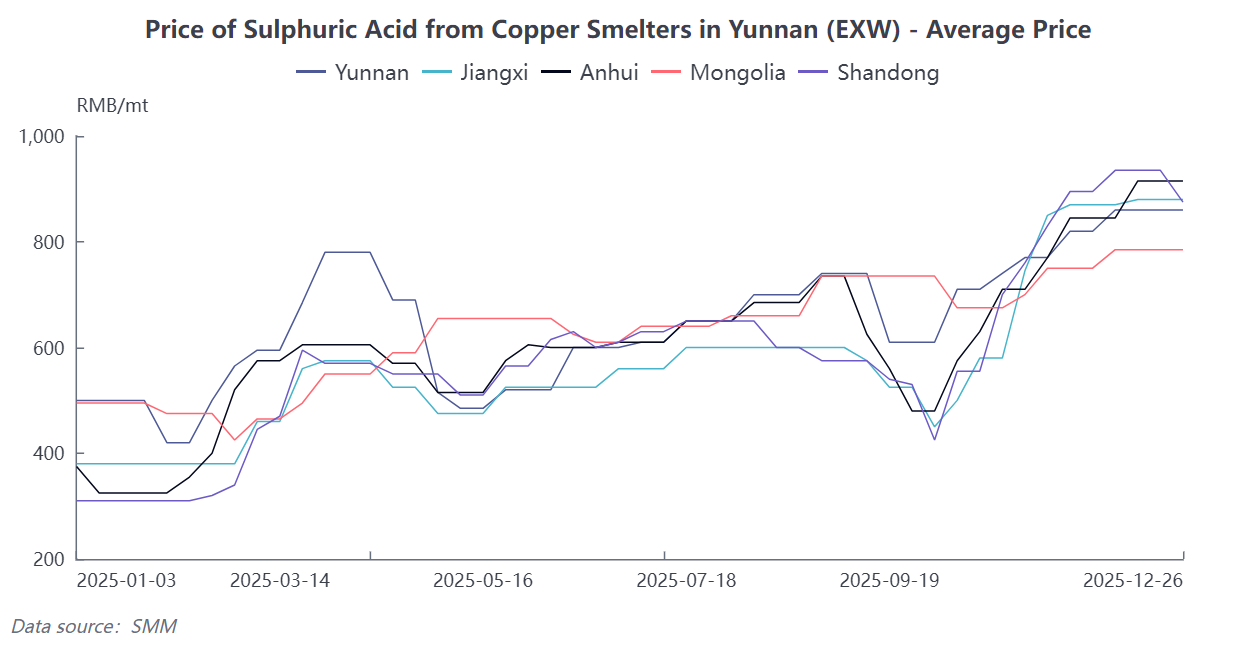
2. Risk of losses in the smelting sector: Copper concentrate TCs have currently fallen to a historical low of -$44.9/dmt, meaning smelters are effectively paying to process ore. However, thanks to high sulphuric acid prices and revenue from by-products such as gold and silver, smelters are either marginally profitable or near break-even. With domestic long-term contracts dropping to $0/mt in 2026 and potential pullbacks in sulphuric acid prices, some smelters may see reduced production, limiting the flexibility of copper cathode supply.

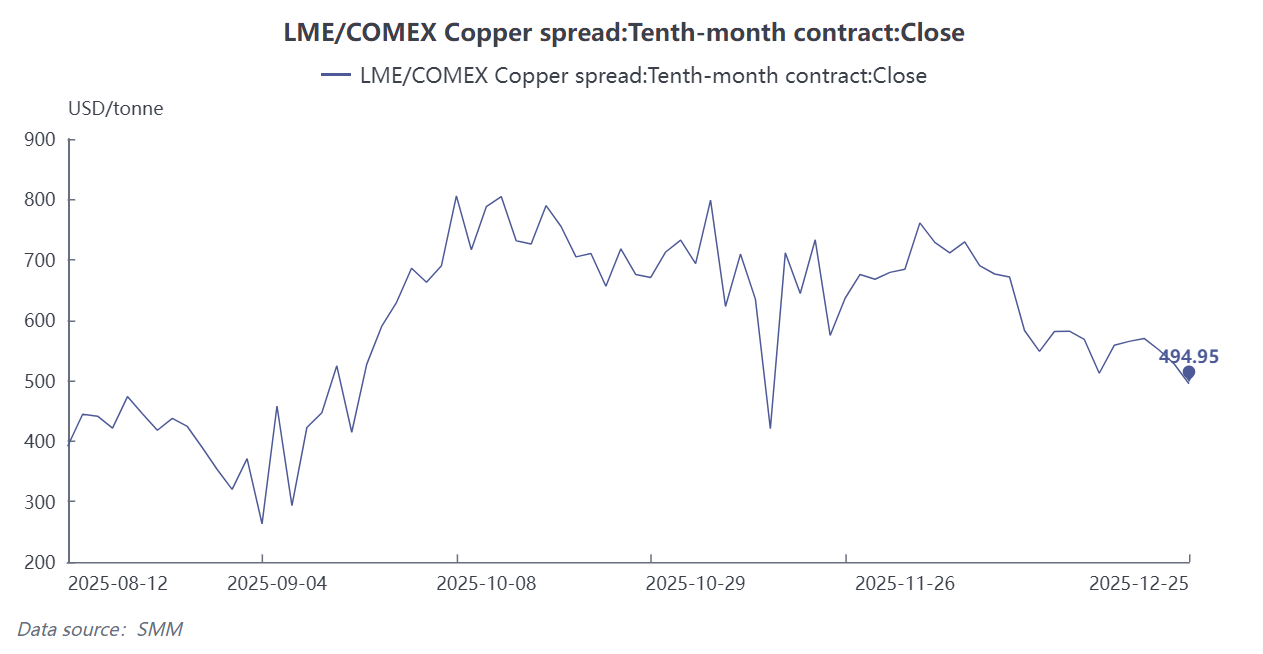
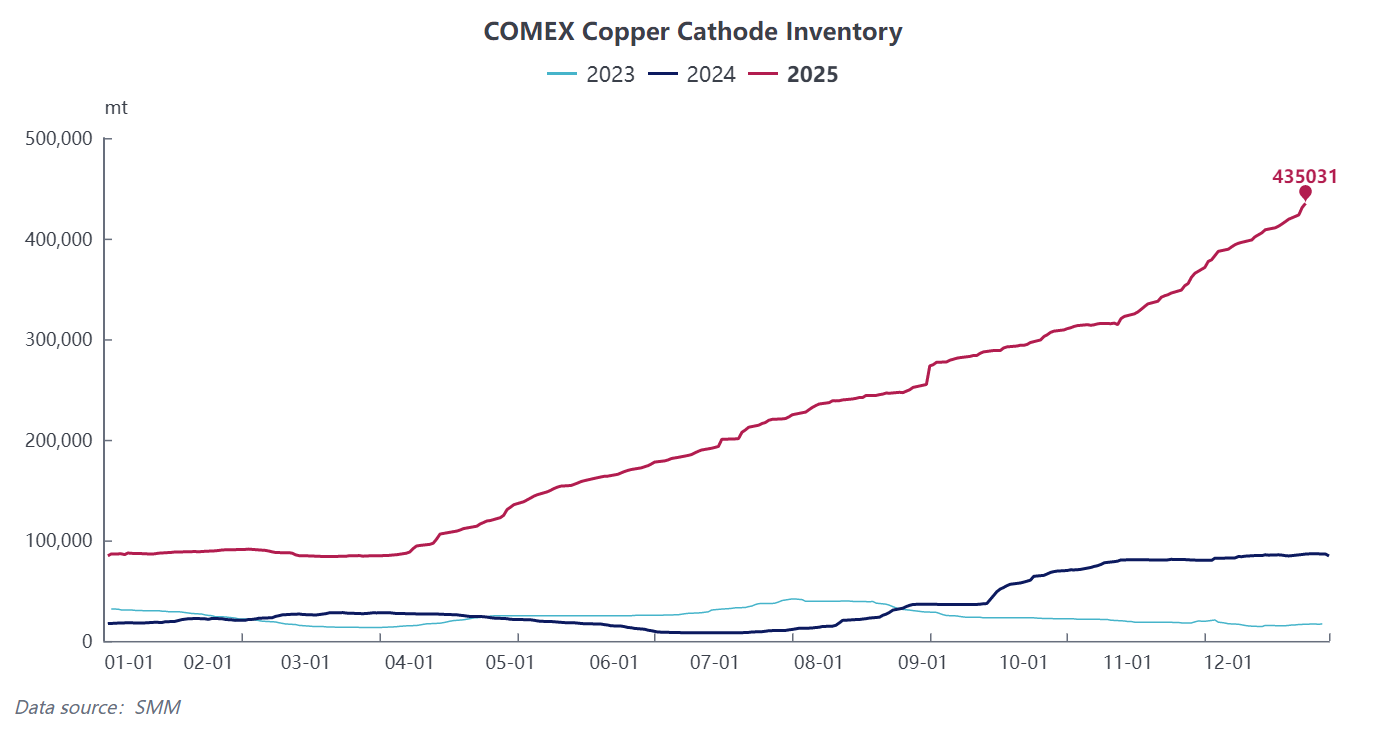
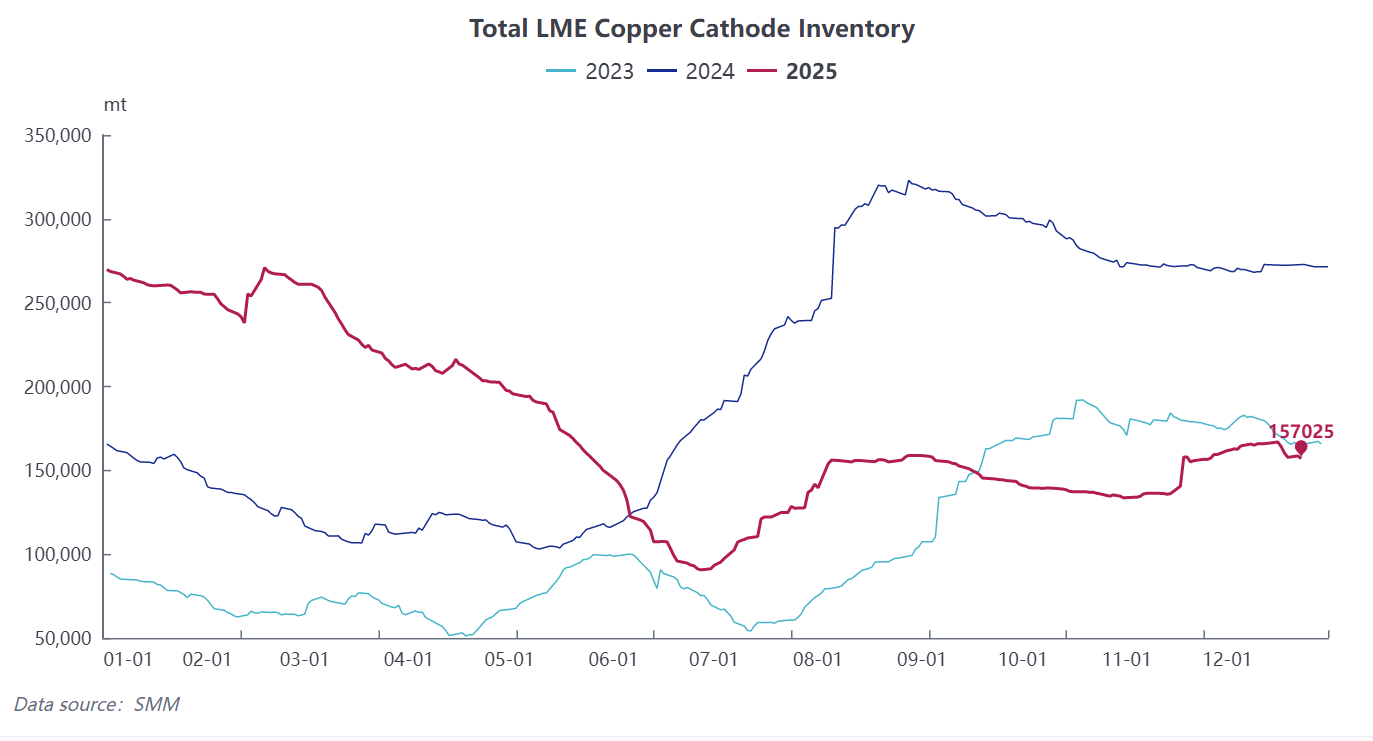
3. Imbalanced inventory distribution: Under the expectation of US tariffs, the COMEX-LME spread remains above $500/mt, leading to a continued concentration of copper cathode in the COMEX market. As of December 24, COMEX inventories rose to a record high of 475,400 short tons, while LME warehouse inventories in Asia gradually declined, exacerbating regional supply tightness and squeeze risks.

4. Scrap copper demand growth outpaces supply growth: With copper concentrate TCs at low levels, smelters continue to increase their demand for recycled copper raw materials. Downstream processing enterprises face low-carbon requirements, which will also drive up the utilization rate of copper scrap. This keeps supply and demand for recycled copper raw materials tight, but the impact on the balance of the copper element is limited.

Demand Side: Strong Expectations for New Copper Demand in Emerging Sectors, but Bubble Risks Warrant Attention
Copper demand driven by the energy transition and the AI computing boom is expected to offset the decline from weak demand in the traditional real estate sector, keeping copper consumption growth positive. However, attention should be paid to the actual return on investment in the AI industry, as most AI projects are not yet profitable, and there is a risk of structural decline in the marginal returns on capital expenditure.

Macro Perspective: Monetary Easing Expectations Amplify Financial Premiums
In 2025, amid monetary easing policies in the US, the US dollar index fell by over 9%. Expectations for US Fed interest rate cuts have not yet cooled, highlighting copper’s anti-inflation and financial attributes. Driven by both fundamentals and macro factors, capital inflows have pushed prices higher. Additionally, against the backdrop of a weaker US dollar, ample liquidity, geopolitical risks, and de-dollarization, soaring precious metal prices have also contributed to the rise in copper prices.

"Mines Reap Huge Profits, While Downstream Processors Struggle for Scraps"
Mines, leveraging resource monopolies, capture the majority of price increase benefits, while downstream processing enterprises face multiple pressures—squeezed costs, capital tie-ups, compressed RC/TC, and intense competition—continuously eroding profit margins.

Amid soaring copper prices, semi-finished copper product enterprises are caught in a dilemma: rising raw material costs and difficulty in raising processing fees. This severely impacts their operations, profitability, and even their market competitiveness and long-term strategic direction. Below are the latest developments in the semi-finished copper products industry:

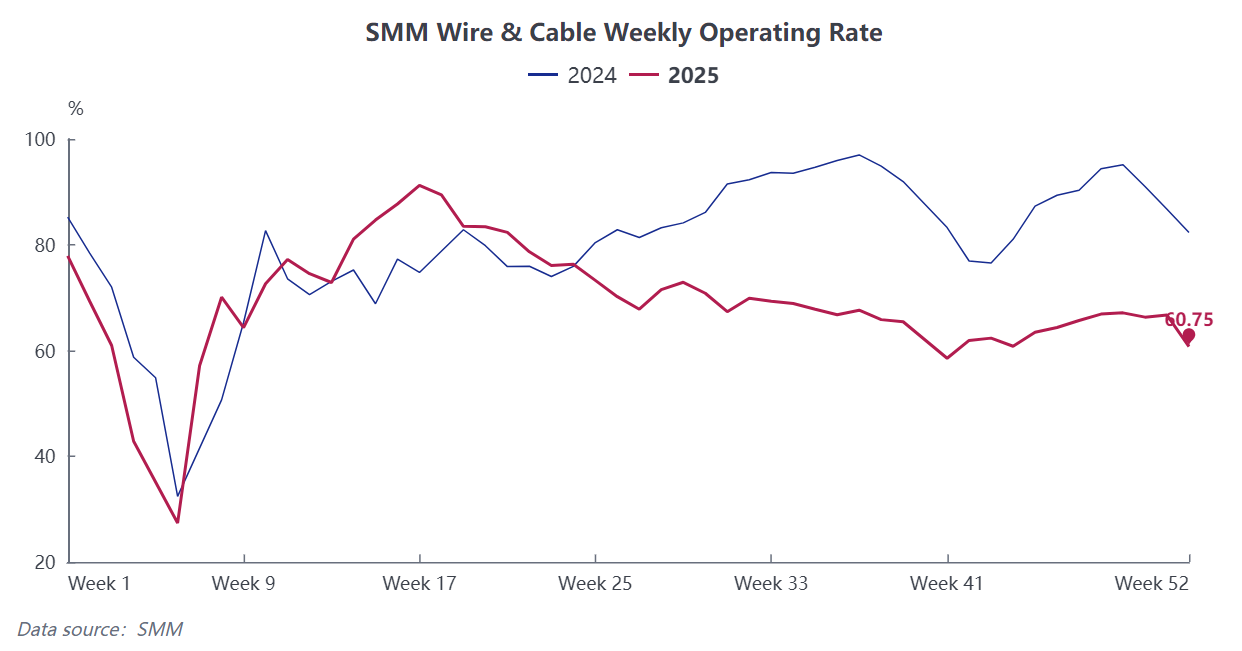
The wire and cable industry faced severe losses at the current copper prices, significantly increasing operational pressure. Most enterprises began production cuts, resulting in an overall bleak performance, with the majority indicating that production workshops would suspend operations during the 2026 New Year holiday. According to SMM data, the weekly operating rate for SMM copper wire and cable enterprises (December 19–25) was 60.75%, down 5.96 percentage points WoW and 21.57 percentage points YoY.

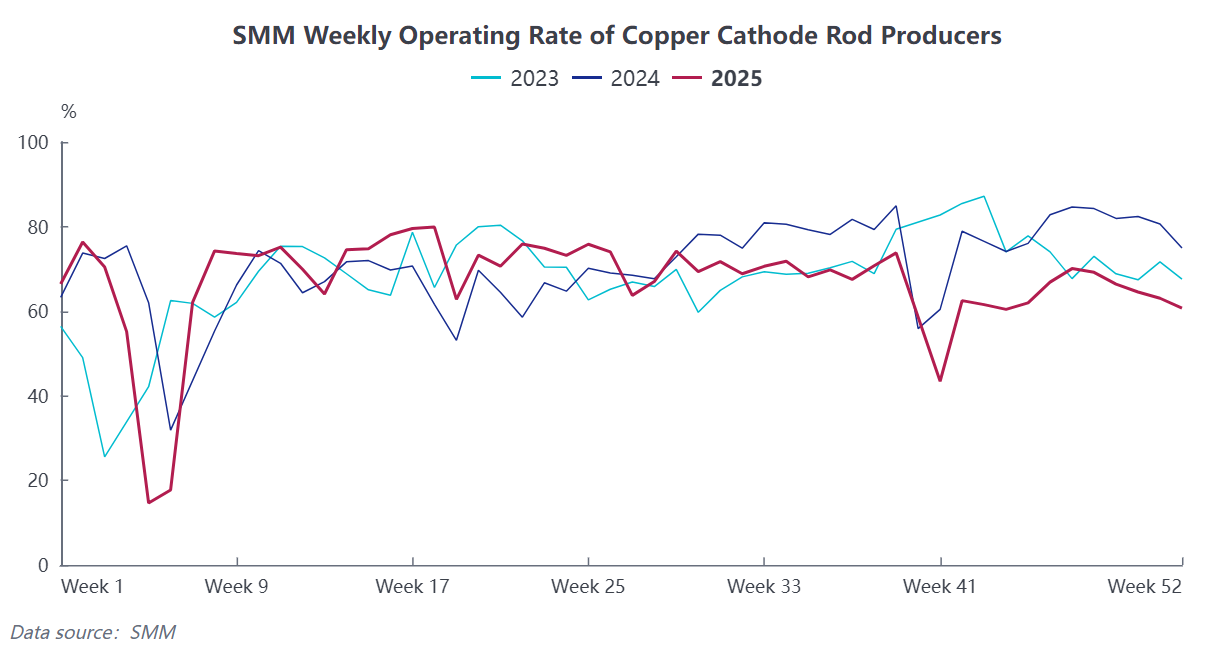
Copper Rod Industry: With copper prices remaining high, new orders have declined and finished product inventories are high, leading multiple enterprises to continue reducing or halting production. According to SMM data, the operating rate of major domestic copper cathode rod enterprises (December 19-25) was 60.73%, down 2.34 percentage points WoW and 14.19 percentage points YoY. The surge in copper prices has led to a sharp increase in capital occupation for processing enterprises, causing liquidity strain. The imbalance in cost transmission has also resulted in a collapse of gross margins, accelerating industry reshuffle and phasing out outdated capacity.

Processing enterprises can use the SMM #1 copper cathode spot price as an anchor, combined with "back-to-back" purchase and sales price locking, which is one of the core operations to lock in processing fees and reduce the risk of copper price fluctuations. "Unified price benchmark + matching performance terms + closed-loop risk management" will support the long-term development of enterprises.

Data Source Statement: Except for publicly available information, all other data are processed by SMM based on publicly available information, market communication, and relying on SMM's internal database model. They are for reference only and do not constitute decision-making recommendations.

For any inquiries or for more information, please contact: lemonzhao@smm.cn
For more information on how to access our research reports, please contact:service.en@smm.cn
Related News
Zambia’s Chisamba Solar Expansion Adds 100MW, Easing Energy Constraints for Mining Sector
1 hour ago
Zambia’s Chisamba Solar Expansion Adds 100MW, Easing Energy Constraints for Mining Sector
Read More
Zambia’s Chisamba Solar Expansion Adds 100MW, Easing Energy Constraints for Mining Sector
According to the Ministry of Energy, President Hakainde Hichilema has commissioned the 100 MW Phase II expansion of the Chisamba Solar Power Plant in Central Province, bringing the facility's total installed capacity to 200 MW. The project represents another step in Zambia's efforts to diversify its electricity generation mix and strengthen energy security as demand from key economic sectors continues to increase. Speaking at the commissioning ceremony, President Hichilema said additional generation capacity would support households, businesses and industrial development, while highlighting the importance of reducing Zambia's dependence on hydropower. The country experienced significant electricity supply challenges during recent drought conditions, which affected hydropower generation and placed pressure on energy-intensive industries. ZESCO Managing Director Justine Loongo said the project created approximately 1,480 jobs during construction, with 95% of positions filled by local residents, highlighting the wider economic benefits of energy infrastructure investment. The expansion comes as Zambia aims to significantly increase copper production towards its long-term target of 3 million tonnes annually. Copper mining operations require large and stable electricity supplies for activities including ore processing, concentration and smelting. Recent power shortages demonstrated the vulnerability of relying heavily on hydropower, particularly during periods of low rainfall. By expanding solar generation capacity, Zambia is strengthening the resilience of its national power system and creating additional support for future mining investments, including new copper projects, mine expansions and processing facilities. A more diversified energy mix could help reduce operational risks for mining companies and improve the country's ability to attract further investment into the copper sector.
1 hour ago
BHP Sees Lower FY2027 Copper Output Despite Advancing Growth Pipeline
2 hours ago
BHP Sees Lower FY2027 Copper Output Despite Advancing Growth Pipeline
Read More
BHP Sees Lower FY2027 Copper Output Despite Advancing Growth Pipeline
According to foreign media reports, global mining company BHP has forecast lower copper production for the 2027 financial year, mainly owing to declining ore grades at its flagship Escondida mine in Chile. The guidance comes despite the company delivering another strong operating year, underpinned by robust copper and iron ore production and continued progress on its long-term growth strategy. BHP produced approximately 1.95 million tonnes of copper during the financial year ended June 30, 2026, meeting its production guidance of 1.9 million to 2.0 million tonnes. The company also achieved record iron ore production of 265 million tonnes, reflecting stable operations across its major mining assets. Despite the expected decline in copper output next year, BHP remains optimistic about its long-term growth prospects. The company continues to advance several key development projects, including expansion pathways at Escondida, Spence and Copper South Australia. It is also progressing the Resolution copper project in the United States, expanding its investment in Faraday, and moving forward with the Vicuña copper project in Argentina after it received approval under the country's large investment incentive programme. Meanwhile, construction of the Jansen potash project in Canada remains on schedule, with first production expected next year. The lower production outlook from Escondida, the world's largest copper mine, could provide additional support to global copper prices if market demand remains strong. At the same time, BHP's continued investment in new copper projects reflects confidence in the long-term demand outlook driven by electrification, renewable energy infrastructure and electric vehicle manufacturing.
2 hours ago
Trafigura Exits 2,000 MW Angola-DRC-Zambia Power Project Amid Financing Challenges
2 hours ago
Trafigura Exits 2,000 MW Angola-DRC-Zambia Power Project Amid Financing Challenges
Read More
Trafigura Exits 2,000 MW Angola-DRC-Zambia Power Project Amid Financing Challenges
Commodity trader Trafigura has withdrawn from a proposed 2,000 MW electricity transmission project intended to supply surplus Angolan hydropower to copper and cobalt mining operations in the Democratic Republic of Congo (DRC) and Zambia, according to foreign media reports. The initiative originated in July 2024 when Trafigura signed a non-binding agreement with engineering firm ProMarks and the Angolan government to conduct feasibility studies for a high-voltage interconnector. According to foreign media reports, the line aimed to monetize Angola's northern hydropower capacity to help alleviate chronic electricity deficits affecting mining assets in the Central African Copperbelt. The withdrawal highlights the complex financing and risk dynamics associated with large-scale cross-border energy infrastructure in emerging markets, as reliable grid power remains a primary constraint for scaling up copper and cobalt production across Zambia and the DRC. According to foreign media reports, despite Trafigura's exit, other transmission ventures linking Angola to regional mining centers are progressing. These include Meridia Energy's planned Lauca–Kolwezi line (1,400 MW) and Soyo–Inga–Cabinda line (800 MW), targeted for commercial operation by 2030, as well as a separate $1.5 billion interconnector proposed by U.S.-based HYDRO-LINK aimed at Lualaba and Katanga provinces. While the delay of this specific 2,000 MW line creates a short-term hurdle for cross-border power sharing, broader efforts to connect Angola's surplus generation to the Southern African Power Pool (SAPP) and Copperbelt miners remain active under revised consortia, according to foreign media reports.
2 hours ago
[SMM Analysis] Downstream Producers Cut Output to Cope with Record-high Copper Prices - Shanghai Metals Market (SMM)