SMM 11 de Dezembro Notícias:
Pontos Principais: Esta semana, o setor de baterias de estado sólido ganhou um impulso significativo, com várias empresas domésticas alcançando avanços chave em aprovações ambientais, entregas de amostras e produção em massa, enquanto players internacionais na Coreia do Sul e nos EUA intensificaram a competição tecnológica. A cadeia industrial avançou simultaneamente em todos os segmentos, desde materiais de cátodo e ânodo e eletrólitos até a fabricação de células de bateria, entrando numa fase de validação intensiva e construção de capacidade.
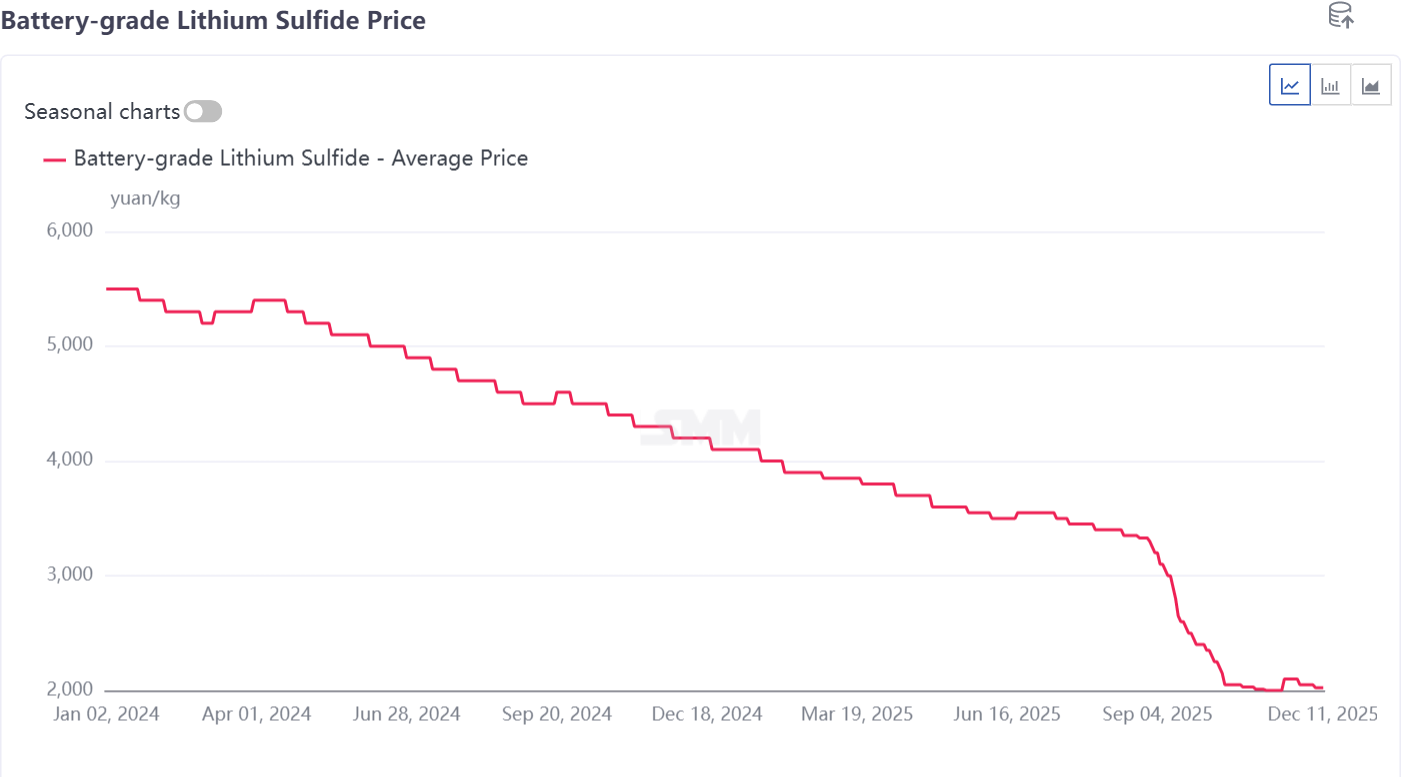
Esta semana, os preços do sulfeto de lítio mantiveram-se estáveis com uma ligeira tendência de baixa. As taxas de operação nas empresas de sulfeto de lítio foram relativamente altas, com remessas consistindo principalmente em pequenas encomendas. O preço médio situou-se em 2.025 iuanes/kg.
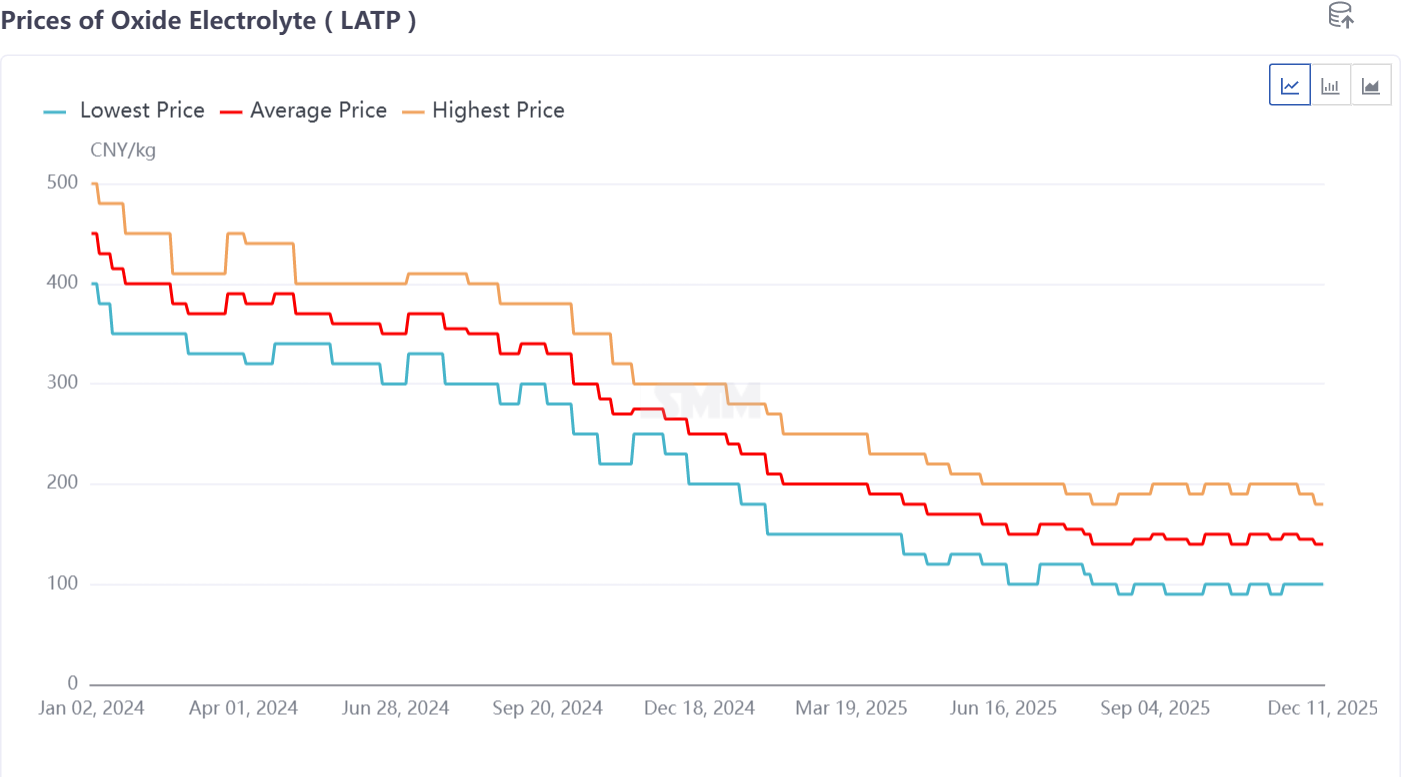
Entretanto, o preço do eletrólito de óxido LATP registou um ligeiro declínio. A sua aplicação manteve-se focada na indústria de baterias semi-sólidas a jusante, com um preço médio de 140 iuanes/kg.
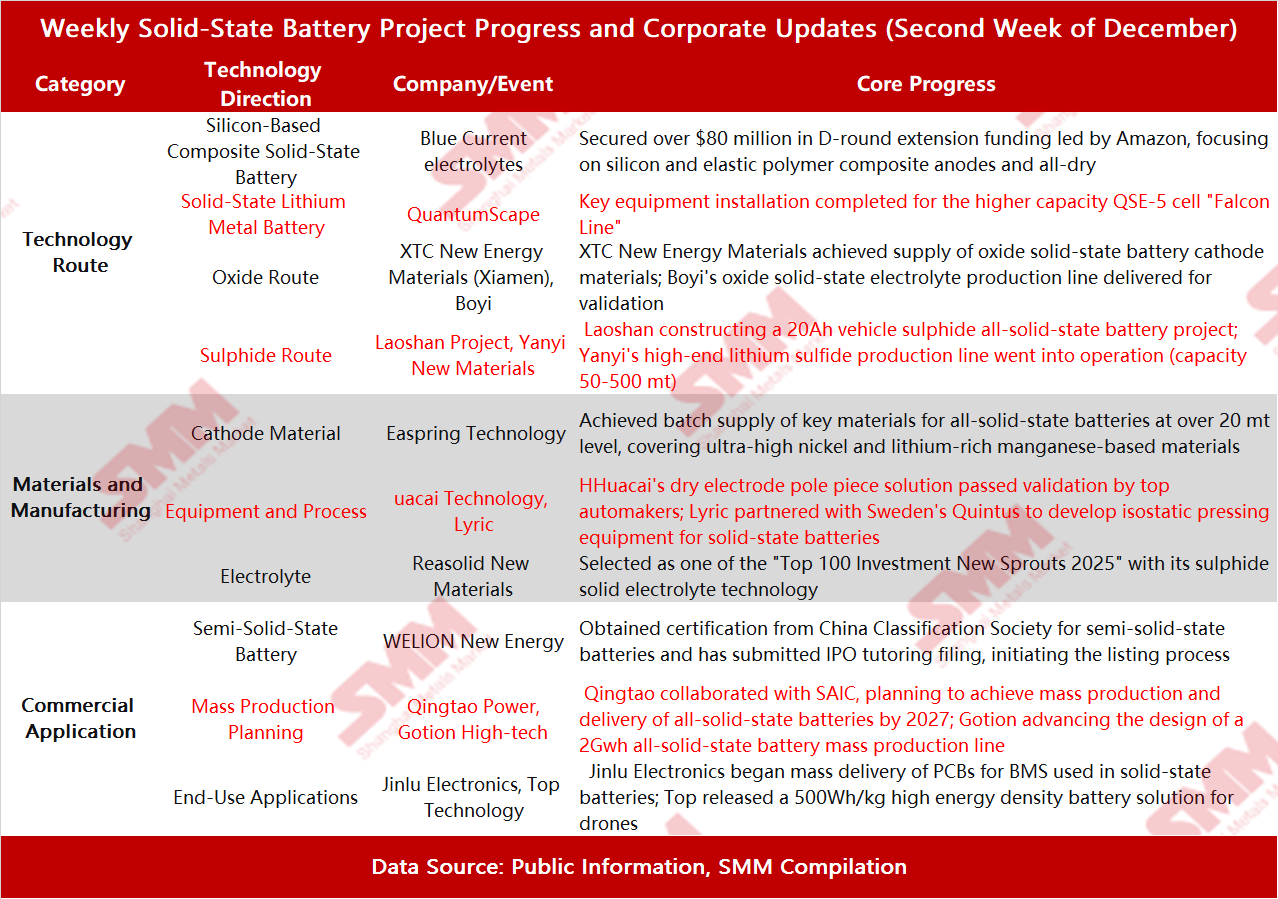
Quanto aos desenvolvimentos desta semana em baterias de estado sólido, a situação doméstica e internacional pode ser compreendida de relance.
I. Materiais Chave: Eletrólito + Cátodo
Os materiais são o núcleo dos avanços na tecnologia de baterias de estado sólido. Esta semana, as empresas domésticas fizeram progressos substanciais tanto em eletrólitos como em materiais de cátodo.
Em eletrólitos de estado sólido, a Boyi Technology entregou com sucesso linhas de produção para eletrólitos sólidos de óxido (como LATP e LLZO) e completou a verificação em lote. A Yanyi New Materials colocou oficialmente em operação a sua linha de produção de sulfeto de lítio de alta gama, com uma capacidade anual de 50–500 toneladas, fornecendo suporte crucial de matéria-prima para eletrólitos de sulfeto.
A rota do sulfeto também viu projetos de aplicação específicos, com o projeto de bateria de estado sólido de sulfeto de grau veicular de 20Ah de alto desempenho de Qingdao Laoshan em construção.
O progresso em materiais de cátodo foi igualmente notável. A XTC New Energy Materials (Xiamen) já alcançou o fornecimento de materiais de cátodo compatíveis com baterias de estado sólido de óxido. A Easpring Technology anunciou ainda que os seus materiais chave para baterias de estado sólido completas atingiram um fornecimento em lote superior a 20 toneladas, cobrindo materiais de níquel ultra-alto com densidades de energia superiores a 400 Wh/kg e materiais de base manganês rico em lítio visando baterias de 500 Wh/kg.
II. Equipamento Primeiro: Eletrodo Seco + Equipamento de Prensagem Isostática
Inovações nos processos de fabricação são fundamentais para reduzir custos e melhorar a eficiência das baterias de estado sólido. Esta semana, a Huacai Technology anunciou que sua solução integrada de eletrodos secos para peças polares passou por rigorosos testes e validação por uma montadora global de luxo de primeira linha.
A tecnologia de eletrodos secos elimina a necessidade de solventes, simplifica a produção, reduz custos e é mais compatível com sistemas de eletrólitos sólidos. É considerada um dos processos futuros essenciais para a produção em massa de baterias de estado sólido. A Huacai planejava lançar uma "solução integrada de eletrodos secos de nova geração" em 2026.
Entretanto, a Lyric assinou um acordo com a líder sueca em tecnologia de alta pressão Quintus para desenvolver conjuntamente equipamentos de prensagem isostática para baterias de estado sólido. O tratamento de alta pressão é um processo crítico para melhorar o contacto interfacial e a densidade nas células de baterias sólidas. O desenvolvimento de equipamentos especializados é vital para a industrialização.
III. Progresso na Produção em Massa: Estado Semicondutor + Estado Totalmente Sólido + Produção e IPO
Na transição do laboratório para o mercado, as baterias de estado semicondutor, como solução intermediária, já alcançaram aplicação comercial. A WELION New Energy destacou-se no sector de estado semicondutor, com seus produtos de bateria obtendo sucessivamente certificações de células e packs emitidas pela Sociedade de Classificação da China (CCS). Isso indica que as baterias de estado semicondutor obtiveram aprovação de acesso em sectores específicos de alta exigência de segurança, como aplicações marítimas. Paralelamente, a WELION New Energy submeteu seu registro de tutoria para IPO, iniciando o processo de listagem e demonstrando clara intenção de acelerar o desenvolvimento através dos mercados de capitais.
Quanto ao planeamento de produção em massa para baterias totalmente sólidas, empresas domésticas forneceram cronogramas claros. A Qingtao Power, em colaboração com a SAIC, concluiu a integração de sua linha de produção de baterias totalmente sólidas em Anting. Planejava entregar amostras até o final de 2025 e alcançar produção e entrega em massa em 2027.
A Gotion High-tech também avançou no projeto de sua linha de produção em massa de baterias totalmente sólidas Jinshi de 2 GWh. A primeira linha piloto de 0,2 GWh da empresa atingiu uma taxa de rendimento notável de 90%, estabelecendo a base para a produção em massa.
IV. Mercado de Materiais Auxiliares: Sinergia da Cadeia Industrial: Atualização Abrangente de Materiais para Aplicações
Em materiais auxiliares chave a montante, a Jinlu Electronics desenvolveu com sucesso e produziu em massa placas de PCB para BMS (Sistema de Gestão de Bateria) de bateria de estado sólido, refletindo os novos requisitos do sistema de bateria de estado sólido para componentes eletrónicos de suporte.
V. Aplicações a Jusante: Drones
Na expansão de aplicações de uso final, as empresas de baterias estão a explorar ativamente mercados para além dos automóveis. A Top Technology lançou uma solução de bateria específica para drones com uma densidade energética de até 500 Wh/kg e planeou um objetivo técnico de mais de 600 Wh/kg até 2028.
VI. Mercado de Capitais: 2.600 Milhões de Yuans da CATL + Canmax
A CATL investiu 2.600 milhões de yuans para se tornar no segundo maior acionista da Canmax, que tem um extenso portfólio no campo de materiais para baterias de estado sólido. Este investimento reforçou o posicionamento do líder do setor para rotas tecnológicas futuras.
VII. Mercado Internacional: Blue Current + QuantumScape
A corrida para a comercialização de baterias de estado sólido mostrou um padrão claro de duplo impulso de financiamento e capacidade esta semana. A Blue Current garantiu mais de 80 milhões de dólares numa extensão da Série D liderada pela Amazon, sinalizando o reconhecimento do mercado de capitais da rota tecnológica diferenciada das baterias de estado sólido de base de silício.
Este financiamento não só injetou um forte impulso no processo de comercialização da Blue Current, mas também sugeriu o planeamento estratégico de gigantes tecnológicos como a Amazon para a tecnologia de baterias de próxima geração em ESS e aplicações futuras de transporte.
Do outro lado do oceano, a QuantumScape anunciou que a instalação de equipamentos chave foi concluída para a sua célula de bateria QSE-5 de maior capacidade, a "Linha de Produção Falcon", em San Jose. Este foi um passo crítico no roteiro da empresa para a produção em escala de baterias de estado sólido com ânodo de lítio-metal.
O progresso dos dois apresentou um contraste acentuado: a Blue Current enfatizou a segurança e a compatibilidade com as linhas de produção existentes através do seu único ânodo de compósito de silício e processo de eletrólito totalmente seco, enquanto a QuantumScape continuou a apostar no seu design disruptivo "livre de ânodo" e eletrólito cerâmico flexível, perseguindo densidade energética extrema e desempenho de carga rápida.
De acordo com as previsões da SMM, as expedições de baterias de estado sólido total atingirão 13,5 GWh até 2028, enquanto as expedições de baterias de semi-estado sólido atingirão 160 GWh. Projeta-se que a procura global de baterias de iões de lítio atinja aproximadamente 2.800 GWh até 2030, com a procura de baterias de iões de lítio do setor de VE a mostrar uma CAGR de cerca de 11% de 2024 a 2030, a procura de baterias de iões de lítio para ESS com uma CAGR de cerca de 27%, e a procura de baterias de lítio para eletrónicos de consumo com uma CAGR de aproximadamente 10%. Estima-se que a penetração global de baterias de estado sólido seja de cerca de 0,1% em 2025, esperando-se que a penetração de baterias de estado sólido total atinja cerca de 4% até 2030, e a penetração global de baterias de estado sólido poderá aproximar-se de 10% até 2035.
**Nota:** Para mais detalhes ou esclarecimentos relativos ao desenvolvimento de baterias de estado sólido, queira contactar:
Telefone: 021-20707860 (ou WeChat: 13585549799)
Contato: Chaoxing Yang. Obrigado!
![Análise da produção de sulfeto de lítio grau bateria em agosto: haverá um aumento no quarto trimestre? [Análise SMM]](https://imgqn.smm.cn/usercenter/mpqgn20251217171727.jpg)
![Padrões de Baterias de Estado Sólido de Agosto Definem o Tom + Linhas de Produção de Cem Toneladas Intensamente Comissionadas + Projetos Totalmente em Estado Sólido Aceleram Implementação [Análise SMM]](https://imgqn.smm.cn/usercenter/IpglC20251217171727.jpg)