To promote the recycling of renewable resources and standardize the import management of recycled black mass raw materials for lithium-ion batteries and recycled steel raw materials, on June 9, 2025, the Ministry of Ecology and Environment, jointly with the General Administration of Customs, the National Development and Reform Commission (NDRC), the Ministry of Industry and Information Technology, the Ministry of Commerce, and the State Administration for Market Regulation, issued the Announcement on Regulating the Import Management of Recycled Black Mass Raw Materials for Lithium-ion Batteries and Recycled Steel Raw Materials (Announcement No.14 of 2025), which will come into effect on August 1, 2025. The original Announcement on Regulating the Import Management of Recycled Steel Raw Materials (Announcement No. 78 of 2020) will be abolished simultaneously. To enable administrative personnel and the public to fully understand and accurately grasp the key points of this revised announcement, the following interpretations are provided:
I. Main Revisions
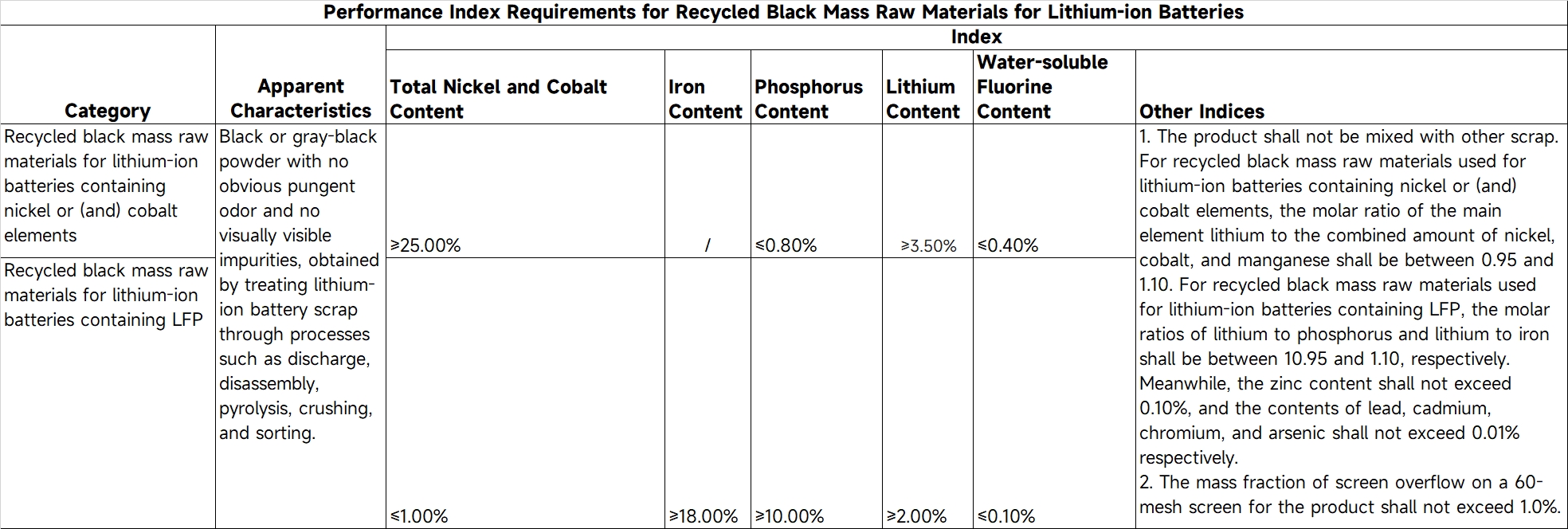
(1) Adding recycled raw materials that are allowed for imports - recycled black mass raw materials for lithium-ion batteries.
It is clarified that recycled black mass raw materials for lithium-ion batteries that meet the requirements of the attached table do not belong to solid waste and can be freely imported. They are divided into two categories: "recycled black mass raw materials for lithium-ion batteries containing nickel or (and) cobalt elements" and "recycled black mass raw materials for lithium-ion batteries containing lithium iron phosphate (LFP)".
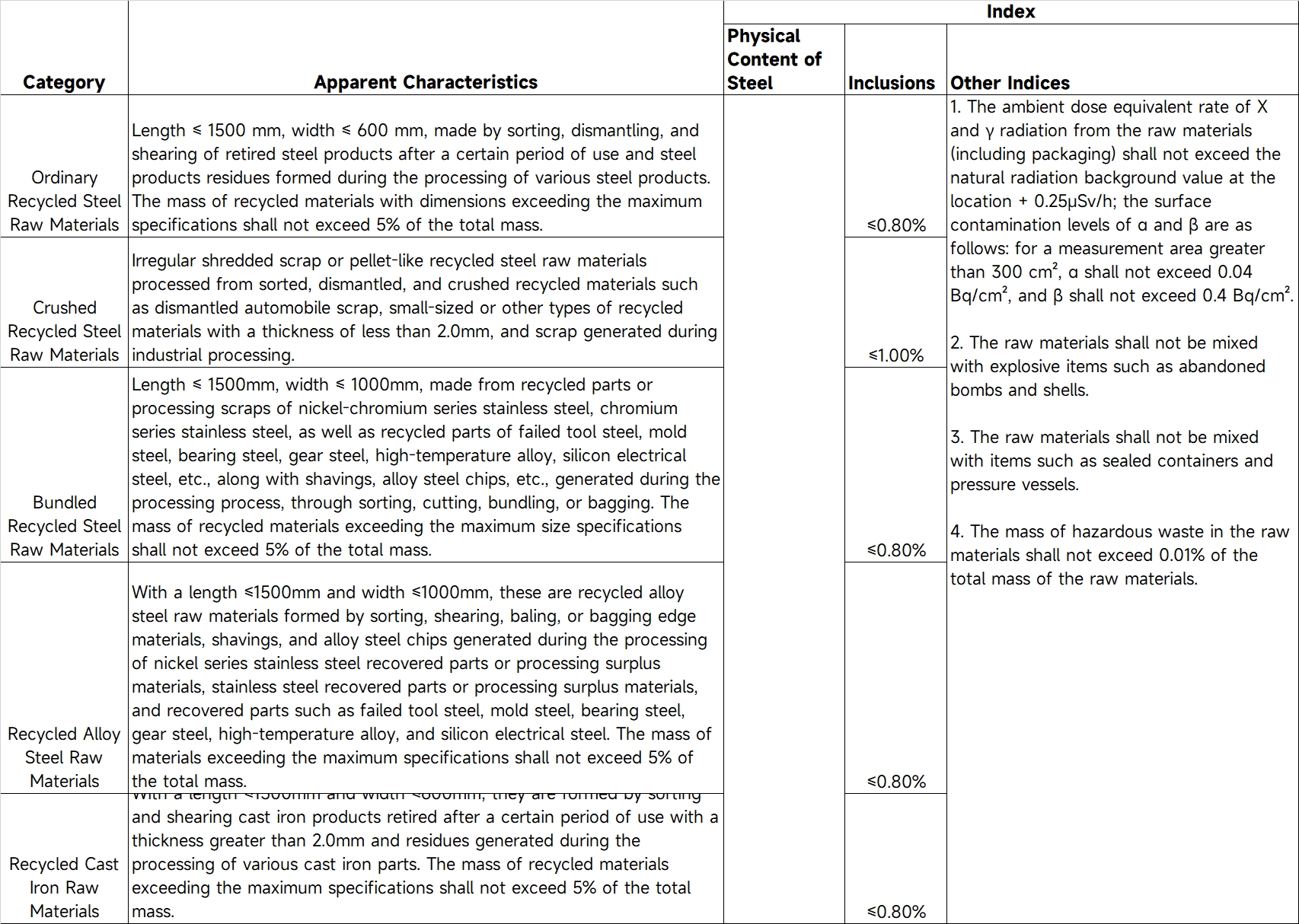
(2) Revising the categories and performance index requirements of recycled steel raw materials.
1. The categories of recycled steel raw materials have been adjusted from the original seven categories (heavy recycled steel raw materials, medium recycled steel raw materials, light recycled steel raw materials, shredded recycled steel raw materials, bundled recycled steel raw materials, alloy steel recycled steel raw materials, and cast iron recycled steel raw materials) to five categories (ordinary recycled steel raw materials, shredded recycled steel raw materials, bundled recycled steel raw materials, recycled alloy steel raw materials, and recycled cast iron raw materials). The original "heavy recycled steel raw materials", "medium recycled steel raw materials", and "light recycled steel raw materials" have been merged into "ordinary recycled steel raw materials".
2. New requirements for the physical content of steel have been added to the performance indices, clarifying that the physical content of steel in all categories of recycled steel raw materials shall be no less than 92%.
3. The requirements for inclusions have also been adjusted. Instead of having different inclusion indices corresponding to different grades, a unified inclusion limit requirement has been established for the same category.
(3) Clarifying the HS codes for recycled black mass raw materials for lithium-ion batteries and recycled steel raw materials.
The customs HS code for recycled black mass raw materials for lithium-ion batteries is 3824999996;
The customs HS codes for recycled steel raw materials are 7204100010, 7204210010, 7204290010, 7204410010, and 7204490030.
(4) Clarifying the performance index requirements for recycled black mass raw materials for lithium-ion batteries and recycled steel raw materials.
1. This revised announcement clarifies the performance index requirements for recycled steel raw materials and recycled black mass raw materials for lithium-ion batteries in the form of an attached table. It is clarified that recycled steel raw materials and recycled black mass raw materials for lithium-ion batteries that meet the requirements of the attached table do not belong to solid waste and can be freely imported.
2. If the customs finds that imported recycled black mass raw materials for lithium-ion batteries or recycled steel raw materials are suspected of being solid waste, it may entrust a professional institution to conduct attribute identification and manage them in accordance with the law based on the identification conclusions.
(5) Clarifying the shipping, declaration requirements, and customs inspection methods for recycled black mass raw materials for lithium-ion batteries and recycled steel raw materials.
1. Imported recycled black mass raw materials cannot be mixed with other types of recycled raw materials. Bulk shipping is not allowed, and different categories of recycled black mass raw materials should be placed separately. When declaring customs, different types of recycled raw materials are not allowed to be declared under the same customs declaration form.
Imported recycled steel raw materials cannot be mixed with other types of recycled raw materials. When different categories of recycled steel raw materials have independent packaging or physical separation measures, or can be distinguished and unloaded as different categories during unloading, mixed shipment is allowed, but they should be placed separately. When declaring customs, different types of recycled raw materials are not allowed to be declared under the same customs declaration form, but different categories of recycled steel raw materials can be declared under the same customs declaration form.
2. This revised announcement clarifies that the inspection of recycled black mass raw materials for lithium-ion batteries shall be conducted in accordance with the customs industry technical specifications to determine whether they meet the requirements of the attached table. Except for radioactive contamination inspection, which shall comply with the customs' specialized inspection requirements, the inspection of recycled steel raw materials shall first adopt sensory inspection. When it cannot be determined whether they meet the requirements of the attached table, inspection shall be conducted in accordance with the customs industry technical specifications.
II. Answers to Hot Issues
Q1: Do the recycled black mass raw materials and recycled steel raw materials imported by enterprises need to comply with national standards?
This announcement clarifies the performance index requirements for recycled black mass raw materials and recycled steel raw materials in the form of an attached table. Recycled metal raw materials imported by enterprises can be imported if they meet the requirements of the attached table in the announcement. For index items not listed in the attached table of national standards, the buyer and seller can agree on them during the trade process.
AQ2: Can recycled black mass raw materials and recycled steel raw materials with independent packaging be imported in the same container and declared under the same customs declaration form?
The answer is no. Recycled black mass raw materials and recycled steel raw materials cannot be mixed with other types of recycled raw materials. Different types of recycled raw materials are not allowed to be declared under the same customs declaration form when declaring customs.
AQ3: Under what circumstances will recycled black mass raw materials and recycled steel raw materials be returned? What will happen if they are identified as solid waste?
If the customs finds that imported recycled black mass raw materials for lithium-ion batteries or recycled steel raw materials do not comply with the requirements of the announcement, they need to be returned. If they are suspected of being solid waste, the customs may entrust a professional institution to conduct attribute identification. If they are identified as solid waste, they shall be disposed of in accordance with the relevant regulations on solid waste. Therefore, enterprises must strictly control the quality during import, strengthen source management, and urge shippers to pay attention to whether the raw materials comply with the announcement requirements before shipment to avoid situations where the performance indices of imported raw materials do not meet the announcement requirements or are even identified as solid waste, resulting in unnecessary economic losses.
Please note that this news is sourced from the official WeChat account of the General Administration of Customs of the People's Republic of China (GACC) and translated by SMM.
![[SMM Analysis] Spot lithium carbonate prices drift higher on the first working day after the holiday](https://imgqn.smm.cn/usercenter/yfoxV20251217171727.jpg)

![[GFEX Seeks Public Comments on Lithium Hydroxide Futures and Options Contracts]](https://imgqn.smm.cn/usercenter/tKgKv20251217171725.png)