Does the Active Market Drive Prices Upward? Q3 Review and Q4 Outlook for the Iron Phosphate Market

Published: Sep 24, 2024 19:51 (GMT+8)
Source: SMM
Recently, an SMM survey revealed the following about the iron phosphate market: (1) Due to strong downstream demand, iron phosphate companies have experienced delays in order deliveries, with some orders not being fulfilled on time, leading to prices remaining firm or slightly increasing. Meanwhile, some LFP companies have expanded their capacity, seeking outsourcing and other methods, which have driven up the operating rates of some small and medium-sized LFP companies. (2) During the October negotiation season in the fourth quarter, iron phosphate companies generally hold an optimistic view of the market and maintain a bullish stance; however, LFP companies tend to adopt a wait-and-see approach, expecting the market to remain stable.

Recent market conditions: (1) Due to strong downstream demand, iron phosphate companies have experienced delays in order deliveries, with some orders not being fulfilled on time, leading to firm or slightly rising prices. Meanwhile, some LFP companies have increased capacity, seeking outsourcing and other methods, which has driven up the operating rates of some small and medium-sized LFP companies. (2) In the October negotiation season of Q4, iron phosphate companies generally hold an optimistic outlook on the market, maintaining a bullish stance; whereas LFP companies mostly adopt a wait-and-see attitude, expecting the market to remain stable.
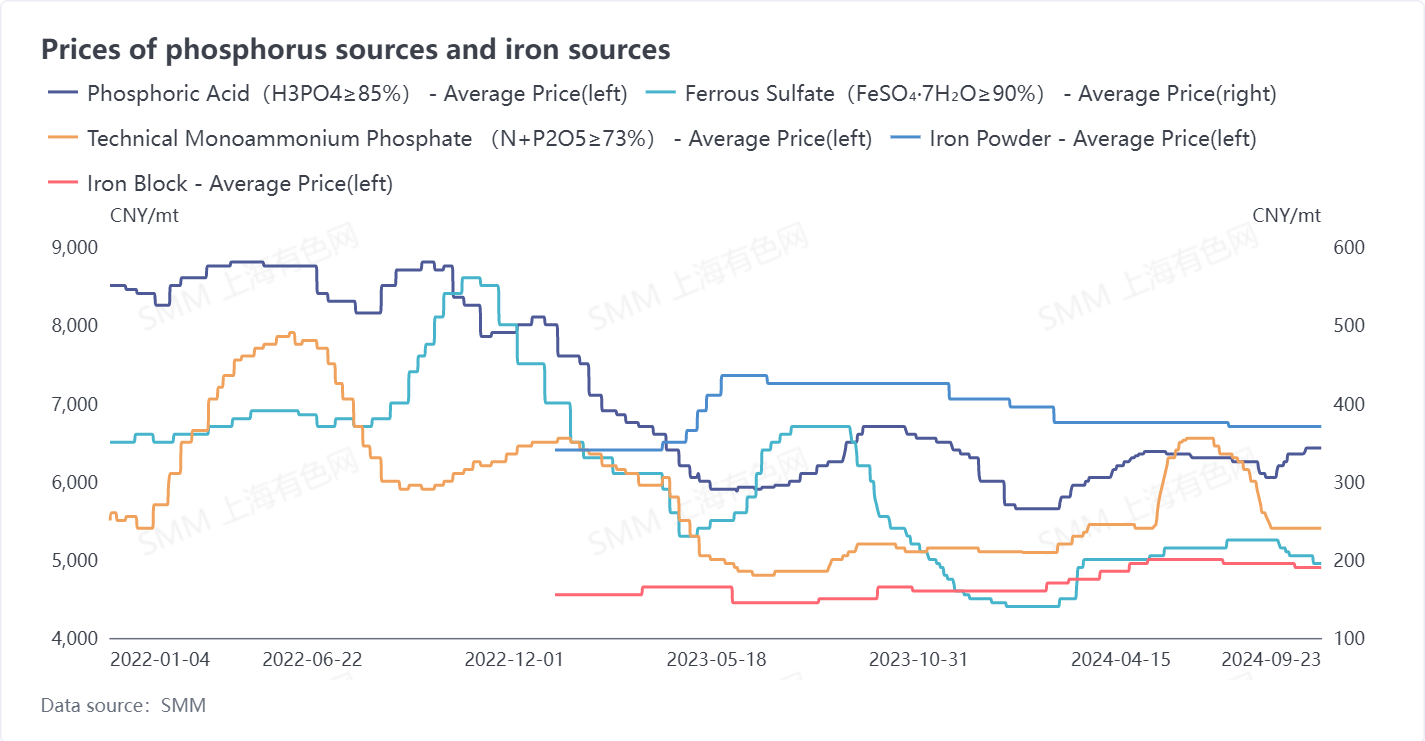
In Q3 2024, the price of phosphorus sources, the main raw material for iron phosphate, fluctuated due to the supply of phosphate rock, demand in the agricultural fertilizer market, and fertilizer export market. Driven by the demand for autumn fertilization and strong demand in the new energy market, the price of phosphorus resources remained firm. In Q2, the demand for monoammonium phosphate in the agricultural market increased, leading to a rise in industrial monoammonium phosphate prices. However, as Q3 began, the demand in the water-soluble fertilizer market declined, causing monoammonium phosphate prices to decrease accordingly.


The price of phosphoric acid (85%) showed a stable upward trend in Q3, with price changes of about 100 yuan per mt, affecting production costs as follows: an increase of about 80 yuan per mt for the iron and sodium processes, and an increase of 10 yuan per mt for the ammonium process. Meanwhile, the iron source market prices remained stable, but ferrous sulfate might experience slight regional price fluctuations due to resource adaptation issues. It is expected that in Q4, the prices of phosphorus sources and iron will first remain stable and then show a slight downward trend.
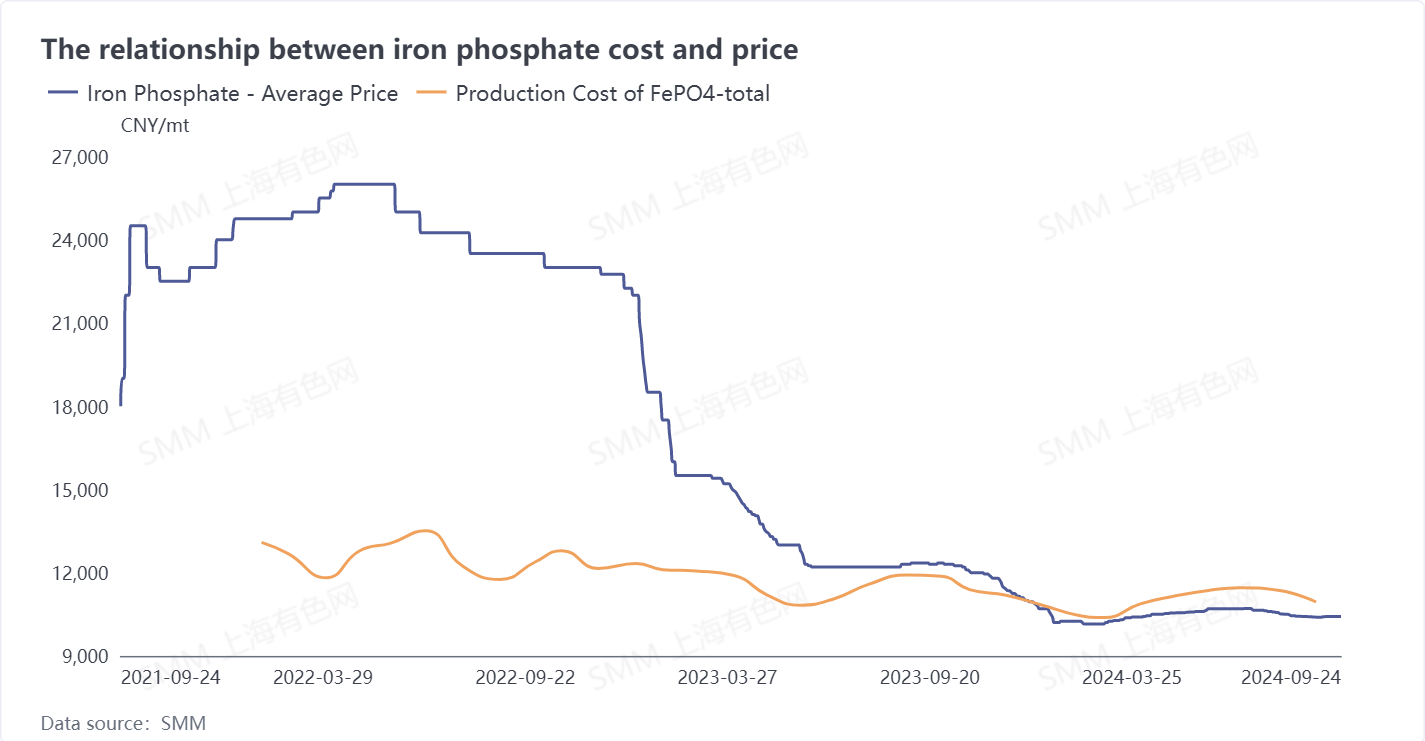


In Q3 2024, the production cost of iron phosphate decreased compared to Q2, showing a trend of falling back from highs. The main reasons were the high operating rate during the quarter, reduced depreciation and cost per mt, and the decline in some raw material prices, leading to an overall reduction in production costs. However, despite adopting low-price strategies to stabilize market share, iron phosphate companies still faced losses, though the extent of the losses decreased.
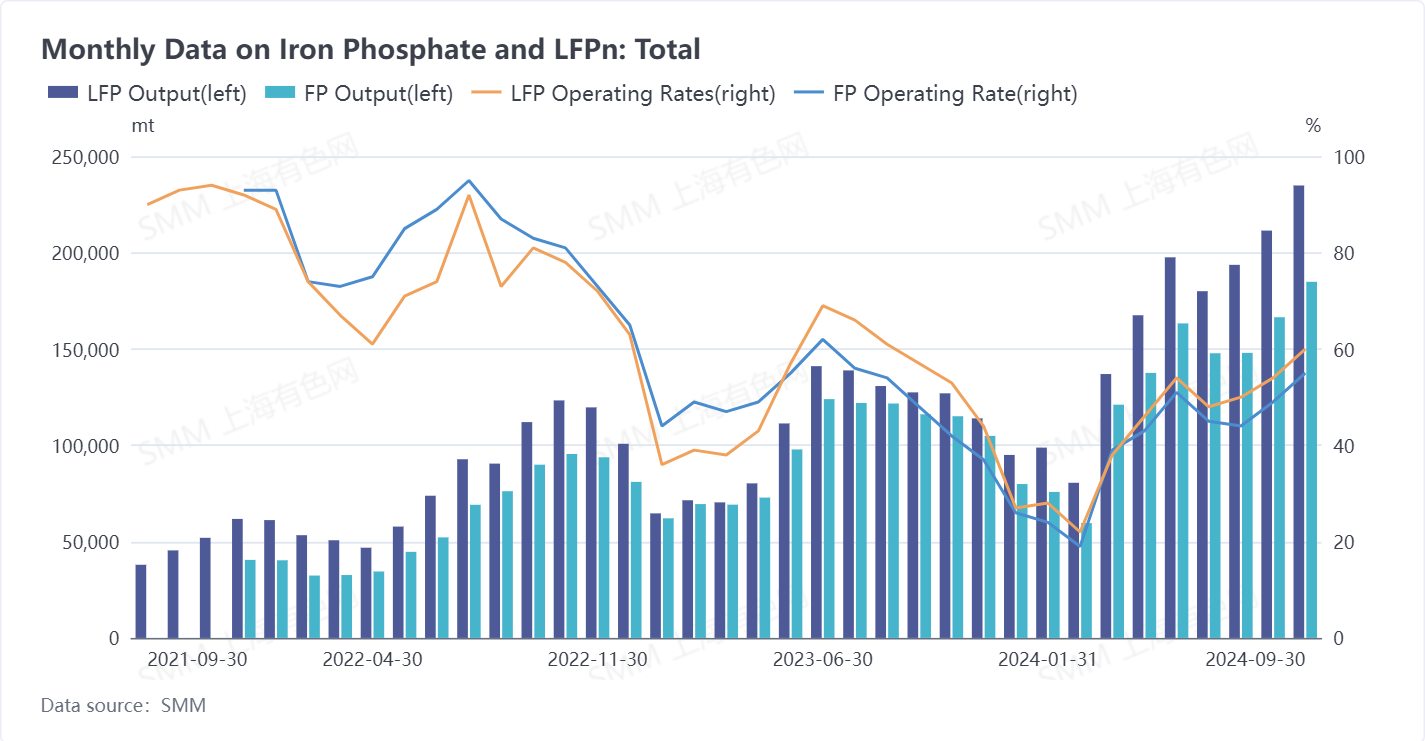


The high operating rate in the LFP industry drove the demand for iron phosphate. Meanwhile, LFP companies seeking low costs actively purchased lower-priced supplies, significantly reducing the inventory of iron phosphate companies. Some iron phosphate companies sold large quantities of B-grade products at low prices.
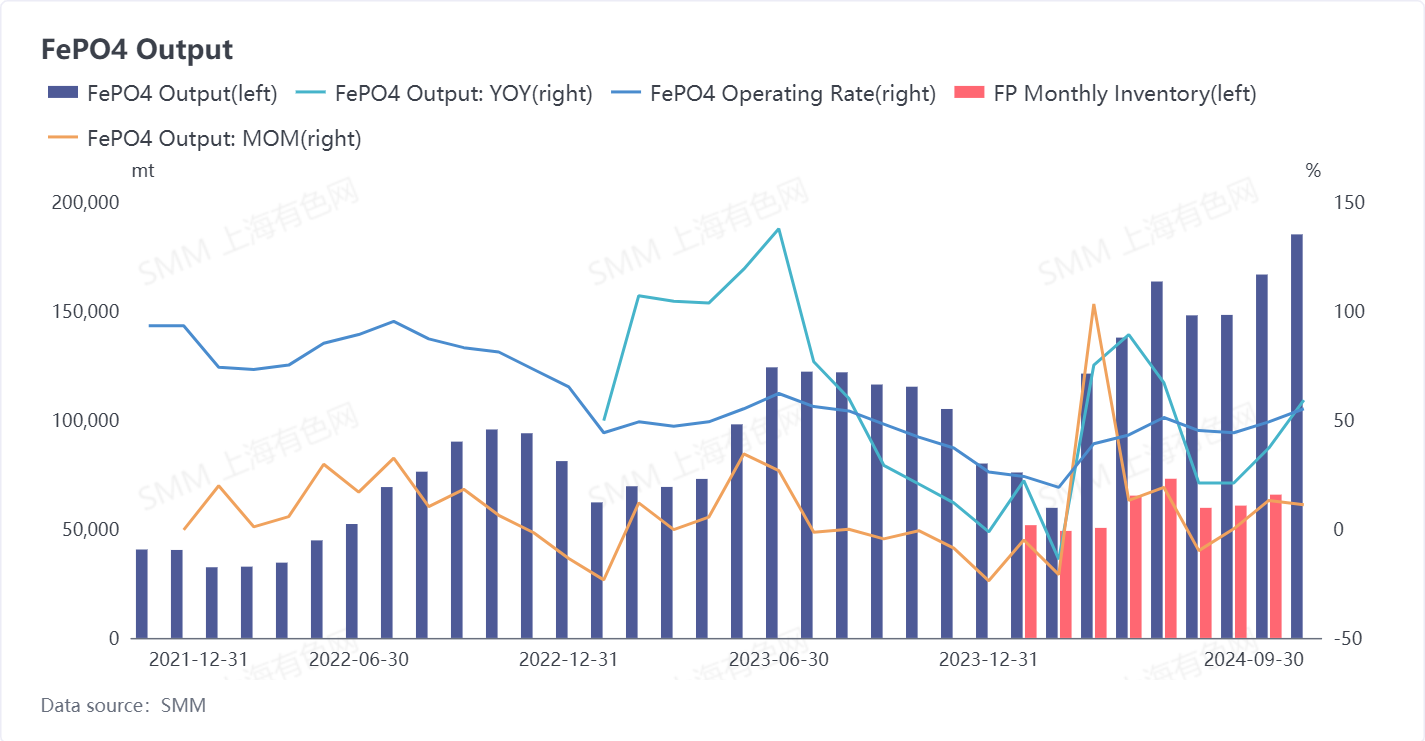


Looking ahead to Q4, downstream demand may fall back from highs, and some iron phosphate companies with high production costs and limited funding channels may face cash flow shortages. However, this situation will have limited impact on the market landscape in H2 2024, and companies can still maintain relatively stable operations.

Looking ahead to 2025, market competition will become more intense, and some companies may struggle to sustain themselves in the market, facing the risk of acquisition or elimination.

Data Source Statement: Except for publicly available information, all other data are processed by SMM based on publicly available information, market communication, and relying on SMM's internal database model. They are for reference only and do not constitute decision-making recommendations.

For any inquiries or for more information, please contact: lemonzhao@smm.cn
For more information on how to access our research reports, please contact:service.en@smm.cn
Related News
Solid-State Battery Next Decade Series, Part 7 of 9: Global Competitive Landscape—The "Patent Shadow War" and Industrialisation Race Among China, Japan and South Korea [SMM Analysis]
43 mins ago
Solid-State Battery Next Decade Series, Part 7 of 9: Global Competitive Landscape—The "Patent Shadow War" and Industrialisation Race Among China, Japan and South Korea [SMM Analysis]
Read More
Solid-State Battery Next Decade Series, Part 7 of 9: Global Competitive Landscape—The "Patent Shadow War" and Industrialisation Race Among China, Japan and South Korea [SMM Analysis]
[SMM Analysis: Solid-State Battery Next Decade Series, 7 of 9: Global Competitive Landscape—The "Patent Shadow War" and Industrialisation Race Among China, Japan, and South Korea] Is the development of global solid-state batteries measured by patents, determining the endpoint of each country's technological route? Currently, the global competition features China leading in quantity, while Japan and South Korea hold key patent positions. China is pursuing a dual-track approach, with solid-liquid batteries already in mass production and all-solid-state batteries catching up; Japan is doubling down on sulphide, South Korea is targeting dual markets, and Europe and the US are adopting technology imports plus local manufacturing. 2027-2028 is a critical window, with patents, industrialisation speed, and lithium sulphide capacity deciding the outcome.
43 mins ago
Third-Gen Ray-Ban Meta Smart Glasses Enter India Market, Camera-Free Audio Model Teased
Oct 02, 2026 14:04 (GMT+8)
Third-Gen Ray-Ban Meta Smart Glasses Enter India Market, Camera-Free Audio Model Teased
Read More
Third-Gen Ray-Ban Meta Smart Glasses Enter India Market, Camera-Free Audio Model Teased
【Third-Gen Ray-Ban Meta Smart Glasses Launch in India, Audio Model Teased for Market Entry】Meta announced that the third-generation Ray-Ban Meta smart glasses are now on sale in India, starting at INR 44,300, available through its official website, Ray-Ban India's official site, and local consumer electronics and eyewear retailers. The model offers up to 9 hours of battery life per charge — one hour more than its predecessor — along with a 12-megapixel camera supporting 3K ultra-HD video recording and a six-microphone array capable of eliminating over 90% of background noise, with 27 frame and lens combinations available. Meta also teased the upcoming India launch of the camera-free Ray-Ban Meta Audio, which weighs 43g and offers up to 12 hours of battery life per charge with an additional 48 hours via the charging case; pricing and launch date for India were not disclosed.
Oct 02, 2026 14:04 (GMT+8)
DRC to Launch Annual Audits on Subcontracting and Local Content Compliance at Major Miners
Oct 02, 2026 13:42 (GMT+8)
DRC to Launch Annual Audits on Subcontracting and Local Content Compliance at Major Miners
Read More
DRC to Launch Annual Audits on Subcontracting and Local Content Compliance at Major Miners
【DRC to Launch Annual Audits on Subcontracting and Local Content Compliance at Major Mining Companies】The DRC's Sous-traitance Privée regulatory authority stated that annual audits of subcontracting practices and local content compliance at large mining companies will commence from 2027. The country's new local content law takes effect on January 1, 2027, with sector-specific mining rules currently being drafted to include a mandatory three-year compliance program and penalty provisions. In 2025, 167 large enterprises declared subcontracting contracts totaling USD 3.7 billion, with 83% flowing to locally controlled companies, of which the mining sector alone accounted for USD 2.9 billion. The authority has already required certain copper-cobalt miners operating in the DRC to terminate non-compliant subcontracting arrangements, submit rectification plans, and expand procurement from local suppliers, with several Chinese and international major miners among those under scrutiny.
Oct 02, 2026 13:42 (GMT+8)