Supply Growth Outpaces Demand, Average Industry Profit Declines, New Silicon Metal Projects Slow Down [SMM Analysis]

Published: Sep 03, 2024 15:26 (GMT+8)
Source: SMM
According to SMM data, by the end of 2021, China's silicon metal capacity was 4.98 million mt (based on 300 days of capacity).

According to SMM data, by the end of 2021, China's silicon metal capacity was 4.98 million mt (based on 300 days of capacity). As of the end of July 2024, domestic silicon metal capacity reached 6.78 million mt (based on 300 days), an increase of 1.8 million mt or 36% compared to the end of 2021.

With more than half of 2024 already passed, some projects have been successfully commissioned while others have experienced delays. SMM has summarized the new silicon metal capacity commissioning progress as follows:
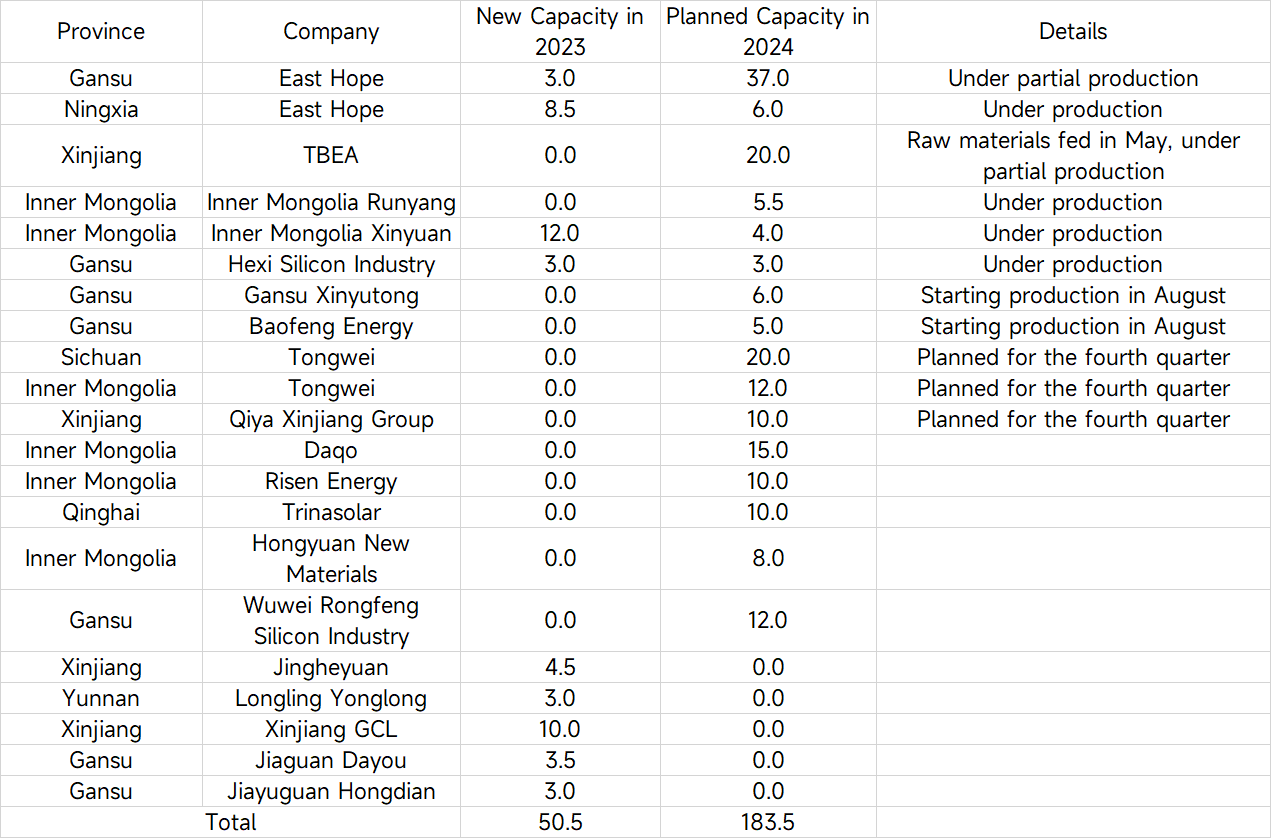
According to the silicon metal commissioning plan at the end of 2023, over 1 million mt of new silicon metal projects were expected to be commissioned in 2024. However, by the end of August this year, the actual commissioned capacity was less than 400,000 mt, with multiple projects experiencing delays. The main reason is that the planning of new silicon metal projects has been intensive in recent years, while the overall downstream consumption growth has not met supply expectations. In 2024, spot silicon metal prices have been declining, with industry profits narrowing or even turning into losses. According to SMM prices, on August 30, 2024, the average price of above-standard #553 silicon metal in east China was 11,700 yuan/mt, down 3,900 yuan/mt or 33% from early January 2024's 15,600 yuan/mt.

There are over 200 silicon metal enterprises in China, distributed in regions rich in resources such as thermal power, hydropower, and mineral coal, including Xinjiang, Inner Mongolia, Yunnan, and Sichuan. The annual capacity of new silicon metal projects is mostly above 100,000 mt. During the industry's capacity expansion process, the competitiveness of integrated or cost-advantaged enterprises will be highlighted. At the same time, new entrants often have strong financial and technological innovation capabilities, accelerating the development process of the silicon metal industry.

Data Source Statement: Except for publicly available information, all other data are processed by SMM based on publicly available information, market communication, and relying on SMM's internal database model. They are for reference only and do not constitute decision-making recommendations.

For any inquiries or for more information, please contact: lemonzhao@smm.cn
For more information on how to access our research reports, please contact:service.en@smm.cn
Related News
[SMM Analysis] Rubaya: Ownership, Conflict and the Global Tantalum Trade
6 hours ago
[SMM Analysis] Rubaya: Ownership, Conflict and the Global Tantalum Trade
Read More
[SMM Analysis] Rubaya: Ownership, Conflict and the Global Tantalum Trade
[SMM Analysis] Rubaya: Ownership, Conflict and the Global Tantalum Trade
Rubaya’s coltan industry shows how mineral wealth can sustain livelihoods while under conflict. This study traces the mining district’s ownership, formalisation efforts and M23’s takeover, then examines trade routes, taxation and risks facing miners. Rubaya matters to global tantalum supply, but its precise contribution is subject to further research.
6 hours ago
[SMM Chromium Flash] Zimbabwe's Mines Ministry Inspects Alluvial Chrome Operations in Nationwide Compliance Sweep
11 hours ago
[SMM Chromium Flash] Zimbabwe's Mines Ministry Inspects Alluvial Chrome Operations in Nationwide Compliance Sweep
Read More
[SMM Chromium Flash] Zimbabwe's Mines Ministry Inspects Alluvial Chrome Operations in Nationwide Compliance Sweep
[SMM Chromium Flash] Zimbabwe's Mines Ministry Inspects Alluvial Chrome Operations in Nationwide Compliance Sweep
Zimbabwe's Ministry of Mines and Mining Development has launched nationwide blitz inspections of alluvial chrome mining operations and processing plants, effective September 25, 2026, to enforce compliance with the country's mining laws. The inspections are initially targeting operations in Mashonaland Central, Mashonaland West and Midlands provinces, before being extended to other parts of the country. Permanent Secretary in the Ministry of Mines and Mining Development Dr Thomas Utete Wushe said the exercise is aimed at ensuring chrome mining activities are conducted within the legal framework. The ministry cited Section 222 of the Mines and Minerals Act [Chapter 21:05], which classifies chromite as a designated mineral, and Section 225, which requires anyone seeking to work an alluvial or eluvial chromite deposit to obtain an order from the Mining Affairs Board. Dr Wushe warned that mining operations found in breach of the regulations could face suspension and other penalties, and said the inspections will also cover chrome processing plants to assess compliance with relevant regulatory requirements. The government has appealed to members of the public to assist authorities by reporting suspected illegal alluvial chrome mining activities. The inspections come amid wider efforts by Zimbabwean authorities to regulate mining activities and ensure mineral resources are extracted and processed in accordance with the law, following earlier findings that the country's chrome output fell sharply in the first quarter of 2026 as more accessible alluvial deposits became depleted, pushing producers toward costlier hard-rock extraction methods.
11 hours ago
[SMM Chromium Flash] China's Zero-Tariff Scheme Drives Chrome Volumes Through South Africa's Port of Ngqura
12 hours ago
[SMM Chromium Flash] China's Zero-Tariff Scheme Drives Chrome Volumes Through South Africa's Port of Ngqura
Read More
[SMM Chromium Flash] China's Zero-Tariff Scheme Drives Chrome Volumes Through South Africa's Port of Ngqura
[SMM Chromium Flash] China's Zero-Tariff Scheme Drives Chrome Volumes Through South Africa's Port of Ngqura
China's zero-tariff policy for qualifying South African exports has significantly boosted demand for dry bulk commodities moving through South Africa's Port of Ngqura, including chrome, magnetite, iron ore and corn, port business strategy manager Xola Mkontwana said. Speaking during a media tour of the adjacent Coega Special Economic Zone in South Africa's Eastern Cape Province, Mkontwana described "exponential growth" in commodity throughput destined for the Chinese market since the policy took effect, saying the zero-tariff treatment has assisted bulk throughput across the port system specifically for commodities including chrome and magnetite alongside iron ore and corn. The zero-tariff treatment applies to qualifying exports from South Africa and 19 other non-least-developed African countries, and officially took effect on May 1, 2026. The framework runs as a two-year, non-reciprocal arrangement through April 30, 2028, expanding duty-free access to the Chinese market for African goods, provided exporters comply with rules of origin and standard customs regulations. The initiative fulfils commitments made under the Forum on China-Africa Cooperation (FOCAC) framework aimed at promoting more balanced bilateral trade and supporting industrialization across the African continent. Mkontwana attributed the surge in Chinese orders to expanding industrial and infrastructure activity in China combined with favorable price realizations for South African mining and agricultural producers. Port of Ngqura, located roughly 20 km northeast of Gqeberha, is South Africa's newest deep-water commercial port and serves as a logistics gateway connecting Eastern Cape minerals, agricultural produce and automotive manufacturing to global shipping lines, offering an additional export route for South African chrome alongside the Richards Bay and Maputo corridors more commonly associated with the country's chrome trade. No specific chrome tonnage or volume figures for Port of Ngqura were disclosed in the report.
12 hours ago