

Introduction: A Mining District with Global Reach
Rubaya, in Masisi territory in eastern Democratic Republic of Congo (DRC), is a town surrounded by mining sites that supply most of the world's coltan. Coltan (Columbite-Tantalite) contains tantalum as per the name, a metal used in electronics and other demanding industrial applications. Yet the people digging the mineral, those holding mining rights and those collecting money from its movement have often been different groups. Understanding that separation explains both Rubaya's importance and its repeated conflicts. [1][7][10]
Rubaya is a town and surrounding mining area with several pits and concessions. Its pegmatites, coarse-grained rocks associated with granite, contain coltan and gemstones. UN experts also recorded cassiterite and manganese extraction; gem researchers documented tourmaline. Most mining is artisanal, although OECD/UN research identified mechanical mining at SMB's D2 Bibatama site. Calling the district artisanal does not settle who legally holds its concessions. [4][7][19]
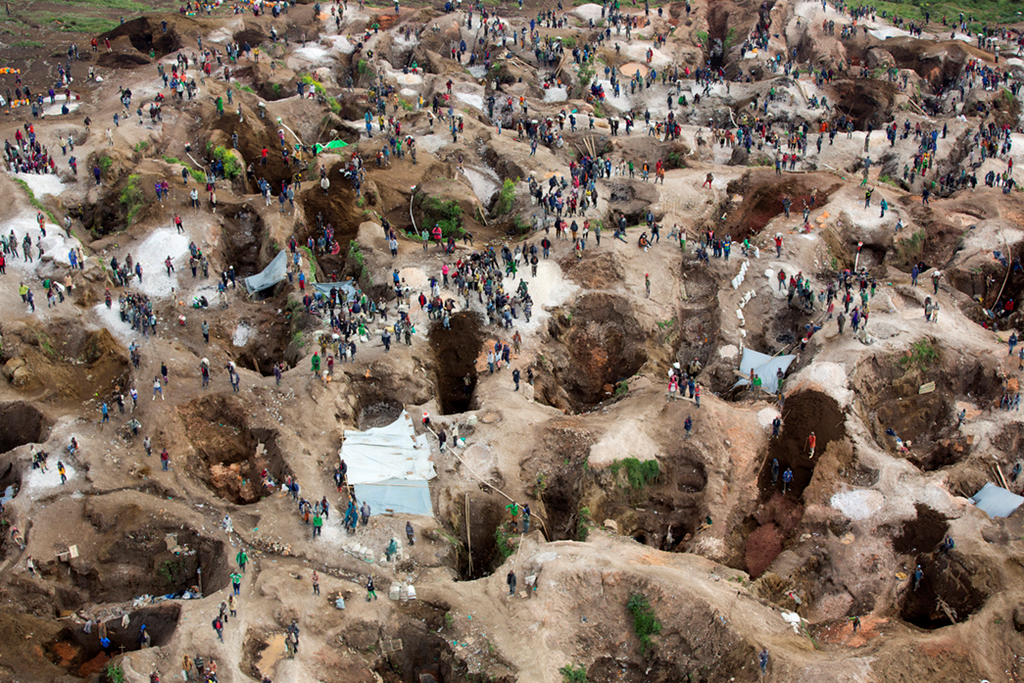
Figure 1. Luwowo near Rubaya, March 2014. Historic photograph: MONUSCO Photos. [20]CC BY-SA 2.0
How Mining Rights and Trading Relationships Developed
The regional concession history runs through SOMINKI, formed in 1976 with private and state shareholders, and SAKIMA, created from its assets in May 1997. Rubaya's modern licence history is clearer from 2001, when the RCD-Goma rebel administration granted Edouard Mwangachuchu a licence. National authorities confirmed the title in 2006. His MHI business later became Societe Miniere de Bisunzu (SMB). These records establish a corporate and permit history, rather than a single discovery date for the entire district. [2][3][4]
Alongside the licence holder, COOPERAMMA organised artisanal miners. Robert Seninga established the cooperative in 2004. A joint mission validated the concession as green in September 2011. In 2013, a purchasing agreement directed cooperative sales to MHI, with an exception when MHI could not buy all production. This linked concession rights to a large artisanal workforce, while making purchasing terms central to commercial control. [3][4]
|
Milestone |
What it changed |
|
1976 / 1997 |
SOMINKI and then SAKIMA shaped the regional concession structure. |
|
2001 / 2006 |
Mwangachuchu received a licence, later confirmed by Kinshasa. |
|
2004 / 2013 |
COOPERAMMA formed; a purchasing agreement linked miners to MHI. |
|
2014–2018 |
ITSCI operated on the former SMB concession; participation ended in December 2018. |
Figure 2. Corporate history, mineral rights and purchasing arrangements were distinct forms of control. [1][2][3][4]
Formal records grew around these relationships. The ITSCI traceability programme operated at SMB from 2014 to December 2018. Meanwhile, disputes over payments, outside sales and boundaries with neighbouring SAKIMA ground continued as purchasing agreements ended or expired in 2018–2019. Traceability could document transactions, but it could not settle the underlying struggle over rights and revenue. [1][3][4]
From Disputed Rights to the 2024 Rebel Takeover
The ownership picture then became more complicated. Congo Fair Mining (CFM) and CDMC, a mining cooperative, describe a 2020 partnership with SAKIMA; their later account asserts rights over disputed ground. In 2023, SMB withdrew personnel, the ministry suspended its activities and exports, and the company lost its PE4731 permit and appealed. UN experts also documented minerals from restricted PE4731 entering trade through neighbouring PE76. Paperwork could therefore survive while the reported origin changed. [5][6][9]
Physical control was equally unsettled. M23 briefly occupied Rubaya in February 2023 before being pushed out. Government-allied Wazalendo groups subsequently controlled and taxed sites. The sustained turning point came on 30 April 2024, when the Congo River Alliance and its M23 armed component (AFC/M23) seized Rubaya town and the mining area. ITSCI suspended its wider Masisi operations again on 8 May, after earlier interruptions and a short April resumption. Its former SMB coverage had already ended in 2018. [1][5][6][7]
|
Date / period |
Change in control or oversight |
|
February 2023 |
Brief M23 occupation, followed by renewed local armed-group control. |
|
30 April 2024 |
AFC/M23 seized the town and mining area. |
|
8 May 2024 |
ITSCI suspended wider Masisi tagging again. |
|
2026 reporting |
UN experts described continued rebel administration; ITSCI reaffirmed suspension in February. |
Figure 3. Site control and traceability coverage must be matched to the same place and date. [1][5][7][8]
The takeover changed who could regulate trade without changing DRC sovereignty. It also left a separate legal dispute: the UN's 2026 cadastral snapshot identifies the main hill as PE16159, registered to SAKIMA, while CFM/CDMC assert competing rights. Their statement is an interested-party account. Neither physical possession nor one registry snapshot resolves the full permit and court history. [8][9]
What the Output Evidence Can Tell Us
This loss of oversight makes Rubaya's scale harder to measure precisely. UN experts estimated approximately 120 tonnes of coltan traded monthly from mid-May to late October 2024. Their 2026 assessment found expanded activity and output above that benchmark, but gave no exact replacement annual figure. The evidence describes mineral flows and changing activity; it does not establish an engineered mine capacity, audited reserves or mine life. [7][8]
A national-share calculation illustrates the uncertainty. Annualising 120 tonnes gives 1,440 tonnes of concentrate. Adding that to the ministry's detailed 2025 national total of 1,434.17 tonnes would give 2,874.17 tonnes, with Rubaya contributing about 50%. But this carries a 2024 flow estimate into 2025 and assumes a full year, no overlap and no other missing output. It is a scenario, not a measured national share. The ministry's summary instead reports 1,309.55 tonnes; the discrepancy is explained in the reference notes. [7][11]
Global comparisons require another adjustment: coltan concentrate is not pure tantalum. USGS estimates 2025 world mine production at 2,500 tonnes of contained tantalum. At an assumed 32% tantalum pentoxide grade, the illustrative 1,440 tonnes of concentrate would contain about 377 tonnes of tantalum, equivalent to 15.1% of that world total. This helps explain how the frequently quoted 15% contribution could arise, but neither the assumed grade nor a full year at that volume has been verified here. [4][10]
The practical conclusion is that Rubaya is a significant source whose exact annual share remains unresolved. A defensible estimate needs dated weights, representative assays and checks for overlap with national records. Adding a fixed percentage to every historical year would conceal changes in coverage and risk counting the same material twice.
Where the Money Goes and Who Bears the Cost
Uncertain output does not mean the trading system is invisible. UN investigators traced Rubaya minerals along rebel-controlled routes into Rwanda. Their 2026 report describes Kigali-based buyers, approved transporters and tax invoices settled after delivery. The UN also documents Rwandan military support for M23; Rwanda denies backing the group. These findings concern identified routes and actors, rather than proving that every Rwandan mineral shipment originates in Rubaya. [7][8][21]
For the rebel administration, the attraction is recurring income from movement and sales. UN experts estimated at least US$800,000 a month from coltan taxation in 2024. Later reporting gives different per-kilogram rates, while Reuters described a percentage levy during its March 2025 visit. The sources cover different dates and tax bases, so the figures cannot simply be combined into one revenue estimate. [7][8][12]
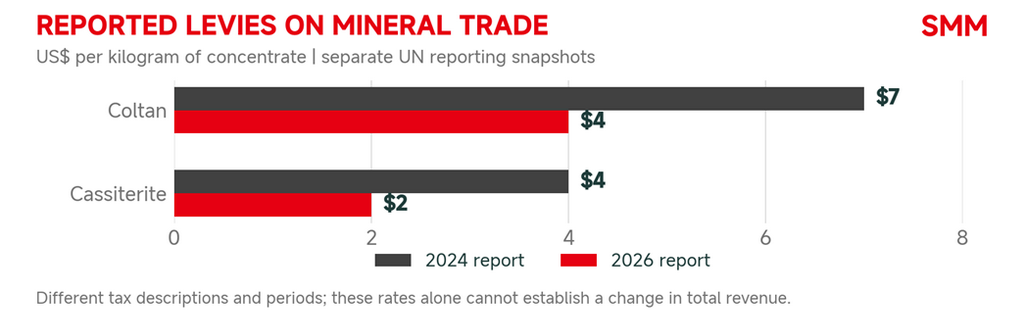
Figure 4. Separate UN levy snapshots. Different rates alone do not establish a change in total revenue. [7][8]
That system affects miners as well as buyers. Amnesty's September 2026 investigation documented killings, torture and forced labour across Rubaya's coltan and Lomera's gold sites, including accounts of Rubaya miners forced underground. Serious collapses added to the danger. More than 200 deaths were reported after a late-January collapse; the government reported over 200 after a separate March disaster, but M23 disputed the latter toll. These are attributed reports, not a verified combined total. [14][16][17]
Mining nevertheless supports households and local commerce. Comfort International's account of a Rubaya school established in 2016 shows how closely education and livelihoods are tied to the mining economy. For buyers, this means due diligence must distinguish specific mines and payment chains. ITSCI itself cautions that its coverage is narrower than all Rwandan exports. Checks on origin must also establish whether payments support coercion and whether miners can work safely. [13][15]
Conclusion and Outlook: What Would Make Investment Credible?
These weaknesses explain why strategic interest alone cannot unlock Rubaya's potential. A government document reviewed by Reuters placed Rubaya on a February 2026 offer to US investors, with US$50 million–US$150 million estimated for restarting and expanding commercial output. This is a planning range, not committed funding or a tested feasibility budget; artisanal extraction was already continuing. [8][18]
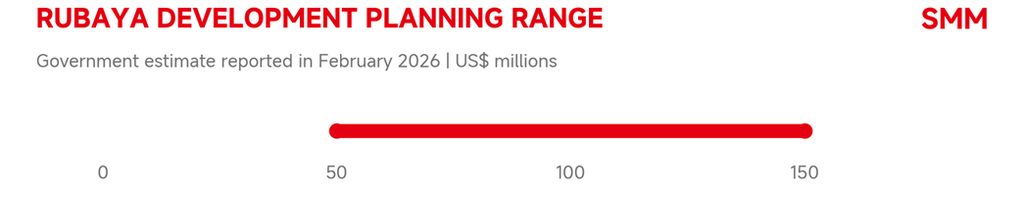
Figure 5. Government development planning range reported by Reuters; no approved project cost or midpoint forecast is implied. [18]
The investment sequence follows directly from the history. First, legal rights and safe access must be established. Then sampling, processing tests and a credible resource model must show what can be produced economically. A lawful route to market must connect those results to traceable shipments, transparent payments and better conditions for miners.
Rubaya's importance to tantalum supply is clear, while its precise scale remains uncertain. Progress should be judged by independent access, reliable production records and safer livelihoods. Those changes would show that control of a valuable deposit is becoming a functioning, accountable mining economy.
References
[1] ITSCI (6 Feb 2026). ITSCI statement on the mine collapse in Rubaya, Masisi territory. Annexes 1–2.
[2] ICGLR / Martello Risk (27 Jul 2016). Third-party audit at SAKIMA, executive summary. p. 2.
[3] UN Group of Experts (10 Jun 2021). S/2021/560. Final report; annex 42, p. 147.
[4] OECD / United Nations (2023). Conflict transformation and the role of responsible artisanal and small-scale mining: Supporting peace through supply chain due diligence. pp. 25–26 and 58; doi:10.1787/cdbd61d1-en.
[5] UN Group of Experts (13 Jun 2023). S/2023/431. Final report; paras 91–97, pp. 23–24; annex 52.
[6] UN Group of Experts (30 Dec 2023). S/2023/990. Midterm report; paras 61–71, pp. 15–16; annexes 41–44.
[7] UN Group of Experts (27 Dec 2024). S/2024/969. Midterm report; paras 49–66, pp. 12–15; annex 29.
[8] UN Group of Experts (11 Jun 2026). S/2026/466. Final report; paras 213–225, pp. 38–40; annex 67, p. 219.
[9] CFM / CDMC, published by Times.cd (3 Oct 2025). Right of reply on the Rubaya concession dispute. Company right of reply; interested-party account, not an independent title ruling.
[10] US Geological Survey (Feb 2026). Mineral Commodity Summaries 2026: Tantalum. World mine production table: 2025 estimates in tonnes of contained tantalum.
[11] DRC Ministry of Mines (2025 reporting year). Statistiques minières, exercice 2025. Tables 29–31, pp. 43–45 (PDF 59–61); table 35, p. 49 (PDF 65).
[12] Reuters (13 Aug 2025). Inside the mine that feeds the tech world — and funds Congo’s rebels. Field investigation; March 2025 visit under M23 supervision.
[13] ITSCI (12 Nov 2025). Shifts in tantalum mineral flows from the Great Lakes Region. Programme coverage and regional trade statistics.
[14] Amnesty International (21 Sep 2026). DRC: “We didn’t come to play”: M23 abuses at artisanal mines and the trafficking of gold and coltan to Rwanda. AFR 62/1454/2026; pp. 8–9, 16–24. Two-site investigation.
[15] Comfort International (n.d.; 2022 visit account). Rubaya: Mining, Minerals and a Desperately Needed School. Izzy Henderson’s community account; no publication date displayed.
[16] Reuters (4 Mar 2026). Landslide kills over 200 people at Congo’s Rubaya mine, mines ministry says. Government and M23 casualty accounts differ.
[17] Reuters, via Engineering News (2 Feb 2026). More than 200 killed in coltan mine collapse in east Congo, official says. Reprint; casualty estimate attributed to a rebel-appointed official.
[18] Reuters (18 Feb 2026). Congo offers tantalum deposit under M23 control to US in minerals pact, document shows. Cites a government shortlist and planning estimate.
[19] Laurs, B.M.; Falster, A.U.; Simmons, W.B. (2017). Tourmaline from Masisi, Democratic Republic of the Congo. Journal of Gemmology 35(8), pp. 698–700.
[20] MONUSCO Photos / Wikimedia Commons (Mar 2014). Luwowo coltan mine near Rubaya. Photo credit: MONUSCO Photos. Licensed CC BY-SA 2.0; historical image.
[21] Reuters (22 Sep 2026). Belgium, Rwanda resume diplomatic relations after DRC conflict dispute. Includes Rwanda’s denial of backing M23.
![[SMM Chromium Flash] Zimbabwe's Mines Ministry Inspects Alluvial Chrome Operations in Nationwide Compliance Sweep](https://imgqn.smm.cn/usercenter/ZVhtl20251217171724.jpeg)
![[SMM Chromium Flash] China's Zero-Tariff Scheme Drives Chrome Volumes Through South Africa's Port of Ngqura](https://imgqn.smm.cn/usercenter/xLlnY20251217171724.jpeg)


![[20]](https://commons.wikimedia.org/wiki/File:SRSG_visits_coltan_mine_in_Rubaya_(13406579753).jpg)