LME WEEK: China’s energy transformation, manufacturing upgrade and Belt & Road becoming new driving forces for China’s metal consumption

Published: Oct 11, 2023 14:44 (GMT+8)
At the SMM LME LONDON EVENT held during LME WEEK, Wu Ming, head of metals and commodities at PRC Macro, expressed her views on the impact of Chinese real estate on global metal demand.

At the SMM LME LONDON EVENT held during LME WEEK, Wu Ming, head of metals and commodities at PRC Macro, expressed her views on the impact of Chinese real estate on global metal demand.

https://imgqn.smm.cn/production/admin/news/cn/pic/QOMHf20231010193001.png?imageView2/2/w/800

China’s real estate slowdown: knowns and unknowns

A slowdown in China's property market has weakened global metals demand as the industry accounts for about 20% of global steel demand, about 18% of aluminium demand and about 6% of copper demand. This is expected to lead to overcapacity and oversupply.
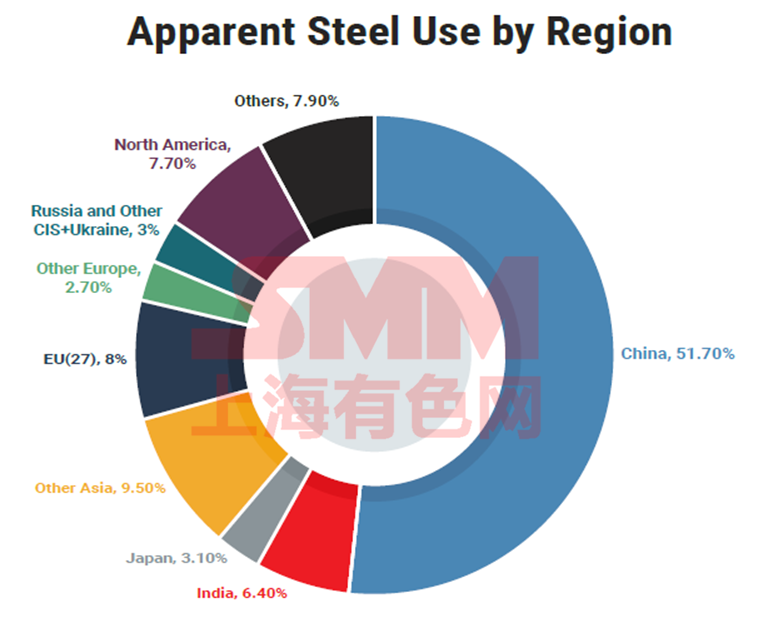
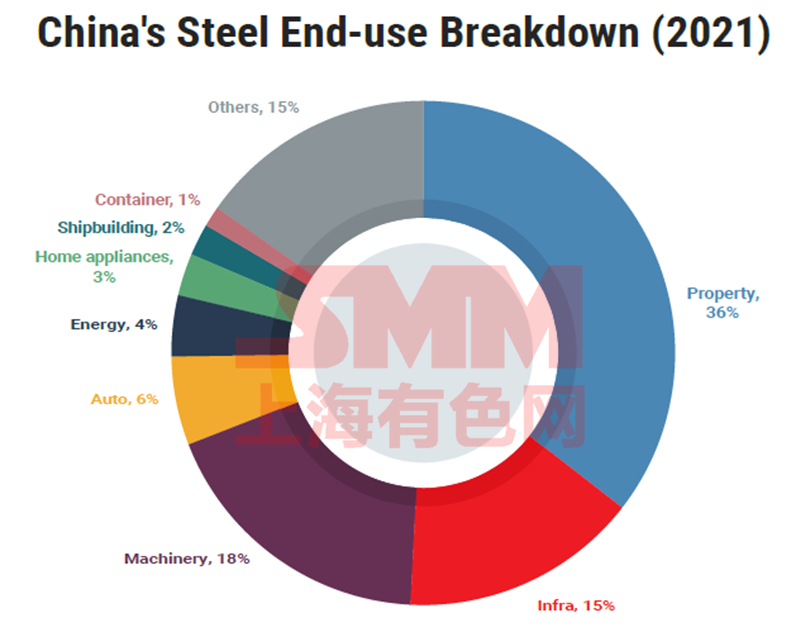
https://imgqn.smm.cn/production/admin/news/cn/pic/OUmEg20231010132836.png?imageView2/2/w/800

https://imgqn.smm.cn/production/admin/news/cn/pic/ZntDL20231010132854.png?imageView2/2/w/800

The Mystery of Steel

In theory, steel and iron ore demand should collapse as housing starts and construction weaken, but actual demand for steel this year has exceeded market expectations.

New driving forces: energy transformation, manufacturing upgrade

Chinese manufacturers hold a leading position in the global value chain and are capable of providing more high value-added products. China's energy transition not only boosts infrastructure and domestic consumption, but also enhances the competitiveness of Chinese manufacturers.
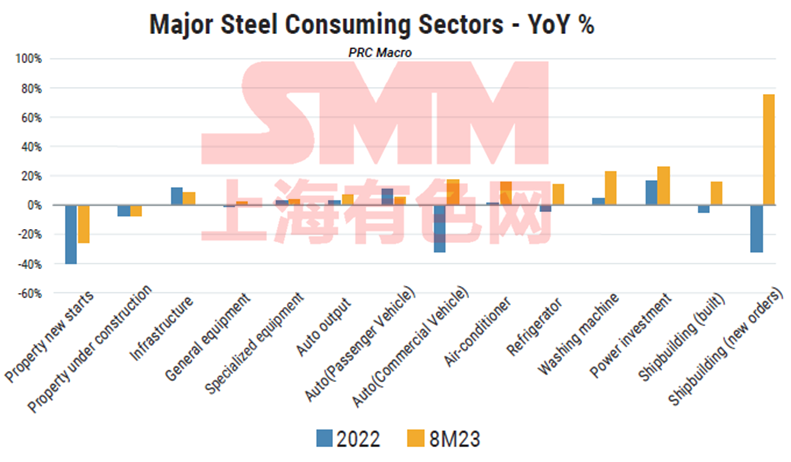
https://imgqn.smm.cn/production/admin/news/cn/pic/ViZVy20231010134101.png?imageView2/2/w/800

ODI boosts steel demand thanks to Belt and Road initiative

Strong exports consumed about 8% of steel production , largely counteracting the impact of the real estate slowdown.

The surge in exports to the Middle East was driven by a strong rebound in policy-supported RMB overseas direct investment (ODI).

Structural changes in China’s steel market

Manufacturing upgrades, energy transformation and overseas demand have led to changes in the structure of China's steel market, with flat steel gaining more share.

Chinese steel mills are working to reduce risks posed by the property market, and industry policy guidance will reinforce this trend.

Chinese steel mills

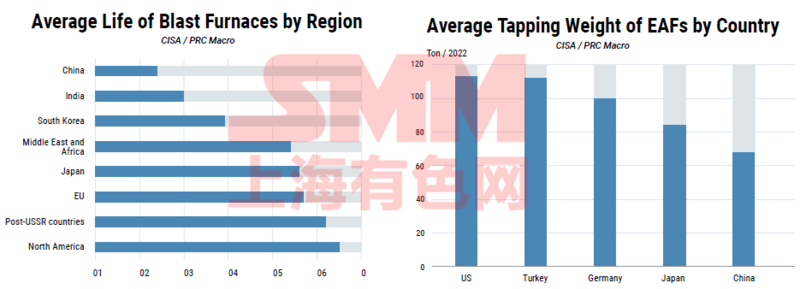
The average service life of BF-BOF assets in China is only about 14 years, compared with more than 40 years elsewhere, making it difficult for Chinese steel mills to scrap them in a short period of time. At the same time, the current capacity of electric arc furnaces is too small to produce flat steel.
https://imgqn.smm.cn/production/admin/news/cn/pic/qVwGf20231010141953.png?imageView2/2/w/800

Copper and aluminium: Still have support in the near term

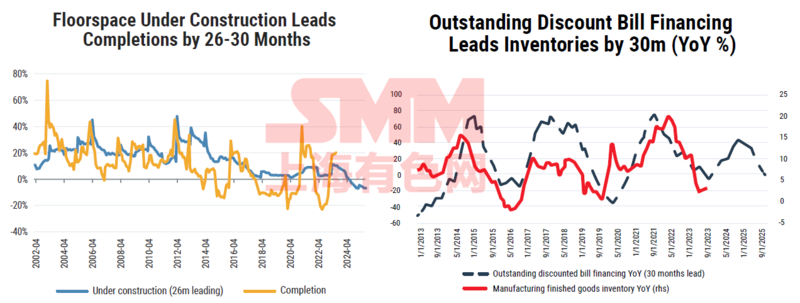
Completion of real estate will maintain growth until at least the second quarter of 2024.

Manufacturing stockpiling may begin in the fourth quarter of 2023, driven by energy investment, manufacturing upgrades and real estate completions.
https://imgqn.smm.cn/production/admin/news/cn/pic/OiJmP20231010142619.png?imageView2/2/w/800

Conclusion

•Global metal producers and metal demand are reducing the risk of China's real estate crisis. China's energy transformation, manufacturing upgrades, and strong exports driven by ODI in the Belt and Road initiative countries are becoming new driving forces for metal consumption.

•These new drivers have led to structural changes in China's steel market, with the share of flat steel rising steadily.

•This structural change on the demand side, coupled with China's supply structure, makes iron ore demand more resilient.

•China's property completion and restocking cycle will continue to support aluminium and copper demand in the short term.

Data Source Statement: Except for publicly available information, all other data are processed by SMM based on publicly available information, market communication, and relying on SMM's internal database model. They are for reference only and do not constitute decision-making recommendations.

For any inquiries or for more information, please contact: lemonzhao@smm.cn
For more information on how to access our research reports, please contact:service.en@smm.cn
Related News
Peru sees 1 million t/y copper output boost within five to six years
20 hours ago
Peru sees 1 million t/y copper output boost within five to six years
Read More
Peru sees 1 million t/y copper output boost within five to six years
Peru's Energy and Mines Minister Guillermo Shinno said the country expects to add about 1 million tonnes of annual copper production within five to six years through new mining projects. The world's third-largest copper producer anticipates 2026 output of 2.5 to 2.7 million tonnes, roughly unchanged from 2023 as declining ore grades and recurring social conflicts weigh on supply. The newly elected government is seeking to reverse that stagnation by cutting red tape; in the two months since taking office, mining companies have stepped up engagement with the ministry. Shinno said officials have identified 27 permits that could be eliminated from roughly 100 mining-sector requirements, without lowering environmenta
20 hours ago
India copper producers seek GST cut as record prices raise working-capital burden
Sep 25, 2026 20:26 (GMT+8)
India copper producers seek GST cut as record prices raise working-capital burden
Read More
India copper producers seek GST cut as record prices raise working-capital burden
Indian copper producers are seeking a GST cut to 5% from 18%, citing rising working-capital requirements amid record-high copper prices.
Sep 25, 2026 20:26 (GMT+8)
Sulphuric Acid Shortage Emerges as a Constraint on Zambia’s Copper Growth
Sep 25, 2026 16:43 (GMT+8)
Sulphuric Acid Shortage Emerges as a Constraint on Zambia’s Copper Growth
Read More
Sulphuric Acid Shortage Emerges as a Constraint on Zambia’s Copper Growth
Zambia’s sulphuric acid shortage is becoming a growing constraint on copper production and refining. Jubilee Metals reported acid costs rising by more than 200% in Q4 FY2026, while Sable cathode output fell to 250 t from 361 t in Q3. Government data also showed small-scale copper production down 35.2% YoY in H1 2026, highlighting the sector’s exposure to tight acid availability and higher processing costs.
Sep 25, 2026 16:43 (GMT+8)