SHANGHAI, Aug 31 (SMM) – Aluminium is the second largest metal after steel in the world. Due to excellent possessing properties such as good electrical and thermal conductivity, and suitable for machining, it is widely used in various sectors of the national economy. As a source of aluminium, bauxite is mainly composed of minerals such as gibbsite, boehmite, or diaspore. As a big aluminium consumer, China is relatively short of bauxite resources. Over-exploitation in recent years also aggravated the lack of high-grade ore reserves in China, causing a shortage of ores for a prolonged period of time. And Indonesia, one of China’s top bauxite suppliers, announced in 2021 that it planned to stop export of commodity raw materials and formally banned bauxite exports in June 2023. Under pressure, what’s the next move for China’s bauxite market?
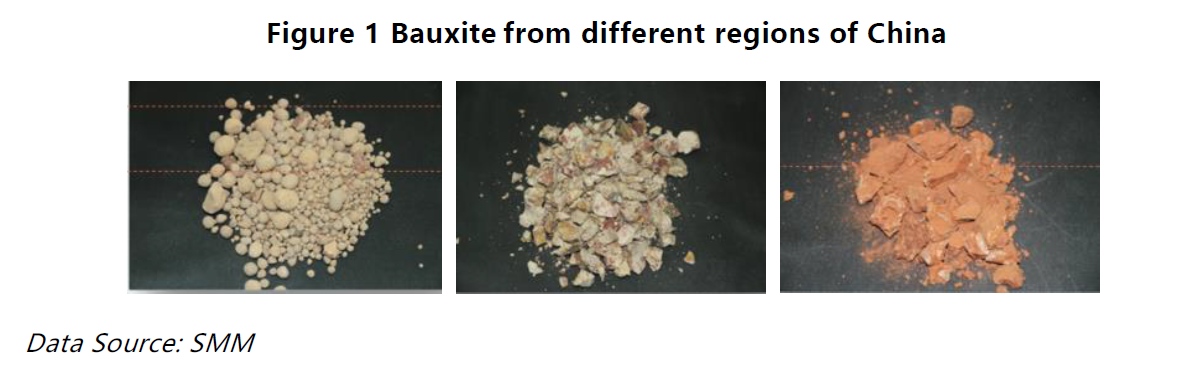
The mining areas of bauxite are mainly distributed in Guangxi (50%), Henan (17%), Guizhou (16%), and Shanxi (15%). Bauxite deposits come in sedimentary type (80%), accumulation type (16%), and laterite type (4%). Bauxite in China is mostly monohydrate bauxite, the average aluminium-silicon ratio is less than 6, the grade is high, and contains a lot of impurities.
Sedimentary deposits own the largest reserves and output. They are mainly distributed in the eastern and central parts of Shanxi, northwestern Henan, northern and central Guizhou, western and northern Guangxi, Benxi City in Liaoning, Huaihua City in Hunan, and Hanzhong City in Shaanxi. The main difficulties faced by bauxite mines are limited large-scale open-pit mines, difficulty in utilizing high-sulfur and high-silicon resources, rising mining costs at depths above 300 meters underground, and disputes over the mining rights of aluminiumbauxite under coal mines (especially in Shanxi and Henan). Accumulative deposits are distributed in karst areas such as Baise City in western Guangxi and Wenshan Prefecture in eastern Yunnan. Among them, the most typical representatives are Pingguo and Nadou bauxite deposit in Guangxi. Laterite deposits are distributed in southern Guangxi, central Yunnan, southwestern Fujian, Guangdong Leizhou Peninsula, Penglai Town in Hainan, and other southern tropical regions. Most deposits are small ones, with very few medium-ones.
With the rapid development of industrialization and urbanization, domestic demand for mineral resources has also increased sharply. However, China’s bauxite mine lifespan is much lower than the global average. In 2021, the lifespan of bauxite mines in China was 8.7 years, while the global average is 102 years. This further shows that the shortage of bauxite resources in China is severe, and it will be difficult to support the rapid growth of the industry.
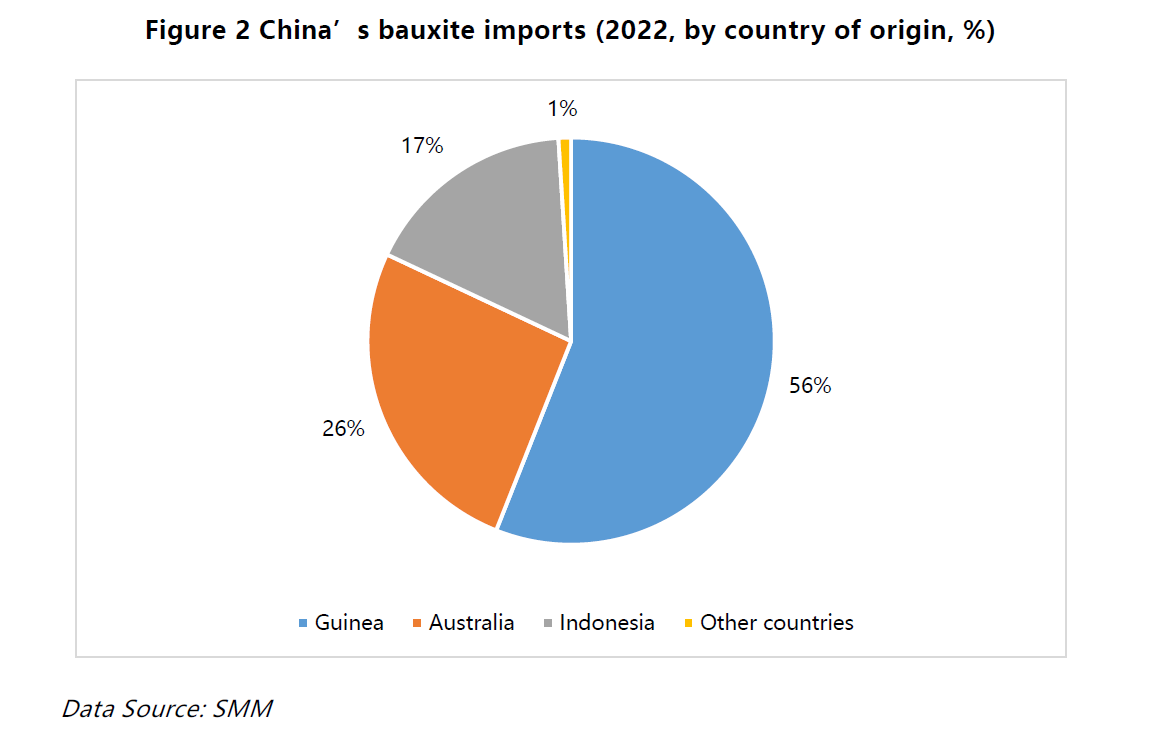
In terms of imports, China imported a total of 125.47 million mt of bauxite in 2022, an increase of 16.8% over 2021, reaching a record high. Among them, imports from Guinea, Australia, and Indonesia were 70.35 million mt, 34.09 million mt, and 18.98 million mt respectively, an increase of 28.5%, 0.05%, and 6.7% over the previous year.