SHANGHAI, Sep 15 (SMM) – LME and SHFE base metals closed mixed as the investors weighed the US inflation print for August, and they were still worried about the economic prospect following the expected aggressive US rate hike.
LME copper slid 0.57%, aluminium fell 1.43%, lead rose 0.61%, and zinc gained 0.68%.
SHFE copper slid 0.56%, aluminium fell 1.13%, lead rose 0.47%, and zinc gained 0.08%.
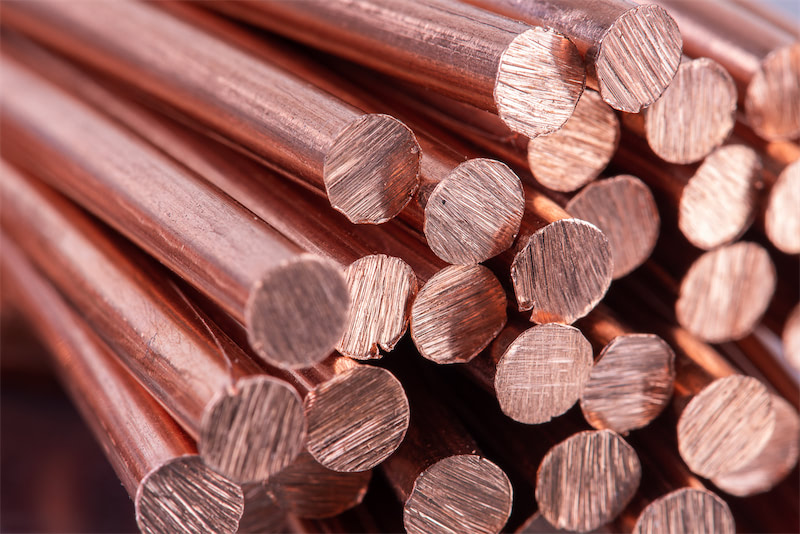
Copper: LME copper opened at $7,837.5/mt yesterday and trended lower. The contract once hit the lowest and highest of $7,753/mt and $7,827.5/mt respectively. At last, the contract closed at $7,785.5/mt, down 0.57%. Trading volume was 13,000 lots, and open interest stood at 252,000 lots.
SHFE 2210 copper contract opened at 62,280 yuan/mt in overnight trading, and reached 62,320 yuan/mt after falling to 61,870 yuan/mt. At last, the contract closed at 62,140 yuan/mt, down 0.56%. Trading volume was 45,000 lots, and open interest stood at 152,000 lots.
On the macro front, the US dollar index fell overnight as the market gradually digested the impact of US inflation data. Under the expectation of aggressive interest rate hikes by the US Fed, the market was worried about the economic outlook, and copper futures fluctuated and closed down slightly at night.
In terms of spot, the import window was closed, and goods arriving at ports recently were hindered by the typhoon, so the supply of imported copper is still relatively tight. On the demand side, the spread between the front-month and next-month contracts fluctuated violently approaching the delivery of the SHFE 2209 contract, which once expanded to above 700 yuan/mt in the backwardation structure. Downstream copper processing enterprises held a wait-and-see attitude and were waiting for the delivery, hence the transactions were slack. SMM believes that under the factors such as the closing of the import window, the influence of typhoons, goods arriving at ports during the Mid-Autumn Festival holiday, and the gradual consumption of domestic supply, it is difficult for the cargo holders to reduce the premiums. After the delivery of the SHFE 2209 contract, the market may witness high premiums again.
Aluminium: The most-traded SHFE 2210 aluminium contract opened at 18,470 yuan/mt overnight before closing at 18,455 yuan/mt, down 210 yuan/mt or 1.13%.
LME aluminium opened at $2,309.5/mt on Wednesday and closed at $2,273.5/mt, down 1.43%.
On the whole, though the downstream demand has not yet improved substantially in September, and direction is slightly bullish with frequent overseas production cuts as well as digested macro sentiment. Therefore, SHFE aluminium is likely to retain some momentum as the market will be dominated by the supply side.
Lead: LME lead opened at $1,948/mt overnight and fell slightly during the Asian trading hours. As the US dollar index fell, LME lead rose. LME lead fell to the lowest point at $1,933/mt after hitting the highest point at $1,967.5/mt. LME lead finally rebounded and closed at $1,964.5/mt, up 0.61%. The open interest increased by 602 from the previous trading day lots to 92,281 lots.
The most-traded SHFE lead contract opened at 15,010 yuan/mt overnight and rose 0.47% to 15,070 yuan/mt after hitting the lowest point at 14,995 yuan/mt. The open interest decreased by 1,200 from the previous trading day lots to 42,138 lots.
Zinc: LME zinc closed at $3,242/mt on Wednesday, up $22/mt or 0.68%. The open interest added 1,284 lots 197,000 lots. Overnight LME inventory fell 50 mt to 76,375 mt.
The most traded SHFE 2210 zinc contract closed at 24,780 yuan/mt overnight, up 20 yuan/mt or 0.08%. The open interest fell 139 lots to 129,000 lots. On the supply side, August zinc ingot production fell short of expectation though the power rationing has ended. Nonetheless, September zinc ingot production is expected to add 62,900 mt MoM. On the consumption side, the average monthly operating rate of galvanising companies stood at 61.78% in August, but the operating rate of die-casting companies lost 2.11 percentage points MoM to 40.72% in August. The downstream has not yet improved significantly. The transactions were lacklustre amid high spot premiums and limited rigid demand.
Overnight, the State Council: manufacturing industry will enjoy delayed tax payment totalling 440 billion; it is determined that special refinancing and financial subsidies will be introduced to support the renewal of equipment in some areas; openness is China's basic state policy, and the efforts to stabilise foreign trade and foreign investment will be ramped up; two nuclear power projects are newly approved. The inflation in Europe and the United States is still strong: U.S. August PPI growth fell to 8.7% year-on-year compared to July, core PPI is still higher than expected; U.K. August CPI increased 9.9% year-on-year, slightly below the forty-year high of over 10%. The first national rail strike in thirty years looms in the US as unions reject a preliminary agreement.
Tin: On the fundamentals, domestic warrants inventory fell slightly thanks to warming market trades. LME inventory was high recently, and the import window has opened, with import premiums showing spread with domestic brands. In the futures market, SHFE tin rebounded strongly overnight, and basically regained previous losses. The shorts left the market intensively, and the investors were less interest in participating in futures transactions. To sum up, SHFE tin volatility grew recently, but the overall direction was still firm.
Nickel: On the supply side, the production situation of pure nickel was relatively stable. Although the customs clearance of imported nickel plates has continued to be less, there has been no shortage of NORNICKEL nickel supply due to the weak downstream demand. In terms of NPI, the pressure of high inventory was slightly eased as the steel mills were expected to resume their production. On the demand side, according to SMM research, the spot prices in Wuxi and Foshan markets rose again. And the downstream gradually began to accept the current prices, thus the spread between the traded prices and quotes narrowed. In terms of alloys, the demand for pure nickel remained poor as the current high nickel prices aroused fear in the terminals. To sum up, the downstream demand for pure nickel was still weak and the nickel prices soared earlier. The short-term nickel prices may drop slightly.
[Disclaimer: The above representation and data is based on market information SMM believes to be reliable at the time of acquiring as well as the comprehensive assessment by SMM research team, and any and all information provided in this article is for reference only. This article does not constitute a direct recommendation for investment or any decisions in any form and clients shall act on their own discreet and any decisions made by clients are not within the responsibility of SMM.]