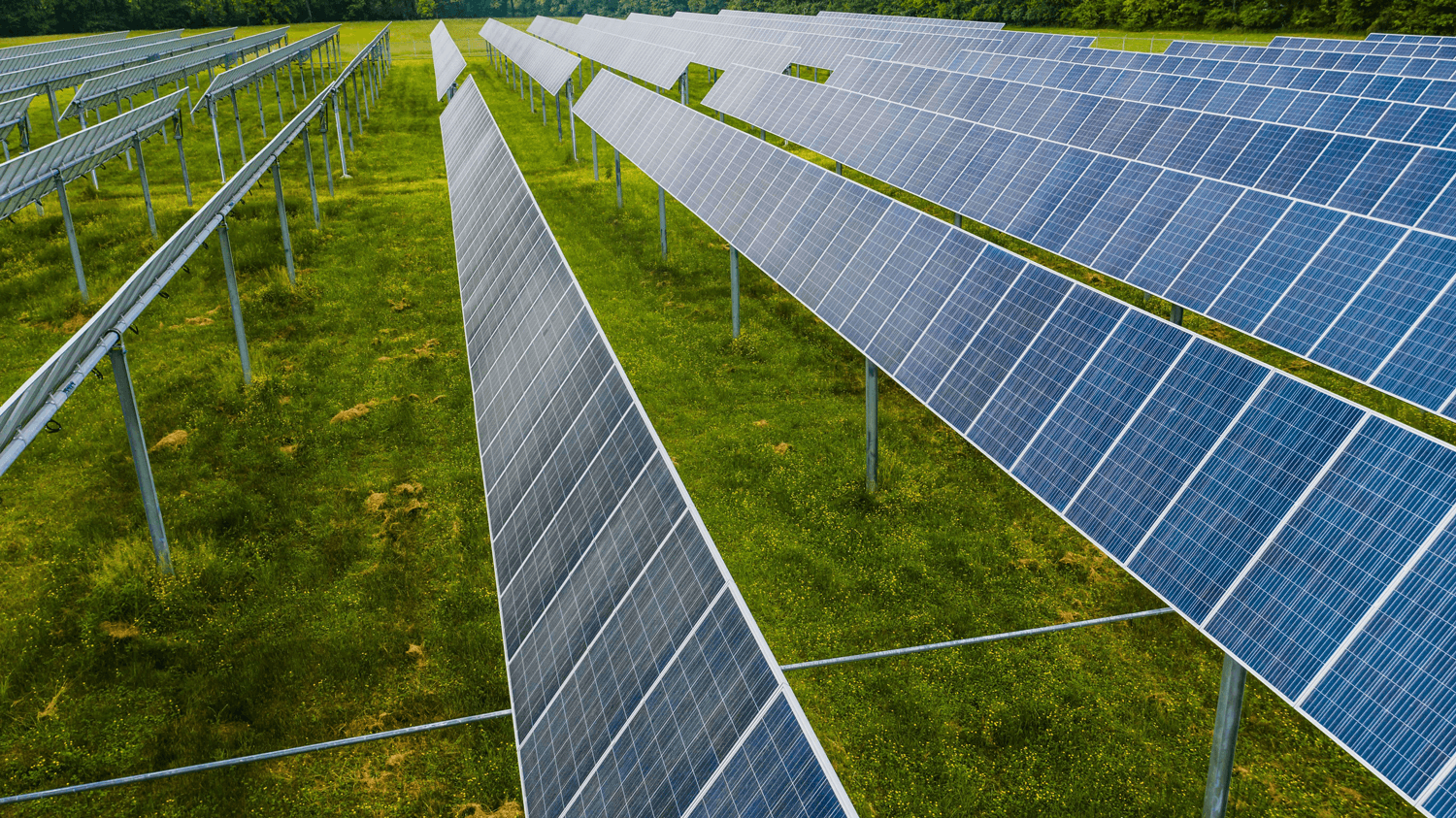
With the increasingly fierce competition in the industry, in addition to the guarantee of production capacity, it may be better to build a green industrial chain. On March 25th, Ningde Times announced that SGS, a world-renowned certification body, issued PAS2060 carbon neutralization certification to its wholly-owned subsidiary Sichuan Times, which means that Ningde Yibin factory has become the world's first zero-carbon battery factory.
"this is the overall certification of Yibin manufacturing base." Ningde era insiders told reporters that the Sichuan era began to plan the path of zero-carbon factories, and the production line used a lot of cool techs to improve efficiency and reduce carbon emissions. Among them, all the waste generated in the manufacturing process will be recycled, and the recovery rate of precious metals such as nickel, cobalt and manganese can reach 99.3%, while more than 80% of the energy in the Yibin plant comes from renewable energy hydropower, which can reduce carbon emissions by 400000 tons per year. "Zero carbon has become one of the core competitiveness of the Sichuan era, and in the future, the Ningde era will replicate and promote the experience of lighthouse factories to achieve carbon neutralization in the top ten bases in the world one after another."
Since 2019, Ningde era has increased Yibin investment many times, and the total investment of the base now exceeds 54 billion yuan. In September 2020, Ningde Times signed a comprehensive strategic cooperation agreement with the Sichuan Provincial people's Government; in June 2021, the Sichuan Times Power Battery Phase I project, a wholly-owned subsidiary of Ningde Times, was officially put into operation in the eastern industrial park of Yibin Sanjiang New area; in December of the same year, Ningde Times announced that the company intends to build a new power battery manufacturing base (Phase 7 to Phase 10) in Yibin through its wholly-owned subsidiary Sichuan Times, with an investment of no more than 24 billion yuan.
Zeng Yuqun, chairman of Ningde Times, said earlier that Yibin base is an important part of the global layout of Ningde era and will complete supporting services for national and global vehicle partners after completion.
According to SNE Research data, in January this year, the global power battery installed TOP5 companies are: Ningde Times, BYD, Panasonic, LG New Energy, China New Airlines. Among them, the global market share of the Ningde era, which topped the list, was as high as 37.8%, 5.2 percentage points higher than the 32.6% in 2021.
How to keep his hegemonic position is an important thinking of "Ning Wang". At present, Ningde era has located 10 production bases around the world, including Ningde, Fujian, Xiamen, Xining, Qinghai, Yibin, Sichuan, Zhaoqing, Shanghai Lingang, Jiangxi Yichun, Guian, Guizhou and Thuringen, Germany. Together with the joint venture capacity with automobile companies, the total planned production capacity of Ningde era exceeds 600GWh. In response to an inquiry from the Shenzhen Stock Exchange about fund-raising in October last year, Ningde Times said that with 30 per cent of the global power and energy storage battery market share, Ningde era's battery capacity would need to reach 520 GWh by 2025.
"the power battery industry also has a lot of room for development." In the view of people in the industry, in order to stabilize supply, many car companies choose to "lock up" in advance, but even so still can not meet the growth rate of demand. "with the rise of new energy vehicles, the market demand for power batteries is growing day by day, and the power battery industry is showing a pattern of stronger and stronger. If the enterprise scale is not large enough, it is easy to be eliminated in the next wave of cost competition."
Other battery makers are grabbing food, one of which is LG New Energy, which has recently been heavily invested. On March 24th, LG New Energy Officer announced the expansion of production in North America, where the company will have more than 200GWH capacity after 2025, a day after the South Korean company and Stellantis Group announced that they had jointly invested more than C $5 billion (US $4.1 billion) in a battery manufacturing plant in Canada to surpass 45GWh's annual production capacity, which is expected to start production in the first quarter of 2024. At the same time, LG New Energy will spend 1.7 trillion won (US $1.4 billion) on building a cylindrical battery plant with 11GWh capacity in Arizona to supply major US electric car customers. Construction of the plant will begin in the second quarter of this year and mass production will begin in 2024 with an annual capacity of 11GWh.
In Asia, LG New Energy and Hyundai announced on March 15 that a joint venture battery plant in Indonesia would start production in 2024 with an original annual capacity target of 10GWh. the two sides now plan to increase their annual production capacity to 30GWh.
"the Ningde era is unlikely to be surpassed in a short period of time." Yang Yong, director of investment and investment in Sheng Heng, said that other power battery manufacturers may occupy a dominant position in some structural markets, such as Funeng Technology, which ranks first in the field of three-yuan soft package batteries; other battery manufacturers may not want a dominant one because of downstream terminals, so they will have a certain living space. At that time, the production capacity of second-and third-line power battery manufacturers will gradually contribute.
The aforementioned industry insiders believe that the competition between LG new energy and Ningde era is becoming increasingly fierce, LG new energy only constantly enhance research and development strength, solve capacity bottlenecks, can further help enterprises to reduce costs and increase efficiency, and improve the status of the industry.
![Solid-State Battery Next Decade Series, Part 9 of 9: A Brand-New Track, Not a "Simple Sequel" to Liquid Lithium Batteries [SMM Analysis]](https://imgqn.smm.cn/usercenter/ezoBg20251217171730.jpg)
![[Weekly Observation] Cobalt industry chain in the doldrums in first week after holiday; cobalt salt prices continue to grind lower; some enterprises remain in reduced or halted production](https://imgqn.smm.cn/usercenter/GVVKq20251217171728.jpg)
![[SMM News] Sinomine’s Bikita to Lift Annual Spodumene Processing Capacity 50% to 3 million mt by Q2 2027](https://imgqn.smm.cn/usercenter/akEdZ20251217171728.jpg)