More Aluminium Alloy Cable Is Being Used to Replace Copper Cable in PV System for Palpable Advantages

Published: Mar 4, 2022 11:16
Control of PV (photovoltaic) system manufacturing costs is the key to achieve grid parity for PV. The cost of cables accounted for 10% of the system’s total cost.

SHANGHAI, Mar 4 (SMM) - Control of PV (photovoltaic) system manufacturing costs is the key to achieve grid parity for PV. The cost of cables accounted for 10% of the system’s total cost. And in the last two years, with the rise in the prices of copper and aluminium conductor materials, the cost of cables in the photovoltaic system has been rising instead of falling. As such, in order to ensure the normal operation of the system while maintaining safety, many companies use AA8030 series aluminium alloy as conductor for the production of new types of cable to replace part of the AC copper cable, which could greatly reduce the costs of cables.

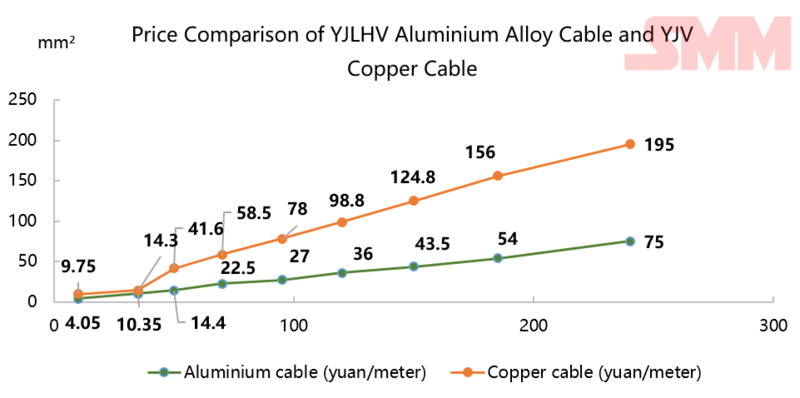
Firstly, in terms of the most important production cost, copper material is 30% more expensive than aluminium alloy material in terms of direct procurement costs. The graph below shows the price comparison between YJLHV aluminium alloy cable and YJV copper cable (vertical axis is conductor area, horizontal axis is price) at the voltage of 0.6/1kV. It can be seen that the cost of aluminium alloy cable is about 25%-60% of copper cable, hence the cost advantage of aluminium alloy cable is quite obvious.


In terms of product design standards, when aluminium alloy cable’s conductor cross-sectional area is approximately 1.5 times that of copper cables after special treatment, the load capacity is comparable to that of copper cables. While the weight of aluminium alloy conductor is only 50% of that of copper under the same load capacity and length.
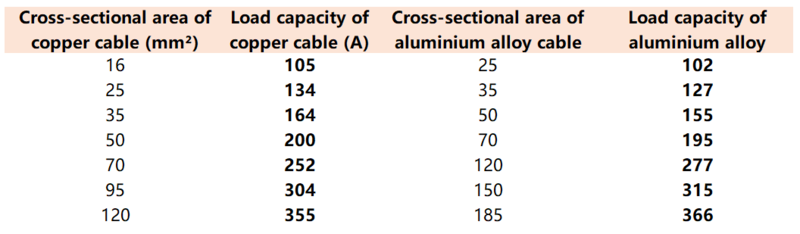
In terms of electricity losses, the difference in electricity loss between copper cable and aluminium alloy cable with a cross-sectional area enlarged by a factor of 1.5 is insignificant under the same running current.
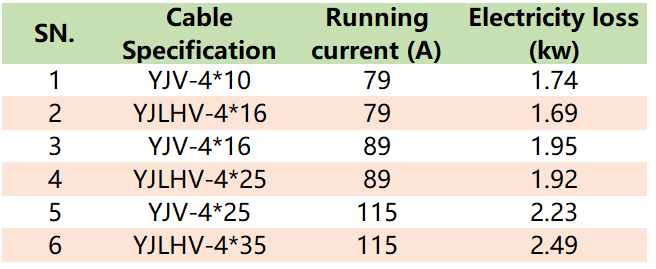
When seen from other physical properties, aluminium alloy cable is superior in terms of flexibility, resilience, and elongation. Furthermore, aluminium alloy tau chemical cross-linked polyethylene cable has a service life longer than that of copper cable polyoxyethylene by 5-10 years.

Of course there are some natural disadvantages besides the absolute superiority of reducing costs. For example aluminium alloy cable is slightly inferior in terms of conductivity and safety performance. Copper cable is less resistive and presents better performance of electricity transmitting, while reducing the risk of heat generation, combustion and short circuits. Some aluminium material can achieve the same safety performance as copper cables by way of special aluminium alloy ratios and heat treatment processes, but not all aluminium alloy cables are comparable. In addition, the residual value of aluminium alloy cables is low and much lower than that of copper cables. In the long term, the development of aluminium alloy cable is contrary to the national environmental protection and low carbon targets.

To sum up, aluminium alloy cable and copper cable deliver similar performance concerning load capacity, electricity loss, etc., even aluminium alloy cable is even more outstanding in other parameters. In the premise of ensured quality, photovoltaic with aluminium alloy cable is the current trend.

Domestic leading cable enterprises are trying to manufacture aluminium alloy cable that can serve as an alternative to copper cable through generations of technical innovation in the field of not only photovoltaic production but also automotive and wind power. Nonetheless, most domestic cable companies still focus their businesses on copper, and it requires time for the new trend to develop and evolve.


Data Source Statement: Except for publicly available information, all other data are processed by SMM based on publicly available information, market communication, and relying on SMM's internal database model. They are for reference only and do not constitute decision-making recommendations.

For any inquiries or for more information, please contact: lemonzhao@smm.cn
For more information on how to access our research reports, please contact:service.en@smm.cn
Related News
[SMM Flash] Kazakhstan Follows Russia in Full Suspension of Sulfur Exports
2 mins ago
[SMM Flash] Kazakhstan Follows Russia in Full Suspension of Sulfur Exports
Read More
[SMM Flash] Kazakhstan Follows Russia in Full Suspension of Sulfur Exports
[SMM Flash] Kazakhstan Follows Russia in Full Suspension of Sulfur Exports
The ban took effect on June 27, with an exception for exports to Russia, dealing another heavy blow to global sulfur supply: According to Order No. 1363 signed by Kazakhstan's Ministry of Energy on June 26, Kazakhstan fully suspended sulfur exports starting June 27, 2026, and the ban will remain in effect "until further notice." Notably, sulfur shipments destined for railway stations within the Russian Federation are exempted. The ban covers all categories, with logistics operators responsible for enforcement: This ban includes all mainstream industrial sulfur categories such as liquid sulfur, granular sulfur, and lump sulfur. The responsibility for supervision and enforcement has been explicitly assigned to relevant railway structures and logistics operators, including Dar Rail LLC and TTT Service LLC. Russia and Kazakhstan Take Successive Actions, Global Supply Sees Precipitous Contraction: Just one day before Kazakhstan's ban—on June 25, the Russian government signed Decree No. 785, extending the ban on industrial sulfur exports, originally set to expire on June 30, to December 31, 2026. The Russian ban also covers liquid, granular, and lump sulfur, with officials stating the move aims to prioritize domestic fertilizer production and strengthen national food security.
2 mins ago
Transactions remained sluggish throughout the off-season,  Operating rates of brass billet producers weakened further.
21 mins ago
Transactions remained sluggish throughout the off-season, Operating rates of brass billet producers weakened further.
Read More
Transactions remained sluggish throughout the off-season,  Operating rates of brass billet producers weakened further.
Transactions remained sluggish throughout the off-season, Operating rates of brass billet producers weakened further.
The brass billet industry is currently deep in the traditional consumption off-season. Weighed down by weak demand, tight raw material supply, and fluctuating costs, production in the sector remained under pressure.
21 mins ago
Copper Price Pullback Spurs Surge in Price-Fixing Orders, End-User Wait-and-See Stance Depresses Operating Flexibility
52 mins ago
Copper Price Pullback Spurs Surge in Price-Fixing Orders, End-User Wait-and-See Stance Depresses Operating Flexibility
Read More
Copper Price Pullback Spurs Surge in Price-Fixing Orders, End-User Wait-and-See Stance Depresses Operating Flexibility
52 mins ago