Chen Ailian, known as the "business magnolia", is one of the models to promote the transformation and upgrading of China's manufacturing industry. After more than 20 years of development, the Wanfeng Group she founded is involved in auto parts, general aviation, smart equipment and other fields. Wanfeng 002085.SZ is the first listed company in the Chinese industry.
At the upcoming two sessions in 2022, Chen Ailian, deputy to the National people's Congress and chairman of the board of directors of Wanfeng Group, prepared two motions plus eight proposals on legal, industrial and livelihood topics. One of the important suggestions is to speed up the application of magnesium alloy industry in automobile lightweight.
At present, in order to promote energy saving and emission reduction, countries around the world have implemented the policy of forcing automobile manufacturers to reduce vehicle fuel consumption. According to the research and forecast results of China Automotive Information Division, the automobile industry is expected to achieve carbon peak in 2028 and carbon neutral in 2050. The "double carbon goal" has made automobile lightweight become an important breakthrough for major automobile companies. Among many paths of automobile lightweight, magnesium alloy is one of the most promising options.
According to relevant research, 60% of the fuel used in cars is consumed by vehicle self-weight. For every 10% reduction in vehicle weight, the fuel efficiency can be increased by more than 5%. For every 100kg reduction in vehicle weight, fuel consumption can be reduced by about 0.7L per 100 km, and CO2 emissions can be reduced by 2.5kg for every 1L of fuel saved, and annual emissions can be reduced by more than 30 per cent. According to statistics, in 2020, 6.8kg magnesium alloy will be used per car in North America, 9.3kg in Japan and 14kg in Europe, while the average consumption of each car made in China is less than 3kg.
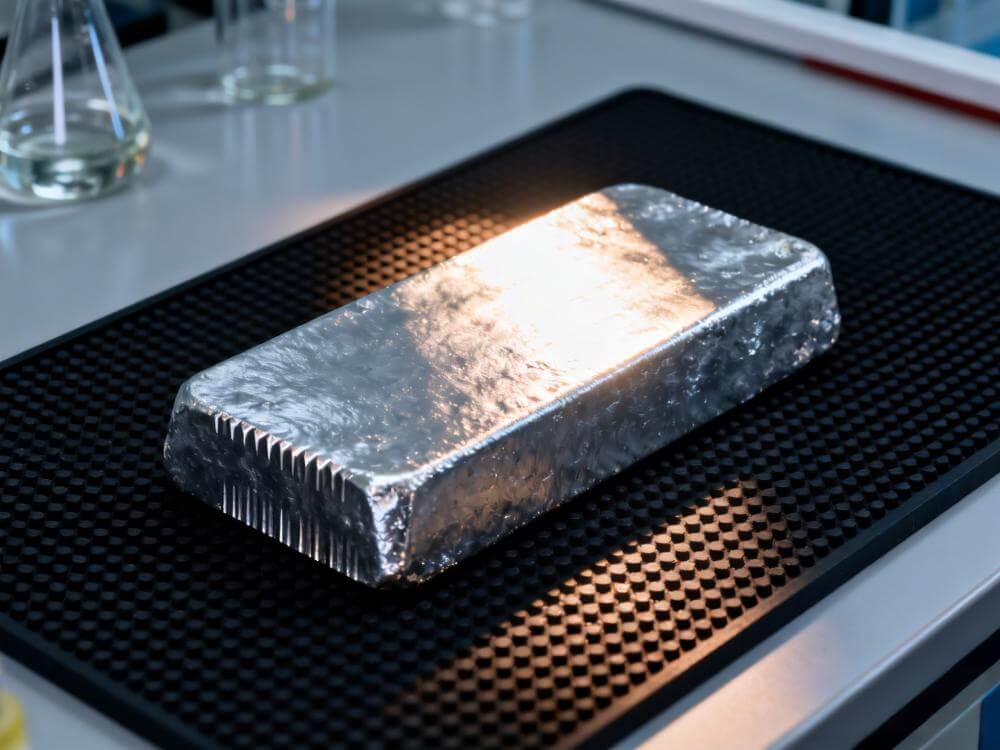
It is worth noting that China has outstanding advantages in magnesium resources and characteristics. According to relevant data, more than 80% of the magnesium in the global market is exported from China. Magnesium as a new light metal material, the weight loss effect of magnesium alloy is more obvious than that of high strength steel and aluminum alloy. Magnesium alloy is the most effective lightweight material for automobile because of its light weight, strong shock absorption, good casting performance, strong automatic production capacity, long die life and stable size. In addition, die-casting magnesium alloy materials can be recycled, does not affect the performance of materials, especially suitable for circular economy and energy-saving low-carbon production requirements, conducive to environmental protection and resource saving.
In the past year, Chen Ailian found that although magnesium alloy has a great effect on automobile lightweight, consumers lack in-depth understanding of magnesium alloy performance and scientific and technological progress, and lack of understanding of the role of lightweight. Secondly, with the expansion of the application of magnesium and magnesium alloys, especially widely used in automobile lightweight, the current international and domestic standards are insufficient to meet the standards of both supply and demand in time; thirdly, the Ministry of Science and Technology has set up the topic of magnesium alloy automobile lightweight during the 14th five-year Plan period, but the overall investment is obviously insufficient, and the investment of various vehicle enterprises in magnesium alloy R & D and production is also very limited.
In addition, China's high-performance magnesium alloy industry started late and has a weak foundation, so it is still in the middle and low end of the industrial chain and value chain as a whole. There is a big gap between the key process technology and foreign countries, and most of the high-end equipment depends on imports. The technology and equipment needed for research and development are often restricted by foreign exports, which makes the research and development of magnesium alloy materials difficult, especially the research and development of many high-end core materials is difficult, the performance improvement is slow, and the production capacity is seriously insufficient. In response to the above problems, Chen Ailian put forward the following three suggestions:
The first is to construct the lightweight standard system of magnesium alloy. The application of magnesium alloy in the automobile field must proceed from the system as a whole, systematically consider and practice the lightweight of automobile, from the aspects of lightweight design of car body, lightweight design of parts, lightweight design of modeling and so on. carry on the systematic construction to the lightweight standard of automobile. It is suggested that the industry association and the government should increase the policy guidance and standard setting for automobile lightweight. Fully consider the trend and process of automobile lightweight in the formulation of industrial policy, product standards and environmental protection standards, and issue laws and regulations that are conducive to guiding and restricting the behavior of enterprises. Encourage domestic vehicle manufacturers to adopt light, environmentally friendly and recyclable magnesium alloy materials and increase the proportion of equipment quality. At the same time, relevant policies have been introduced to improve the technical standards for imported cars and encourage the import of models with light materials.
The second is to establish a magnesium alloy industrialization promotion alliance. It is suggested that an industrialization promotion alliance should be established to promote the application of magnesium alloys through a series of joint actions and joint development. The alliance should be led by industry associations and societies, with the participation of auto parts enterprises, magnesium alloy enterprises, universities, scientific research institutions and government departments to establish an upstream and downstream linkage mechanism that should be guided by the government. Through the exchange of information, technical training, the establishment of public research and development platforms, topics and projects, plan joint implementation, results sharing, to promote the development and application process of magnesium alloy. Learning from the cooperation model of the American automobile industry in promoting the application of magnesium alloys, the government and enterprises jointly set up a medium-and long-term research plan on magnesium alloys for automobiles to consolidate and enhance the status of magnesium alloy materials and promote the important mission that magnesium alloys should undertake in the lightweight of automobiles to meet the complex and diverse needs of the market.
The third is to increase the investment in scientific research on the lightweight of magnesium alloys. In the construction of "industry-university-research", we should pay attention to the independent development and application of magnesium alloy materials for the preparation and testing of high-end equipment, reduce the dependence on imported equipment, and promote the rapid, efficient and intelligent manufacturing process of magnesium alloy enterprises. We will increase support for the construction and industrialization of the industry's technological innovation system and invest funds into the government and industry organizations, and support the establishment of a new type of scientific and technological innovation system with enterprises as the main body and the combination of "industry, university, research and application." It is suggested that the government should give priority to and increase support for magnesium alloy industrialization projects in relevant scientific and technological research plans, industrialization promotion plans, market development plans and other projects. Consider establishing a tax compensation mechanism and incentive mechanism for domestic vehicle magnesium alloy research and development projects and new products, and start an industrialization project driven by application and promotion.
"Automobile lightweight has become the inevitable trend of the future development of the automobile industry. as the lightest engineering structural metal material, there are still many bottlenecks to be broken in the application of magnesium alloy materials. it is necessary for the automobile industry and magnesium industry to cooperate closely, strengthen research and development, jointly promote the industrialization development process of automobile lightweight, and make new and greater contributions to the dual-carbon strategy." Chen Ailian said.
![La flambée du charbon enflamme le marché du magnésium, la consolidation de deux mois est enfin rompue, les réductions de production et le déstockage annoncent le prochain rallye [Analyse SMM]](https://imgqn.smm.cn/usercenter/mLwgx20251217171723.jpeg)
![Prix du magnésium dopés par les coûts, la faible demande rend la reprise insoutenable [Revue hebdomadaire du magnésium SMM]](https://imgqn.smm.cn/usercenter/rUQIB20251217171723.jpeg)