As competing forces support and weaken the performance of gold prices, gold prices in 2022 are likely to face a similar trend as in 2021. In the short term, gold prices are likely to respond to real interest rates in response to the speed with which central banks around the world tighten monetary policy and the effectiveness of controlling inflation. But history suggests that the impact of higher interest rates may be limited. At the same time, high inflation and a pullback in the market are likely to maintain demand for gold as a hedge. In addition, jewellery and central bank gold demand may provide additional long-term support.
In retrospect, the pressure to raise interest rates in 2021 exceeds the risk of inflation.
Gold fell about 4 per cent for the year to close at $1806 an ounce as the Omicron variant spread rapidly and the gold price rebounded before the end of the year, which could prompt a shift to quality products, but that was not enough to offset weakness in the first half of the year.
Investor optimism may have contributed to a reduction in portfolio hedging in early 2021 with the launch of newly developed vaccines. This has a negative impact on the performance of gold, leading to gold ETF outflow. For the rest of the year, there was a tug-of-war between competing forces. Uncertainty around the new variant, coupled with the increased risk of persistently high inflation and a rebound in consumer demand for gold, pushed gold prices higher. On the contrary, higher interest rates and a stronger dollar continue to create disadvantages (table 1).
Table 1: gold prices vary from currency to currency

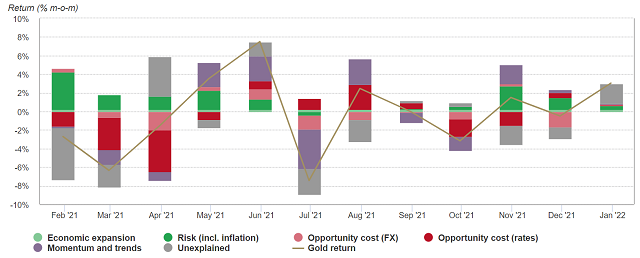
The World Gold Council's gold attribution model also confirms this. Rising opportunity costs are one of the most important factors contributing to gold's negative growth in the first and second quarters, while rising risks, especially those related to inflation, pushed gold higher at the end of the year (figure 1).
Figure 1: interest rates and inflation are the two most important contributors to gold's performance in 2021
Looking ahead, rising interest rates will bring risks, but the devil will be hidden in the details.
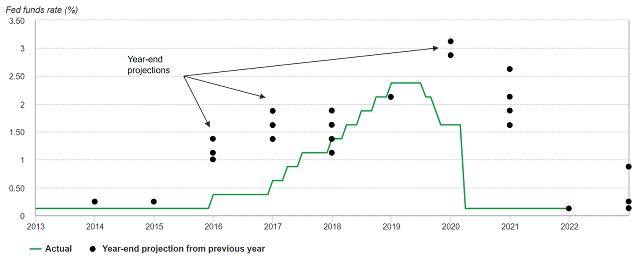
As the World Gold Council enters 2022, the Federal Reserve (fed) is taking a tougher stance. The Fed expects to raise interest rates about three times this year, faster than previously expected, and aims to reduce the size of its balance sheet, according to Fed forecasts. However, an analysis of previous tightening cycles shows that the Fed has often tightened monetary policy less than committee members initially expected. Bitmap forecasts show that the Fed's expectations for the coming year have far exceeded its real target interest rates (figure 2).
Figure 2: in the last tightening cycle, the Fed sent a tougher signal than it actually did.
But more importantly, the expectation of financial markets for future monetary policy actions has always been a key factor affecting the performance of gold prices. As a result, gold performed poorly in the months leading up to the Fed's tightening cycle, but improved significantly in the months after the Fed raised interest rates for the first time (figure 3). Gold may have been boosted in part by the dollar, which has shown the opposite pattern. Finally, US stocks performed strongest before the tightening cycle, but had weaker returns after the tightening cycle.
Figure 3: gold usually outperforms other currencies after the first rate hike in the Fed's tightening cycle

Finally, while much emphasis has been placed on the relationship between gold and US interest rates, the gold market is a global market. And not all central banks can act as quickly as the Fed. The ECB, for example, said it was "very unlikely" to raise interest rates in 2022, despite recent record inflation. Although the Bank of England raised interest rates in December, its policy committee seemed to hint at only small increases in the future. The Bank of India also said it would maintain a loose monetary policy position to restore and maintain economic recovery and reduce the impact of COVID-19.
While different monetary policies may lead to a stronger dollar, stable or falling interest rates should support investment demand for gold.
Although opinions are divided, inflation is likely to persist
Many central banks initially played down concerns about inflation, and while some central banks, such as the Federal Reserve, acknowledged upside risks, investors with potential expectations that inflation would disappear seemed less sure. Interestingly, these views were also reflected in a poll conducted by the World Gold Council in December. Although the vast majority of respondents expect inflation to remain high, more than 1/4 of respondents think inflation will cool down.
The World Gold Council believes that inflation remains high for a number of reasons, including:
Unprecedented monetary and fiscal policies to mitigate the impact of the epidemic.
(2) the continuous disruption of the supply chain caused by the initial novel coronavirus epidemic and the follow-up chaos caused by the continuous emergence of new variants.
(3) the tight labor market, coupled with COVID-19 's fatigue, has led to an increase in the number of people voluntarily looking for new opportunities with higher pay.
Since 2020, the increase in average savings has contributed to high valuations in various financial markets.
(5) the prices of commodities are high.
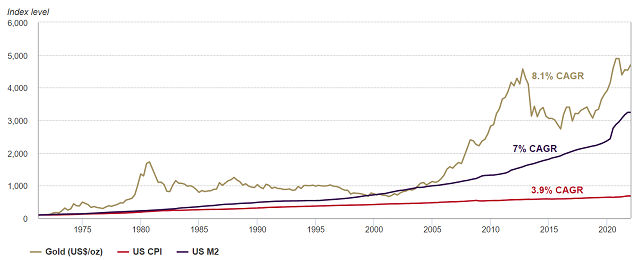
Historically, gold has performed well in times of high inflation. In years when inflation was above 3%, the price of gold rose by an average of 14% (figure 4). In addition, in the long run, the growth rate of gold has outpaced the rate of inflation in the United States and is getting closer and closer to the growth rate of the money supply, which has increased significantly in recent years (figure 5).
Figure 4: historically, gold has performed well in times of high inflation

Figure 5: gold and money supply keep Synchronize growth
With two opposing forces, real interest rates are likely to remain low
Although some central banks may raise interest rates, from a historical point of view, nominal interest rates will remain low. This is important for gold because its short-and medium-term performance tends to respond to real interest rates, which combine two important drivers of gold's performance: "opportunity cost" and "risk and uncertainty".
In addition, low interest rates, including nominal and real interest rates, are shifting portfolios more towards risky assets. As the World Gold Council discussed in a recent report, this in turn increases demand for high-quality liquid assets such as gold.
Figure 6: both nominal and real interest rates are at or near historic lows

Investors are ready to turn the page of COVID-19, but the market may continue to fall.
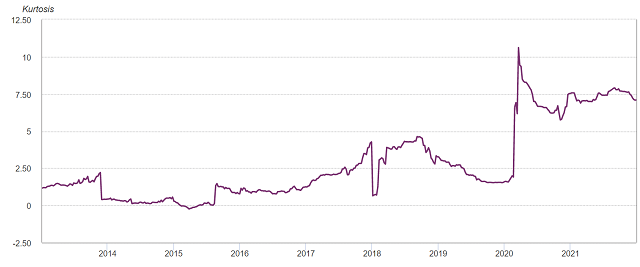
Two years after the outbreak, the world seems ready to move on: global stock markets have rebounded strongly from their 2020 lows, albeit at different speeds. But "tail events" are also on the rise (figure 7).
Figure 7: callbacks become more frequent
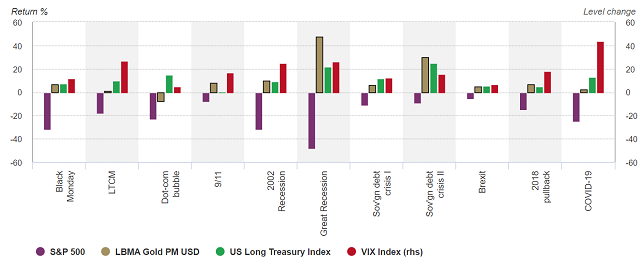
In the face of what appears to be a steady stream of new changes, rising geopolitical tensions and rising overall stock market valuations driven by a long period of ultra-low interest rates, the correction is likely to continue. In this context, gold can become a valuable risk management tool in the hands of investors. During the period of systemic risk, gold has a proven history of mitigating the negative effects of the stock market correction (figure 8).
Figure 8: gold tends to perform well during a sharp correction in the market
The performance of gold is not only related to investment.
It is generally believed that the price behaviour of gold is related to investment demand, especially from financial instruments such as gold ETF, over-the-counter contracts or exchange-traded derivatives. This is only partly true. Short-term and more significant price fluctuations tend to respond to variables related to these types of gold investments; for example, interest rates, inflation, exchange rates and, more generally, flows that flee to high-quality assets.
However, analysis by the World Gold Council shows that gold's performance is also related to other components of demand, such as jewellery, technology and central banks. While this does not usually lead to large price fluctuations related to investment, they may provide support to boost the performance of gold prices. The World Gold Council believes that gold is still likely to receive active support from major jewellery markets such as India in 2022.
Finally, central bank demand for gold rebounded in 2021 and is likely to remain an important source of demand. Central banks favor gold as part of their foreign exchange reserves for good reason, coupled with the low interest rate environment, gold continues to be attractive. This is also evidenced by the fact that last year, two developed market central banks joined the ranks of buyers who have been dominated by emerging market banks since 2010. The trend of gold will depend on which factors play a decisive role.
In 2022, gold is likely to face two main obstacles: higher nominal interest rates and a potentially stronger dollar. However, the negative impact of these two drivers may be offset by other supporting factors, including persistently high inflation, market volatility related to the novel coronavirus epidemic and geopolitics, and strong demand from the central bank and other industries such as jewelry. In this context, gold, as a risk hedging tool, is particularly important for investors in 2022.