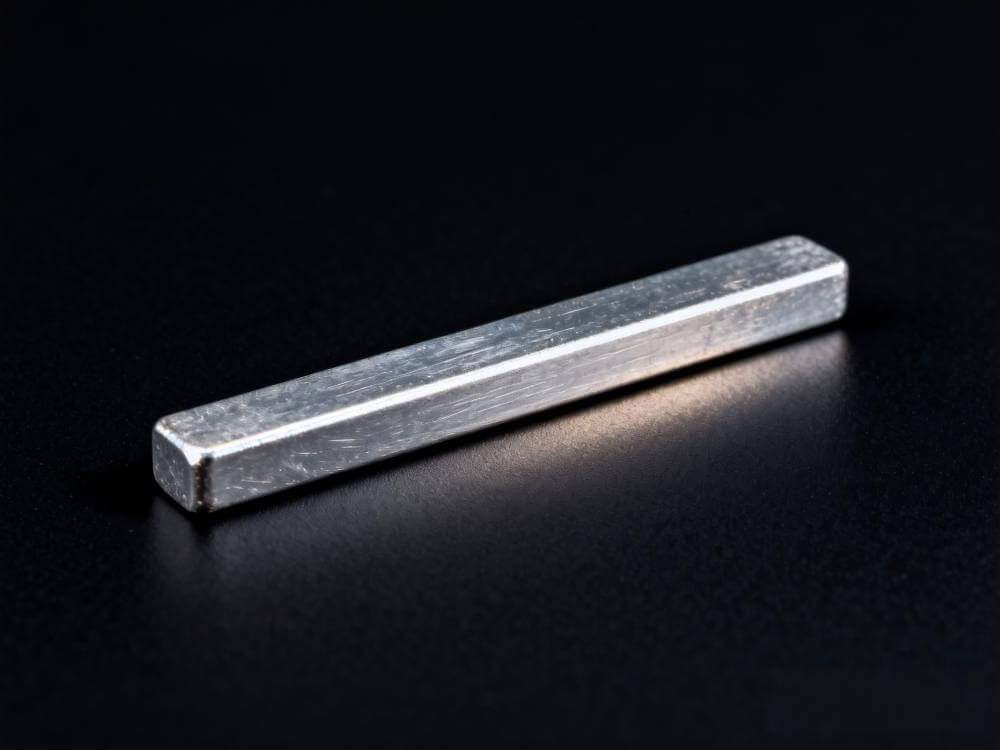
China, the largest producer of magnesium, has closed smelters on a massive scale because of emissions restrictions and energy shortages, causing the price of magnesium to climb to its highest level since 2008 and creating another problem for carmakers.
Magnesium, which is widely used in the aerospace industry, is a necessary metal for the automotive industry to manufacture aluminum alloy, and the automotive industry has been in trouble because of a shortage of chips. Magnesium is also used in zinc alloys, and tight supplies can also have an impact on industries such as laptops and mobile phones and missile components.
The price of magnesium has risen to its highest level in 13 years and is likely to rise further in the coming months before "returning to a more normal level by the end of the first half of 2022", according to (International Magnesium Association), the international magnesium association.
"capacity reduction and price increases are almost unprecedented, and our industry has never experienced such rapid market changes since the 2008 Beijing Olympic Games," Rick McQueary, president of IMA, said in a statement.
Magnesium production outside China is low, with most of the magnesium produced in Shaanxi, where about 15 magnesium plants have been asked to suspend operations and 30 magnesium plants have been asked to cut production by 50 per cent, valid from September to December this year, according to sources.
According to the China Nonferrous Metals Industry Association, from January to June, China's domestic magnesium production increased by 8.13% to 434000 tons compared with the same period last year. Shaanxi, as the world's largest magnesium producing region, produced 302500 tons in the first half of the year, an increase of 16.92% over the same period last year. Shaanxi's production reduction will naturally affect the overall supply of domestic and foreign markets.
Market participants have expected a continued shortage of magnesium supply, as China's energy control policy will continue until the end of this year, and magnesium prices may hit new highs in the short term, thus affecting production and demand in downstream industries, for example, many downstream titanium and magnesium alloy producers have stopped production due to the loss of profits caused by the rising price of magnesium raw materials.
"the energy conservation and emission reduction measures during the Beijing Winter Olympic Games will be more stringent, and we are not sure whether these restrictions will be relaxed after the Olympic Games," said a trader in Shanxi. "
![Prix du magnésium dopés par les coûts, la faible demande rend la reprise insoutenable [Revue hebdomadaire du magnésium SMM]](https://imgqn.smm.cn/usercenter/rUQIB20251217171723.jpeg)
![Coût de soutien incapable de compenser la faible demande ; le marché des lingots de magnésium s'affaiblit sous la pression [Rapport spot SMM sur les lingots de magnésium]](https://imgqn.smm.cn/usercenter/XUnxM20251217171723.jpeg)