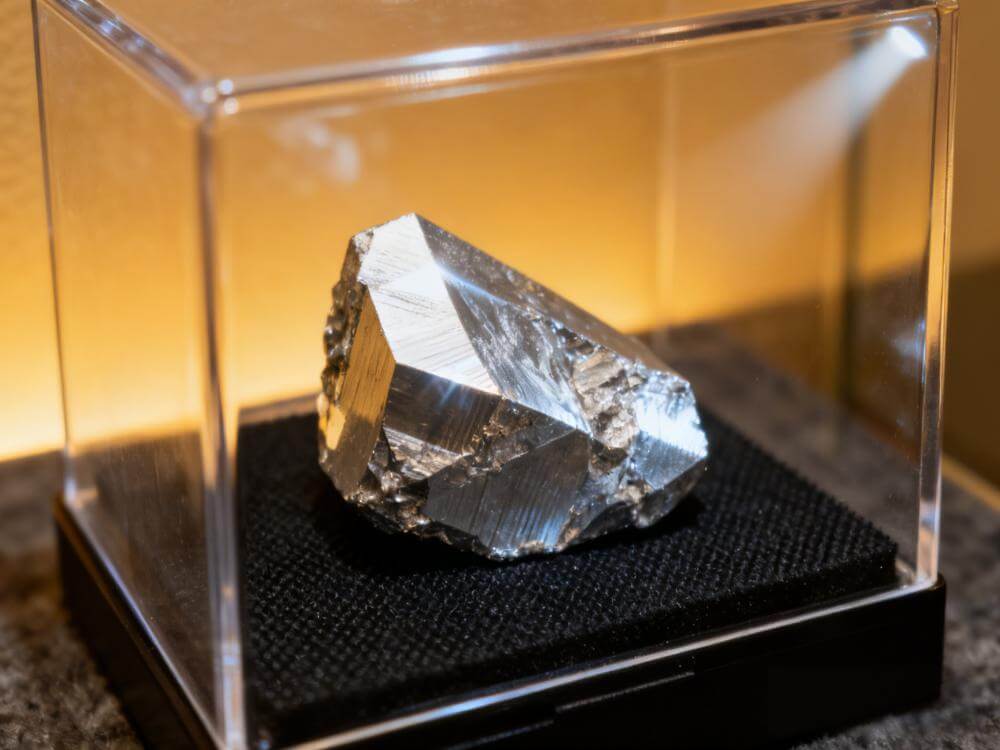
According to foreign media reports, on Sept. 5, local time, (PNNL), the Northwest National Laboratory of the Pacific Ocean, developed a new patented riveting technology that makes it easier to make light magnesium and reduces the time required to connect each rivet. PNNL develops magnesium components made of new riveting technology.
Magnesium is one of the lightest metals, so it becomes an ideal material for cars to achieve better fuel economy. However, in industrial applications, magnesium lags behind aluminum and steel because it is fragile and difficult to make structural parts. The friction-based riveting technology called rotary hammer riveting (RHR), eliminates the step of preheating metal to make rivets and improves fastening joints. In addition, this technology is also applicable to aluminum rivets made by aircraft. The speed of this processing method is significantly accelerated, which can save both time and money in aircraft and vehicle manufacturing.
Rejuvenate the old process
Riveting is one of the oldest techniques for connecting different materials. The ancient Egyptians used wooden rivets to connect metal handles to clay pots. The riveting process has been handed down from generation to generation, spanning civilizations, and can be found in Roman architecture, Viking pirate ships, medieval armor, and other historical objects.
With the emergence of new materials in the 19th and 20th centuries, steel riveting can be seen everywhere in various structural applications, such as buildings, bridges, warships, aircraft and so on. However, the riveting process has hardly changed, that is, take a cylindrical metal with a mushroom shape at one end, pass the handle or rod through the holes of the two materials you want to connect, and then hit one end of the handle with a hammer to form a second end. to connect the two materials together.
If magnesium rivets are used, they may break. Although magnesium alloys have high strength because of their light weight, magnesium is easy to break at room temperature. As a result, magnesium alloys are usually heated to make them soft enough for hammering and bending so that they do not break.
Heating each rivet is slow and expensive, so magnesium rivets are rarely used, although they are 30% lighter than the aluminum rivets used to connect magnesium plates.
Hammering riveting is a new riveting technology.
The RHR technology developed by PNNL does not need to preheat magnesium rivets. This process uses magnesium rivets that do not need to be preheated, so they are 4 to 12 times faster than those needed in traditional hammering riveting, and can enhance strength and have anti-corrosion properties.
RHR is a branch of friction stir welding technology, which uses a small rotating tool called hammer. The rotating force produces heat through friction and deformation, softens magnesium and forms a rivet head. At the same time, the bottom surface of the rivet head is mixed with the metal plate below by metallurgical means. This method of making metal can ensure continuous bonding to prevent corrosion.
The newly patented process can deform the metal, thereby changing its crystal structure. Using a high-power microscope, researchers can see how grains are optimized and reoriented to allow magnesium to shape and become stronger.
Riveting solution for aircraft manufacturing
The researchers say RHR is also suitable for making aluminum rivets for aircraft. Each commercial aircraft contains hundreds of thousands of rivets, most of which are made of aluminum alloy 2024, while the RHR process can reduce costs and improve the efficiency of the production line. Rivets made of aluminum alloy 2024 are too strong to rivet when stored at room temperature. Therefore, it also needs to be annealed, softened, and then stored in the refrigerator to maintain the softening state before riveting.
Faster friction riveting technology
The speed of aluminum treatment by RHR process is very fast. Conventional riveting takes 1 to 3 seconds for each rivet, while RHR takes only 0.25 seconds, saving 40 hours for every 100000 rivets. The RHR process is just a subversive technology developed by PNNL for machining metal alloys and composites. This kind of solid-state processing technology involves deforming materials without melting, heating, mixing, manufacturing and joining metals and other materials, resulting in materials with more extraordinary properties than those made by traditional manufacturing methods.
![Le soutien des coûts fait remonter les cotations des lingots de magnésium ; la faiblesse de la demande sur les marchés intérieurs et étrangers pourrait entraîner une consolidation [SMM Magnesium Ingot Spot Express]](https://imgqn.smm.cn/usercenter/LYGyd20251217171725.jpg)
![La hausse des coûts de production fait grimper les prix des lingots de magnésium, tandis que la demande atone limite le rebond [SMM Express des prix spot du lingot de magnésium]](https://imgqn.smm.cn/usercenter/qjvqf20251217171725.jpg)