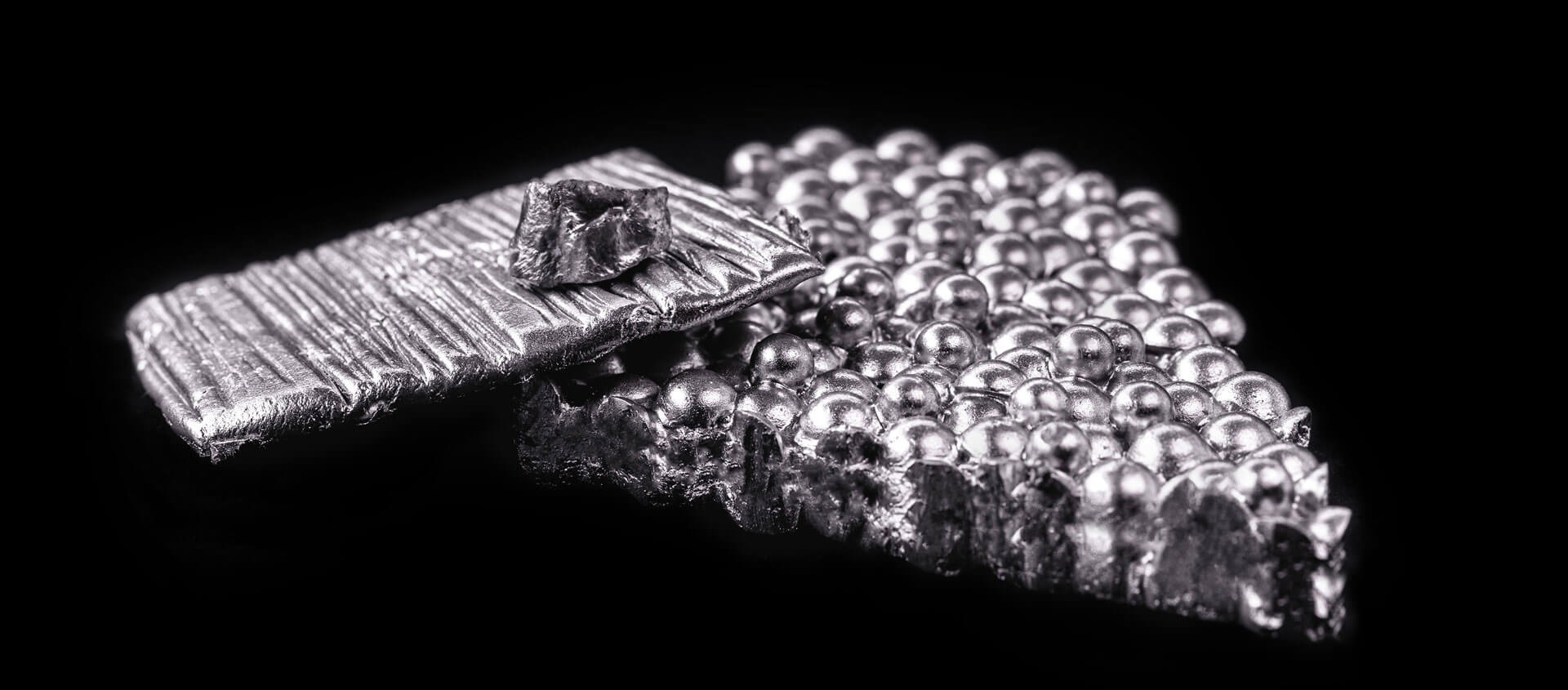
Apple, Tesla and the public all know that lithium iron phosphate (LFP) is good.
As one of the most popular battery technology routes in the Chinese market, lithium iron phosphate battery has also begun to attract the attention of international big-name companies.
According to foreign media reports, recently, a number of people familiar with the matter revealed that Apple is in talks with China's Ningde era and BYD on the supply of power batteries. Apple tends to carry lithium iron phosphate batteries for its upcoming electric cars.
Not long ago, foreign media reported that Tesla was negotiating with Yiwei Lithium Energy on the supply of lithium iron phosphate batteries.
At Volkswagen's "Power Day" (PowerDay) in March, Volkswagen announced that Volkswagen plans to widely use lithium iron phosphate batteries in its entry-level models to reduce battery costs by about 50 per cent. It is reported that Volkswagen plans to start mass production of entry-level models equipped with lithium iron phosphate in 2023.
Obviously, as the "standard battery" of domestic popular models, lithium iron phosphate battery has been popular abroad, and it is expected that more international car companies will begin to use lithium iron phosphate battery in the future.
Tesla: cost reduction and material safety will increase the use of LFP batteries
In fact, among foreign car companies, Tesla is the earlier one to use LFP batteries. In September 2020, the standard continued Model3 of Tesla (Shanghai) factory began to replace lithium iron phosphate batteries, and soon after that, all the models were switched to lithium iron phosphate batteries.
After the replacement of lithium iron phosphate battery, the price of Model 3 has been further reduced, while the battery life has been increased by about 20km.
Recently, a person familiar with the matter revealed that the Model Y of the Tesla (Shanghai) factory plans to launch a lithium iron phosphate battery version in July.
Despite cost and safety concerns, Tesla CEO Musk has other ideas to support his plans to continue to increase the use of lithium iron phosphate batteries.
In February, Musk said that because of concerns about the long-term availability of nickel, the company would consider equipping more electric vehicles with lithium iron phosphate batteries. "the supply of nickel raw materials is our biggest concern in the battery production process. That's why we plan to install lithium-iron batteries in standard endurance electric vehicles. There's a lot of iron (and lithium)! "
Musk's statement is likely to indicate that Tesla will replace the lithium iron phosphate battery with the standard extended version of Model 3, which is mass-produced in the United States and other factories in the future.
It is worth noting that Tesla is also considering expanding the capacity of lithium iron phosphate battery suppliers to further stabilize the supply of lithium iron phosphate batteries.
Recently, according to foreign media reports, Tesla is negotiating with Yiwei LiNeng on the supply of lithium iron phosphate battery (LFP). According to the report, if the two sides reach a cooperation, Yiwei LiNeng will become the second Chinese company to supply LFP batteries to Tesla after the Ningde era. However, Yiwei LiNeng later responded that the company did not do business communication with Tesla on lithium iron phosphate battery, and the relevant reports were unfounded.
Apple: safety and cost reduction superimposed to use LFP battery
Despite its deep pockets, Apple is known for its supply chain management. In order to enter the electric car industry, it has been reported that Apple is also considering using cheaper lithium iron phosphate batteries.
According to people familiar with the matter, Apple tends to use lithium iron phosphate batteries because "the LFP uses iron for production, rather than higher-priced nickel and cobalt, which makes it cheaper to produce."
Sources said that Apple and Ningde era, BYD is still in the early stage of negotiations. Both Ningde Times and BYD declined to comment on the matter.
It is worth noting that as early as 2020, after Apple's Apple Car project was exposed, there were rumors that Apple was studying the "MONOCELL" battery design in terms of battery design, while in battery materials, Apple was also considering using lithium iron phosphate batteries to improve the safety of batteries and vehicles, while reducing manufacturing costs.
However, sources said Apple would build a manufacturing plant in the United States as a condition for selecting potential battery suppliers. However, considering the current Sino-US international relations and cost issues, the feasibility of the above news remains to be verified and continued observation.
Volkswagen: entry-level models will use lithium iron phosphate batteries
Volkswagen should also be an active promoter of lithium iron phosphate batteries. In 2020, Volkswagen invested heavily in Guoxuan Tech, becoming the largest shareholder of Guoxuan Tech, which has always been a fan of lithium iron phosphate batteries. According to Battery China, Guoxuan Tech is expected to provide Volkswagen with power batteries from 2023, one of which is lithium iron phosphate batteries.
Volkswagen unveiled its battery and energy plan at Volkswagen's Power Day in March. Volkswagen said that Volkswagen's battery layout includes lithium iron phosphate batteries, high manganese batteries, nickel-cobalt-manganese ternary batteries and solid-state batteries.
"the biggest advantage of lithium iron phosphate battery is the cost (lower) and a slight disadvantage in terms of mileage, but because its technology is mature and fully proven, it is a very promising technology for models with low mileage." Volkswagen said it planned to use lithium iron phosphate batteries in 2023, with standardized cells that cost 50 per cent less than it currently costs in mass production.
Earlier, analysts pointed out that Volkswagen bought a stake in Guoxuan Tech, and in the future, Guoxuan Tech is expected to become a major supplier of lithium iron phosphate batteries for Volkswagen, supporting lithium iron phosphate batteries in bulk for Volkswagen China and even the global market.
In the domestic market, the growth of lithium iron phosphate batteries has been very significant. Data show that from January to May this year, the installed capacity of power batteries in the Chinese market was about 41.4 GWH, an increase of 223.9% over the same period last year. Among them, the installed capacity of ternary batteries is about 24.2GWH, accounting for 58.5%, an increase of 151.7% over the same period last year; the installed capacity of lithium iron phosphate batteries is about 17.1 GWH, accounting for about 41.3%, while the year-on-year growth rate is as high as 456.6%, which is much higher than that of ternary batteries, and the market share and ternary batteries continue to shrink.
The continuous growth of the installed capacity of lithium iron phosphate batteries in the Chinese market is closely related to the main supporting versions of lithium iron phosphate in hot-selling models, such as Tesla Model 3, BYD Han, Hongguang MINI EV and Xiaopeng P7 in passenger cars.
In the long run, with the promotion of Volkswagen and Tesla for lithium iron phosphate battery models in the international market, lithium iron phosphate will no longer be popular only in the Chinese market, but its share in the global market is expected to increase. China has the most perfect supporting system of lithium iron phosphate battery industry chain, and the volume of the international market will further promote the rapid development of China's entire lithium iron phosphate battery and materials industry chain.
![[SMM Analysis] Weak Demand and Rising Substitution Advantage Push High-Grade NPI Price Center Downward](https://imgqn.smm.cn/usercenter/KFwsY20251217171734.jpg)
![[SMM Nickel Flash] Indonesia Approves Revised 2026 RKAB Nickel Ore Production Quota of Approximately 290 Million Tonnes](https://imgqn.smm.cn/usercenter/CWsEw20251217171732.jpeg)