Since entering 2021, the new energy vehicle market has ushered in the rapid development, and the automobile industry, as a field with a wide demand for chips, is also the first to bear the brunt of the "chip shortage" that has spread since the end of 2020. Since the end of 2020, many enterprises have successively released the news that car production has been reduced due to lack of core, but unexpectedly, at a time when the impact of chip waste on the automotive industry has not yet subsided, the "battery shortage" is here again!
It is reported that recently, an auto company executive told the media that "compared to the current 'core shortage' crisis, we are more worried about the shortage of battery supply." He said frankly that at present, the power batteries needed for new energy vehicles are in a state of tight supply. Prior to this, Gong Jie, head of UBS's auto industry in China, also publicly commented on the rapid growth of the new energy vehicle market in 2021 and the lack of capacity in the corresponding battery industry. But at the same time, he also said that it is not difficult for domestic power battery companies to expand production, and the shortage of power battery supply will not become a factor affecting the growth of the new energy vehicle market.
Previous data from the China Automotive Power Battery Industry Alliance showed that in the past four months, the cumulative installed capacity of power batteries in China was about 31.6 GWH, an increase of 241% over the same period last year. At the same time, SMM speculates that with the growth of the new energy market, the demand for lithium batteries in the new energy market is expected to reach 102 GWH in 2021, an increase of 60 per cent year-on-year. As an important part of lithium battery, the demand for lithium salt will increase obviously.
It is worth mentioning that at present, with the explosive growth of power battery demand, many related enterprises have been operating at full capacity. Take Ulan Lithium, a manufacturer of lithium battery batteries, as an example, which has publicly stated that the company has an annual production capacity of nearly 400 million batteries and its production line is at full capacity. The second phase of the Zhangjiagang plant has a new production capacity of about 300 million, and after it is put into production at the end of the year, the total will reach about 700 million. In addition, Azure Lithium Core also has a target of 600 million units in the first phase of the Huaian plant, which will be gradually put into production by the end of next year.
Of course, in addition to the blue lithium core, Ganfeng lithium industry, Huayou cobalt industry, Shanshan shares and other well-known enterprises are also increasing their construction in the field of lithium batteries, and even many car companies, such as Tesla, BMW, Volkswagen, and so on, have begun to participate in the competition for upstream lithium resources.
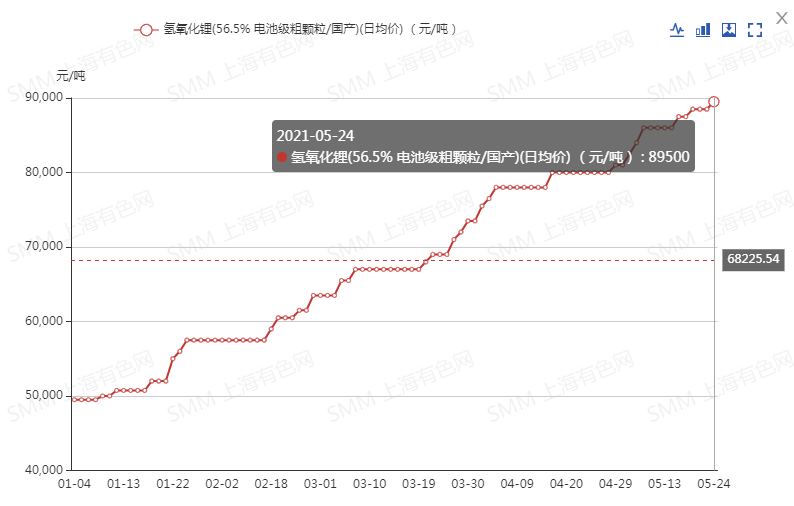
On the other hand, at a time when the demand for power batteries is soaring, the price of raw materials is also rising. According to SMM historical data, as of May 24, the average spot price of battery-grade lithium carbonate was 89000 yuan / ton, up 67.9% from the beginning of the year; while battery-grade lithium hydroxide is not to be lagged behind, its spot price of 89500 yuan per ton has risen by 80.8% since the beginning of the year. What is even more admirable is that lithium hydroxide has achieved the new achievement of 22 consecutive weeks of price increases as of May 21.
"Click to see more historical prices of SMM Metals.
As for its subsequent price trend, SMM research shows that the current smelter shipment situation is better, the downstream raw material gap is more obvious, due to obvious production expansion in the second half of the year, the upstream raw material output increment is relatively limited, some downstream manufacturers intend to reduce the quantity at a high price, and the price of lithium hydroxide will continue to rise. "View details
In this context, lithium battery-related companies have benefited a lot and have begun to embark on the road of production expansion. On May 23, Huayou Cobalt Industry announced that the company intends to buy 38.6175% of the shares of Tianjin Bamo Technology Co., Ltd. from Hangzhou Hongyuan to strengthen the layout of lithium cathode materials. On May 20th, BASF and Shanshan reached a consensus that the two sides agreed to set up a joint venture controlled by BASF in China to produce cathode active material (CAM) and cathode material precursor (PCAM),. The transaction is expected to be formally completed by the end of this summer. On May 17, lithium battery manufacturer Funeng Technology said that it plans to set up a joint venture with Geely Technology to build a power battery production plant, and plans to start building a power battery production line with an annual production capacity of no less than 20GWh this year. On the same day, Ganfeng Lithium Industry announced that it had decided to consider and evaluate the possibility of setting up a battery assembly plant in Juyi province, Argentina. SK Innovation and Ford, the second largest automaker in the United States, will set up a power battery joint venture "BlueOvalSK" in the United States at a cost of 3 trillion won each on May 21, the day before when a memorandum of understanding on the joint venture was signed. BlueOvalSK will produce power batteries and modules, with an annual capacity of up to 60GWh. (gigawatt-hour); LG Chemical and General Motors planned to invest more than $2.3 billion in Tennessee as early as April 16 to build a second American electric vehicle battery plant.
Thanks to the popularity of the lithium battery industry, as of May 24, the lithium battery index closed up 0.7% at 2205.59. In terms of individual stocks, Shengyang shares, Hongxing Development, Shandong Zhanggu and Tianyuan shares pulled up the sealing board. Tianqi Lithium Industry, Norde shares and Jiayuan Technology and other shares rose more than 7%.
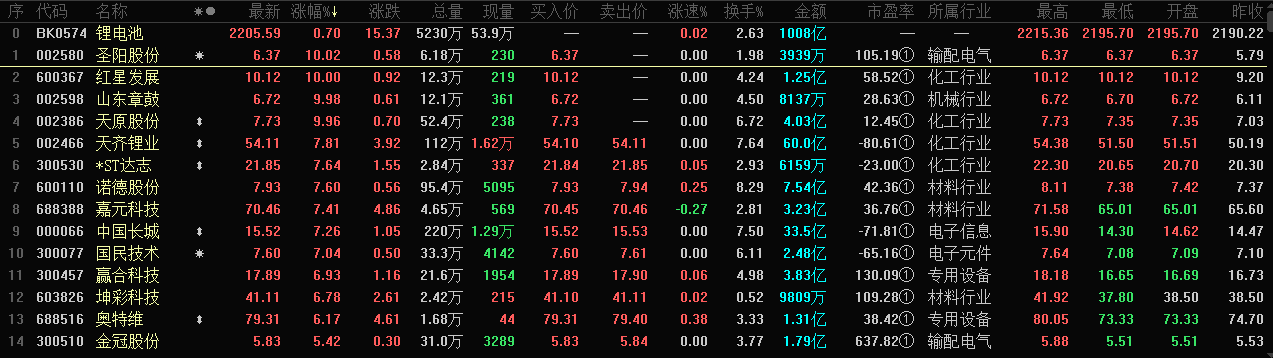
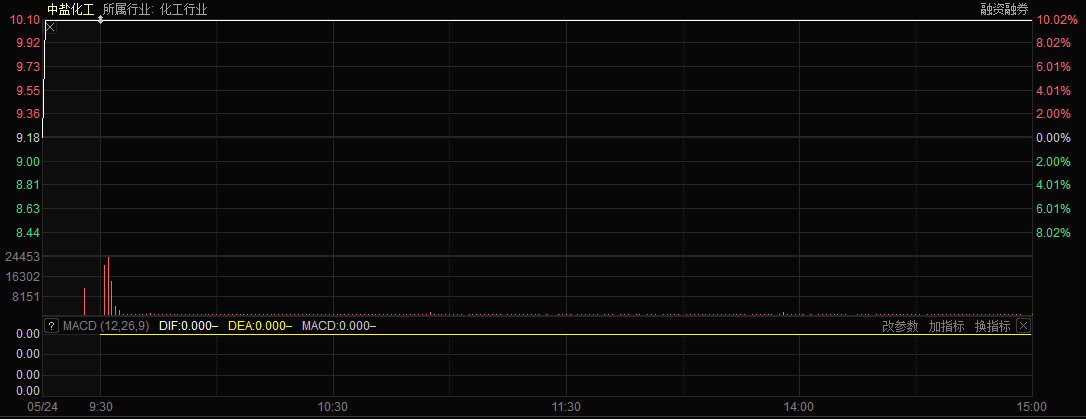
It should be noted that, as the "number one" in the field of power batteries, Ningde Times has previously announced that it will release sodium batteries around July this year, and in view of its advantages such as low cost and good safety, it will become the support and guarantee of lithium batteries. For a time, sodium battery concept stocks were active, China Salt Chemical opened by the daily limit, Hongxing Development also rose by the limit, and Xinwanda rose more than 4%.
At the same time, there is a lot of talk that sodium batteries will replace lithium batteries, but Northeast Securities commented that it is impossible for sodium to replace lithium as the mainstream technology direction in the power field for the time being. From the current point of view, Northeast Securities believes that the substitution of sodium battery for lithium battery is actually very weak. Considering that sodium reserves are more abundant than lithium, more attention should be paid to the strategic significance of sodium battery as a technical reserve and energy security, but its commercial value should not be overestimated.
Therefore, generally speaking, in the medium-and long-term direction, the global new energy vehicle market will continue to heat up, and the power battery industry will continue to usher in positive results. Power battery companies need to reserve a larger scale of production capacity in order to have the opportunity to seize a larger market share.
![[Baterai Solid-State: Tianneng Co., Ltd. Mencapai Pengiriman Skala Besar Sel Baterai Semi-Solid-State 314Ah, dengan Terobosan Bertahap di Berbagai Sistem Teknologi]](https://imgqn.smm.cn/usercenter/JmyWy20251217171729.png)
![[SMM Rangkuman Rapat Pagi Kobalt] Ekspektasi pemulihan permintaan meningkat, harga rantai industri masih dalam fase tawar-menawar yang lemah](https://imgqn.smm.cn/usercenter/hSSxt20251217171722.jpeg)