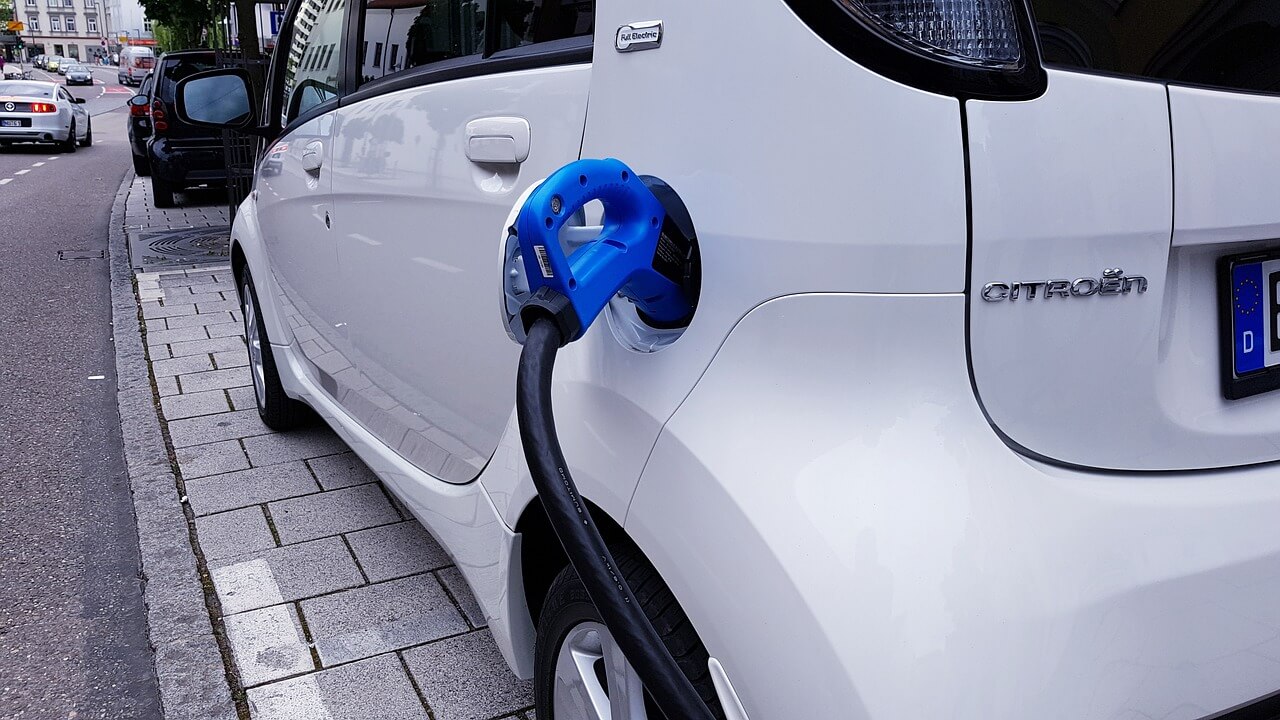
SMM News: with the blowing of the east wind of the policy, coupled with the strong promotion of mainframe factories and battery suppliers such as BAIC, Aodong New Energy, Ningde Times, the taxi power exchange market is ushering in the most exciting part of a new round of development.
Recently, in order to promote the promotion and application of electric vehicles in the taxi market, Dongfeng Qichen, Guangzhou Taxi Association and Olympic New Energy formally signed a strategic cooperation agreement in Guangzhou. Guangzhou Taxi Association actively promotes the electrification of taxis, while Aojing New Energy has carried out power exchange operation in more than a dozen cities across the country, and has accumulated relatively perfect technical reserves and rich operation experience, this replacement model may be locked in Dongfeng Qichen D60 EV.
A week before the signing ceremony, Guangzhou bus Group and Dongfeng Qichen joined hands with bus Group Baiyun (Guangjiao) Panyu Branch Qichen D60EV production ceremony was held in Panyu, Guangzhou. Although the details of the replacement version have not been released officially, as a reference, both the standard and high-endurance versions use Ningde era ternary batteries, and the standard battery has an energy density of 153Whhand kg, which can provide 405km NEDC mileage for vehicles.
From this, it is not difficult to speculate that the power battery of Dongfeng Qichen D60EV replacement version is very likely to be supplied by Ningde era. With the help of this strategic cooperation, all parties will open up R & D and production, exchange power station network and rental business based on their own superior resources in the future, so as to bring better car-using solutions to the taxi market.
Obvious advantage
As we all know, as an operating vehicle, the biggest difference between a taxi and a private car is its long mileage and high frequency of use, so it is more difficult to bear the long charging time of electric cars. after all, time is money. The power replacement mode can replace the battery in a few minutes, which greatly improves the power supply efficiency of taxis, so it is very popular among taxi drivers.
"the power change is really fast and convenient, and the daily operation arrangement can be very flexible. Even if this battery has not finished running, there is no need to be afraid in case I suddenly receive a long-distance order to the airport. I have basically never encountered the situation of losing the order because of no electricity. For example, I just changed the electricity when I had about 70 kilometers left in the battery." Master Tang, who has been driving BAIC's new energy exchange taxi for two years, said.
With regard to the value of power exchange, Li Cheng, deputy director of the Intelligent Transportation Department of the Urban Traffic and Rail Transit Research Center of the Scientific Research Institute of the Ministry of Transport, believes that the power exchange mode, which is dominated by power exchange and supplemented by emergency charging, can effectively alleviate the charging trouble of taxis, save operating costs, and promote the promotion of pure electric taxis in cities with suitable conditions.
Happily, on July 23, Xin Guobin, vice minister of the Ministry of Industry and Information Technology, said that the next step, together with relevant departments, will continue to vigorously promote the construction of recharging infrastructure, further improve relevant technical standards and management policies, and encourage enterprises to develop power exchange mode models according to the use scenarios. The Ministry of Industry and Information Technology will also support places such as Beijing and Hainan to carry out pilot promotion to promote the high-quality development of the new energy vehicle industry.
Maturing day by day
At present, the power exchange operation in the taxi market has become increasingly mature. As the first new energy vehicle company in the world to bring the power exchange mode into large-scale commercial operation, as of May this year, BAIC New Energy has put in 18000 power exchange taxis in 19 cities, including Beijing, Xiamen, Lanzhou and Guangzhou.
It is estimated that by the end of 2020, BAIC New Energy will add 30,000 new power exchange taxis (including online taxi-hailing) nationwide and build more than 300 exchange power stations. In addition, BAIC New Energy will further increase the scale of power stations, realizing an average service radius of 2.53 km in urban areas of Beijing by the end of this year, and an average service radius of about 5.6 km in some suburbs.
It is reported that BAIC New Energy has successively launched power-changing models such as EV160, EU220, EU260, EU300 and EU5, while the next generation of products are being developed on a new platform, including the ARCFOX brand, and Synchronize will also consider charging and changing models with a driving range of 400,700km.
And another power exchange mode of the "trailblazer" Olympic New Energy has also made brilliant achievements. It is understood that at present, in the layout of urban small networks, Olympic New Energy has covered 15 cities across the country. Beijing has 300 power stations to provide services for more than 18000 vehicles, and Xiamen and Guangzhou have made profits.
It is worth mentioning that on August 3, Softbank Corp. Energy announced its strategic investment in Olympic New Energy. Softbank Corp. Energy said that the commercial operation of Olympic Power Exchange is the key to promoting the networking, automation, sharing and electrification of the automobile industry from the perspective of sustainable development, and contribute to the breakthrough in the future development prospects of the electric vehicle market.
On the other hand, Austrian New Energy is full of confidence in the business prospects of the power exchange model. Yang Ye, senior vice president of Olympic New Energy, said that the company will unswervingly change electricity in the future and plans to deploy 5000 power stations across the country in the next five years to provide electricity replacement services for more than 2 million new energy vehicles.
In fact, power exchange is more and more concerned by car companies. On July 8, the equipment Industry Department of the Ministry of Industry and Information Technology held a forum on the promotion and application of new energy vehicle power exchange mode. The participating units include BAIC, Weilai, Geely, Guangzhou Automobile, Dongfeng, Changan and many other mainframe factories. Among them, Geely set up a wholly-owned subsidiary called Yi Yi Power Exchange as early as 2016, and the first power exchange model is expected to be the first to land in Cao Cao.
The promotion of the power exchange mode is naturally inseparable from the support of battery suppliers, and the "Big Brother" Ningde era will not give way. On August 20th, Ningde Times announced that it will join hands with Lulai Automobile, Guotai Junan and Hubei Science and Technology Investment Group Co., Ltd. to jointly invest in Wuhan Ulergy Battery assets Co., Ltd., in order to promote the development of the new business model of "separation of vehicle and electricity" in the new energy automobile industry, and launch BaaS business on this basis. Just a month ago, Ningde era signed a car-electricity separation project contract with BAIC New Energy, officially entering the field of power exchange operation as a battery manufacturer.
Prior to this, Zeng Yuqun, chairman of Ningde Times, said that the company was developing power exchange and battery maintenance services. At a subsequent performance presentation, Pan Jian, vice chairman of Ningde Times, also revealed: "CATL is currently exploring new business in car-electricity separation and (and) repair and maintenance in the afterbattery market." Now the Ningde era is going farther and farther on the road of changing electricity.
In fact, in addition to the Ningde era, many battery companies have also begun to lay out and change electricity.
Among the 333 batches and 334 batches of applications announced by the Ministry of Industry and Information Technology this year, Zhengli New Energy, Azura Energy Storage, Tianjin New Energy, Hefei Guoxuan, Jiangsu Times and so on have begun to provide batteries for power exchange models. Prior to this, Xu Xingwu, senior vice president of Guoxuan Hi-Tech and executive vice president of the General Institute of Engineering Research, revealed that Guoxuan Hi-Tech had designed a power exchange plan with automakers. He believes that, as a supplement to charging, the power exchange mode is a new business model and should be encouraged.
In 2020, the construction of exchange power station, as a "new infrastructure", has been included in the "Government work report" for the first time, marking a new situation in the development of power exchange mode. With BAIC, Olympic New Energy and Ningde era becoming more and more brave in the Vietnam War, it is not difficult to imagine that the spring of changing electricity is coming! And taxis will be one of the most brilliant flowers in this field.
"Click to understand and sign up: 2020 China Automotive New Materials Application Summit Forum
Scan the QR code above to view the business cards of the participating companies and sign up online

Scan the code and apply to join the SMM Automotive Industry Exchange Group.
![[SMM News] Argosy Minerals Completes Rincon Crystallisation Tests, Lithium Chloride Yield Above 99%](https://imgqn.smm.cn/usercenter/Bwmed20251217171726.jpg)