Federation of passengers: the price of new energy points will soar.

Published: Jul 7, 2020 09:42

SMM Network News: recently, the Ministry of Industry and Information Technology issued an amendment to the "parallel management measures for the average fuel consumption of passenger car enterprises and the points of new energy vehicles". I believe that with the release of the plan, the trading price of new energy points will be greatly increased. The transaction price of the early new energy integral is unusually low, which is out of proportion to the cost of the enterprise. with the decline of subsidies, it is more difficult for small and medium-sized enterprises to obtain new energy points, and many large enterprises' new energy points have not been effectively obtained. the value of new energy points has greatly increased, and the trading price of new energy points will be sharply higher than that of last year.

1. The integral value of new energy is back on track.

The only use of new energy credits traded before 2020 is to offset fuel consumption credits. Since the proportion of new energy points is not set in 2016, 2017 and 2018, enterprise fuel consumption credits are required to offset and return to zero. There are three ways to offset and return to zero the negative points of fuel consumption of passenger car enterprises, one is to compensate with the positive points of fuel consumption saved in the previous year, the second is to obtain positive points of fuel consumption from related enterprises, and the third is to compensate by buying new energy vehicles. Therefore, the trading of new energy credits in 2019 is mainly offsetting negative fuel consumption credits. Its price is to use new energy points as fuel consumption points, the actual value is greatly reduced. Therefore, the transaction price is very low, the price of some over-the-counter transactions is only 100 yuan, and there are even lower cases.

The new energy points starting in 2020 will return to normal value. The main purpose of the new energy credit transaction that began in 2020 is to offset the owed new energy points. The double points policy requires passenger car companies with more than 30, 000 vehicles to complete the new energy points ratio requirements from 2019 to 2019. among them, the integral proportion requirements for 2019 and 2020 are 10% and 12% respectively, and the integral proportion requirements for 2021-2023 are 14%, 16% and 18%, respectively. Therefore, starting from 2020, enterprises began to trade new energy points to meet the needs of some enterprises that did not meet the standards of new energy points.

2. drastic changes in the integral supply structure of new energy.

The supply of new energy vehicles has gradually changed from independent brands to traditional cars to diversified supply. The production and sales of new energy of independent brand traditional cars are seriously depressed. This is also a significant improvement in the break-even point of independent brands of new energy after the subsidy has gone downhill. Under relatively difficult circumstances, independent brands reduce the production and sales of new energy vehicles and reduce losses.
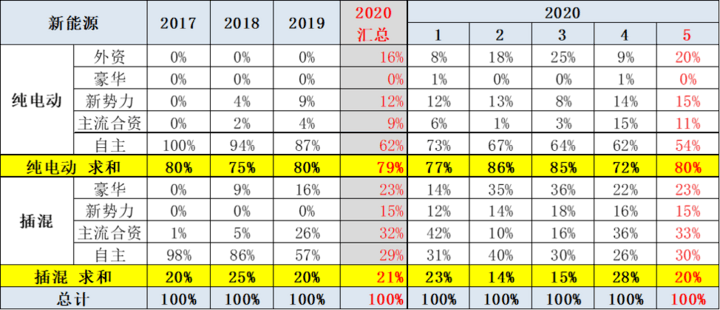
Therefore, the cost of obtaining new energy points of independent brands has skyrocketed, the output has dropped sharply, and the price of selling new energy points must return to a reasonable level rationally.

3. The demand for new energy points is growing steadily.
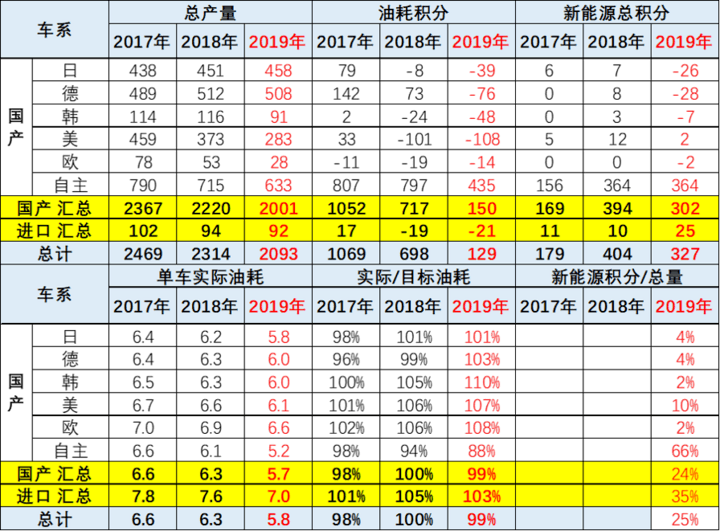
In 2019, the average fuel consumption of passenger cars is 5.8 liters, of which the fuel consumption of domestic cars is 99%, and that of imported cars is 103%. The fuel consumption of domestic cars is excellent, and the overall index is basically balanced.

From the point of view of fuel consumption, independent brands excel in fuel consumption, especially fuel-saving, reaching 12% of the target fuel consumption in 2019, which is much better than the 2018 level.

At present, the pressure on the fuel consumption of the joint venture is relatively high, and the fuel consumption of the joint venture is still maintained at 101%, exceeding the target by one percentage point. the relative fuel consumption pressure continues to increase in recent years, with Korean brands and German brands under greater pressure. The fuel consumption of Korean brands increased by 5% from 5% in 2018 to 10% this year.

The fuel consumption integral pressure of the joint venture in 2020 is difficult to be resolved comprehensively, and a large number of internal fuel consumption integral transfer is needed to make up for it.

4. It is difficult to effectively meet the fuel consumption points within large groups.
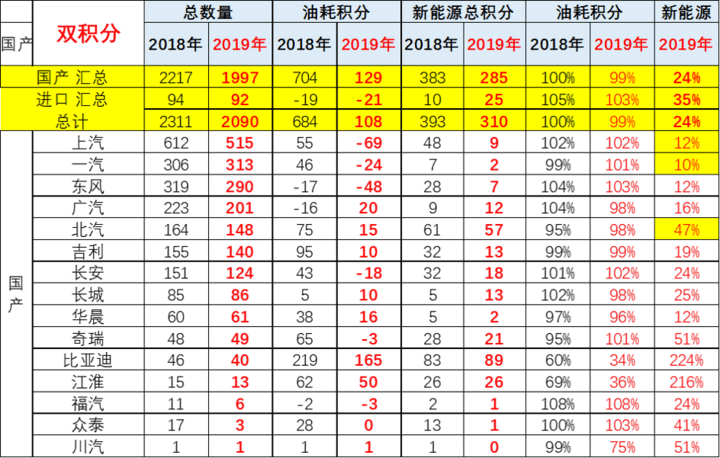
From the group level, the negative points of fuel consumption in 2019 are mainly SAIC Group, Dongfeng Group, Changan Group and foreign-funded enterprises, while the overall fuel consumption scores of other enterprise groups are all positive.

From the point of view of accumulating 16 to 18 years, the main negative points in fuel consumption scores are the Great Wall and Fuqi. Because the new energy points of 16 and 17 years can be offset by the points earned in the early stage, there is basically no pressure on the 2019 transaction from the group level. But the 3.1 million points of new energy points in 2020 should be difficult to achieve high price sales.

New energy points offset fuel consumption points, which is the helpless choice of some car companies.

5. Market regulation is taking effect step by step.

As the new energy points in 2019 can be carried forward to 2020, and the recent performance of new energy production and sales of car companies is relatively low, it is more difficult to obtain new energy vehicles in the future, so it is more difficult.

This revision gives the new energy points 50% carry-over ratio function under certain conditions, which solves the problem of short validity of new energy points in the current 'double points' policy. At the same time, it helps to improve the transaction value of new energy points.

The new energy points of the joint venture can be offset by 2021 against 2020, although this is very good. But the new energy credits for 2019 still need to be settled.

In addition, the structural difficulty of new energy development has increased, resulting in several joys and sorrows. New energy points are also resources for the stable development of enterprises, so the transaction price of new energy points will be significantly increased.

Click to register: "2020 (Fifth) China International Nickel, Cobalt and Lithium Summit Forum"

Scan the code to sign up for the Ni-Co-Li Summit or apply to join the SMM industry exchange group:

Data Source Statement: Except for publicly available information, all other data are processed by SMM based on publicly available information, market communication, and relying on SMM's internal database model. They are for reference only and do not constitute decision-making recommendations.

For any inquiries or for more information, please contact: lemonzhao@smm.cn
For more information on how to access our research reports, please contact:service.en@smm.cn
Related News
[SMM Analysis] Zimbabwe's Only Operating Lithium Sulphate Plant Has No Spare Capacity Ahead of Concentrate Export Ban
3 hours ago
[SMM Analysis] Zimbabwe's Only Operating Lithium Sulphate Plant Has No Spare Capacity Ahead of Concentrate Export Ban
Read More
[SMM Analysis] Zimbabwe's Only Operating Lithium Sulphate Plant Has No Spare Capacity Ahead of Concentrate Export Ban
[SMM Analysis] Zimbabwe's Only Operating Lithium Sulphate Plant Has No Spare Capacity Ahead of Concentrate Export Ban
Zimbabwe's sole operating lithium sulphate plant, run by a Zhejiang Huayou Cobalt subsidiary, has no capacity to process third-party concentrate just months before the country's export ban takes effect, according to comments from plant officials during a government site visit. No room for outside supply. The government's January 2027 ban on lithium concentrate exports aims to push miners toward domestic refining, lifting export revenue and local employment. Producers have requested more time to build their own processing plants, but authorities have instead directed them to use existing local facilities of which only the Prospect Lithium Zimbabwe Huayou plant is currently operational, and it cannot absorb outside material. Mine manager comment. "We don't have the capacity to process other minerals from outside. Our concentrator plant produces around 400,000 tons a year, so there's no room for other players," said mine manager Mthokozisi Goliath, noting the sulphate plant can only process what its own concentrator supplies. No delay to deadline. Mines minister Polite Kambamura ruled out pushing back the ban: "The January 2027 deadline is still on... We would like to urge all producers to stick to that deadline." Other plants not ready in time. Processing facilities under construction at other Zimbabwean lithium assets are unlikely to be completed before the deadline. Chinese firms have invested roughly $2 billion into Zimbabwe's lithium sector since 2021. SMM View: This tightens the bottleneck facing Zimbabwe's non-Huayou producers heading into January 2027 with Goromonzi at full capacity and rival plants unfinished, miners without their own processing routes face a stark choice between stockpiling concentrate, absorbing steep discounts on any domestic sale, or halting output altogether. This reinforces the case for closely tracking commissioning timelines at competing plants, as delays there directly translate into constrained sulphate supply and potential price support for processed material once the ban takes hold.
3 hours ago
[SMM Flash] Nigeria Discovers 3.3M Tons of Lithium Near Abuja, Unveils High-Grade Kaduna Mineral Province
3 hours ago
[SMM Flash] Nigeria Discovers 3.3M Tons of Lithium Near Abuja, Unveils High-Grade Kaduna Mineral Province
Read More
[SMM Flash] Nigeria Discovers 3.3M Tons of Lithium Near Abuja, Unveils High-Grade Kaduna Mineral Province
[SMM Flash] Nigeria Discovers 3.3M Tons of Lithium Near Abuja, Unveils High-Grade Kaduna Mineral Province
Nigeria has confirmed lithium reserves estimated at 3.3 million metric tonnes at a mining site near Abuja, alongside the identification of a separate polymetallic mineral province in Kaduna State that also carries lithium mineralisation. The findings were disclosed at the African Natural Resources and Energy Investment Summit 2026 in Abuja as part of the country's push to build out its critical minerals sector. The 3.3 million-tonne Abuja Lithium Site estimate was disclosed by Steron Mining and Company Limited during a facility tour for summit delegates. Company officials said the site hosts an estimated 94.8 million tonnes of total mineral resources, including lithium-bearing ore and granitic rock, with verified spodumene grades at licensed Nigerian sites ranging between 2.66% and 5.96% Li₂O with some deposits recording concentrations of up to 13% Li₂O, well above the global commercial average of 1-2%. Steron said it has since also identified tantalite occurrences at the site and continues active exploration. Nigeria's Minister of Solid Minerals Development, Dele Alake, described the Kaduna find as a "world-class" mineral province containing high grade platinum group metals, gold, nickel, copper, lithium and rare earth elements, verified by the Nigerian Geological Survey Agency in collaboration with the discovering private operator. The lithium finds build on an already active Chinese processing footprint in Nigeria. Chinese firms including Jiuling Lithium and Canmax Technology have committed more than $1.3 billion to Nigerian lithium processing capacity since 2023. A $250 million lithium processing plant built by Jiuling and Canmax in Nasarawa state, with capacity to process 3 million tonnes of lithium ore annually, came online in July 2026. SMM View: The Abuja and Kaduna find extend Nigeria's lithium resource base beyond its established Nasarawa and Kogi pegmatite belts, reinforcing the country's position as a fast-growing West African lithium ore source with an unusually mature downstream processing footprint already backed by Chinese capital. Whether the new reserves convert to bankable, licensed production will hinge on further resource verification and offtake commitments, but the existing processing infrastructure lowers the barrier to bringing new Nigerian lithium ore to market compared with peers still lacking domestic conversion capacity.
3 hours ago
Sinomine to Acquire Tyranna's Namibe Lithium - Caesium Project in Angola for $1.44 Million
3 hours ago
Sinomine to Acquire Tyranna's Namibe Lithium - Caesium Project in Angola for $1.44 Million
Read More
Sinomine to Acquire Tyranna's Namibe Lithium - Caesium Project in Angola for $1.44 Million
Sinomine Resource Group has agreed to acquire Tyranna Resources' 90% interest in the Namibe lithium project in southern Angola for $1.44 million, adding another West African lithium ore asset to its African portfolio as it deepens exposure to the region's spodumene supply chain. Deal Structure: The transaction covers Tyranna subsidiary Angolan Minerals' stake in AM Mauritius, holding company for Namibe, to be sold to Sinomine Resource (Guangdong Hengqin) Supply Chain Co, a Sinomine subsidiary. The deal requires shareholder approval, with Tyranna's general meeting on the matter scheduled for August 7. Project Background: Namibe has been under exploration for four years, with drilling confirming spodumene and pollucite mineralisation. Sinomine, already a funding partner in the project, was named the natural buyer given its established African mining and lithium ore processing footprint across Namibia, Zimbabwe and the DRC. Capital Redirected to Gold: Tyranna said proceeds will fund its newly acquired Chinguar gold project in Angola, with the exploration team preparing stream sediment sampling, soil surveys and lateritic gold target assessment across the concession. Managing Director David Crook framed the divestment as a strategic pivot to prioritise assets with the strongest exploration upside while retaining an Angolan mineral sector presence. SMM View: The deal underscores Sinomine's continued consolidation of early-to-mid-stage African lithium ore assets at low entry cost, extending its regional footprint beyond existing Zimbabwe and DRC operations into Angola's nascent spodumene sector. For juniors like Tyranna, divesting pre-development lithium assets to fund gold exploration reflects a broader trend of smaller Angola-focused explorers rotating capital away from lithium amid subdued pricing, toward commodities offering faster near-term returns.
3 hours ago
Federation of passengers: the price of new energy points will soar. - Shanghai Metals Market (SMM)