[concern] epidemic situation superimposed drought! The Chilean mining industry is too difficult

Published: Apr 08, 2020 17:02 (GMT+8)

SMM4, April 8: according to Chilean media local time reported on April 6, the central region of the country with the capital Santiago as the center is experiencing a rare dry weather, the recent rainfall compared with the same period in history decreased by nearly 80%, at the same time, the precipitation in some northern provinces is 90% less than in previous years. Local rivers and reservoirs are nearing their lowest levels, and millions of people are already having trouble drinking water.

Some media have pointed out that at present, areas such as Santiago, where the drought is most serious, are precisely the hardest hit areas of Chile's new crown pneumonia epidemic, and one of the important means to prevent infection is to wash hands frequently. In the case of drought, washing hands with water may become a difficult problem. It is reported that the Chilean government has begun to deal with the problem of water shortage in the affected areas, using trucks to transport domestic water to more than 1.5 million people with water difficulties every day, and began to strengthen the cleaning and epidemic prevention work in the affected areas.

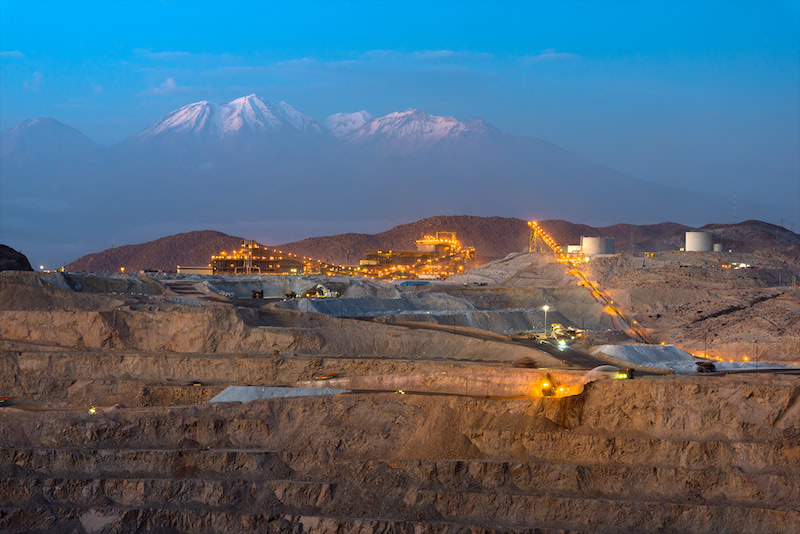
On the one hand, water shortage will cause the epidemic to seriously limit the resumption of production, even if the epidemic is slow to resume work, the mining of copper mines will be affected in the drought state, because the mining process requires the use of water for flotation and the use of water to transport tailings.

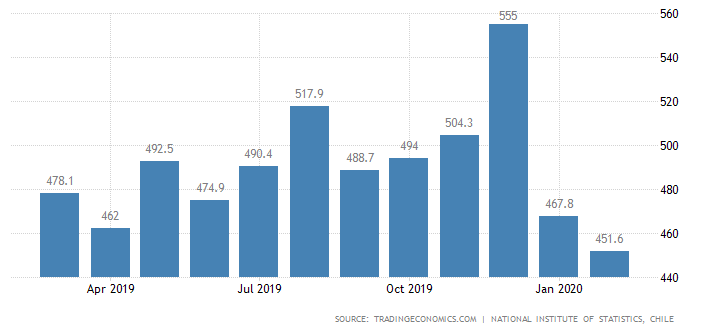
Chilean copper production was 466723 tons in January, up 1.4 percent from a year earlier, and 451580 tons in February, up 8.3 percent from a year earlier, according to INE data from Chilean Statistics. SMM expects Chile to produce 46-480000 tons of copper in March.

Monthly copper production in Chile (in kilotons)
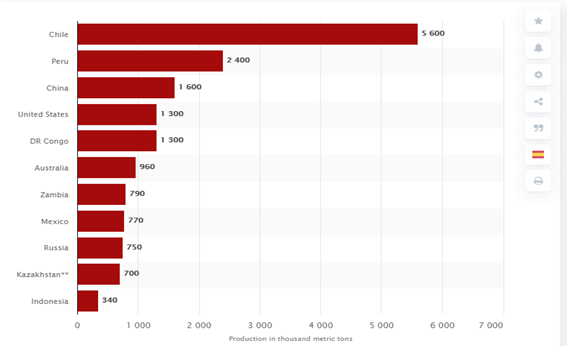
Chile produced a total of 5.6 million tons of copper in 2019, ranking first in the world, according to Statista.

Ranking of Global Copper production by country in 2019 (in kilotons)
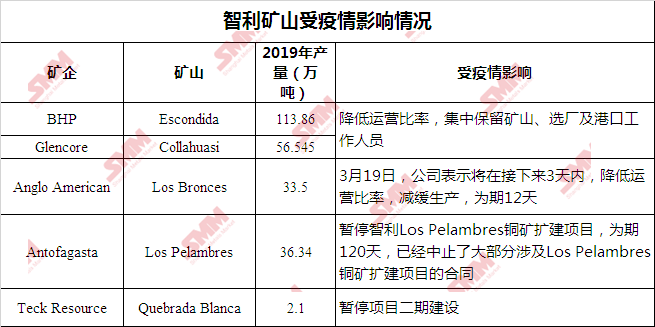
Since February, the output of a number of large mines in Chile has increased. Codelco production, the world's largest copper miner, rose 4.5 per cent to 120300 tonnes in February from a year earlier. Production at Escondida, the world's largest copper mine controlled by BHP Billiton, rose 15.1 per cent from a year earlier to 94500 tonnes. The Collahuasi mine, co-operated by Glencore and Anglo, increased production by 22.3 per cent year-on-year to 47100 tonnes.
"Click to participate in the second China (Yingtan) Copper Industry Summit and the 15th China International Copper Industry chain Summit."

To sign up for the summit or apply to enter the SMM industry exchange group, please scan the code:

Data Source Statement: Except for publicly available information, all other data are processed by SMM based on publicly available information, market communication, and relying on SMM's internal database model. They are for reference only and do not constitute decision-making recommendations.

For any inquiries or for more information, please contact: lemonzhao@smm.cn
For more information on how to access our research reports, please contact:service.en@smm.cn
Related News
【Flash | BHP-Funded Programme Advances Drilling at Argentina’s El Destino Copper-Gold-Molybdenum Target】
1 hour ago
【Flash | BHP-Funded Programme Advances Drilling at Argentina’s El Destino Copper-Gold-Molybdenum Target】
Read More
【Flash | BHP-Funded Programme Advances Drilling at Argentina’s El Destino Copper-Gold-Molybdenum Target】
Kobrea Exploration Corp. announced the approval of a US$4 million 2026/27 exploration programme for the Western Malargüe Mining District in Mendoza Province, Argentina, fully funded by BHP. The programme includes diamond drilling at the El Destino copper-gold-molybdenum porphyry target, induced-polarisation surveys at El Destino and KBX-17, as well as geological mapping, geochemical sampling and hyperspectral work. The exploration alliance covers seven projects totaling approximately 733 square kilometres, where copper, gold and molybdenum geochemical anomalies have been identified. SMM analysis: approval of the new budget moves the BHP-Kobrea partnership from an alliance framework into an active drilling phase. However, the properties remain at an early exploration stage, with no molybden
1 hour ago
【Flash | Glencore Targets Q1 2027 Environmental Filing for El Pachón Copper-Molybdenum Project】
1 hour ago
【Flash | Glencore Targets Q1 2027 Environmental Filing for El Pachón Copper-Molybdenum Project】
Read More
【Flash | Glencore Targets Q1 2027 Environmental Filing for El Pachón Copper-Molybdenum Project】
Glencore plans to submit the environmental impact report for its El Pachón copper-molybdenum project in Argentina in Q1 2027 and aims to secure approval under the Incentive Regime for Large Investments, or RIGI, before July 2027. Glencore previously reported approximately 6 billion tonnes of mineral resources grading an average 0.43% copper, 2.2 g/t silver and 130 g/t molybdenum, equivalent to around 0.013% Mo. Based on the disclosed tonnage and average grade, the resource contains roughly 780,000 tonnes of in-situ molybdenum, although this does not represent reserves, recoverable metal or future production. During the 2025/26 exploration season, the project completed 53 drill holes totaling 21,246 metres and advanced preliminary road and bridge infrastructure.
1 hour ago
【Flash | Glencore Secures RIGI Approval for Argentina’s Agua Rica Copper-Gold-Silver-Molybdenum Project】
1 hour ago
【Flash | Glencore Secures RIGI Approval for Argentina’s Agua Rica Copper-Gold-Silver-Molybdenum Project】
Read More
【Flash | Glencore Secures RIGI Approval for Argentina’s Agua Rica Copper-Gold-Silver-Molybdenum Project】
Glencore announced that its Agua Rica project, known as MARA, has received approval under Argentina’s Incentive Regime for Large Investments, or RIGI. The large-scale copper-gold-silver-molybdenum deposit contains approximately 1.2 billion tonnes of measured and indicated mineral resources grading an average 0.03% molybdenum. Based on the disclosed tonnage and grade, the resource contains roughly 360,000 tonnes of in-situ molybdenum; however, this does not represent reserves, recoverable metal or future molybdenum production. Glencore also brought forward expected first production from the Alumbrera restart to H2 2027 from H1 2028. Alumbrera’s processing, logistics and workforce infrastructure is expected to support the future development of MARA. SMM analysis: RIGI approval improves the project’s fiscal and regulatory certainty, but no final investment decision, molybdenum recovery plan or molybdenum output guidance has been announced, leaving no direct near-term impact on molybdenum supply.
1 hour ago