State issues 2020 Photovoltaic Power Generation Power Price Policy to optimize Industrial Development

Published: Apr 2, 2020 10:44
Source: SMM

SMM4 1: a shares in the morning photovoltaic concept changes, Guangdong Rongtai, Yonggao shares, coal international rose 7%, Zhongtian science and technology, San an photoelectric rose.
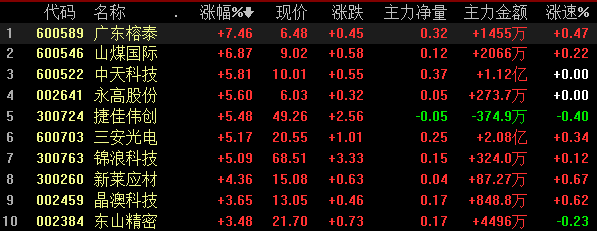
Recently, the National Development and Reform Commission issued the Circular on matters related to the 2020 Photovoltaic Power Grid Price Policy (hereinafter referred to as the "Circular"), announcing the 2020 photovoltaic power grid tariff policy.

The circular proposes to continue to set guidance prices for centralized photovoltaic power generation. The guidance price of the new centralized photovoltaic power station in the I~III resource area, which will be included in the scope of state financial subsidy, is 0.35 yuan per kilowatt hour (including tax, the same below), 0.4 yuan and 0.49 yuan per kilowatt hour, respectively. In principle, the feed-in electricity price of the new centralized photovoltaic power station shall be determined by means of market competition and shall not exceed the guidance price in the resource area where it is located.

The Circular makes it clear that the industrial and commercial distributed photovoltaic power generation projects, which are included in the scale of financial subsidies in 2020, adopt the mode of "self-generating and surfing the Internet", and the subsidy standard for full power generation is adjusted to 0.05 yuan per kilowatt-hour; the industrial and commercial distributed photovoltaic power generation projects adopting the "full access to the Internet" model shall be implemented according to the guidance price of the centralized photovoltaic power stations in the resource area. For all industrial and commercial distributed projects uniformly allocated by the competent energy department in the form of market competition, the price formed by market competition shall not exceed the guiding price in the resource area, and the subsidy standard shall not exceed 0.05 yuan per kilowatt hour.

The notice stipulates that the subsidy standard for household distributed photovoltaic power generation, which will be included in the scale of financial subsidies in 2020, will be adjusted to 0.08 yuan per kilowatt hour. The grid electricity price of the village-level photovoltaic poverty alleviation power station (including Liancun power station), which conforms to the relevant management provisions of the national photovoltaic poverty alleviation project, remains unchanged.

China's renewable energy generation capacity will reach 794 million kilowatts by the end of 2019, an increase of 9 percent over the same period last year, according to public data. Renewable energy generation accounted for about 39.5% of all power installations, an increase of 1.1 percentage points over the same period last year. Photovoltaic power generation was installed at 204 million kilowatts, up 17.3 percent from the same period last year.

In 2019, China's renewable energy generation reached 2.04 trillion kilowatt hours, an increase of about 176.1 billion kilowatt hours over the same period last year, and renewable energy generation accounted for 27.9 percent of the total electricity generation, an increase of 1.2 percent over the same period last year. Among them, photovoltaic power generation increased by 26.3% year on year.

 

Data Source Statement: Except for publicly available information, all other data are processed by SMM based on publicly available information, market communication, and relying on SMM's internal database model. They are for reference only and do not constitute decision-making recommendations.

For any inquiries or for more information, please contact: lemonzhao@smm.cn
For more information on how to access our research reports, please contact:service.en@smm.cn
Related News
Silicon Metal Spot Price Firmed Slightly Then Stabilized[SMM Silicon Industry Weekly Review]
10 hours ago
Silicon Metal Spot Price Firmed Slightly Then Stabilized[SMM Silicon Industry Weekly Review]
Read More
Silicon Metal Spot Price Firmed Slightly Then Stabilized[SMM Silicon Industry Weekly Review]
[Spot silicon metal prices edge higher in a narrow range before stabilizing]: In early August, the supply contraction from production cuts at silicon enterprises on the supply side and bullish price drivers from PV policy had already been realized in stages. Silicon metal futures shifted to narrow-range consolidation after prices rose. In August, fundamentals improved, with strong support below prices limiting downside room. On the upside, without new positive catalysts, upward momentum is insufficient to deliver a trending rally, and the tug-of-war between longs and shorts may shift prices to consolidation.
10 hours ago
Downstream Rigid-Demand Orders Followed Up, Silicone Product Prices Remained Strong [SMM Silicone Weekly Review]
10 hours ago
Downstream Rigid-Demand Orders Followed Up, Silicone Product Prices Remained Strong [SMM Silicone Weekly Review]
Read More
Downstream Rigid-Demand Orders Followed Up, Silicone Product Prices Remained Strong [SMM Silicone Weekly Review]
[SMM Silicone Weekly Review: Downstream Rigid Demand Orders Follow Through, Silicone Product Prices Continue to Show Strength] This week, China’s silicone DMC price center moved up, with quotations at 13,000-13,500 yuan/mt. Expectations of joint industry production cuts, combined with follow-through in downstream rigid demand orders, pushed silicone monomer enterprises to raise quotations, and low-priced supply in the market decreased. Supply side, the 50% joint production cut plan set at the August industry meeting continued to advance, but implementation intensity varied among enterprises, and the operating rate in early August remained above 60%. In terms of order taking by monomer enterprises, they currently have sufficient pre-sale orders and no sales pressure, with a few enterprises’ pre-sale orders already booked through early September; industry pre-sale orders vary from late August to early September. Monomer enterprises’ siloxane inventories are at low levels, and enterprises hold a mostly bullish sentiment. Overall, China’s short-term DMC price center is expected to gradually move up from 13,000 yuan/mt to around 13,500 yuan/mt.
10 hours ago
[SMM Analysis] Futures Market Weakness Coupled with Sluggish Off-Season Demand, Limited Arrivals Saw Stainless Steel Inventory Post a Slight Buildup and Hold Steady
11 hours ago
[SMM Analysis] Futures Market Weakness Coupled with Sluggish Off-Season Demand, Limited Arrivals Saw Stainless Steel Inventory Post a Slight Buildup and Hold Steady
Read More
[SMM Analysis] Futures Market Weakness Coupled with Sluggish Off-Season Demand, Limited Arrivals Saw Stainless Steel Inventory Post a Slight Buildup and Hold Steady
[SMM Analysis] Futures Market Weakness Coupled with Sluggish Off-Season Demand, Limited Arrivals Saw Stainless Steel Inventory Post a Slight Buildup and Hold Steady
[SMM Analysis] Futures Weakness and Sluggish Off-Season Demand; Stainless Steel Inventory Posts Slight Buildup and Remains Stable on Limited Arrivals SMM, August 13 – This week, stainless steel social inventory shifted from prior destocking to a slight buildup, with the overall inventory level basically stable and off-season inventory pressure rising at the margin. Total inventories in the two core markets of Wuxi and Foshan edged up from 915,200 mt on August 6, 2026, to 915,900 mt in the latest period, up 0.08% WoW. The buildup was modest, and overall inventory maintained a stable trend. This week, the stainless steel market continued to follow the traditional off-season pattern. Early recovery signals ahead of the September-October peak season had yet to emerge, and rigid demand from end-users remained weak. During the week, SS futures pulled back repeatedly. Wait-and-see sentiment strengthened among traders and downstream users, and most downstream end-users maintained a need-based, hand-to-mouth purchasing pattern. Spot transactions in the market were generally weak, and the destocking efficiency of cargoes was low, creating the core fundamental pressure behind the inventory buildup. On the supply and distribution side, there were temporary offsetting factors. At the beginning of this week, weather disruptions from Typhoon Dolphin constrained logistics shipments and the pace of spot arrivals in east China. The pace of market supply replenishment slowed, effectively offsetting the incremental buildup caused by weak demand, leaving social inventory only slightly higher this week and broadly stable overall. Overall, weak end-use demand in the off-season and weaker futures that dragged on market transactions were the core causes of this week's slight inventory buildup. Meanwhile, typhoon-related disruptions reduced arrivals and effectively curbed any sharp inventory accumulation, ultimately resulting in a slight buildup with overall stability. At this stage, the off-season fundamentals of stainless steel still dominate the market, and end-use demand shows no signs of recovery yet...
11 hours ago