The Federal Reserve is in a hurry to shrink its watch, but it is not urgent for monetary policy to return to economic data.

Published: Jan 29, 2019 17:09 (GMT+8)

SMM1 29: the first interest rate meeting in 2019 is just around the corner, and the focus of this meeting is not on whether the Fed will raise interest rates, because there is little suspense about the issue. From the shift in Powell's painting style in the past two months, to the decline in US economic data, the continued volatility in US stocks, and the decline in the most important inflation data, we can basically judge that there will be no interest rate hike in January.
Monetary policy should keep pace with economic development, whether hawkish or dovish, raising interest rates or not, not by Fed officials themselves. Economic data itself is the most fundamental and basic reference. The previous round of speeches by Fed officials also talked about the need for monetary policy to return more to economic data.

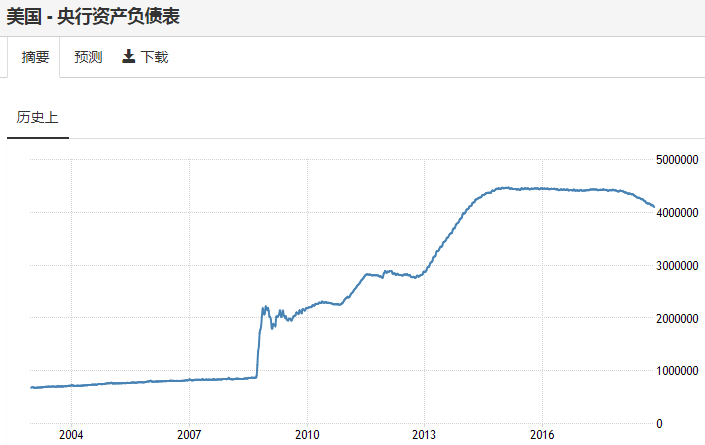
The Federal Reserve should be very worried about such a large balance sheet. The United States has not suffered losses. The United States has suffered a lot of losses in 2008. During the period from 2001 to 2007, the United States has been implementing low interest rates, and the benchmark interest rate has seriously deviated from the Taylor rule. It led to excess monetary liquidity, inflated the housing bubble, and then burst, spurred by higher interest rates, with the result of the financial crisis. The same is true now. The release of $4.5 trillion has boosted the US economy and inflated the stock market bubble. Now the three major stock indexes are riding a tiger, and the market expects too much of technology companies, making US stocks jittery. Confidence will not be fully restored until the balance sheet is repaired, and in the event of a market crisis, the Fed will be in trouble, unable to expand its watch or cut interest rates (there is little room).

The Fed may consider reducing the current 50 billion monthly contraction rate to give markets confidence, but real confidence should come from a complete repair of the balance sheet. The contraction is not that the Fed really wants to take money from the market, but from the point of view of the healthy development of the economy, the Fed, as the most important central bank in the world, can no longer make Greenspan's mistakes.

Data Source Statement: Except for publicly available information, all other data are processed by SMM based on publicly available information, market communication, and relying on SMM's internal database model. They are for reference only and do not constitute decision-making recommendations.

For any inquiries or for more information, please contact: lemonzhao@smm.cn
For more information on how to access our research reports, please contact:service.en@smm.cn
Related News
Panama Panel Backs Conditional Cobre Panamá Restart to Fund Eventual Closure
31 mins ago
Panama Panel Backs Conditional Cobre Panamá Restart to Fund Eventual Closure
Read More
Panama Panel Backs Conditional Cobre Panamá Restart to Fund Eventual Closure
A Panamanian ministerial commission has recommended opening formal negotiations with First Quantum Minerals over a potential restart of Cobre Panamá. Under the proposal, the mine could resume operations without expanding its footprint, with operating revenue funding rehabilitation, long-term monitoring and an eventual orderly closure at no cost to the state. Any agreement would require all pending international arbitration claims to be terminated and could not be extended. The report did not specify the scale or duration of a restart. Cobre Panamá previously accounted for around 1% of global copper production. Until an agreement and timetable are confirmed, the near-term impact on copper concentrate supply remains limited.
31 mins ago
Escondida supervisors vote 95% to authorise strike; talks enter mandatory mediation
32 mins ago
Escondida supervisors vote 95% to authorise strike; talks enter mandatory mediation
Read More
Escondida supervisors vote 95% to authorise strike; talks enter mandatory mediation
Sindicato N°2 de Supervisores y Staff at BHP's Escondida copper mine in Chile rejected the company's final wage offer, with 95% voting to authorise strike action. The union of about 1,020 supervisors objected to limited pay improvements, multi-tasking requirements and a proposed 14x14 shift rotation. Chilean law now mandates at least five days of government mediation, extendable by five more, before any legal walkout. The mine produced 1.26 million tonnes in fiscal 2026, down 3% year on year, with fiscal 2027 guidance of 1.0-1.1 million tonnes. Production is currently unaffected, but the vote compounds supply risk after a fatal accident halted operations in late September.
32 mins ago
India Has Yet to Decide on Scrapping Pre-Shipment Inspections for Metal Scrap Imports
1 hour ago
India Has Yet to Decide on Scrapping Pre-Shipment Inspections for Metal Scrap Imports
Read More
India Has Yet to Decide on Scrapping Pre-Shipment Inspections for Metal Scrap Imports
India has not yet decided whether to remove the pre-shipment inspection requirement for imported metal scrap, the Directorate General of Foreign Trade said on September 30. The authority is reviewing a proposal from the Material Recycling Association of India and remains open to further easing compliance requirements. MRAI has argued that a shortage of India-authorized inspection agencies in several exporting countries is creating certification and logistical constraints for scrap shipments. Reuters India imports around 13 million tonnes of recyclable metal scrap annually from more than 160 countries, with roughly 2,500 containers arriving each day. MRAI has proposed recognizing more overseas inspection agencies and expanding the list of low-risk origins exempt from pre-shipment inspections. DGFT said pre-shipment certification and inspections at Indian ports currently serve different purposes and cannot simply replace each other. Any eventual relaxation could reduce compliance barriers for imported scrap, including copper scrap, and broaden sourcing flexibility for Indian buyers, although no policy change has yet been approved.
1 hour ago