Exclusive: China's base metals output in Apr

Published: May 9, 2018 14:42
This is a roundup of China's base metals output in April. SMM surveyed major producers in the market to get first-hand information for calculation.

SHANGHAI, May 9 (SMM) – This is a roundup of China's base metals output in April. SMM surveyed major producers in the market to obtain information for calculation.

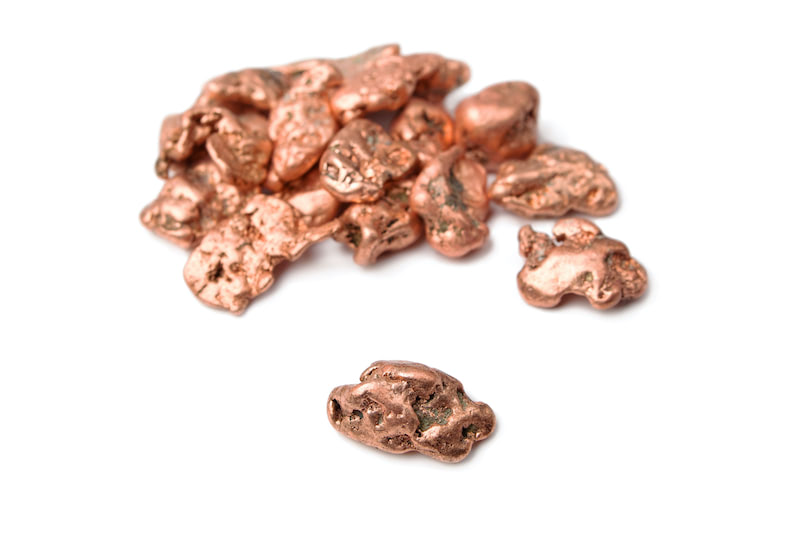
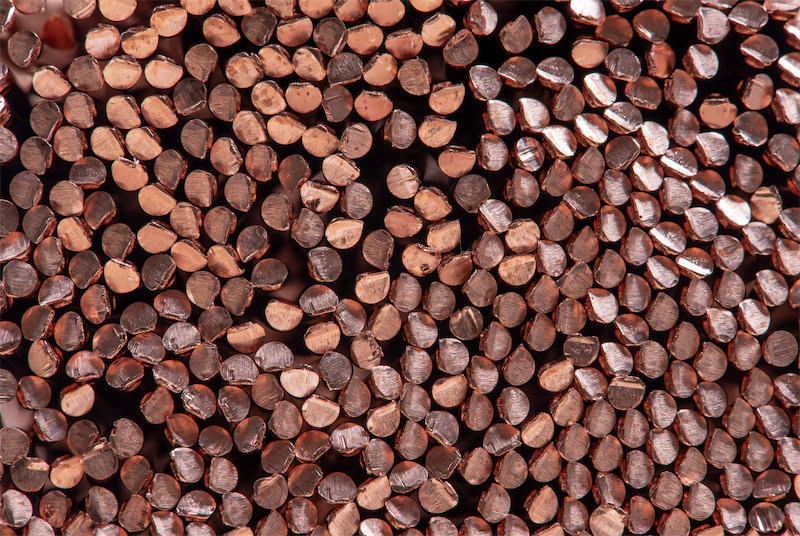
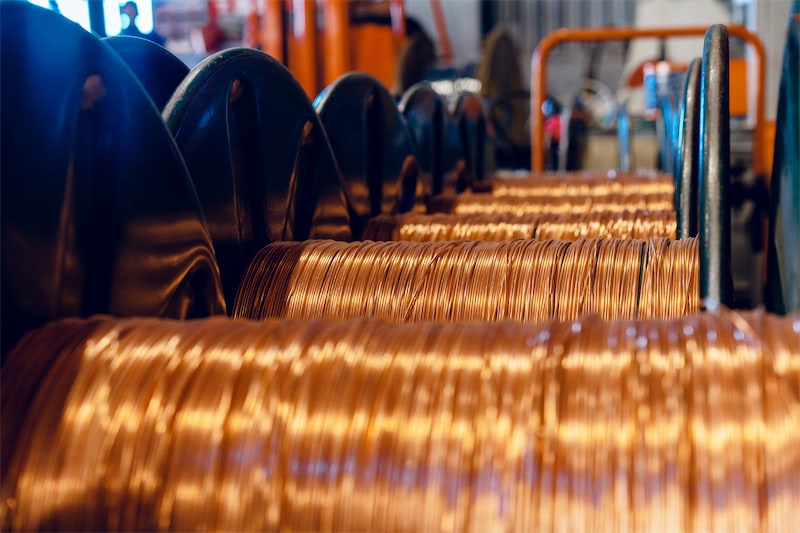
Copper: China's refined copper output came in at 737,800 mt in April, up 3.4% month on month and up 14.2% year on year, an SMM survey showed. Output in the first four months of this year stood at 2.86 million mt, up 11.9% on the year.

April's output exceeded the previous forecast as the actual output of Jiangxi Copper, Jinchuan Group, and Dongying Fangyuan Nonferrous Metals in April exceeded their plans. Moreover, fewer maintenance works also accounted for the year-on-year growth. 

About 20,000 mt of output was affected by maintenance from January to April this year, compared with over 100,000 mt of output affected during the same period last year.

Output growth in April was mainly contributed by copper produced from concentrate. Small- and medium-sized secondary copper smelters that used scrap, blister and anode copper as raw materials generally saw operating rates below 50%, the SMM survey found. This is unlikely to change in the short term.

SMM estimates copper output in May to stand at 732,500 mt, down 0.72% month on month and up 17.2% year on year. Output in the first five months of this year is expected to come in at 3.59 million mt, up 12.9% on the year.

Alumina: China's alumina output came in at 5.81 million mt in April, up 2.1% year on year. Daily output stood at 194,000 mt, up 4.9% month on month. Output in the first four months of this year stood at 22.33 million mt, flat from the same period last year.

As the heating season ended, alumina plants across the country have resumed operations except for Kaiman Aluminum in Sanmanxia and Million King Group. Excess production was seen at some companies due to higher prices. Alumina output at Guizhou Huajin increased as maintenance on its roasting furnaces ended. Rectifications at East Hope Jinzhong Chemical also ended in April.

SMM estimates alumina output in May to stand at 6.1 million mt, with a daily output of 197,000 mt. The increase would mainly be attributed to the recovery of operations for the whole month. New capacity at Xiaoyi Huaqing Aluminium will also bolster its alumina output.

Aluminium: China's aluminium output stood at 2.95 million mt in April, down 3.1% year on year, SMM research found. Output in the first four months of this year came in at 11.72 million mt, down 2.6% on the year.

The annualised operating capacity grew by 263,000 mt to 35.9 million mt from the previous month. The commissioning of capacity rose at a slower rate as the uptick in alumina prices led to higher cost. This was despite higher aluminium prices. In the short term, supply tightness is likely to intensify as it grows slower than demand. Production schedules of new capacity at Guizhou Huaren Aluminium, Guangxi Hualei New Materials, Chalco Shanxi Huarun, and Meixin Aluminium have all been postponed.

Output of aluminium is expected to be 3.08 million mt in May, down 3.1% year on year.

Primary lead: China's primary lead output in April dipped on the month as more primary lead smelters underwent maintenance. This was despite the production restriction in north China eased on better weather condition. Smelters such as Yuguang, Nanfang, Jiangxi Copper continued their maintenance in April from March, and more including Shuikoushan, Hongchi, Mengshan, Dongling started repairing work in April, SMM learned. Some smelters suspending for environmental rectification also accounted for the decline in primary lead production. 

Hunan Jingui and West Mining Group plan to conduct maintenance in May, and Anhui Tongguan is expected to upgrade its equipment at the end of May. Beyond that, most primary lead smelters are expected to end maintenance work in May, SMM survey showed. This includes Nanfang, Shuikoushan, and Jiangxi Copper. SMM expects that primary lead production will rebound in May to 246,700 mt.

Zinc: China produced 444,600 mt of refined zinc in April, down 0.3% month on month and up 7.1% year on year, SMM data showed. 

Smelters such as Hunan Zhuye, Anhui Tongguan, and Yunnan Yuntong Zinc resumed production from maintenance in April, and Baiyin Nonferrous Group released new capacity of nearly 20,000 mt. However, with major smelters such as Shanxi Dongling and Jiangxi Copper shutting down their production for regular maintenance, output in April went down by 1,300 mt.

Jiangxi Copper will resume normal production in May, and Hechi Nanfang plans to recover operation in mid-to-late May. SMM estimates that zinc production in May will be around 444,000 mt.

Nickel: Due to the drop of working days, April's nickel production registered a month-on-month dip of 2.7% to 11,900 mt. The year-on-year decline was 7.6%. Output in the first four months of this year stood at 46,500 mt, down 11.5% from the same period last year.

SMM forecasts nickel production in May to be 12,200 mt, up 2.5% from April as operating rate is likely to pick up.

Nickel pig iron (NPI): At 40,700 mt in nickel content, China’s NPI output in April was up 6.8% month on month and 33% year on year. The output in the first four months of 2018 reached 150,000 mt in nickel content, registering a 15.6% year-on-year increase.

High-grade NPI production increased 10% for the month as maintenance works come to an end at plants in Shandong and Jiangsu. The increase, however, was lower than expectation due to environmental inspections in Jiangsu. Output of low-grade NPI dipped 12% month on month due to cutback at integrated #200 stainless steel plant.

We expect production in May to be 40,100 mt in nickel content, slightly down from April. This is mainly due to environmental restrictions in Jiangsu and maintenance of ferronickel plants in May.

Tin: China produced 14,067 mt of refined tin in April, 7.1% higher than in March as tin ingot output grew in Yunnan, and some secondary tin smelters increased production. 

Tin production in the near term is likely to be affected by the high prices and tight supply of raw material seen in April. This was resulted from a significant decline in the imported tin ore from Myanmar. 

We expect to see production in May at around 14,000 mt. We do not rule out the possibility that some tin plants will cut production due to tight supply of raw materials.


For editorial queries, please contact Daisy Tseng at daisy@smm.cn 
For more information on how to access our research reports, please email service.en@smm.cn

Data Source Statement: Except for publicly available information, all other data are processed by SMM based on publicly available information, market communication, and relying on SMM's internal database model. They are for reference only and do not constitute decision-making recommendations.

For any inquiries or for more information, please contact: lemonzhao@smm.cn
For more information on how to access our research reports, please contact:service.en@smm.cn
Related News
Vicuña Awards 63.6-km Northern Corridor Contract as Josemaria-Filo Development Advances
3 hours ago
Vicuña Awards 63.6-km Northern Corridor Contract as Josemaria-Filo Development Advances
Read More
Vicuña Awards 63.6-km Northern Corridor Contract as Josemaria-Filo Development Advances
Vicuña Corp., the 50/50 joint venture between BHP and Lundin Mining, has awarded the construction contract for Sections A1 and A2 of the Northern Corridor in Argentina, advancing enabling infrastructure for the integrated Josemaria and Filo del Sol copper-gold-silver project. The contract was awarded to a joint venture comprising Contreras, BBC (Boetto y Buttigliengo Constructora) and San Juan-based Construmin following a technical and economic evaluation process that also considered local participation. The awarded sections cover 63.6 kilometres between Angualasto and Junta La Palca, passing through Malimán, and form the first portion of the broader Northern Corridor, which is reported at approximately 220 kilometres. The route is intended to provide future access to the Vicuña project through San Juan Province and support logistics requirements associated with upcoming development stages. The scope of work includes earthworks, embankment construction, excavation and blasting, drainage systems, retaining structures, signage and other road-safety infrastructure. Vicuña is being advanced through a staged development strategy, with Josemaria expected to form the first stage of development, followed by subsequent development of Filo del Sol. BHP has indicated that a Stage 1 final investment decision could occur as early as the end of 2026. The contract award marks another tangible infrastructure milestone for Vicuña as BHP and Lundin Mining advance one of the world’s largest undeveloped copper districts. Development of reliable road access will be important for construction logistics and future operations at the remote project. While the award does not alter the current production timetable, it demonstrates continued progress on enabling infrastructure ahead of a potential Stage 1 final investment decision.
3 hours ago
Algo Grande Intersects 30.23 m at 1.5% CuEq at Adelita, Including 3.55 m at 9.4% CuEq
3 hours ago
Algo Grande Intersects 30.23 m at 1.5% CuEq at Adelita, Including 3.55 m at 9.4% CuEq
Read More
Algo Grande Intersects 30.23 m at 1.5% CuEq at Adelita, Including 3.55 m at 9.4% CuEq
Algo Grande Copper announced first assay results from its Phase II drilling programme at the Adelita Project in Sonora, Mexico, confirming high-grade copper-silver-gold skarn mineralisation at the Cerro Grande discovery. Hole AG-CG-PH2-002 intersected 30.23 metres grading 1.5% copper equivalent from 146.70 metres, comprising 0.83% copper, 47.3 g/t silver and 0.40 g/t gold. The interval included 3.55 metres grading 9.4% CuEq, containing 5.26% copper, 311.8 g/t silver and 2.22 g/t gold, as well as a 1.20-metre interval grading 15.8% CuEq, including 9.84% copper. The company said the mineralisation was intersected approximately 100 metres above the high-grade zone encountered during its Phase I drilling programme, indicating that the Cerro Grande system extends closer to surface than previously recognised. The hole was completed at a final depth of 661.8 metres. Assays remain pending below 179 metres, where a further 40.40 metres of visually mineralised core was logged between 179 and 301 metres. Additional Phase II holes along the Cerro Grande magnetic corridor also contain visually logged copper mineralisation, although assay results for those intervals remain outstanding. The Phase II programme is designed to expand the Cerro Grande skarn discovery along a 2.5-km magnetic corridor, with approximately 7,200 metres across 15 holes planned. The latest results extend high-grade copper-silver-gold mineralisation into a shallower part of the Cerro Grande system and provide further evidence of continuity along the skarn horizon. However, significant portions of the ongoing Phase II drilling remain supported only by visual observations, making forthcoming assays important in determining whether the mineralised footprint can be materially expanded. CuEq values are based on assumed recoveries, while true widths have not yet been established.
3 hours ago
Copper Ends 10-Week Winning Streak as US Tariff Uncertainty Triggers Sharp Pullback
3 hours ago
Copper Ends 10-Week Winning Streak as US Tariff Uncertainty Triggers Sharp Pullback
Read More
Copper Ends 10-Week Winning Streak as US Tariff Uncertainty Triggers Sharp Pullback
According to foreign media reports, copper recorded its first weekly decline since June as uncertainty over potential US tariffs on refined copper triggered a sharp reversal from record highs. Three-month copper on the London Metal Exchange traded at around US$14,238/mt on Friday, leaving prices approximately 1.2% lower for the week and ending a 10-week winning streak. Copper had reached a record US$14,875/mt before falling 3.6% on Thursday, after Reuters reported that the White House had not yet made a decision on whether to impose tariffs on refined copper imports. The pullback reflected a reduction in bullish positioning following the recent rally. However, underlying physical-market conditions remained relatively tight. Available LME copper inventories stood at 117,600 tonnes, while copper stocks monitored by the Shanghai Futures Exchange fell 13% week on week to 54,780 tonnes, their lowest level since January 2024. Near-term tightness on the LME also eased. The cash-to-three-month spread shifted into contango on Thursday, with cash copper trading at a US$4.50/mt discount to the three-month contract, indicating reduced concern over immediate metal availability. Uncertainty surrounding US trade policy remains an important driver of copper flows. Reuters reported that the White House has not yet made a decision on refined copper tariffs, as officials weigh concerns over higher manufacturing costs against the potential benefits of encouraging domestic mining. Expectations of possible tariffs had previously encouraged greater copper flows into the US, contributing to regional inventory imbalances. Copper's retreat from record highs suggests that tariff expectations had become an important component of recent bullish positioning. While uncertainty over US trade policy could continue to generate short-term volatility, falling Chinese inventories and geographically concentrated stocks indicate that underlying physical supply conditions remain relatively tight. The shift of the LME spread into contango, however, suggests that immediate availability concerns have eased compared with earlier in the rally.
3 hours ago
Exclusive: China's base metals output in Apr - Shanghai Metals Market (SMM)