SMM News, August 26:
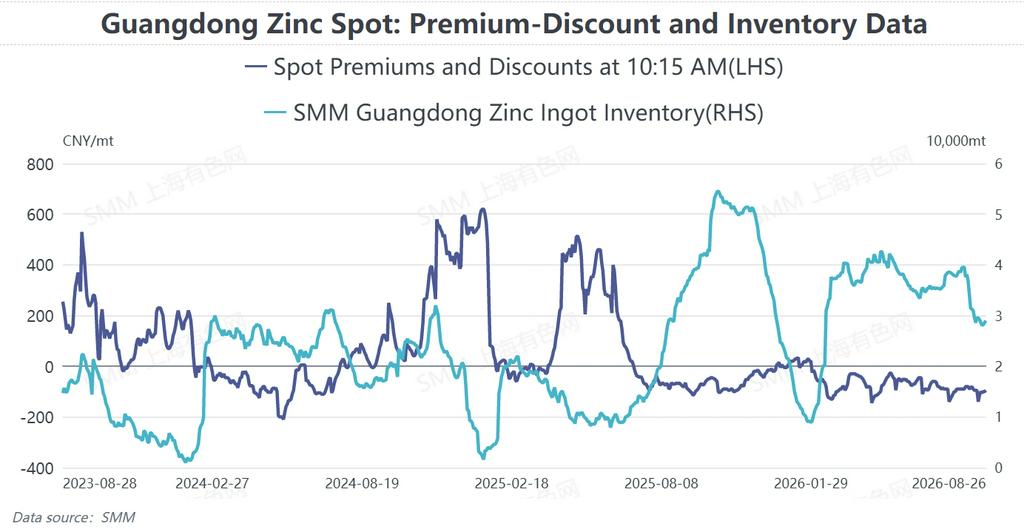
As of 15:00 today, the Shanghai zinc main contract 2610 closed at RMB 26,240/ton, with zinc prices fluctuating at high levels. According to SMM data, the spot premium‑discount in Guangdong has moved between ‑140 yuan/ton and ‑80 yuan/ton so far this month, staying within a discount range. Regional social inventory stood at 29,000 tons as of August 26. How will Guangdong spot premium‑discount evolve going forward? This report first analyzes the current market conditions in Guangdong.
Current Landscape: Interplay of Bulls and Bears — Premium‑discount “Supported on the Downside yet Lacking Upside Momentum”
Based on SMM statistics and market feedback, Guangdong zinc spot premium‑discount is now in a relative bull‑bear balance.
Bullish Factors
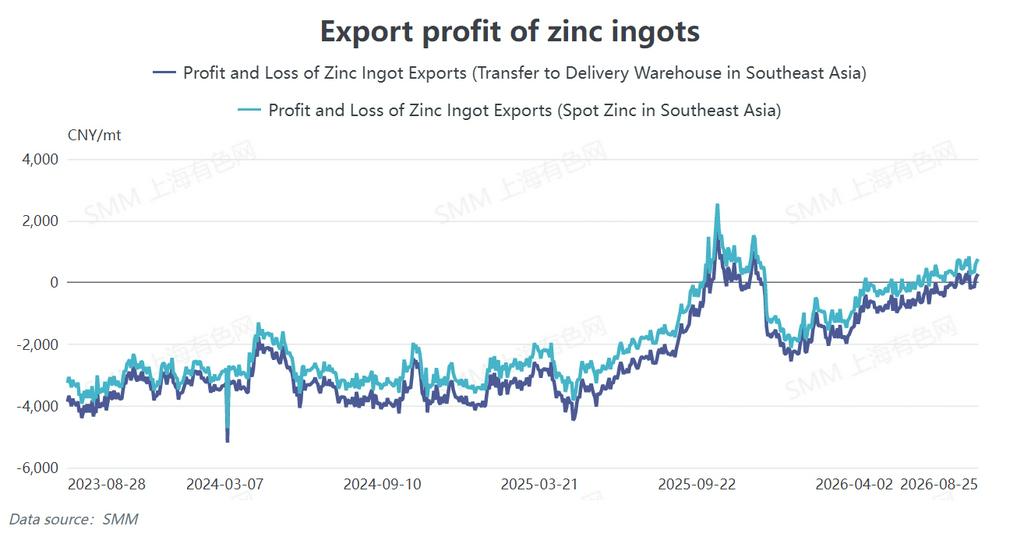
- Continuous destocking of regional social inventory and shrinking spot liquidity. Since August, Guangdong social inventory has trended lower. Smelter arrivals have declined on a periodic basis. Meanwhile, the Shanghai‑LME zinc ratio has remained low, keeping the export window for refined zinc open and diverting cargoes overseas. Available deliverable‑brand spot supplies in the region have tightened, forming downside support for spot premium‑discount.
- Tight supplies of certain deliverable brands and firm offers from traders. Spot availability of some deliverable brands is limited. Hold‑of‑stock traders maintain firm quotes, which prevents further widening of spot discounts.
Bearish Factors
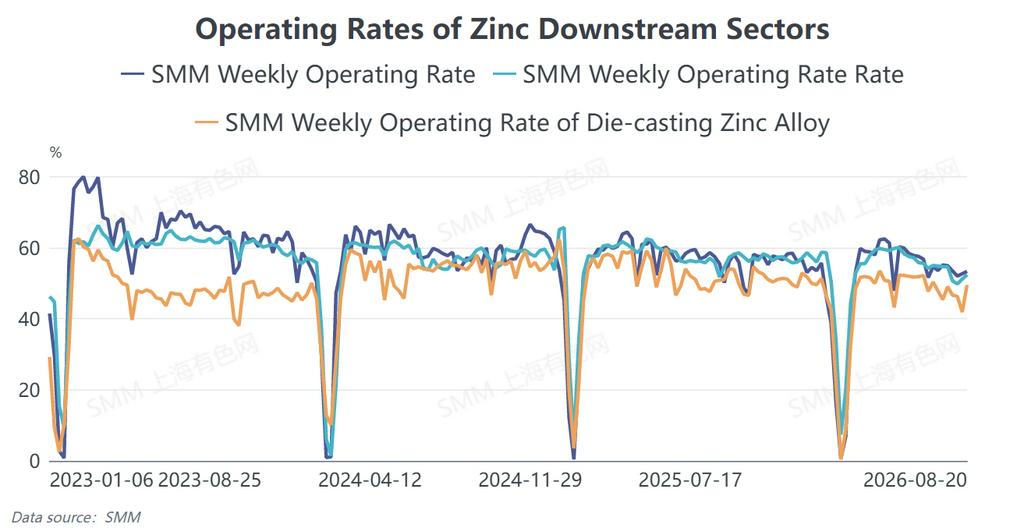
- Downstream caution amid high price levels. With zinc prices climbing above RMB 26,200/ton, downstream end‑users show clear price aversion. Most enterprises stick to rigid‑demand purchasing or draw down existing inventories, while enthusiasm for spot small‑lot purchases remains weak, which directly caps the upside of spot premium‑discount.
- No material improvement in end‑user consumption. The market is still in the traditional off‑season. Although orders from downstream sectors including galvanizing and die‑casting zinc‑alloy have picked up month‑on‑month, overall demand remains weaker year‑on‑year, lacking substantial fundamental drivers.
Outlook: Discount‑Bound Pattern Hard to Disrupt; Three Key Variables to Monitor
Going forward, Guangdong’s spot premium‑discount is expected to remain in a discount‑dominated range‑bound pattern. Any breakout from the current trading band will most likely be driven by the variables below.
Variable 1: Sustainability of the export window Amid the current strong‑overseas‑weak‑domestic dynamic, exports act as a key driver for Guangdong’s destocking. Should the LME backwardation persist and the Shanghai‑LME zinc ratio stay low, the export window will remain open, underpinning Guangdong inventories and supporting spot premium‑discount.
Variable 2: Smelter shipment rhythm Since Q3, output declines at some smelters have curbed cargo arrivals in Guangdong. Once smelters complete maintenance and resume regular shipments, increased inflows will weigh on local premium‑discount. As discussed earlier, the ongoing inventory drawdown mainly reflects periodic supply‑side tightness rather than a material improvement in demand. Resumed smelter deliveries will cap further upside for spot premium‑discount.
Variable 3: Zinc price trajectory Zinc price movement is a core determinant of downstream purchasing sentiment. A price pullback could unlock demand for basis‑priced deals and restocking, delivering periodic support to premium‑discount. Further price rallies, by contrast, will amplify downstream price aversion and keep premium‑discount under persistent pressure. At present, overseas strength lifts domestic prices, yet sluggish domestic consumption caps upside potential. Shanghai zinc is set for high‑level range‑bound trading with limited risk of a sharp near‑term drop. Without tangible improvement in order books, active downstream restocking sentiment can hardly see meaningful recovery.
Short‑term (Early September): Solid discount floor with limited upside Zinc prices have marched higher on the back of robust LME performance, with Shanghai zinc hitting a fresh high since February last night. However, domestic end‑use consumption has not staged a notable recovery, and high price levels are clearly discouraging downstream buying interest. In the short term, Guangdong premium‑discount is projected to oscillate within discount territory. A persistent export window and tight supplies of deliverable brands will prevent discounts from widening further, while downstream price aversion and seasonal off‑season conditions rule out a shift into spot‑premium territory.
Medium‑term (Late September‑October): Will the “Golden‑September‑Silver‑October” peak season become a turning point? September brings the traditional consumption peak season. Nevertheless, downstream order feedback shows most market participants remain cautious about future demand, and the ability of end‑use demand to lift Guangdong spot premium‑discount remains in doubt. If seasonal demand materializes as expected alongside sustained regional destocking, spot discounts may narrow periodically.
Summary Guangdong zinc spot premium‑discount is currently underpinned by open export channels and tight supplies of selected deliverable brands on the downside, and constrained by downstream price aversion and soft end‑use consumption on the upside. The discount‑based range‑bound pattern is unlikely to experience a material break in the near term.
![매수·매도 세력의 각축전 속, 광동 아연괴 현물: 할인 횡보 패턴은 언제 깨질까? [SMM 분석]](https://imgqn.smm.cn/usercenter/EviJV20251217171754.jpg)