Global Copper Smelting Landscape and Intelligent Development [[SMM Copper Conference]]
1 Global Copper Resource Distribution
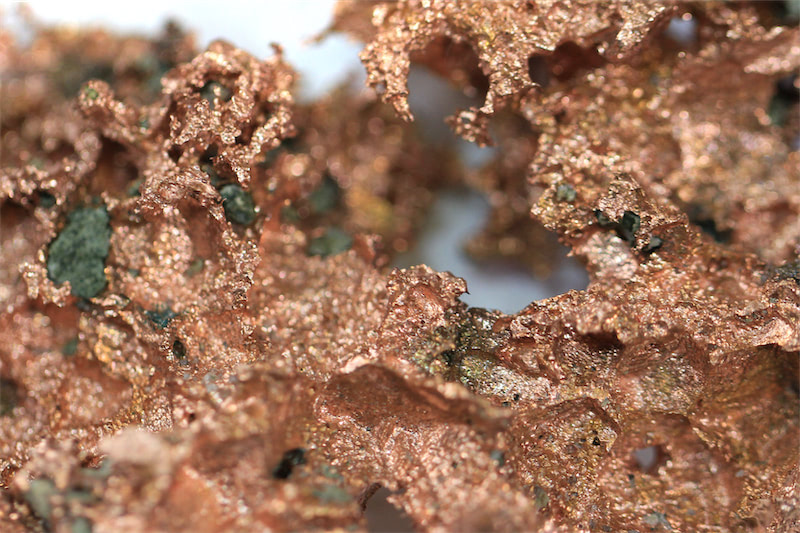
Overall, the world's copper resources are relatively abundant, with an estimated 31 billion tons of land-based copper resources and 7 billion tons in deep-sea nodules. Natural copper minerals include native copper, oxides, and sulfides. The world's proven copper reserves are about 10 billion tons, and based on current mine production, the static assurance period for mining is approximately 45 years.
In terms of regional distribution, the main areas with concentrated copper ore resources globally are:
(1) The western foothills of the Andes in Peru and Chile, South America;
(2) The Cordillera region in the western part of the North American continent, mainly in the US and Mexico;
(3) Central Africa, particularly in the DRC and Zambia;
(4) Central Asia, mainly Kazakhstan, Mongolia, and Russia;
(5) Australia.
The top five countries in terms of copper ore reserves are Chile, Peru, Australia, Russia, and the DRC, accounting for about 57% of the total.
2 Global Refined Copper Consumption
Global copper consumption is mainly concentrated in two types of countries or regions. One type is traditional developed Western countries, where copper consumption is relatively stable. The other type is developing countries and regions experiencing rapid economic growth, which have higher copper consumption growth rates and are key factors in global copper consumption growth. According to ICSG statistics, global refined copper consumption in 2024 was 28.577 million mt, up 5.79% YoY. The growth in global refined copper consumption is mainly supported by strong apparent demand in China.
The main areas of global copper consumption are power grids, construction, consumer goods, transportation, and engineering machinery, accounting for 28%, 27%, 22%, 12%, and 11% respectively. As a basic raw material, changes in copper consumption are closely related to global economic development. In recent years, consumption of copper plate/sheet and strip in traditional fields and copper foil for circuit boards has been relatively weak, while copper use in the power and new energy sectors has performed well.
3 Global Refined Copper Production and Capacity Distribution
Global refined copper production in 2024 was 28.0228 million mt, up 4.07% YoY. The increase in refined copper production is mainly due to capacity expansion in China and the DRC, while production in other regions decreased by about 1%.
As the largest consumer and producer of refined copper, China does not have a significant advantage in copper ore resources and needs to import large amounts of copper concentrates.
China's refined copper production and copper concentrate imports
In 2024, China's refined copper production was 13.644 million mt, and copper concentrate imports were 28.11 million mt.
To address the current state of the copper smelting industry, relevant national departments are promoting the healthy and orderly development of the copper smelting industry through industrial policies, environmental protection policies, and other measures.
In general, on the supply side, efforts are being made to deepen supply-side structural reforms, strictly control the disorderly expansion of copper smelting capacity, and accelerate intelligent and green transformation. On the demand side, enterprises are being guided to accelerate technological progress, overcome the shortcomings of copper-based new materials, and fully tap the potential applications of copper in new infrastructure and construction projects.
Major Chinese Copper Smelters
According to incomplete statistics, there are more than 40 copper smelters (production lines) nationwide, with four groups having a capacity of over 1 million mt/a.
4 Global Copper Smelting Processes and Their Development
Copper Smelting Processes
Pyrometallurgy (80%): Impurities are removed as slag at high temperatures, resulting in copper anode, which is then electrolyzed to produce refined copper.
Traditional matte smelting, the main process for copper smelting, is suitable for sulfide ores. One-step copper smelting, with limited industrial application, is suitable for sulfide ores under special raw material conditions.
Hydrometallurgy (20%): Copper is enriched in solution through leaching and extraction processes, followed by electrodeposition to produce refined copper.
• Leach-extraction-electrodeposition, suitable for oxide ores, especially for large-scale processing of low-grade oxide ores.
• Roast-leach-extraction-electrodeposition, suitable for sulfide ores, mixed ores, and copper-cobalt ores.
• Oxygen pressure leach-extraction-electrodeposition, suitable for sulfide ores, mixed ores, and copper-cobalt ores.
Copper Pyrometallurgical Process Flow
It also elaborated on the hydrometallurgical process flow of copper, including roasting, leaching, extraction, and electrodeposition.
Several Main Matte Smelting Processes and Their Development
► Flash Smelting:
Flash smelting technology includes Outokumpu flash smelting and INCO flash smelting, with Outokumpu technology being widely applied. China began introducing flash smelting technology in the 1980s.
Xiangguang Copper innovated boldly based on flash smelting technology, inventing the vortex flash smelting technology, which received a national invention patent.
Advantages include high capacity, high automation, and longer furnace life; disadvantages include high investment, complex feed preparation system, poor adaptability to high-impurity raw materials, and the need to reduce costs through scale effects.
Recent developments include: high oxygen (even pure oxygen) smelting, further expansion of single-furnace capacity (500,000 mt/a), continuous innovation and improvement of process equipment, and gradual localization.
► Top-Blown Smelting:
Top-blown smelting technology, including Ausmelt smelting and ISA smelting, was introduced to China in the 1990s.
Characteristics of top-blown smelting technology include using a submerged lance to blow air and oxygen into the melt pool, providing strong stirring and good reaction kinetics, and high production efficiency. Disadvantages include the need to add fuel, inability to separate slag and copper in the furnace, requiring a settling electric furnace, high comprehensive energy consumption, low utilization of oxygen and fuel, and short furnace life.
Recent developments include: increasing oxygen concentration, improving matte grade, raising smelting temperature, and continuously extending lance and furnace life.
► Bottom-Blown Smelting:
Bottom-blown smelting is a new copper smelting technology with independent intellectual property rights from China ENFI. It was first industrially applied in Vietnam in 2002, and the first bottom-blown copper smelting production line in China was put into operation in 2008.
Advantages include simple feed preparation, low furnace investment, high oxygen utilization, and strong adaptability to raw materials, capable of handling high-impurity raw materials. Disadvantages include high copper content in slag and low direct recovery rate.
Developments include: further expansion of single-furnace processing capacity (1.8 million mt/a of concentrate); as a representative technology for matte gold capture, it has low requirements for copper content in concentrate and has been applied in complex gold concentrate processing at Shandong Humon, Central China Gold, and Guotou Jincheng. Zhongjin Lingnan Copper Co., Ltd. (formerly Dongying Fangyuan) developed the "Zhongjin Method" for two-step copper smelting based on bottom-blown smelting. China ENFI and Baotou Huading Copper Industry developed the full bottom-blow three-furnace process based on bottom-blown smelting and continuous bottom-blowing.
► Side-Blown Smelting:
Based on Vanyukov smelting technology, China developed and applied oxygen-enriched double side-blowing smelting technology in 2009, which has rapidly developed in recent years.
Characteristics of side-blown smelting technology include blowing air and oxygen into the melt pool through tuyeres on both sides of the furnace, improving mass and heat transfer conditions, with low blowing pressure, low copper content in slag, and relatively simple operation. Disadvantages include the need for manual opening and plugging of tuyeres and the need to add coal (mainly to inhibit magnetic iron in slag).
Recent developments: Rapidly achieved a leap from 100,000 mt capacity to 400,000 mt capacity, with the maximum bed area reaching 70 square meters.
► P-S Converter Blowing:
P-S converter blowing, invented in 1905, has been used for over a century and remains the primary copper matte blowing technology worldwide.
Advantages include flexible operation and the ability to balance various cold copper-containing materials and externally purchased cold copper using reaction heat.
Disadvantages include periodic intermittent operation, large fluctuations in flue gas volume and sulfur content, which are unfavorable for acid-making systems, large flue gas collection volumes, and difficult-to-solve low-altitude SO2 pollution caused by ladle lifting.
The drawbacks of P-S converters have prompted metallurgists to seek continuous blowing technologies.
► Flash Blowing:
The world's first flash blowing furnace was commissioned at Kennecott Utah Copper in 1995, forming the "double flash" process when paired with flash smelting.
Xiangguang Copper was the first in China to introduce "double flash" technology, and the first flash blowing furnace in China was put into operation in 2007. After years of improvement, it developed into vortex flash blowing technology.
Currently, there are six flash blowing furnaces in operation in China, five of which are paired with flash smelting, each with a capacity of over 400,000 mt/a, and one paired with bottom-blown smelting, with a capacity of 300,000-400,000 mt/a.
Advantages include easy measurement of solid matte, high automation, and high operating rate. Disadvantages include the need for additional grinding equipment for matte and limitations in handling cold materials like anode stubs due to furnace structure and thermal balance.
The maximum single-unit designed capacity has reached 500,000 mt/a.
Additionally, it provided a detailed introduction to the processes and developments of bottom-blowing and multi-lance top-blowing.
5 Trends in the Copper Smelting Industry
Main factors and trends driving global copper smelting development
It also reviewed the development policies of China's copper smelting industry and shared interpretations of the main contents of the High-Quality Development Plan for the Copper Industry (2025-2027).
6 Intelligent Development in the Copper Smelting Industry
Background of intelligent transformation and upgrading
Policy promotion for intelligent transformation and upgrading
In March 2021, the State-owned Assets Supervision and Administration Commission (SASAC) issued the Notice on Accelerating the Digital Transformation of State-Owned Enterprises.
In November 2021, the MIIT issued the 14th Five-Year Plan for Deep Integration of Informatization and Industrialization.
In April 2020, the MIIT, NDRC, and Ministry of Natural Resources jointly released the Guidelines for the Construction of Smart Factories (Mines) in the Nonferrous Metals Industry (Trial). Among these, the Guidelines for the Construction of Smart Smelting Factories in the Nonferrous Metals Industry, led by China ENFI, provide a top-level design for the intelligent development of the nonferrous metal smelting industry.
Overall implementation plan for smart factories
Expected effects of smart factory implementation
It discussed in detail aspects such as organizational management model reconstruction, innovative digital transformation panoramic view, data assetization, and improvement of technical and economic indicators.
For more information, click to view the special report on the CCIE-2025SMM (20th) Copper Industry Conference and Copper Industry Expo.
데이터 출처 설명: 공개 정보를 제외한 모든 데이터는 SMM이 공개 정보, 시장 커뮤니케이션 및 SMM 내부 데이터베이스 모델을 기반으로 가공한 것입니다. 본 자료는 참고용이며 의사결정 권고를 구성하지 않습니다.
문의 사항이 있거나 자세한 정보를 원하시면 아래로 연락해 주시기 바랍니다: lemonzhao@smm.cn
리서치 보고서 열람 방법에 대한 자세한 내용은 아래로 문의하시기 바랍니다:service.en@smm.cn
관련 뉴스

12시간 전
ACG 게디크테페 황화물 확장 프로젝트, 첫 구리·아연 정광 생산; 2026년 말까지 완전 생산 목표
더 보기
ACG 게디크테페 황화물 확장 프로젝트, 첫 구리·아연 정광 생산; 2026년 말까지 완전 생산 목표
ACG Metals는 9월 1일 튀르키예 소재 Gediktepe 광산에서 8월 31일 첫 구리 정광을 생산했다고 발표하며 증산 단계에 돌입했다고 밝혔다. 회사는 처리량을 점진적으로 늘리고 플랜트 성능을 최적화하여 2026년 말까지 완전 가동을 목표로 하고 있다. Gediktepe의 정상 상태 연간 생산 목표는 구리 환산 2만~2만 5천 톤이다.
전체 발표문에는 해당 광산이 2026년 8월 첫 아연 정광을 생산했다는 내용도 포함되었으나, 구체적인 날짜와 생산량은 공개되지 않았다. SMM은 2026년 해당 광산의 아연 정광 내 아연 함유량을 약 1만~1만 5천 톤으로 추정했다.
12시간 전
![[ SMM 분석 ] 19개 구리 제련소의 2026년 반기 보고서 한눈에 보기](https://imgqn.smm.cn/usercenter/gCNEi20251217171715.jpeg)
12시간 전
[ SMM 분석 ] 19개 구리 제련소의 2026년 반기 보고서 한눈에 보기
더 보기
[ SMM 분석 ] 19개 구리 제련소의 2026년 반기 보고서 한눈에 보기
12시간 전
14시간 전
MMG, 보츠와나 코에마카우 확장 지원 위해 6,400만 달러 규모 장비 주문
더 보기
MMG, 보츠와나 코에마카우 확장 지원 위해 6,400만 달러 규모 장비 주문
에피록이 MMG 리미티드와 광산 계약업체인 차이나 화예, 23MCC로부터 보츠와나 코에마카우 구리 광산 확장을 지원하기 위한 지하 채굴 장비 주문을 약 6억 1천만 크로나(6,400만 달러) 규모로 수주했다. 이번 주문에는 갱도 굴착 드릴, 생산 드릴, 케이블 볼팅 장비, 로더, 지하 광산 트럭과 함께 원격 제어 시스템, 예비 부품, 교육, 현장 기술 지원이 포함된다.
이 장비는 MMG가 진행 중인 코에마카우 확장을 지원할 예정이며, 이를 통해 정광 내 구리 금속 연간 생산 능력을 약 6만 톤에서 13만 톤으로 늘리는 것이 목표다. 이 프로젝트에는 연산 450만 톤 규모의 새로운 처리 공장 건설이 포함되어 총 처리 능력을 800만 톤 이상으로 끌어올리게 되며, Zone 5 North, Mango, Zeta North-East 개발도 함께 진행된다. 확장 프로젝트의 첫 구리 정광 생산은 2028년 상반기로 예상된다.
에피록은 새로운 지하 장비의 인도가 2026년 4분기에 시작되어 2028년 2분기까지 완료될 예정이며, 이는 확장 일정과 대체로 일치한다고 밝혔다. 주문된 장비에는 부머 갱도 굴착 드릴, 심바 생산 드릴, 케이블텍 케이블 볼팅 장비, 스쿱트램 로더, 마인트럭 지하 트럭이 포함되며, 일부 장비는 자동화 및 원격 제어 운전이 가능하도록 구성된다.
이번 장비 주문은 이미 승인된 코에마카우 확장의 또 다른 실행 이정표로, 새로운 생산 목표가 아니다. 조달이 진행되고 장비 인도가 2028년 2분기까지 예정된 가운데, 프로젝트는 MMG가 계획한 정광 내 구리 생산 능력 연간 13만 톤 달성을 향해 계속 진전되고 있다. 이번 확장은 보츠와나 칼라하리 구리 벨트에서 코에마카우의 구리 생산 능력을 대폭 확대하려는 계획을 의미한다.
14시간 전