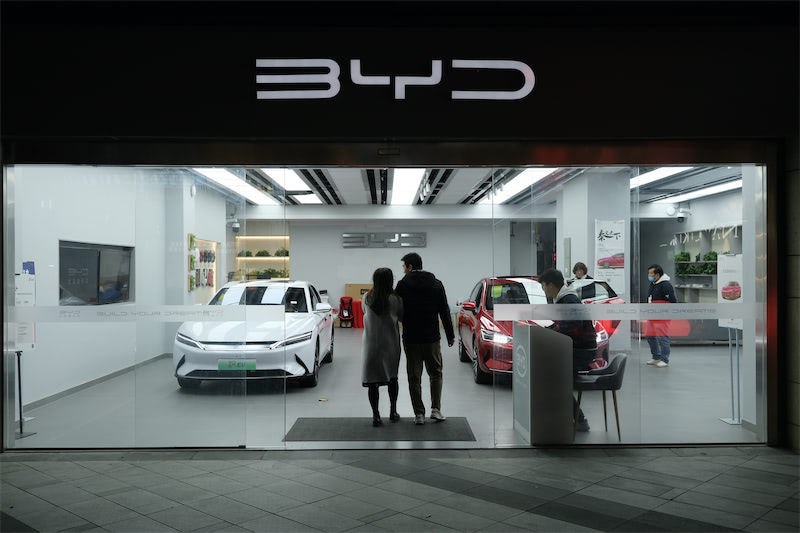
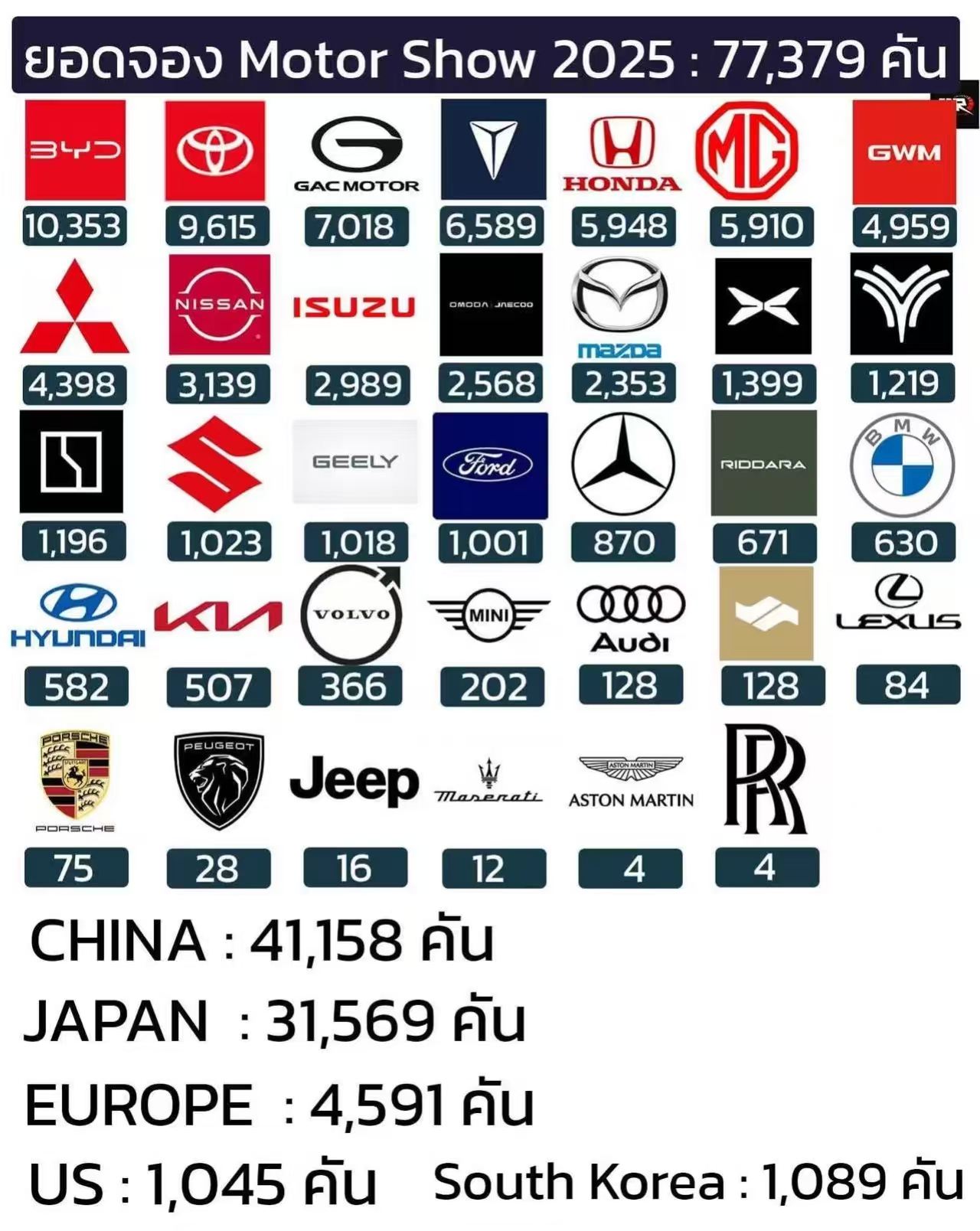
The 2025 Bangkok International Auto Show concluded with Chinese automaker BYD (including Denza) securing 10,353 orders, surpassing Toyota's 9,615 units for the first time, making it the best-selling car brand at the 2025 Bangkok Auto Show. Additionally, Chinese automakers collectively achieved 41,158 pre-orders, surpassing the 31,569 pre-orders of Japanese automakers. This marks a historic restructuring of the global automotive industry. This breakthrough not only reflects the technological iteration of China's NEVs but also signifies a new phase in the strategic competition between Chinese and Japanese automakers in the Southeast Asian market.
I. The Three Core Competitiveness of Chinese Brands
Technological Gap and Product Matrix
The BYD Dolphin, with 4,014 orders, became the best-selling BEV model, with its 445 km driving range and pricing strategy of 150,000 yuan precisely meeting Southeast Asian consumers' dual demands for cost-effectiveness and practicality. Models like the GAC Aion AION UT have established a brand image of "technological equality" in the Thai market through intelligent cabins and L2.9-level assisted driving systems. This "technology downshift" strategy has given Chinese automakers an overwhelming advantage in the 150,000-300,000 yuan price range.
Deep Localization Strategy
BYD has built its first overseas passenger car factory in Thailand, achieving right-hand drive model adaptation and full coverage of charging networks. GAC launched the "Thailand Action," planning to establish 80 new dealerships by 2025 and build a battery repair network covering Southeast Asia. This "from production to service" full-chain localization has enabled Chinese automakers to respond to after-sales needs 30% faster than Japanese brands. Chinese automakers have also introduced pickup truck models tailored to local needs in Thailand, better catering to the market demand for pickups.
Precise Capture of Policy Benefits
The Thai government's BEV3.5 policy offers up to 10 years of tax exemption for locally produced NEVs. By establishing a presence in automotive industry clusters like Rayong, Chinese automakers not only enjoy tax benefits but also leverage the ASEAN Free Trade Area to access markets like Indonesia and Malaysia. Data shows that by 2024, Chinese automakers' production capacity in Thailand reached 474,000 units, exceeding local annual sales demand.
II. The Three Survival Crises of Japanese Brands
Systemic Lag in Electrification
Toyota's main models in Thailand are still hybrid-focused, with its bZ4X BEV model selling fewer than 1,000 units in 2024. In contrast, most Chinese automakers have achieved over 80% electrification of their models. This generational gap is particularly evident in technical parameters: fast charging times for mainstream Chinese models are generally under 30 minutes, while Japanese EVs average over an hour.
Disintegration and Reconstruction of Channel Systems
Nissan's dealer network in Thailand has shrunk from 200 to 140, with some dealers directly switching to selling Chinese brands. This "channel defection" phenomenon stems from Chinese automakers offering 20%-30% higher subsidies for store construction and inventory financing compared to Japanese brands. More disruptively, Chinese automakers have shortened the sales cycle to 7 days through an "online ordering + offline delivery" model, completely breaking the traditional 4S store process of Japanese brands.
Irreversible Supply Chain Costs
The Japanese automakers' reliance on Japanese supply chain systems (e.g., Denso, Aisin) results in parts costs 15%-20% higher than Chinese supply chains. Chinese automakers, through a "domestic core components + local assembly" model, have controlled battery costs below 0.5 yuan/Wh, 30% lower than Japanese brands. This cost advantage is directly reflected in end-user selling prices: in the same vehicle class, Chinese brands' average prices are 12% lower than Japanese brands.
III. Deep Insights into Industry Transformation
Reevaluation of Southeast Asia's Strategic Value
As ASEAN's largest automotive market, Thailand's EV penetration rate reached 12% in 2024 and is expected to exceed 30% by 2030. By adopting the "Made in Thailand" label, Chinese automakers not only avoid trade barriers in European and US markets but also enjoy tariff benefits under the ASEAN Free Trade Area. Data shows that in 2024, Chinese automakers' EV exports from Thailand increased 217% YoY, primarily to markets like Australia and the Middle East.
Power Shift in the Global Industry Chain
Chinese automakers' localization rate in Thailand has reached 65%, driving the transformation of over 300 local parts companies. This "industrial ecosystem export" model is reshaping the Southeast Asian automotive industry chain. In contrast, Japanese supply chain companies' market share in Thailand has shrunk from 85% to 60%, with their traditional strongholds (e.g., ICE vehicle transmissions) being replaced by Chinese electric drive systems.
IV. Key Variables for the Next Five Years
Policy Risks: The Thai government may adjust NEV subsidy policies, imposing higher localization requirements.
Geopolitics: If the US implements battery supply chain reviews in Southeast Asia, it could impact Chinese automakers' raw material layouts.
The outcome of the Bangkok Auto Show is essentially a showdown between two industrial models: Chinese automakers' three-dimensional breakthrough in "technology + cost + localization" is dismantling the "brand premium + supply chain barriers" moat built by Japanese automakers. The pre-order numbers, to some extent, reflect changes in the incremental market. From the perspective of Thailand's automobile ownership, Japanese brands still dominate the stock market. For the global automotive industry, this is not just a battle for market share but an ultimate contest for the discourse power of future mobility. As Chinese brands establish a foothold in Southeast Asia, their experience may be replicated in markets like Europe and Latin America, fundamentally rewriting the power map of the century-old automotive industry.
![[전고체 배터리: 황화물 전해질 생산량 70톤, 1~8월]](https://imgqn.smm.cn/usercenter/Bwmed20251217171726.jpg)
![[SMM 분석] 유럽, 리튬 공급망 독립 추구하나 프로젝트에는 아시아 투자자 유치](https://imgqn.smm.cn/usercenter/nVnLo20251217171728.jpg)