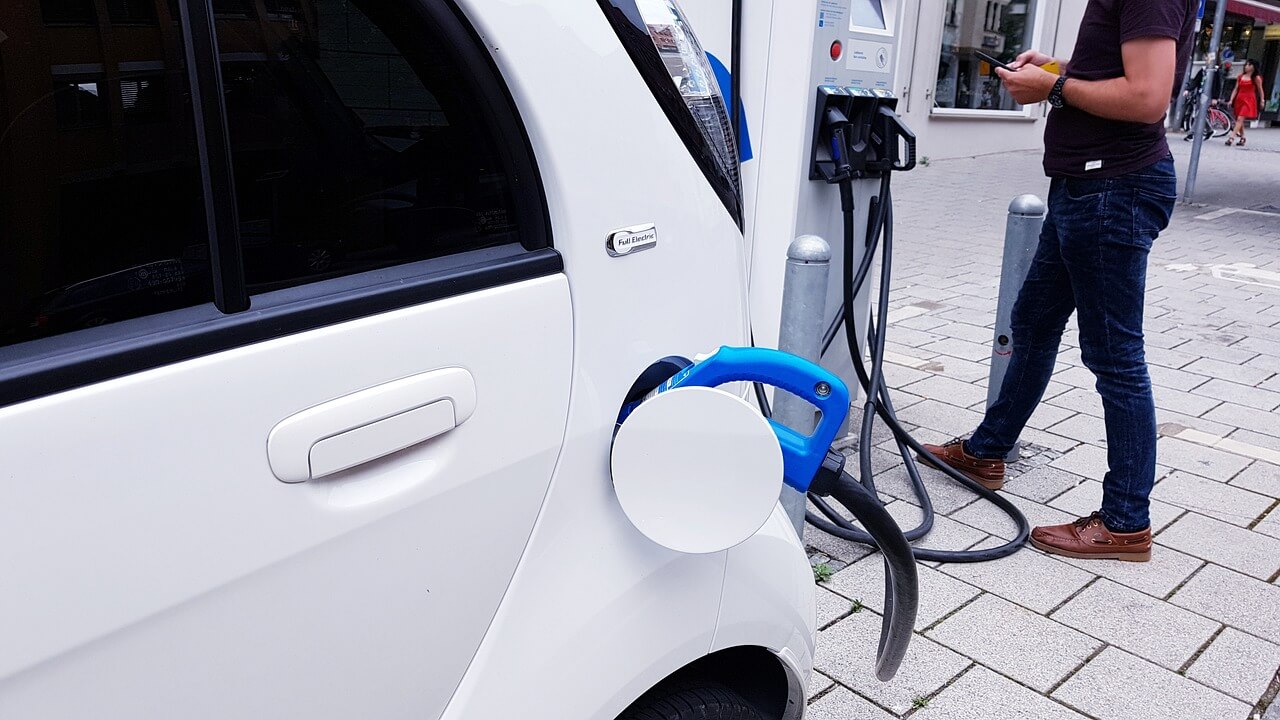
The red of the car market in January ushered in "good news". BYD is still leading among new energy car companies!
In February, many domestic car companies successively released their "report cards" for the beginning month of 2024. CaiBriefing has compiled January sales data for new energy car companies including Changan Automobile, Geely Automobile, and the new energy car companies led by BYD. Although in the total sales ranking, Changan Automobile and Geely Automobile surpass BYD and are at the forefront, but looking only at the new energy car companies, BYD still leads among many new energy car companies with a score of over 200,000 vehicles, it's retail sales of 206,904 vehicles breaks BYD's highest sales record in history, demonstrating its unquestionable strength.
Other new forces in car-making such as NIO, Leap Motor, & Xpeng's performances are also outstanding. Ideal car ranked after BYD with over 30,000 vehicles with 31,165 sales, an increase of 105.83% compared to the same period in 2023; Avalanche & NIO both achieved new energy vehicle sales of over 10,000 vehicles in January, Avalanche sold 12,277 vehicles in the month, a surge of 977.88% compared to the same period in 2023; NIO sold 10,055 vehicles, an increase of 18.21% compared to the same period in 2023. Dongshu Cui, secretary-general of CPCA, pointed out that the retail of the car market in January 2024 achieved the expected good performance, mainly due to the difference in pre-holiday consumption time brought about by the Spring Festival. He stated that January 2024 had 22 working days, 4 more than January 2023. As a consumer product, the extension of the pre-holiday consumption time is more sufficient and significant in driving consumption. Therefore, with a long period of effective production and sales in January, the good news of the car market is more prominent.
The car price war continues after the Spring Festival. Many car companies have followed suit. Since the first day of the new year in 2023, when Tesla announced price reductions, the car price war has been ongoing. The China Passenger Car Association had previously mentioned that the price war in the national passenger car market in 2023 was continuously intense, achieving a 6% increase in promotion, which was nearly 2% higher than the norm from the end of previous years, indicating the fierce competition in the 2023 car market. At the beginning of 2024, Tesla continued with its policy of offering discounts, offering a limited-time insurance subsidy of 6,000 RMB for the purchase of Model 3 rear-wheel drive vehicles with a pre-delivery price of 255,400 RMB by the end of January. Then, many major new energy and joint venture car companies such as Lynk & Co 09 MHEV, Leap Motor, NIO, FAW Toyota, and Volkswagen all followed. After the Chinese New Year holiday, the car market price war did not show any signs of stopping. On the morning of February 19th, BYD officially launched a new model with a minimum selling price of 79,800 RMB, and introduced the concept of "lower than fuel", sparking a fierce debate in the market. On the same day, many car companies including Wuling, Changan, and NIO all announced price reductions for multiple car models. Wuling's Starlight 150km advanced version was reduced in price from 105,800 RMB to 99,800 RMB, Changan Q05 and Changan A05 with a starting price of 73,900 RMB, and NIO X models were reduced across the board by 22,000 RMB to 99,800 RMB....... The China Passenger Car Association said that the fundamental reason for the recent car market price war is the fierce competition in the process of replacement of new technology over old technology and the replacement of new energy cars over traditional cars, which is expected to continue for several years until a new pattern is established.
In addition, it also mentioned that 2024 is a critical year for the new energy car companies to stabilize their position, competition is expected to be very fierce. From the perspective of traditional fuel cars, the decline in new energy costs and "parity of oil and electricity" have brought tremendous pressure to traditional car manufacturers, who update their products relatively slowly, with low levels of product intelligence, and rely more on discounted prices. From the perspective of new energy vehicles, as lithium carbonate prices have fallen, battery costs have decreased and the cost of car manufacturing has also decreased. Moreover, as the new energy market develops rapidly, economies of scale are formed, allowing for more profit margins. The issue of reduced battery costs has been a topic of much discussion since 2023. Looking back, in the fourth quarter of 2022, the spot price of battery-grade lithium carbonate, one of the main raw materials for domestic power batteries, once rose to nearly 600,000 RMB/ton. Since the beginning of 2023, due to weak downstream demand, the spot price of battery-grade lithium carbonate has been on the decline, falling below the integer mark of 100,000 RMB/ton, and as of February 22nd, the average spot price of battery-grade lithium carbonate had dropped to 96,150 RMB/ton, a decrease of 83.06% from its previous high of 567,500 RMB/ton.
The sharp drop in lithium carbonate prices has provided space for overall cost reductions for car companies. The CPCA said that new models launched on the market by the end of 2023 had already advanced price discounts. Ping An Securities has previously indicated that the growth rate of leading new energy car companies in 2024 will be under pressure, and the price war will continue, especially in the mainstream price range of 100,000-200,000 RMB, while the decline in battery costs provides space for further price reductions for car companies. In addition to the reduction in battery costs, the current oversupply of new energy cars is also a factor driving car companies to lower prices. Zhang Xiang, director of the Institute of New Energy Vehicle Technology at the Jiangxi New Energy Technology Vocational College, has previously stated that the capacity utilization rate of China's new energy vehicles is only 13%, with supply far exceeding demand. He expects that with the continuous intensification of industry reshuffling, this year's price war will still continue throughout the year.
Moreover, as the penetration rate of new energy vehicles in the market is rapidly increasing, the CPCA has indicated that the scale of the traditional fuel car market is gradually shrinking, and the contradiction between the large traditional capacity and the gradually shrinking traditional car market brings even more intense price competition. Scale determines costs and the survival state of companies, and most manufacturers prioritize market share, inevitably leading to further intensification of price competition.
for more information contact Gina Wen: ginawen@smm.cn
![[전고체 배터리 루머 반박: 중국자동차기술연구센터(CATARC) 왕팡, 전고체 배터리 기업에 대한 적합성 판정 없었다고 밝혀]](https://imgqn.smm.cn/usercenter/JSjkr20251217171728.jpg)
![[리튬 배터리: 포산 플라스틱, 고급 분리막 생산능력에 70억 위안 이상 투자 계획]](https://imgqn.smm.cn/usercenter/aXRJI20251217171728.jpg)
![[전고체: ProLogium, 381Wh/kg 3.5세대 전고체 셀 양산 시작]](https://imgqn.smm.cn/usercenter/mpqgn20251217171727.jpg)