"Click to view details
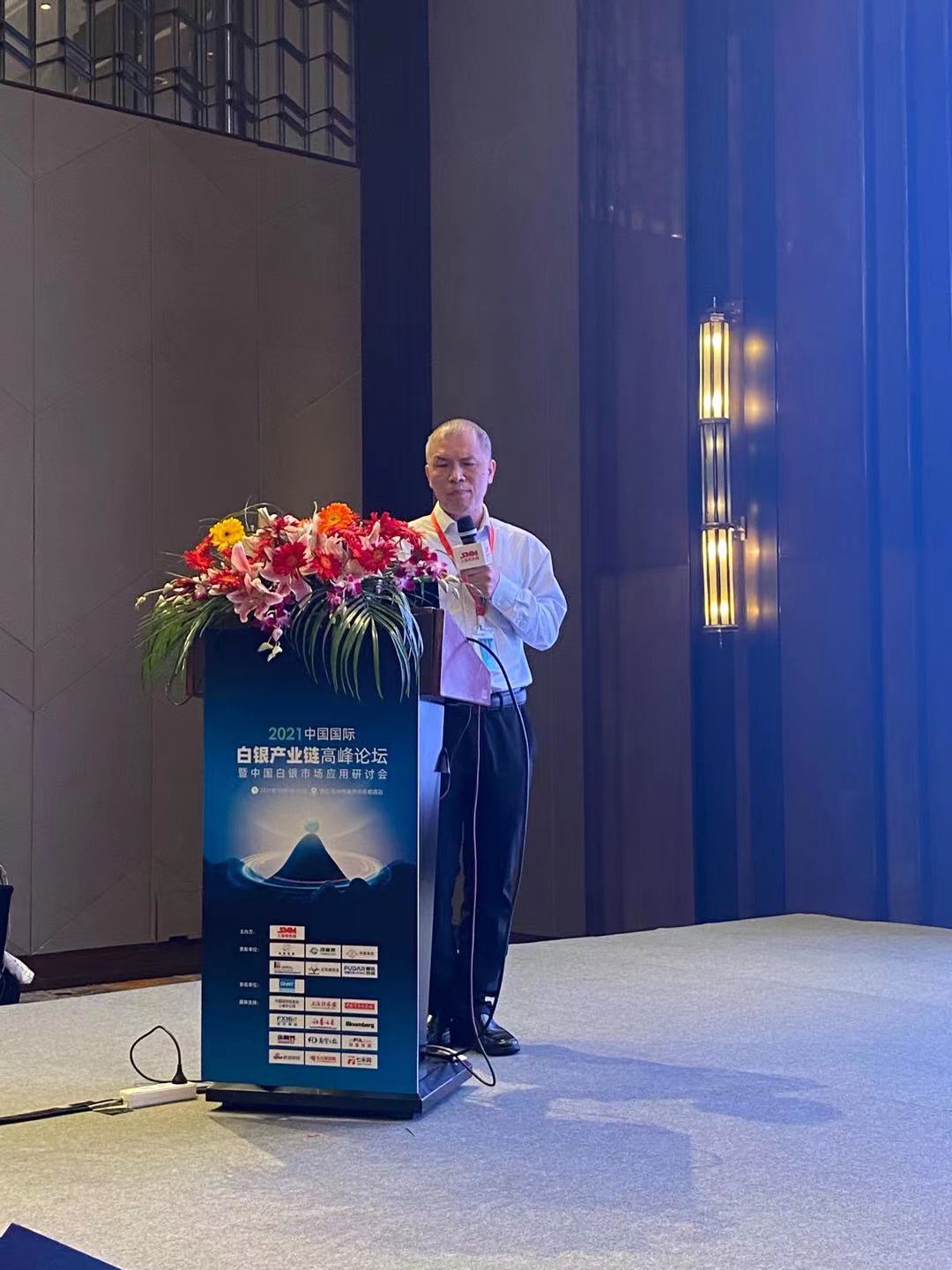
At the 2021 China International Silver Industry chain Summit Forum and China Silver Market Application Symposium sponsored by (SMM) of SMM Information & Technology Co., Ltd., the Institute of Resource Utilization and rare Earth Development of Guangdong Academy of Sciences and the professor-level senior engineer Liu Yong of the State key Laboratory of rare Metal Separation and Comprehensive Utilization introduced the current situation of silver production cycle technology and looked forward to the future development.
Silver is an important precious metal with three attributes: currency, investment and commodity. Global silver demand is expected to reach 1.025 billion ounces (31900 tons) in 2021, an eight-year high, and industrial demand is expected to reach 510 million ounces (15900 tons) in 2021, an increase of 9 percent over 2020 and a four-year high.
With the development of high and new technology, especially the rapid development of electronic information and new energy industry, the demand for silver in strategic emerging industries increases greatly, which has the attribute of strategic shortage of resources.
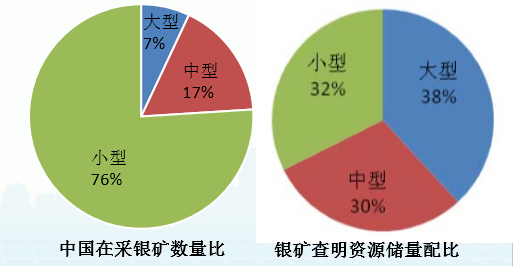
Silver mineral resources
Independent silver deposits: the reserves of independent silver deposits in China account for about 21%, and there are only 3 deposits whose grade exceeds 1000g/t. Shandong Xiaodongguan mining area, Inner Mongolia Bayanchagan Sumu silver polymetallic deposit, Hubei Yindonggou, Yunnan Shizishan mining area lead-zinc-silver deposit and so on.
Symbiotic silver deposits: most of the symbiotic silver deposits in China are silver-lead-zinc deposits, which account for 64% of the silver reserves. Tongbai County, Henan Province, Bushan Silver Mining area, Bayern Copper and Zinc Polymetallic Mine in Inner Mongolia, Fuwan Silver Mine, Gaoming City, Guangdong, etc.
Associated silver deposits: associated silver deposits are mainly associated in lead-zinc and copper deposits, as well as tin, gold and polymetallic deposits, accounting for about 15% of resource reserves. Yunnan Lanping Jinding lead-Zinc Mine, Lancang Laochang lead Mine, Inner Mongolia Chifeng Zhongse Baiyinnuoer lead-Zinc Mine, Guangdong Fankou lead-Zinc Mine, Jiangxi Lengshuikeng Orefield Yinzhushan Mining area.
China's silver reserves only account for about 8% of the world's total reserves, and it is a major importer of silver.
Silver production
The main production methods of silver metallurgy are lead electrolytic anode slime metallurgy, copper electrolytic anode slime metallurgy, tin, nickel and other metal electrolytic anode slime metallurgy, gold and silver ore cyanide metallurgy, high silver waste (jewelry, alloy, etc.) recycling metallurgy, low silver waste (electronic waste, etc.) recycling metallurgy, recovery of other silver-containing materials (waste water, sludge, etc.).
The output of silver in China was only 1588 tons in 2000 and increased to 14104 tons in 2012, ranking first in the world. The output in 2020 is about 19000 tons (according to the total output of silver).
More than 60% of China's gold and silver production comes from copper-lead electrolytic anode mud.
Production of silver from lead anode slime
Lead anode slime is an important raw material for extraction of precious metals (Au, Ag) and comprehensive recovery of Sb, Bi, Cu, Pb, As and other metals.
Production of Silver from Copper (Nickel) anode Mud
The content of copper, selenium, silver, lead, tellurium, antimony, bismuth, arsenic and gangue minerals in smelting anode slime of copper sulphide concentrate is more than that of platinum group metals.
The anode slime of copper-nickel sulphide mining and smelting has high contents of copper, nickel, sulfur and tin, a small amount of platinum group metals, and less gold, silver and lead.
The content of lead and selenium in the anode slime produced in the process of copper electrolysis is higher.
Production of silver from other anode slime
Tin anode slime:
Features: low silver content (Ag 0.15% ~ 2.5%), the main components are Sn 30.0% ~ 40.0%, Sb 2.0% ~ 20.0%, Pb 2.0% ~ 20.0%, As 1.7% ~ 13.0%, a small amount of Cu 0.5% Cu 7.0% Sb 1.0% 4.0%.
Process technology: sulfidation volatilization removal of antimony, vacuum reduction-volatilization removal of lead and antimony, molten salt electrolytic tin smelting, chlorination roasting-wet impurity removal, alkaline roasting-water leaching, total wet tin recovery by oxygen pressure alkaline leaching, tin tetrachloride leaching-coupled electrodeposition and chlorination leaching to prepare fine chemical products.
Advantages and disadvantages: tin anode mud direct fire smelting process is short, can better achieve tin recovery, but not conducive to the opening of impurity elements (especially Sb); wet process is long, can be a good separation of valuable elements in tin anode slime and achieve pricing sales, but the waste water is large, acid and alkali consumption is large.
Zinc anode slime:
Features: manganese is high and silver is low, the content of manganese is generally about 30%, and the contents of zinc, silver and lead are about 2%, 150 g / t and 7%, respectively.
Technology: dilute acid zinc dipping-reduction manganese leaching-lead silver slag-silver leaching-reduction-silver powder.
Cyanide extraction of silver
Representative technology of gold cyanidation: cyanidation-replacement method; carbon slurry method; roasting-cyanidation method; high pressure oxidation-cyanidation method.
Recycling of silver
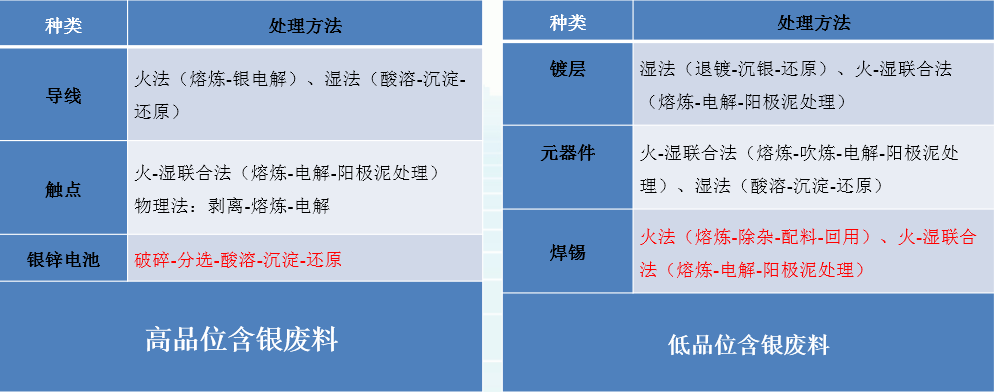
The main sources of silver secondary resources are:
Electronics and electrical appliances: contacts, lead (lead) wire, coating, solder;
Battery: silver zinc battery, photovoltaic cell;
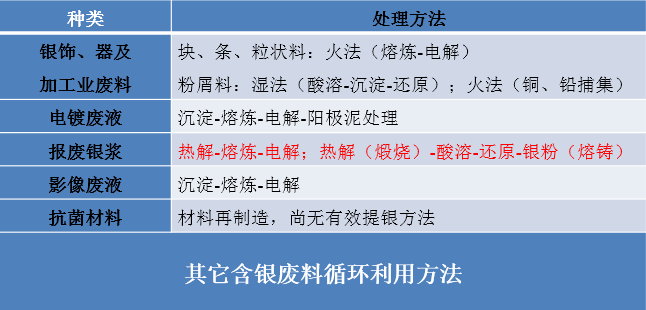
Silver ornaments and silverware: chains, bracelets, headgear, coins, tableware, etc.
Processing waste: scrap, scrap, debris, powder, etc.
Other silver-containing materials: image washing solution, electroplating sludge, etc.
Recovery of silver from waste electronics, electrical appliances and batteries
Extraction of silver from photovoltaic modules
In 2020, the country's newly installed photovoltaic capacity increased by 48.2 GW, by 24.1%, and the grid-connected power generation capacity reached 253.4 GW, ranking first in the world. The total mass of existing photovoltaic modules is about 1680 million tons.
Solar cell is the core of the whole photovoltaic module, and its mass accounts for about 4% of the whole photovoltaic module. The composition mainly includes silicon, silver, copper, aluminum and other valuable metals, among which the silver content is about 1.0%.
The mass fraction of silver in early photovoltaic modules is about 600 × 10-6. With the progress of technology, the mass fraction of silver decreases, but it is still maintained at more than 350 × 10-6, which has a good recovery value. In 2020, the photovoltaic industry consumes about 1200 tons of silver, and the amount of metallic silver retained in China's existing photovoltaic modules is about 6720 tons (based on 0.04% content).
Recovery of silver from other materials
Green low-carbon Technology and its Prospect
Green and low carbon Technology for Silver production
Anode mud pyrometallurgy:
(1) Development and application of large-scale new furnaces for energy saving and emission reduction.
(2) Application of rich (pure) oxygen blowing technology.
(3) Development and application of vacuum distillation technology and equipment.
Hydrometallurgy of anode mud:
(4) Microwave-assisted leaching can shorten the technological process and accelerate the process.
(5) improve the recovery rate of valuable metals (Cu, Pb, Sb, Bi, Se, Te, etc.) and the comprehensive utilization rate of resources.
(6) combined with the production of fine chemical products
(7) reuse of waste water and waste acid and application of high efficiency evaporation equipment for high salinity wastewater.
Anode mud fire-wet combined metallurgy:
(8) according to the composition of anode mud, all kinds of technologies are used together to form personalized advanced technology.
(9) the treatment of "three wastes" is included in the comprehensive evaluation of the process, and carbon reduction is combined with emission reduction.
Cyanide metallurgy:
(10) improve the technical level of physical mineral processing and improve the enrichment ratio and recovery of silver.
(11) strengthening the efficiency of cyanide leaching of silver.
(12) to develop a new type of non-toxic complex leaching agent.
Bio-metallurgy:
(13) Biological method: low investment, simple equipment, green and safe, capable of dealing with complex polymetallic electronic wastes. However, there are many limitations, such as high requirements of microorganisms for living environment, colony domestication and screening, etc., which are still in the stage of laboratory research, and it is believed that there will be a breakthrough in the future.
Manufacturing-cycle Advanced Design:
(14) increase the recycling of silver and reduce the overexploitation of mineral resources
(15) the product design process optimizes the recovery and utilization of silver, simplifies the regeneration process, and realizes the low-carbon cycle.
Silver has excellent optoelectronic and processing properties, and plays an irreplaceable role in the field of high-tech manufacturing. It is a precious metal with good performance-to-price ratio. The development of production and recycling industry is of great significance.
Silver ore is mostly silver-lead-zinc ore, and its retained reserves account for more than 64% of the total. The increase of mineral silver production will inevitably lead to the increase of metal lead production, but the scope of application of lead is narrowing day by day and the demand is decreasing, which will lead to the increase of mineral silver production cost sharing.
Silver has stable chemical properties and is easy to be recycled. In order to reduce the consumption of mineral resources and reduce carbon emissions, it is of great significance to develop its circular economy industry. In order to be more conducive to the recycling of silver, the reasonable design of the product manufacturing source is very important.
In order to meet the requirements of national green production and the goal of "carbon peak and carbon neutralization", it is necessary to further improve the technical level of silver production and circulation, improve the efficiency of comprehensive utilization of resources and reduce pollutant emissions.
![[SMM 거시 분석] 잭슨홀, 매파적 연준 신호로 9월 금리 인상 기대감 고조](https://imgqn.smm.cn/usercenter/VCNvX20251217171735.jpeg)