SMM Network News: since Weilai car officially launched BaaS (battery as a service) program, "car-electricity separation" has become a new position for car companies to compete for layout. Following in the footsteps of Wei, Naha Automobile is planning a project called "Battery Bank". Although the specific plan has not yet been announced, the core is focused on the "car-electricity separation" sales model; in addition, Xiaopeng, which has just been successfully listed on the New York Stock Exchange in the United States, began to launch its brand-new battery rental plan. In addition to these new car-building forces, the traditional car brand Roewe also announced to dabble in the "car-electricity separation" model.
The policy promotes the development process of the separation of electric and electric vehicles.
In fact, as early as 2013, the National Electroweb launched the basic operation mode of new energy vehicles, which is "power exchange mainly, power insertion secondary, centralized charging, unified distribution". However, it was shelved from 2011 to 2014 due to the shortage of new energy vehicles and the establishment of power exchange ecology.
Until April this year, the Ministry of Finance and other four ministries jointly issued the Circular on adjusting and improving the subsidy Policy for New Energy vehicles, explicitly supporting the development of new business models such as "separation of vehicles and electricity." it is required that the price of new energy passenger vehicles should be less than 300000 yuan (including 300000 yuan) before subsidies, and at the same time, in order to encourage the innovative development of new business models such as "power exchange", The price limit of 300000 yuan is not implemented for new energy vehicle products that adopt the "power exchange" mode, and since then the power exchange mode has been formally included in the category of subsidies.
In the subsequent national two sessions, the power exchange mode was included in the content of "new infrastructure" for the first time, and the "construction of charging piles" in the construction of new energy infrastructure was changed to "increase charging piles, change power stations and other facilities". To encourage the interconnection of all kinds of charging facilities.
In addition, the Ministry of Industry and Information Technology revealed that the Development Plan of New Energy vehicle Industry (2021-2035) has been submitted to the State Council, and the next step is to vigorously promote the construction of charging and replacement infrastructure together with relevant departments, further improve relevant technical standards and management policies, encourage enterprises to develop power exchange models according to the use scenarios, and will carry out pilot promotion in Beijing, Hainan and other places.
The separation of vehicle and electricity directly hits the pain point of new energy users.
According to the senior analyst of Gaishi Automotive Research Institute, the reason why the separation of car and electricity is strongly supported by the policy has something to do with the pain points existing in the process of promotion and application of new energy vehicles. "since the second half of 2019, the growth rate of domestic sales of new energy vehicles has slowed sharply, and the substantial withdrawal of subsidies has caused the current manufacturing costs to be difficult to digest, and the sales price of new energy vehicles is still on the high side. At the same time, due to the inefficiency of charging infrastructure, the lack of self-owned parking spaces, and the difficulty of Electroweb to cooperate with capacity expansion, the construction of charging piles is not as expected, and the convenience of use is greatly reduced. The introduction of vehicle-electricity separation arises at the historic moment."
Wu Zhixin, deputy general manager of China Automotive Technology Research Center Co., Ltd., said bluntly at the Teda Forum in 2020 that the car-electricity separation mode can basically solve the pain points of all pure electric vehicle users. "first of all, the separation of cars and electricity not only transfers the economic pressure of the whole vehicle enterprises, but also greatly reduces the car purchase cost of users. Secondly, the centralized charging, management and maintenance of the battery can better solve the safety problem and prolong the battery life. Finally, for new energy vehicles without batteries, it is not a problem to evaluate the salvage value of second-hand cars, and the value preservation rate may be higher than that of traditional cars. "
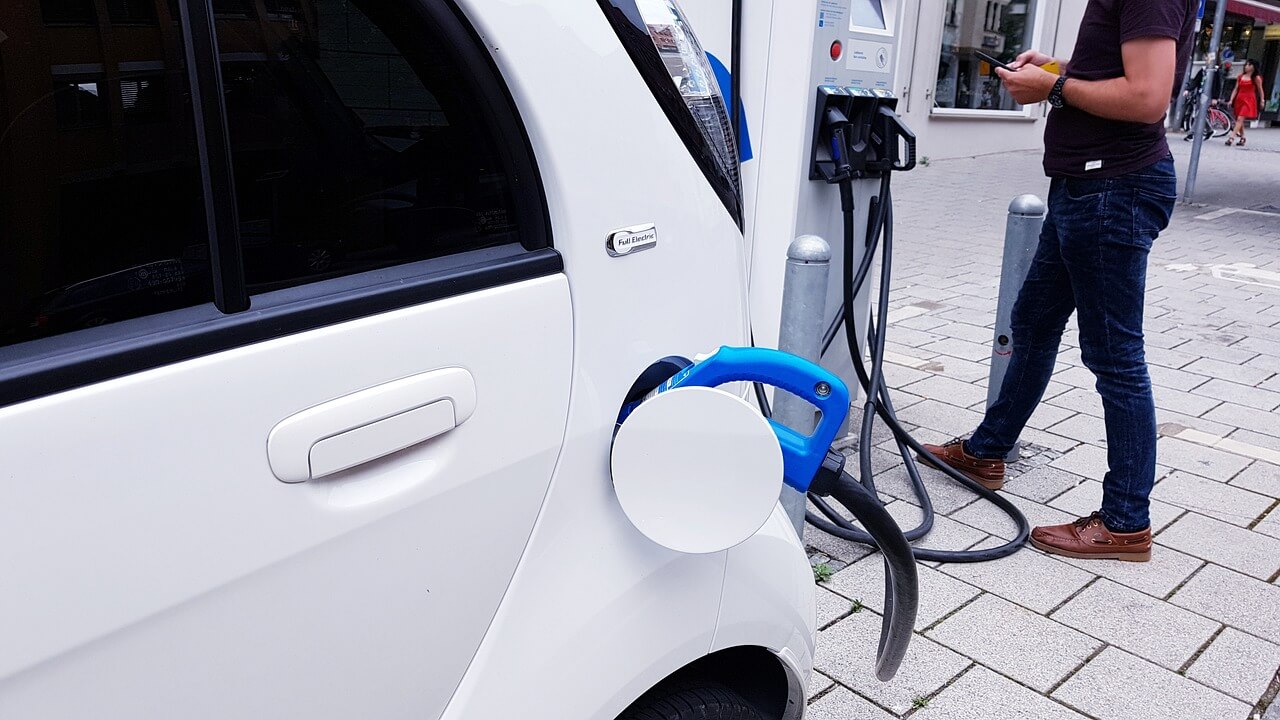
Taking the power exchange mode in the car-electricity separation as an example, it has the following five advantages: first, the car-electricity separation in the power-exchange mode can greatly reduce the cost of purchasing a car; second, the time to change the battery is even shorter than that of adding a box of oil. can increase the convenience of consumers to travel; Third, the battery operation company monitors, maintains and manages the battery centrally, which is conducive to prolonging the life of the power battery and improving the safety of the battery; fourth, the peak-valley preferential price can be used for charging, thus reducing the charging cost; fifth, consumers can consider how much electricity they rent for the day according to their daily mileage to save energy consumption.
The relevant standards of vehicle-electricity separation need to be improved urgently.
Although there are many advantages of vehicle-electricity separation, as a brand-new business model, it still faces many challenges in the process of implementation. First of all, the standard is not unified, different car companies, different models of the battery specifications are the same, can not achieve universal compatibility, restricting the popularity of the power exchange mode. In mid-August this year, the GB/T "Power Exchange Safety requirements for Electric vehicles", led by BAIC New Energy, Xilai, CNAC and other units, passed the review. However, at present, this standard is a "recommended national standard", and it is still a question of interest disputes whether other car companies and operators will follow this standard.
The second is the problem of scale. Wang Binggang, head of the National New Energy vehicle Innovation Project expert Group, has pointed out that in order to form a large-scale separation of vehicles and electricity, a series of problems still need to be solved. for example, many car companies have power exchange technology, but they are all replaced by battery packs as a whole, and without standardization as the basis, it is difficult to achieve cross-model and cross-brand promotion. If there is no cross-brand promotion, it will result in high costs for car companies to operate and manage power stations.
In view of this, Wu Zhixin suggested that the construction of the separation of cars and electricity can start with taxis in cities such as Beijing and Guangzhou. "Taxi drivers in big cities have the highest demand for fast charging, and taxi models are more unified, which meets the standardized needs of power exchange mode. I personally think that the 100000 taxis in Beijing can almost support the construction of a model. If the mode is put together, the follow-up can drive private car users to choose the model of changing electricity. "
Bai Hua, a researcher at the Ministry of Industry and Information Technology, said frankly that new energy vehicles are still in the early stages of industrial development, and the Ministry of Industry and Information Technology maintains an open attitude towards various technical routes for charging and changing electricity, and encourages enterprises to explore and develop in various ways and accumulate experience. The Ministry of Industry and Information Technology will also improve relevant policies to provide support.
He also mentioned that the industry needs to sort out the difficult problems still existing in the car-electricity separation mode, work together to promote it, and suggest that standard research should be carried out in the form of enterprise standards and group standards first. The Ministry of Industry and Information Technology will also mobilize the local departments and bureaus of Industry and Information Technology to formulate relevant policies, create pilot projects to promote industrial development, and support and encourage enterprises to carry out R & D and production of electric exchange models.
Automobile companies actively explore the business model of "separation of vehicle and electricity"
In a short period of time, it is obviously difficult to unify the vehicle-electricity separation standard, but under the encouragement of a series of policies, and in order to solve the pain points of new energy vehicles as soon as possible, a number of car companies have begun to explore in the field of "vehicle-electricity separation".
Gu Huinan, general manager of GAC NE Automobile Co., Ltd., points out that at present, there are mainly two ways of "car-electricity separation": one is physical separation, that is, batteries can be disassembled and replaced, and the other is business model separation. for example, take the battery out to rent, pay by installments, but the battery cannot be replaced.
The physical separation of automotive electricity is the exchange of electricity, and the leading players in this field are Lulai Automobile and BAIC New Energy. As early as the release of NIO Power in 2017, Weilai began to explore in the field of power exchange technology. The first power station was put into operation in 2018, and more than 100 power stations have been built in 2019. On August 20 this year, Xilai officially released the battery rental service BaaS (Battery as a Service), which marked a new stage in its power exchange mode.
In 2018, BAIC made a comprehensive transformation to new energy and began to apply the power exchange model commercially at the same time. At that time, Zhang Qingping, deputy general manager of BAIC New Energy, said, "the advantages and disadvantages of the power exchange mode are very obvious, and in terms of the current technical level and market conditions, it is more suitable to be promoted on operating vehicles." At present, BAIC New Energy operates 18000 replacement taxis in 19 cities across the country, with a total of 4.8 million battery replacements and 187charging stations across the country.
The other is the separation of various business models, such as the "battery bank" of the car mentioned at the beginning of the article, and Xiaopeng's battery rental plan all fall into this category. From the point of view of the industry, the direct benefit brought by the commercial separation model of auto electricity is to further lower the threshold for vehicle purchase, thus driving sales.
It is understood that Xiaopeng car battery leasing plan is different from full car purchase and phased car purchase. It uses seven years of ultra-long phased service to share battery costs. After seven years of payment, end users can obtain battery ownership. In addition, the car body price in the battery financial leasing plan can also be purchased with a down payment of at least 30%, greatly reducing the financial pressure on car purchase. However, due to market demand, network layout and financial policy implementation, the plan is only implemented on a pilot basis in some parts of the country.
Summary: after the development in recent years, electric vehicles have formed a certain scale in China. As a supplementary scheme of "charging" modes such as charging piles and charging stations, the separation of electric vehicles is undoubtedly beneficial to automobile enterprises, consumers and even the whole vehicle industry chain. Next, it is expected that under the promotion of the policy and the joint exploration of enterprises, the car-electricity separation mode can gradually get on the right track and usher in a greater development channel.
"Click to understand and sign up: 2020 China Automotive New Materials Application Summit Forum
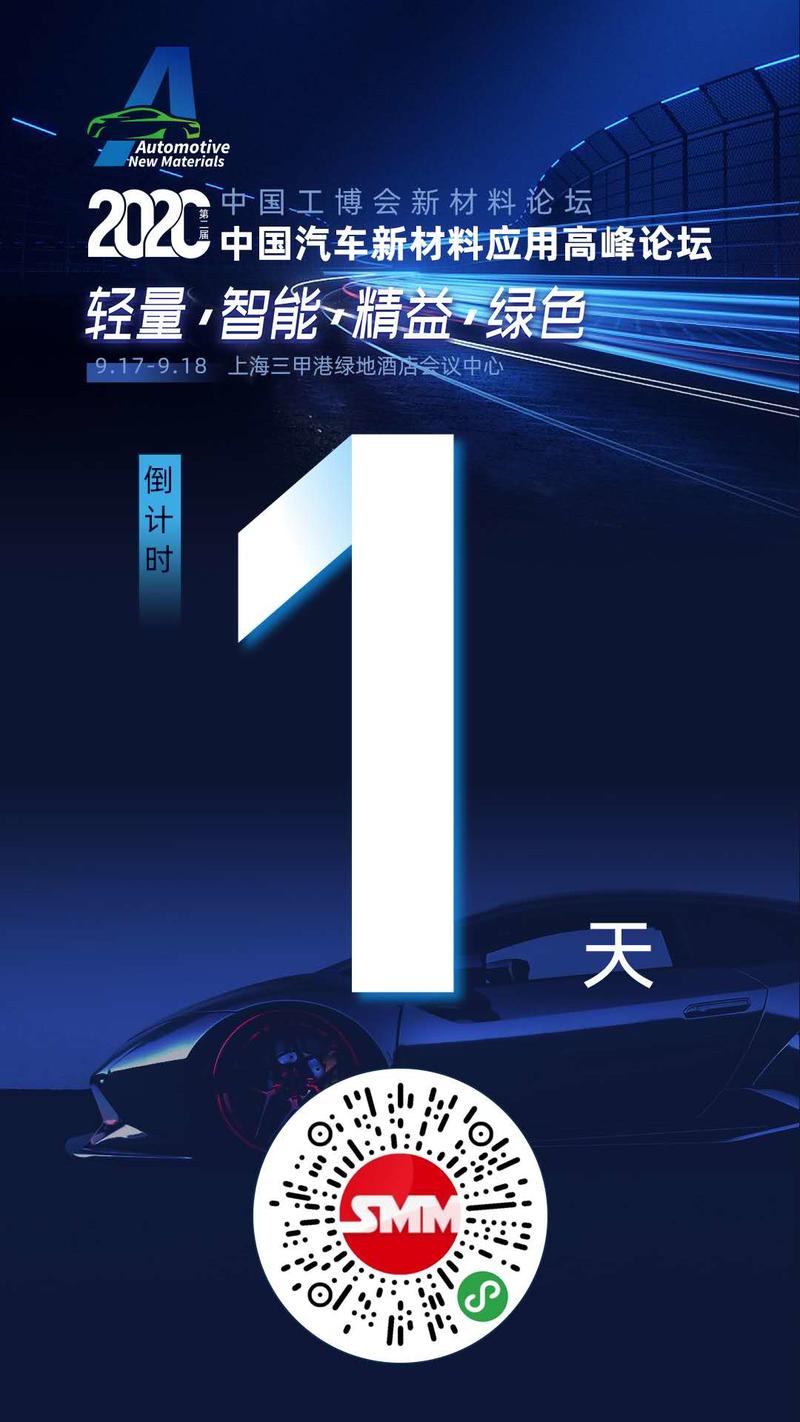
Scan the QR code above to view the business cards of the participating companies and sign up online

Scan the code and apply to join the SMM Automotive Industry Exchange Group.