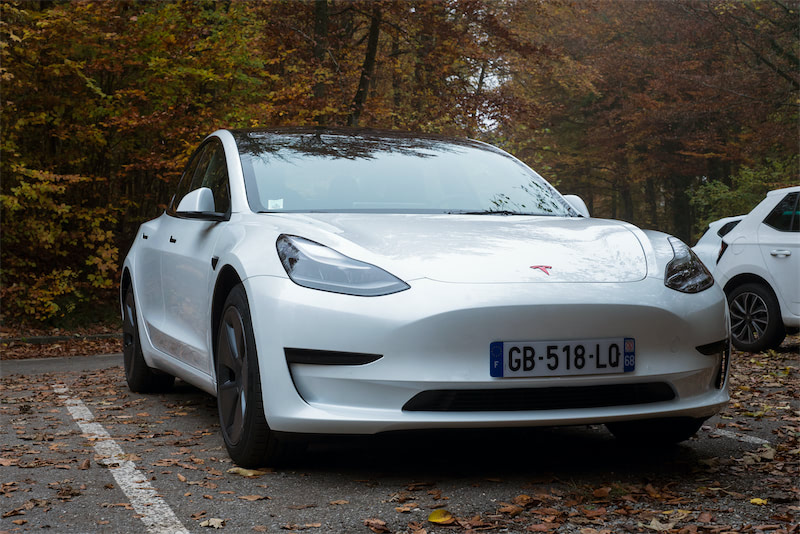
SMM Network News: for the commercial mass production of solid-state batteries, Toyota and the industry's predictions are basically the same, and it is expected that they will not be able to land on the market until around 2025. Recently, Keiji Kaita, executive vice president and general manager of Toyota Motor Powertrain, revealed that "Toyota plans to mass-produce solid-state batteries by 2025."
Although the application of solid-state battery in electric vehicles is expected to be four or five years away, this does not hinder automakers' enthusiasm for solid-state battery technology. solid-state battery is expected to become one of the breakthrough technologies to eliminate battery life anxiety, safety anxiety and charging anxiety of electric vehicles. In other words, whoever has mastered the solid-state battery technology first will be able to rewrite the competitive landscape of electric vehicles.
01 Toyota: launch of solid-state battery prototype as scheduled will be unveiled next year
Shigeki Terashi Terajima, Toyota's chief executive and chief technology officer, revealed in October that Toyota would launch an electric car with solid-state batteries based on Toyota's e-Palette platform during the 2020 Tokyo Olympic Games. "had it not been for the impact of the epidemic, solid-state batteries, the core component of Toyota's next-generation electric vehicles, might have been unveiled during the Tokyo Olympic Games." Toyota is still actively developing solid-state batteries, launching a prototype as scheduled and running it on a concept car, according to people familiar with the matter.
So how is Toyota's solid-state battery technology going?
In terms of charging speed, according to Toyota insiders, the solid-state battery prototype has a clear advantage over existing lithium batteries in charging speed, ranging from 0 to 100% in only 15 minutes. "charging anxiety" may become a thing of the past on solid-state batteries.
In terms of battery life, Toyota plans to maintain more than 90% performance of its solid-state batteries after 30 years of use. If this technology can be realized as soon as possible, then the cycle performance will exceed the million km battery advertised recently by Tesla, Ningde era, GM and so on.
In terms of energy density, Toyota plans to increase the energy density of solid-state batteries to more than twice the energy density of existing lithium batteries by 2025, which is expected to reach 450Wh/kg. At that time, the range of electric vehicles with solid-state batteries will be greatly increased, comparable to the current fuel-fueled vehicles.
In terms of safety, as solid-state batteries use solid electrolytes and do not contain combustible electrolytes and other material components, the safety will also be significantly improved.
However, although the solid-state battery prototype has been launched, Toyota believes that the real market-oriented application will not be until around 2025: on the one hand, because the technology still needs to be improved; on the other hand, the cost is still relatively high.
Keiji Kaita said it was too early to discuss the launch of solid-state batteries and, like many forward-looking technologies, faced multiple obstacles to commercialization. It is reported that Toyota engineers are adjusting the anode and other materials of the battery to continue to improve the durability and safety of solid-state batteries. "Toyota hopes to mass-produce solid-state batteries by 2025," Keiji Kaita said.
According to Toyota insiders, another major problem with solid-state batteries is the cost, which will need to be less than $100 / kWh in the future to compete with fuel engines, and it is clear that the cost reduction of solid-state batteries still has a long way to go. However, Toyota did not disclose the current production cost of prototype products, but it is believed that with the maturity of technology and the scale of industrialization, the cost can be reduced after the technology is mature.
According to Battery China Network, Toyota is promoting the development of solid-state battery business through its joint venture with Panasonic Battery, Taixing Energy Solutions Co., Ltd. The company went into operation in April this year, with Toyota holding 51 per cent of the joint venture and three seats on the five-member board of directors, with Panasonic holding 49 per cent, chaired by Toyota Hoda Hiroaki.
Judging from the information disclosed by Toyota, the real commercialization of solid-state batteries is not expected until 2025, and there are still some problems to be overcome, such as technology needs to be continuously improved and costs still need to be reduced. If next year's Tokyo Olympic Games can be held as scheduled, we can also get a glimpse of the latest progress in Toyota's solid-state battery research and development at the Tokyo Olympic Games.
02 Volkswagen invests another 200 million US dollars in solid-state battery technology company
Volkswagen is also keen on solid-state battery technology. In June, Volkswagen announced that it would increase its investment in solid-state battery developer Quantum Scape by $200 million (1.42 billion yuan), a move Volkswagen said was aimed at further developing solid-state batteries.
Public information shows that, Quantum Scape is a new company founded by former Stanford University researchers in San Jose in 2010, mainly engaged in solid-state battery research and development, with about 200 solid-state battery technology patents and patent applications.
According to Battery China, this is the third time Volkswagen has invested in the company, and Volkswagen took a 5% stake in the company in 2014, and in 2018, Volkswagen invested another $100 million (710 million yuan) to form a joint venture with QuantumScape. The fact that Volkswagen has injected money into the company three times in a row shows that Volkswagen attaches great importance to solid-state batteries.
In fact, on the huge investment in June, Thomas Schmall, chairman of the Volkswagen parts Management Committee, said: "We are making technological progress with Quantum Scape, and this investment will effectively enhance our joint research and development of all-solid-state batteries."
At present, the industry does not have much information about the research and development progress of Volkswagen and Quantum Scape in solid-state battery technology. Volkswagen has previously revealed that it has tested Quantum Scape's solid-state battery samples to "increase the e-golf 's comprehensive range from 300km to 750km."
Volkswagen estimates that the time point for mass production of solid-state batteries is similar to that of Toyota. "our goal with Quantum Scape is to build a production line for solid-state batteries for electric vehicles by 2025."
In addition to Toyota and Volkswagen, BMW, Ford, Hyundai and other car companies have also invested in solid-state battery technology companies such as Soild Power in recent years.
On the domestic side, automobile companies such as SAIC, FAW and BAIC have also invested in solid-state battery technology companies in recent years. For example, SAIC and BAIC jointly invested in Qingtao Energy, a domestic solid-state battery technology company, and FAW Industry Fund participated in the financing project of Huineng Technology.
In fact, in addition to some of the above-mentioned international car enterprises, many domestic lithium battery manufacturers and materials enterprises, such as Ningde Times, BYD, Guoxuan Hi-Tech, Qingtao Energy, Lishen Battery, Huineng Technology, Dangsheng Technology, Ganfeng Lithium Industry, etc., are also laying out solid-state battery and material technology development.
Zeng Yuqun, chairman of Ningde Times, said that real solid-state batteries need to use metal lithium as negative electrode in order to improve energy density. At this stage, solid-state batteries released by some enterprises in the industry are not as good as (liquid) lithium-ion batteries in terms of energy density. The company is also continuing to invest in cutting-edge technology such as solid-state batteries and product research and development. However, Ningde Times has not disclosed any information about the progress of the company's solid-state battery research and development.
Recently, Li Kun, chairman of Guoxuan Tech, revealed that Guoxuan Tech has invested a lot of resources in the research of semi-solid batteries, and in the future, Guoxuan will combine the research of semi-solid batteries to greatly improve the safety and reliability of high-nickel ternary batteries and Pack system applications.
In addition, Ganfeng Lithium Industry, Qingtao Energy and Huineng Technology have all built trial production lines for solid-state batteries, which are speeding up the landing of related technologies.
In fact, driven by the rapid development of the electric vehicle industry, the progress of battery technology has increased greatly in the past decade, and the current wave of electrification is sweeping the world, and the world's mainstream car companies are also transforming to electrification. It is expected that in this wave, as the next generation of battery technology, solid-state battery research and development and landing time will also be shortened. Toyota and Volkswagen have both given a timetable for 2025. This node is also worth looking forward to. If solid-state battery technology is really industrialized in 2025, it is believed that automobile electrification will really become the mainstream.
Scan the code to apply to join the SMM industry communication group:

![[전고체 배터리: 상하이교통대학, 지능형 할로겐화물 고체 전해질 제조 및 테스트 시스템 입찰 공고]](https://imgqn.smm.cn/usercenter/MjfPv20251217171728.jpg)