SMM March 30:
According to SMM data, die-cast zinc alloy operating rates stood at 51.8% as of last week. Looking at March expectations, the industry's operating performance is projected to decline by approximately 7 percentage points year-on-year. The main reasons for the decline in operating rates are as follows:
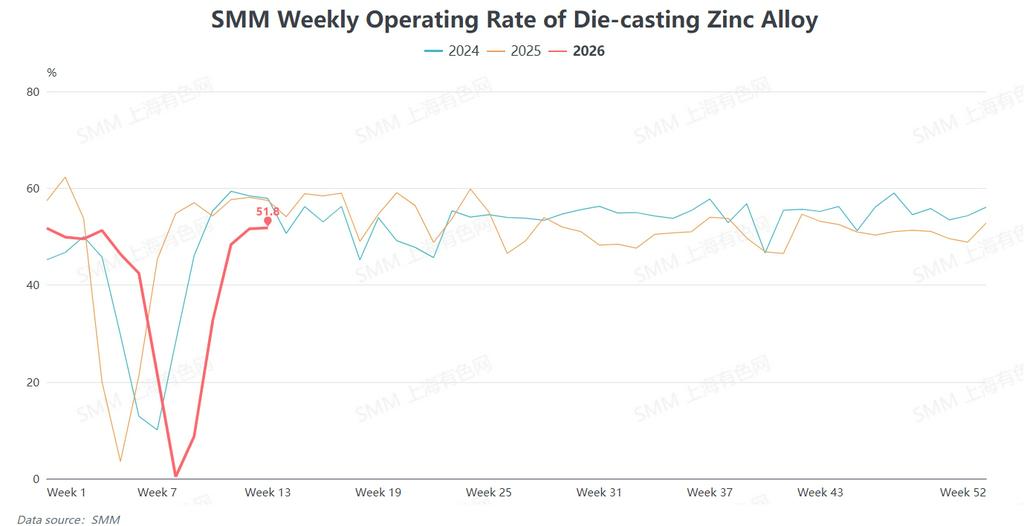
First, the 2026 Chinese New Year arrived later than usual, and most die-cast zinc alloy enterprises, influenced by order conditions, generally resumed operations after the Lantern Festival. Actual production startup was concentrated in March, which weighed on operating rates for the month.
Second, fluctuations in the price spreads among zinc, aluminum, and copper in March raised production costs for die-cast zinc alloy enterprises. In response, some alloy producers moderately reduced their own production and instead purchased lower-priced alloy from the market, engaging in small-scale trading to maintain stable customer relationships.
How are downstream end-market segments performing for die-cast zinc alloy?
Real Estate Sector
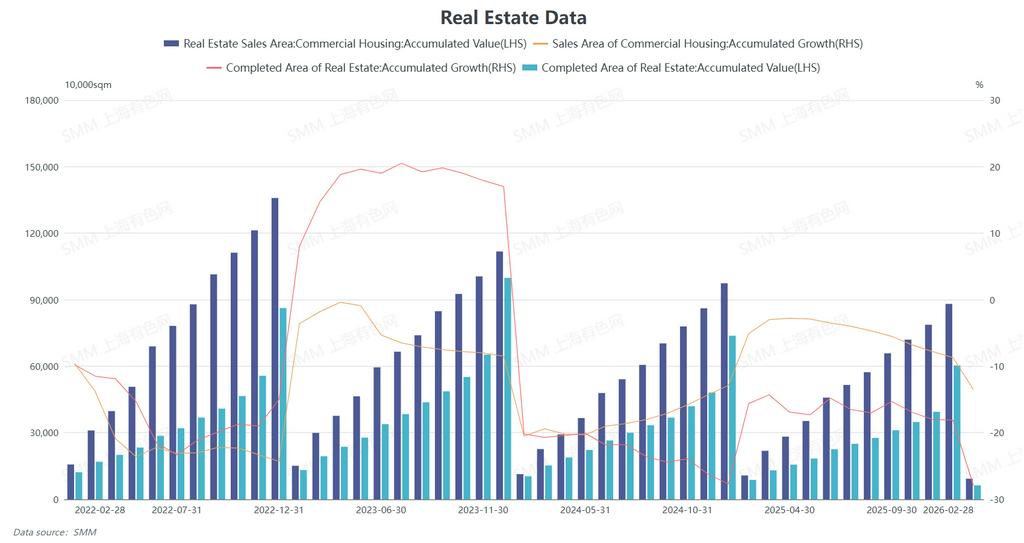
In February, China's cumulative commercial housing sales area fell 13.5% year-on-year, while cumulative completed floor space dropped 27.9% year-on-year. The current real estate market remains primarily focused on stability, with policies providing systematic "support" but offering limited impetus for demand for hardware accessories—a downstream application of die-cast zinc alloy. Domestic consumption performance is relatively weak.
Home Appliance and Automotive Sectors
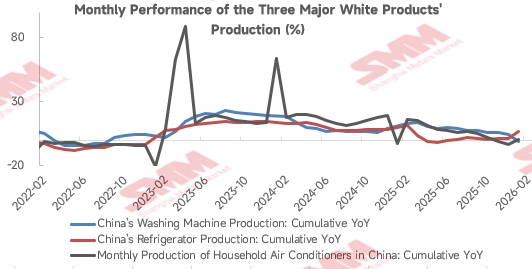
As of February, China's cumulative air conditioner and refrigerator production increased 0.7% and 6.5% year-on-year, respectively, while washing machine production declined 0.8%. Automotive production and sales fell 9.5% and 8.8% year-on-year, respectively. Although the "trade-in" subsidy policy remains in effect, the prolonged duration of such stimulus measures may have led to some demand being pulled forward.
Exports
China is a net importer of die-cast zinc alloy, with annual export volumes remaining below 8,000 metric tons in recent years, primarily destined for Asian countries and regions. Therefore, the recent Middle East developments have had a limited direct impact on die-cast zinc alloy exports. However, they have created some disruption for downstream hardware product exports. According to SMM's understanding, exports of locks and real estate hardware accessories from East China to the Middle East have faced obstacles, while certain decorative hardware products from South China have encountered similar challenges.
Additionally, due to the Middle East situation, some Middle Eastern countries have faced disruptions in their own product exports, leading to a portion of overseas orders being redirected to China. A small number of Chinese enterprises have thus gained new export opportunities, though such cases account for a relatively small share of overall exports.
![[SMM Analysis] Zinc Price Divergence: Is Reverse Arbitrage Nearing?](https://imgqn.smm.cn/usercenter/eyxqF20251217171756.jpg)