LFP Cost Cutting and Risks: The Drive for Survival 

Telah Terbit: Feb 2, 2024 16:59
Sumber: SMM
LFP's 2024 Focus: Cost Reduction

LFP's 2024 Focus: Cost Reduction


Cost Reduction Background

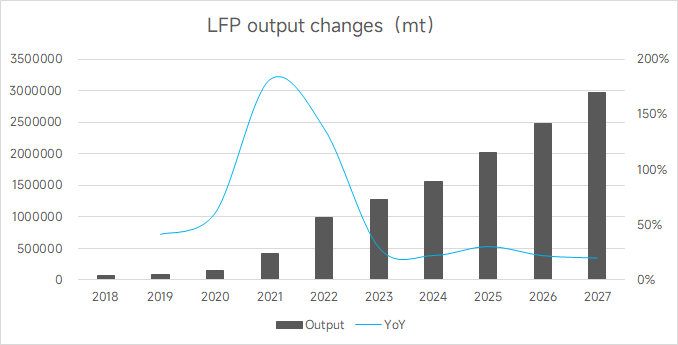
The LFP industry's expansion has slowed after rapid growth from mid-2021 to 2023. Post-2022 NEV subsidy cuts, despite the continued opportunity for capacity expansion, LFP operating rates hovered near 50%, sometimes dropping below 30%.
Since Q4 2022, the LFP industry's capacity-output gap has grown due to new firms increasing capacity, causing low operating rates. With excess capacity and slower demand growth, LFP firms are cutting prices to maintain market share, and cell manufacturers are using low prices to regulate new market entrants.

Falling LFP prices have turned profits into losses. With slower LFP demand, future production growth is expected to be lower.

Overcapacity and slower demand growth, amidst persistent capital gains, keep leading LFP firms dominant in negotiations, yet as industry growth slows, profits shrink.
Given these factors, the industry is at a new juncture focusing on cost reduction and efficiency improvement.

The process of cost reduction


Cost cutting and efficiency gains are the future trends for the competitive LFP industry.
In the LFP sector, two giants have boosted cost-efficiency by squeezing upstream suppliers' profits.

1. Lithium carbonate: Top firms have targeted lithium carbonate, a key LFP input, securing supplies and market leverage through investments, acquisitions, mining, and bulk buying, squeezing margins and stressing miners' profits.
2. Other Raw Materials: Big companies undermine suppliers' prices through tenders or direct talks, boosting their margins. New energy entrants with capital get orders for lower prices, shaving another profit layer. This suppresses LFP prices, pressuring costs of iron phosphate, phosphorus, and carbon sources.
3. Land and Labor: Cost reduction boils down to land and labor. Efforts focus on mineral-rich, low-energy-cost areas and companies with cheap labor and high automation.

The risks of cost reduction
The two leading firms spearhead cost-cutting in the LFP market, triggering a price-lowering race and a 'survival of the fittest' among suppliers, leading to a shift from a crowded to an orderly market.
The two giants lower raw material costs due to their large demand, strict yet punctual payments, and their supplier system's endorsement of quality.
Cost cutting may destabilize supply chains, introducing risks despite gradual change.
Cost cutting could redirect capital, prompting a reevaluation of the LFP industry, with investment favoring monopolistic and competitive firms over regular newcomers.
Where does cost reduction lead? Who benefits after cuts—society or select customers? A question worth deep thought.

Pernyataan Sumber Data: Kecuali informasi yang tersedia untuk publik, semua data lainnya diproses oleh SMM berdasarkan informasi publik, komunikasi pasar, dan mengandalkan model database internal SMM. Hanya untuk referensi dan tidak menjadi rekomendasi pengambilan keputusan.

Untuk pertanyaan atau informasi lebih lanjut, silakan hubungi: lemonzhao@smm.cn
Untuk informasi lebih lanjut tentang cara mengakses laporan penelitian kami, hubungi:service.en@smm.cn
Berita Terkait
Harga Magnesium Naik Tiga Sesi Berturut-turut! Sisi Biaya Tetap "Membara" Sementara Sisi Permintaan Kesulitan Mengambil Alih [Komentar SMM]
10 jam yang lalu
Harga Magnesium Naik Tiga Sesi Berturut-turut! Sisi Biaya Tetap "Membara" Sementara Sisi Permintaan Kesulitan Mengambil Alih [Komentar SMM]
Baca Selengkapnya
Harga Magnesium Naik Tiga Sesi Berturut-turut! Sisi Biaya Tetap "Membara" Sementara Sisi Permintaan Kesulitan Mengambil Alih [Komentar SMM]
10 jam yang lalu
Tinjauan Harian SMM: Harga Spot Litium Karbonat Melemah pada 2 September
11 jam yang lalu
Tinjauan Harian SMM: Harga Spot Litium Karbonat Melemah pada 2 September
Baca Selengkapnya
Tinjauan Harian SMM: Harga Spot Litium Karbonat Melemah pada 2 September
Hari ini, harga spot baterai lithium karbonat SMM bergerak lebih rendah dibandingkan hari perdagangan sebelumnya. Kontrak lithium karbonat 2701 dibuka lebih rendah di 157.000 yuan/mt hari ini, kemudian berfluktuasi melemah setelah pembukaan. Pada sesi pagi, diperdagangkan lemah di kisaran 156.000-157.000 yuan, dengan tertinggi intraday 157.800 yuan/mt. Menjelang tengah hari, harga turun cepat ke 153.200 yuan/mt, mencapai titik terendah intraday baru. Sekitar tengah hari, harga bergerak naik turun berulang kali di kisaran 154.000-156.000 yuan. Pada sesi sore, pembeli sempat mendorong harga naik tetapi gagal menembus garis harga rata-rata. Harga melemah lagi di akhir perdagangan, akhirnya ditutup turun 3,2% di 154.800 yuan/mt, dengan open interest turun 9.123 lot. Di pasar spot, pembeli hilir melakukan pembelian saat harga turun sesuai kebutuhan. Pada level 155.000 yuan/mt ke bawah, minat beli pesanan spot dari hilir terus pulih. Di sisi pasokan, seiring harga yang bergerak lebih rendah, minat menjual pesanan spot tetap lemah, dengan beberapa pabrik kimia lithium menahan harga dan menahan penjualan. Secara keseluruhan, permintaan pasar dan transaksi aktual relatif aktif.
11 jam yang lalu
Litium Sulfida Kelas Baterai: Akankah Kuartal IV Melonjak?
12 jam yang lalu
Litium Sulfida Kelas Baterai: Akankah Kuartal IV Melonjak?
Baca Selengkapnya
Litium Sulfida Kelas Baterai: Akankah Kuartal IV Melonjak?
Poin utama di awal: Lonjakan pada kuartal keempat tidak mungkin terjadi, tetapi kami memperkirakan pertumbuhan moderat akan berlanjut. Output bulanan kemungkinan akan berada di kisaran 9–10 ton – sedikit meningkat dari kuartal ketiga, bukan lompatan yang eksplosif.
12 jam yang lalu