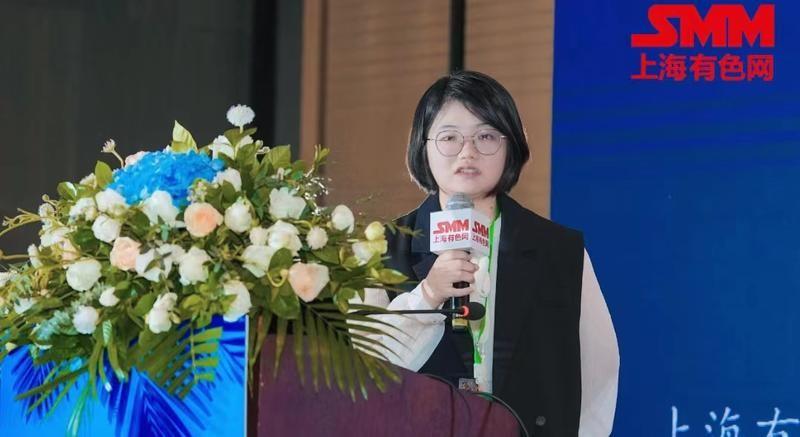
At the 2023 China New Energy Industry Annual Conference hosted by SMM, Hao Jiahui, Director of Energy Storage Consulting at SMM, stated that SMM predicts global energy storage cell demand is expected to reach approximately 900 GWh by 2030, driven by the carbon neutrality background. China and North America are expected to be the core demand markets. In the Chinese market, with the support of compulsory storage policies and subsidies for energy storage projects, the compound annual growth rate of energy storage cell demand from 2023 to 2025 is expected to reach around 55%. In North America, the implementation of the IRA and issues related to aging power equipment could lead to a compound annual growth rate of energy storage cell demand of around 38% from 2023 to 2025. In Europe, due to energy scarcity and high electricity prices, the compound annual growth rate of energy storage cell demand from 2023 to 2025 is expected to reach around 40%.
Outlook for the Global Energy Storage Market
In the context of "carbon neutrality", global energy storage cell demand is expected to reach around 900 GWh by 2030, with China and North America as the core markets.
China, North America, and Europe are the main markets for energy storage cell demand. SMM predicts that, in the context of carbon neutrality, global energy storage cell demand is expected to reach around 900 GWh by 2030, with China and North America as the core markets.
China, North America, and Europe are the main markets for energy storage cell demand.
SMM predicts that, driven by compulsory storage policies, subsidies for energy storage projects, and other factors, the compound annual growth rate of energy storage cell demand in China from 2023 to 2025 is expected to reach around 55%. In North America, the implementation of the IRA Act and issues related to aging power equipment could lead to a compound annual growth rate of energy storage cell demand of around 38% from 2023 to 2025. In Europe, due to energy scarcity and high electricity prices, the compound annual growth rate of energy storage cell demand from 2023 to 2025 is expected to reach around 40%.
China and US markets drive high demand for large-scale energy storage. "Energy crisis" drives explosive demand for commercial and household energy storage.
According to SMM's forecast of global energy storage cell demand (by scenario) from 2022 to 2030, high demand for large-scale energy storage is being driven by the Chinese and American markets. In Europe, the "energy crisis" caused by energy shortages and soaring electricity prices is expected to drive explosive demand for commercial and household energy storage.
The energy storage technologies are flourishing, what is the future trend of lithium and sodium?
Major energy storage demand countries have proposed diversification of energy storage technologies, and energy storage is heading towards long duration development.
China: The Blue Book on the Development of New Power Systems has been released, proposing a focus on the development of long-life, low-cost and high-security core energy storage technologies such as sodium batteries and vanadium liquid sulfur, and promoting diversified technological routes such as flywheels to large-scale and high-efficiency directions.
US: The Long Duration Energy Storage Challenge has been announced, declaring that future energy storage will develop towards an 8-hour discharge duration.
EU: The REPOWER EU plan has been designated by the European Union. The European Association for Energy Storage follows the directive (EU) of the European Parliament and Council, proposing the use of POWER-to-X technology to achieve energy transfer, with technologies suitable for providing this service including lithium batteries, flywheels, superconductors, etc.
Energy storage technology routes are diverse, with both lithium and sodium battery technologies demonstrating strong performance and breaking through.
In addition to meeting technical performance indicators such as high safety, the commercial profitability of energy storage technologies is another key factor. In terms of revenue, there is no difference due to changes in technology. The technology side primarily affects costs, with the core cost being the battery cell. When applied in power stations, the technological performance differences will impact the station's lifespan and system efficiency.
Therefore, considering factors such as safety, battery cell costs, station lifespan, and system efficiency, a comparison between the core indicators of the relatively advanced lithium and sodium battery (layered & polyanion) routes in current industrialization can be made. Compared to lithium batteries, sodium batteries have higher safety performance, and there is great potential for improvements in system efficiency and cycle life, while also offering significant cost reduction opportunities. Taking sodium-ion with polyanion (vanadium) as an example, it is expected that by 2030, the cycle life could reach 10,000 cycles, and the battery cell cost could potentially decrease to 0.23 yuan/Wh.
SMM profitability calculation case study of energy storage application scenarios – power generation side
After conducting profitability calculations for energy storage application scenarios on the generation side, SMM found that in the third quarter of 2023, when sodium batteries were not yet mass-produced on a large scale, the gross margin was significantly lower compared to lithium batteries. However, it is expected that once sodium batteries are mass-produced, the gross margin for sodium-ion with polyanion will increase to around 37%, far surpassing the 18% of lithium batteries.
SMM profitability calculation case study of energy storage application scenarios – power grid side
After mass production, the gross margin for sodium with polyanion batteries is projected to reach approximately 28%, surpassing the 20% of lithium batteries.
![[Baterai solid-state: produksi elektrolit sulfida 70 mt, Januari-Agustus]](https://imgqn.smm.cn/usercenter/Bwmed20251217171726.jpg)
![[SMM Analysis] Eropa Mencari Kemandirian Rantai Pasokan Litium, Namun Proyek-Proyeknya Menarik Investor Asia](https://imgqn.smm.cn/usercenter/nVnLo20251217171728.jpg)