Is it really so good for lithium batteries to spread out so wantonly? Tesla is worried about the safety of burnout and energy storage of large batteries in Australia.

Telah Terbit: Aug 5, 2021 15:57

Aug. 5 (Xinhua) as the global decarbonization process accelerates, most of the discussion about lithium-ion batteries is limited to how they can help the world become "greener", while little attention has been paid to the disadvantages of large-scale use and storage. With the recent fire at Tesla's lithium energy storage facility in Australia, which lasted for many days, it finally aroused public concern about the safety of energy storage.

The fire first broke out on Friday morning local time, when a 13-ton lithium battery caught fire and then spread to a nearby battery pack. It took the local fire department three days to put out the fire.

You know, lithium reacts violently when it meets water at room temperature, and reacts with CO2 when ignited, so once the lithium battery ignites spontaneously, it is impossible to extinguish it with water and fire-fighting equipment.

As a result, the local fire department adopted the strategy of waiting for the battery to burn out, saying, "Lithium battery fires last much longer than ordinary fires, because lithium batteries produce oxygen to reignite as they decompose. Firefighters can only eliminate the heat inside them as much as possible."
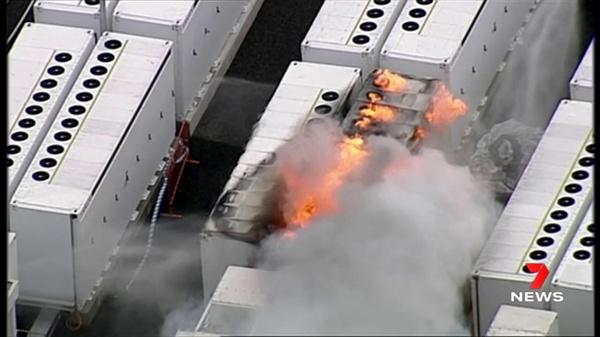
The Victorian Big Battery (Victorian Big Battery) project is the country's largest energy storage project, jointly developed by French power producer and renewable energy giant Neoen SA and Tesla. The project, which has 210 battery packs that can store up to 450MW of energy for Electroweb, aims to achieve 50 per cent of renewable energy for Victoria by 2030.

In fact, with the rise of clean energy, global lithium battery energy storage devices are being rolled out at an unprecedented scale. According to Wood Mackenzie, a research and consulting firm, the total number of energy storage facilities deployed worldwide increased by 62 per cent throughout 2020. The agency expects the market as a whole to grow another 27 times over the next decade.

In this process, lithium battery fires are actually not uncommon. Data show that since 2018, there have been a total of 38 large-scale lithium-ion battery fires around the world.

For example, in September 2020, a lithium-ion battery in Liverpool caught fire. An Electroweb-sized lithium-ion battery fire threw a firefighter "more than 20 meters" in Arizona in 2019, causing brain injuries and broken ribs.

Paul Christensen, a professor at Newcastle University, said: "Lithium-ion batteries are crucial to the decarbonization of the planet, but lithium-ion energy storage projects permeate society far beyond people's understanding of the risks and hazards associated with them. As individuals and households increasingly install lithium-ion batteries to store the energy of solar panels, such risks will only continue to increase. "

But for now, the "advantages" of lithium-ion batteries still seem to outweigh the "disadvantages".

Gavin Harper, a (University of Birmingham) researcher at the University of Birmingham, concluded: "it is critical that we not stifle new innovation because we have to decarbonize quickly, but at the same time, we also need to take precautions when deploying new technologies on a large scale."

Pernyataan Sumber Data: Kecuali informasi yang tersedia untuk publik, semua data lainnya diproses oleh SMM berdasarkan informasi publik, komunikasi pasar, dan mengandalkan model database internal SMM. Hanya untuk referensi dan tidak menjadi rekomendasi pengambilan keputusan.

Untuk pertanyaan atau informasi lebih lanjut, silakan hubungi: lemonzhao@smm.cn
Untuk informasi lebih lanjut tentang cara mengakses laporan penelitian kami, hubungi:service.en@smm.cn
Berita Terkait
[Baterai solid-state: produksi elektrolit sulfida 70 mt, Januari-Agustus]
1 jam yang lalu
[Baterai solid-state: produksi elektrolit sulfida 70 mt, Januari-Agustus]
Baca Selengkapnya
[Baterai solid-state: produksi elektrolit sulfida 70 mt, Januari-Agustus]
[Baterai solid-state: produksi elektrolit sulfida 70 mt, Januari-Agustus]
[Baterai solid-state: Produksi elektrolit sulfida 70 mt pada Januari-Agustus] Dari Januari hingga Agustus 2026, produksi elektrolit sulfida kumulatif Tiongkok mencapai 70 mt, naik 119,7% YoY, sudah melampaui total setahun penuh 2025 (58,29 mt). Namun, pertumbuhan mengesankan ini menutupi tiga kenyataan pahit: ① Hanya 19,6% dari target perkiraan tahunan (360 mt) yang tercapai; ② Tingkat utilisasi kapasitas pada Agustus hanya 5,82%, dengan kapasitas yang menganggur parah; ③ Harga produk terus merosot (LPSC turun lebih dari 24% dalam satu bulan). Produksi rata-rata bulanan Q4 kemungkinan besar berada di kisaran 11,5-13 mt, dengan total setahun penuh sekitar 118-121 mt, yang merupakan "pendakian solid." Perkiraan tahunan 360 mt, dengan hanya 70 mt yang diselesaikan dalam delapan bulan pertama: kesenjangan antara "peningkatan bertahap" elektrolit sulfida Tiongkok dan kenyataan.
1 jam yang lalu
[SMM Analysis] Eropa Mencari Kemandirian Rantai Pasokan Litium, Namun Proyek-Proyeknya Menarik Investor Asia
1 jam yang lalu
[SMM Analysis] Eropa Mencari Kemandirian Rantai Pasokan Litium, Namun Proyek-Proyeknya Menarik Investor Asia
Baca Selengkapnya
[SMM Analysis] Eropa Mencari Kemandirian Rantai Pasokan Litium, Namun Proyek-Proyeknya Menarik Investor Asia
[SMM Analysis] Eropa Mencari Kemandirian Rantai Pasokan Litium, Namun Proyek-Proyeknya Menarik Investor Asia
1 jam yang lalu
Proyek Tembaga-Emas-Kobalt Farellon di Chili Menyelesaikan Pengiriman Bijih Pertama, Memulai Produksi Skala Kecil
2 jam yang lalu
Proyek Tembaga-Emas-Kobalt Farellon di Chili Menyelesaikan Pengiriman Bijih Pertama, Memulai Produksi Skala Kecil
Baca Selengkapnya
Proyek Tembaga-Emas-Kobalt Farellon di Chili Menyelesaikan Pengiriman Bijih Pertama, Memulai Produksi Skala Kecil
Menurut Red Metal Resources pada 3 September, proyek Farellon, bagian dari properti tembaga-emas-kobalt Carrizal milik perusahaan di dekat Vallenar, Chili, telah menyelesaikan pengiriman pertama bijih tembaga sulfida, menandai transisi proyek dari tahap pengembangan ke penjualan bijih aktual dan produksi skala kecil. Penyewa dan operator proyek, Minera KMT, mengangkut batch bijih pertama ke fasilitas pemrosesan Vallenar yang dioperasikan oleh perusahaan pertambangan milik negara Chili, ENAMI, pada 20 dan 21 Agustus. Tonggak ini tercapai hanya sekitar tiga bulan setelah para pihak menandatangani perjanjian pertambangan pada bulan Mei, sekitar empat bulan lebih cepat dari jadwal pengembangan awal tujuh bulan. Farellon adalah bagian penting dari properti tembaga-emas-kobalt Carrizal. Pengiriman bijih pertama diharapkan menghasilkan pendapatan royalti bagi Red Metal dan menjadi dasar untuk perluasan lebih lanjut aktivitas penambangan dan pemrosesan. Perusahaan belum mengungkapkan kadar kobalt spesifik, output kobalt, atau tingkat pemulihan untuk bijih yang dikirim. Namun, langkah proyek menuju produksi dan penjualan aktual merupakan perkembangan baru dalam jalur sumber daya kobalt Chili di luar Afrika.
2 jam yang lalu