SHANGHAI, Apr 10 (SMM) – This is a roundup of China's base metals output in March 2019. SMM surveyed major producers to obtain information for calculation.
Copper
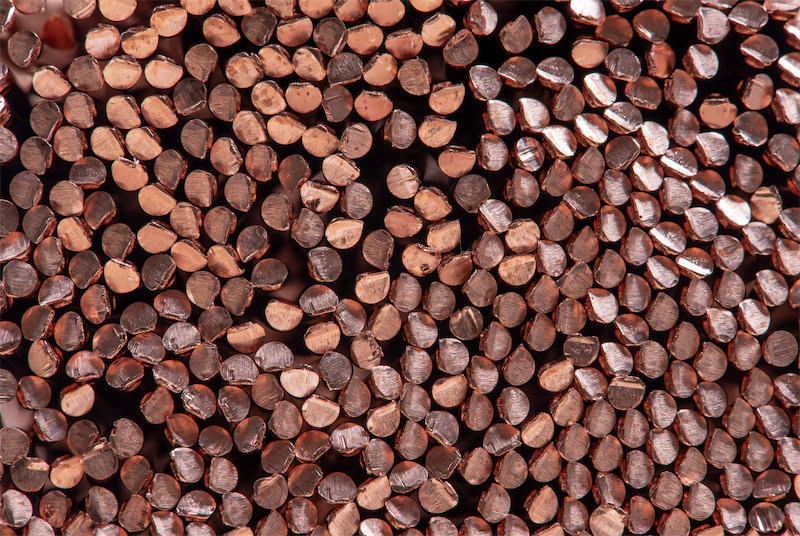
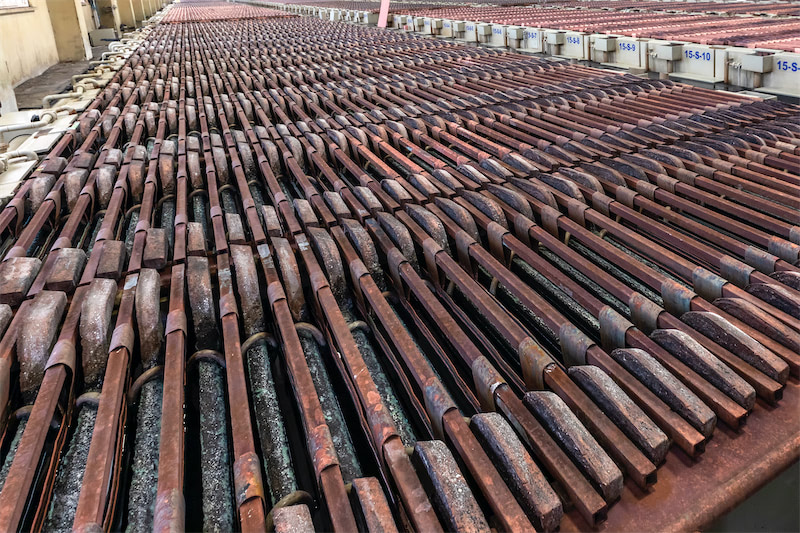
Growth in China’s output of copper cathode fell short of expectations in March as Chalco’s Dongnan smelter, which came online in the fourth quarter last year, has not reached full capacity and as sales pressure prompted some small smelters to slow production.
China produced 751,100 mt of copper cathode last month, up 4.38% from February and 5.28% from March 2018. SMM expected production to increase by 5.93% in March.
In the first three months of 2019, copper cathode output amounted to 2.21 million mt, up 4.17% from a year ago.
Most small and medium-sized smelters expressed concerns about declining treatment charges for spot copper concentrate but their production has yet to be affected. Healthy prices of sulphuric acid would balance the risks from weaker concentrate TCs.
SMM also learned that copper scrap supplies across secondary copper smelters remained stable and that their production would remain normal in April. Most of them expressed concern about supplies when imports of Category Six materials are restricted from July. This is expected to impact secondary copper production from June.
Many smelters will undertake maintenance in April, and this is expected to sharply lower overall copper cathode production in China. Those smelters include Xinjiang Wuxin, Dongying Fangyuan, Guangxi Jinchuan, Yuguang Gold & Lead, Yanggu Xiangguang, Humon and Jinlong Copper.
Guangxi Nanguo this week put 300,000 mt/year of capacity into operation, which is the second phase of a 600,000 mt/year copper project. Those new capacity is unlikely to yield output in April or help offset the production decline triggered by maintenance.
Output copper cathode in China is expected to fall 8.41% on the month and 6.76% on the year to stand at 687,900 mt in April. This will bring January-April production to 2.89 million mt, with a much smaller year-over-year increase of 1.35%.
Alumina
Daily alumina output in China averaged 194,000 mt in March, down 7,000 mt from February, as factors including tight bauxite supplies, high costs, maintenance and equipment upgrading idled a slew of capacity.
About 70.86 million mt of capacity on an annualised basis were in operation last month, compared to 73.46 million mt a month ago.
SMM survey also showed that production of metallurgical-grade alumina in China for March expanded 5.07% on the year and registered 6.02 million mt.
Tight supplies and higher prices of bauxite drove Chalco Huaxing, Chalco Shanxi, East Hope’s Sanmenxia and Jinzhong branches to slash alumina capacity in March. Capacity cuts across Xinfa Huayu, Xiaoyi Xinfa and Shanxi Fusheng were due to maintenance, while Xiangjiang Wanji felt impact from equipment upgrading. Most of those closed capacity have returned online or will resume in April.
Capacity resumption is expected to bolster the average daily alumina output by 7,000 mt to 201,000 mt in April, and this is estimated to yield output of 6.03 million mt for the month, up 3.88% from April 2018.
Capacity that has been upgraded to meet ultra-low emission standards is likely to be able to return online. Bosai’s plant in Nanchuan Shuijiang and Luyu Bochuang’s resumed capacity will steadily yield output. After the heating season, plants in Shanxi and Henan that faced environmental issues are expected to recover to full capacity. Those factors are also likely to help lift daily alumina output in China in April.
Aluminium
Production of primary aluminium in China came in at 8.63 million mt for the first three months of 2019, down 1.2% from a year ago. Capacity cuts exceeding 500,000 mt/year during the same period and the sluggish market slowed the commissioning of new capacity or the recovery of idle capacity.
Production in March stood at 2.98 million mt, down 1.5% year on year. By the end of March, domestic primary aluminium capacity in operation stood at an annualised 36 million mt, down some 430,000 mt/year from a year earlier.
Consumption of primary aluminium in China returned to growth in March, after it contracted in January and February. About 3.06 million mt of primary aluminium was consumed last month, up 4.9% on a yearly basis.
Declining costs and recovering aluminium prices will trigger more new capacity in Guangxi and Yunnan etc. in April.
Production of primary aluminium is expected to stand at 2.9 million mt in April while actual consumption is expected to grow 2.5% on the year to stand at 3.06 million mt.
Social inventories of primary aluminium are likely to fall to 1.53 million mt by the end of this month.
Nickel
China produced 12,800 mt of refined nickel in March, up 4.77% from a year earlier, and up 6.03% from February. A greater number of working days in March accounted for the gain.
Smelters are expected to maintain regular operation in April, but a shorter month may lower their output of refined nickel by 2% from March, to 12,600 mt in April.
Nickel pig iron (NPI)
In March, NPI output climbed 13.2% from a month earlier to stand at 45,800 mt in Ni content. This was 20.39% higher than March 2018.
On a month-on-month basis, output of high-grade NPI rose 8.6% to 40,400 mt in Ni content last month. Capacity additions at a large NPI mill in Shandong province raised output.
For low-grade materials, output advanced 64.1% from February, to 5,500 mt in Ni content last month. Two stainless steel plants in the south resumed production of low-grade NPI, and this contributed to the growth.
Overall output of NPI in China is expected to extend increase by 3.01% from March, to 47,200 mt in Ni content in April, with that of high-grade materials up 1.56% to 41,000 mt in Ni content, in anticipation of the continued release of new capacity in Shandong.
Output of low-grade NPI is likely to climb 13.71% from March, to 6,200 mt in Ni content this month, as stainless steel mills in the south release capacity.
Nickel sulphate
In March, China produced 10,967 mt in metal content of nickel sulphate, which translated to 49,900 mt in physical content.
Compared to February, production expanded 13.68% from the longer month and resumption of nickel sulphate producers after CNY breaks. SMM learned that a producer in Guangdong restarted and contributed to output last month.
Even as output rose, the nickel sulphate market remained in a tight balance as demand from electric vehicle producers expanded after the release of 2019 new-energy vehicle (NEV) subsidy policies in March. Automakers accelerated production to obtain subsidies before the transition period ends on June 25.
For April, greater production in Guangdong is expected to extend the increase in nickel sulphate output, by 1.2% from March. Lower planned output at a producer in Gansu province will cap growth in supply. Other nickel sulphate plants in China are expected to operate normally in April.
Zinc
China's production of refined zinc increased by 7.55% from February and by 1.39% from March 2018 to stand at 452,100 mt in March.
Surveyed capacity remained unchanged at 6.085 million mt/year. Higher treatment charges for zinc concentrate grew profits at smelters and encouraged them to step up production. Compared with February, a greater number of working days in March also grew output. Despite maintenance at some smelters, recovery across smelters in Xiangxi of Hunan province raised overall output in March.
Yunnan Chihong Zinc & Germanium and Baiyin Nonferrous Metals planned to conduct maintenance in April. This will offset production growth from new capacity at Zhuzhou Smelter Group, and from Sihuan Zinc & Germanium after maintenance.
SMM expects the output of refined zinc in China to slip 0.41%, or 1,900 mt from March, to 450,200 mt in April. This stands 1.26% higher from a year earlier.
Lead
China’s production of primary lead gained 14.48% from February to stand at 257,700 mt in March as smelters recovered from the CNY holiday or maintenance.
The longer month of March also grew production.
Henan Xinling remained under maintenance. Repairs at Hunan Yuteng and Silver Star ended, and operations recovered last month.
In January-March, primary lead production amounted to 756,800 mt, up 7.34% from a year earlier.
March’s output was up 5.83% from a year ago as a slew of smelters, including Yuguang, Wanyang, Nanfang, Jiangxi Copper and Humon, undertook maintenance in March 2018 for up to 45 days. Heavy smog also affected production in Henan in March 2018.
Output of primary lead is unlikely to change from March in April, standing at 256,000 mt, as the impact of maintenance across Anhui Tongguan, Yunnan Chihong and Chifengshan Gold, Silver & Lead will be offset by the restart of Henan Xinling.
Tin
Output of refined tin in China rose 26.2% from a month ago to stand at 12,067 mt in March as smelters recovered from the CNY holiday.
A handful of smelters in Yunnan and Jiangxi suspended for equipment maintenance, and this impacted overall tin production last month.
Guangxi-based China Tin Group's smelter in Laibin city continued maintenance in March and is expected to recover production in April, which is likely to help bolster overall production to 12,800 mt for the month.