India's hot-rolled coil market entered late August with a clear mismatch between steelmaking costs and executable export prices. Earnings disclosures from Tata Steel, JSW Steel and Jindal Steel pointed to higher coking-coal consumption costs during Q1 FY2026-27 and further increases expected in Q2. However, SMM market communication showed persistent resistance from overseas HRC buyers, particularly in Vietnam. The available evidence therefore confirms cost pressure and firmer seller intentions, but not a complete pass-through into realised HRC prices.
Domestic downstream indicators nevertheless remained positive across automobiles, engineering, capital goods and infrastructure-linked activity. These indicators show activity in major steel-consuming sectors, although they do not establish a direct one-to-one increase in HRC procurement or price acceptance.
I. August Indian HRC Market Review
In the domestic market, HRC was heard at around 596USD/tonne (57,000INR/tonne) EXW Mumbai on August 11. The range subsequently moved to 603-609USD/tonne (57,500-58,100INR/tonne) on August 17 before returning to approximately 596-601USD/tonne (57,000-57,500INR/tonne) on August 24. The observations indicate that the mid-month increase was not fully maintained through the following week.
In the export market, Indian HRC indications to Vietnam were heard near 515USD/tonne CFR during the middle of August, against buyer ideas of approximately 505-510USD/tonne CFR. Offers later reached 520-525USD/tonne CFR, but buyers remained unwilling to accept those levels. By August 27, some market participants reported that Indian mills were no longer offering material to Vietnam because prevailing levels were not considered commercially attractive. Consequently, the earlier indications should not be interpreted as evidence of concluded transactions.
Europe provided higher price indications. Indian material was heard around 510-520USD/tonne FOB India and 630-650USD/tonne CFR Europe earlier in August, including freight indications of approximately 120-130USD/tonne. A possible Indian HRC transaction was subsequently discussed at around 680USD/tonne CFR Europe, but this remained unconfirmed. At the same time, China-origin HRC was heard at 645-650USD/tonne CIF Europe, providing a competitive reference against Indian material.
The export evidence therefore shows a widening difference between regional markets, but not a uniform increase in executable Indian HRC prices. Vietnam remained below Indian sellers' indicated levels, while the highest Europe number had not been confirmed.
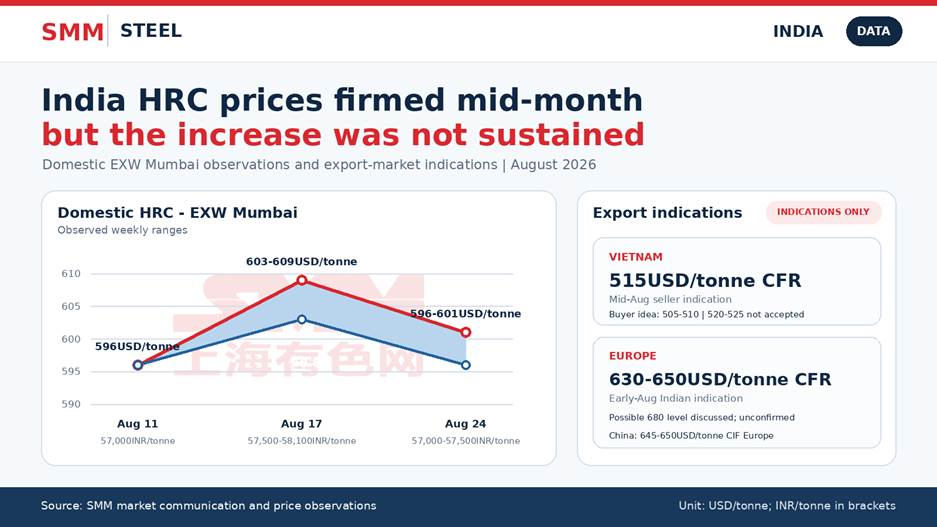
Figure 1. Indian HRC domestic observations and export-market indications during August 2026.
II. Coking-Coal Indicators Move in Different Directions
The Ministry of Steel's Australian premium hard coking-coal indicator increased from 233USD/tonne FOB in April to 239USD/tonne in May and 243USD/tonne in June, representing a 4.3% increase between April and June. These are the indicator points shown in the Ministry's monthly reports and should not be described as monthly averages.
In contrast, the Ministry of Coal's imported coking-coal representative price declined from 23,466.97INR/tonne in April to 20,772.31INR/tonne in May and 18,143.03INR/tonne in June. The National Coal Index methodology derives the imported component from DGCIS-recorded import quantities and values. It is an import unit-value measure affected by cargo origin, quality, contract timing and product mix - not an Australian spot HCC benchmark.
These movements are not contradictory. International spot indicators, customs-recorded import unit values and mill consumption costs measure different stages of the procurement cycle.
India imported 66.33million tonnes of coking coal in FY2025-26, compared with 57.58million tonnes in FY2024-25. Provisional imports during April-June FY2026-27 stood at 16.88million tonnes. The Ministry of Coal states that the steel sector imports coking coal mainly to bridge the gap between domestic availability and requirements and to improve coal quality.
The wider raw-material basket was mixed in August. NMDC's listed price for Baila lump ore declined by 3.7% month on month to 5,250INR/tonne, while fines declined by 4.3% to 4,500INR/tonne. The government's HMS II scrap indicator, however, increased by 3.6% to 39,970INR/tonne. These figures confirm that steel input prices were not moving uniformly.
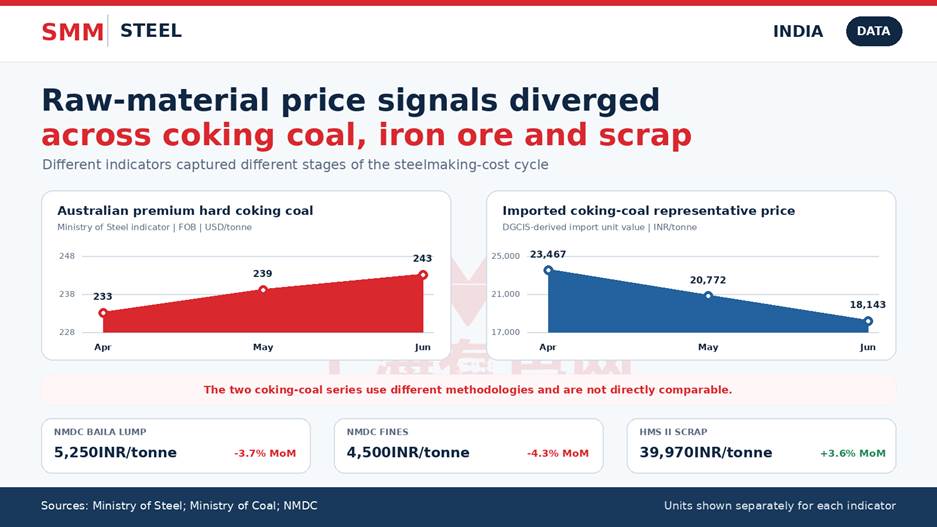
Figure 2. Coking-coal indicators and selected August raw-material price movements.
III. Mill Disclosures Confirm the Consumption-Cost Lag
Tata Steel reported that its India material cost increased by approximately 1,330INR/tonne quarter on quarter in Q1 FY2026-27. Management attributed this partly to higher coking-coal consumption costs and partly to increased rebar purchases from NINL and Tata Steel Thailand; the entire 1,330INR/tonne increase cannot therefore be assigned to coal. For Q2, Tata Steel expected coking-coal consumption cost of approximately 184USD/tonne, with the India cost around 5USD/tonne higher quarter on quarter. The company also guided for India steel realisations to decline by around 1,500INR/tonne from Q1.
JSW Steel reported that coking-coal prices increased by approximately 17USD/tonne during Q1, above its earlier guidance of 12-15USD/tonne. The company expected coking-coal cost to rise by another 12-15USD/tonne during Q2. Management said the subsequent decline in spot coking-coal prices was expected to enter the company's consumption cost only in Q3, directly confirming the lag between spot-market movements and mill accounts.
Jindal Steel reported a 23USD/tonne increase in Q1 coking-coal consumption cost, which partly offset the benefit of higher average steel selling prices. Management expected another 12-15USD/tonne increase during Q2 and separately described a possible 15USD/tonne increase as approximately 1,500INR/tonne of coking-coal pressure. The company simultaneously reported HRC prices around 800INR/tonne below Q1 levels.
These disclosures are company-specific and cannot be combined into a single industry cost estimate. They use different coal blends, inventory positions, accounting periods and steelmaking configurations. Nevertheless, all three confirm that coking-coal consumption costs remained a material cost factor entering Q2.
IV. Trade Volumes Strengthen, but India Remains a Net HRC Importer
India exported 699,300tonnes of finished steel in July, up 44.1% year on year, while imports reached 702,300tonnes, up 9.5%. During April-July, finished-steel exports totalled 2.292million tonnes and imports reached 2.766million tonnes, leaving India a net importer.
HRC and strip were the largest product category on both sides of the trade balance. India exported 841,500tonnes of HRC and strip during April-July but imported 1.015million tonnes. The category accounted for 36.7% of both finished-steel exports and imports. Vietnam was India's largest overall finished-steel export destination at 354,000tonnes, followed by the UAE at 339,600tonnes; these destination figures cover all finished-steel products and should not be treated as HRC-only volumes.
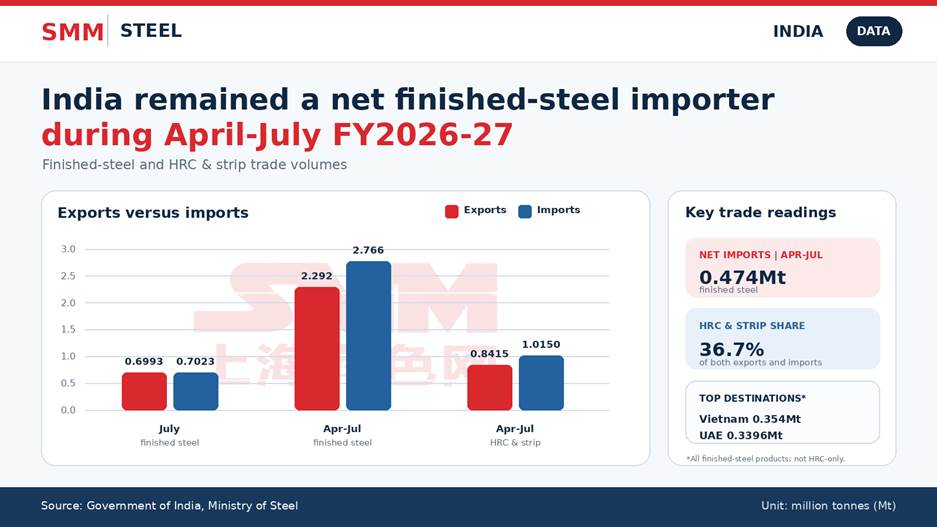
Figure 3. India's finished-steel and HRC & strip trade volumes.
V. Domestic Demand and Downstream Sectors Remain Positive
Domestic finished-steel consumption reached 56million tonnes during April-July, up 7.9% year on year, while finished-steel production increased by 4.7% to 54.7million tonnes. The faster increase in consumption confirms continuing domestic demand growth, without establishing how that demand was distributed among individual steel products.
Automobile-sector activity remained strong. According to the Society of Indian Automobile Manufacturers, passenger-vehicle sales reached 457,810units in July, increasing by 34.3% year on year on SIAM's reported coverage. Two-wheeler sales increased by 22.6% to 1.923million units, while three-wheeler sales rose by 33.4% to 92,560units. SIAM had also reported record Q1 passenger-vehicle sales of 1.27million units, up 25.9% year on year, with utility-vehicle sales increasing by 28.6%.
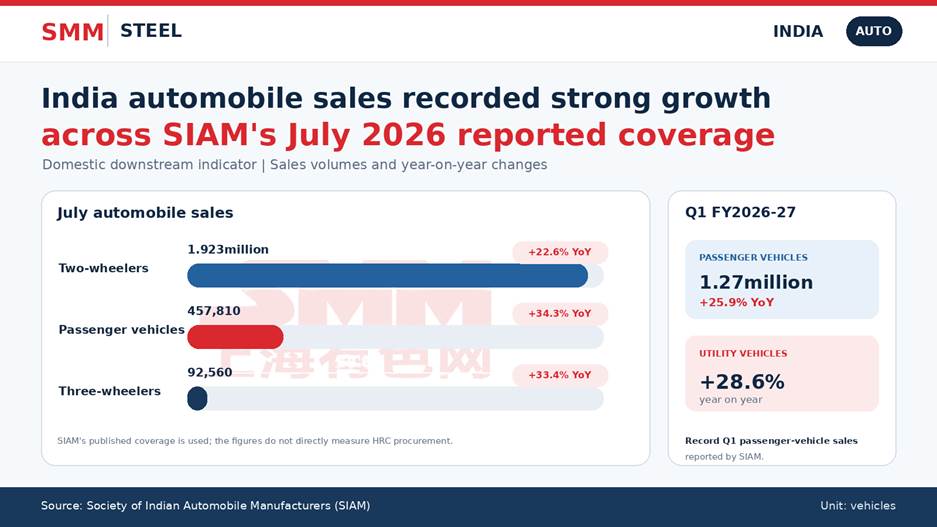
Figure 4. SIAM automobile sales indicators for July and Q1 FY2026-27.
Broader industrial data indicated growth across several domestic steel-consuming segments. India's manufacturing output increased by 7.8% year on year in June, with the manufacture of motor vehicles, trailers and semi-trailers rising by 17.5% and electrical-equipment manufacturing increasing by 34%. Auto components, passenger cars and commercial vehicles were among the principal contributors to motor-vehicle manufacturing growth.
Domestic engineering and investment-linked activity also remained positive. Under the use-based classification, capital-goods output increased by 14.2%, infrastructure and construction goods by 7.5%, intermediate goods by 9.3% and consumer durables by 7.7%. Cement production, a broad indicator of construction activity, increased by 13.1% year on year in July.
These sectoral indicators do not measure HRC consumption directly. However, they confirm positive activity across automobiles, electrical equipment, capital goods, engineering-linked manufacturing and infrastructure-related sectors.
VI. Near-Term Assessment
Cost Support Is Evident, Price Pass-Through Is Not
Some market participants believe the Indian steel market could gain support in the coming days following the seasonal monsoon slowdown.
On the domestic side, major blast-furnace steelmakers entered Q2 with guidance for higher coking-coal consumption costs. Growth in automobile sales, motor-vehicle and electrical-equipment manufacturing, capital goods, infrastructure and construction goods, and cement production indicates continuing activity across several major steel-consuming sectors. These indicators, however, do not quantify actual HRC procurement or confirm mills' ability to transfer higher raw-material costs.
The export picture remained less conclusive. Indian indications moved above their early-August levels in some markets, but Vietnam buyers continued to indicate prices below Indian sellers' earlier offers. By August 27, some participants reported that no Indian HRC material was being offered there. The highest India-Europe transaction level remained unconfirmed, while China-origin HRC was available at competitive Europe-delivered levels.
SMM's Mumbai EXW observations also eased from their mid-August range, while domestic iron-ore list prices declined during August, partly countering the broader cost-support argument.
The evidence therefore supports two separate conclusions. Domestic automobiles, engineering, capital goods and infrastructure-linked sectors continue to provide underlying steel demand, while higher coking-coal consumption costs are pressuring blast-furnace mills. In the export market, however, Indian suppliers have not yet demonstrated a consistent ability to recover those costs through higher confirmed HRC transaction prices. A sustained change would require firmer domestic HRC procurement and concluded export bookings rather than offer indications alone.
![[China Iron Ore Brief] Prices of Iron Ore Concentrates in Shandong Region May Rise](https://imgqn.smm.cn/usercenter/niwZw20251217171715.jpg)
![[SMM Acier]](https://imgqn.smm.cn/usercenter/VgxkU20251217171719.jpg)
![[SMM Acier]](https://imgqn.smm.cn/usercenter/ikbxI20251217171718.jpg)