Myanmar Ore Supply Disruption Continues: What Is the Impact on the Rare Earth Market? [SMM Analysis]

Published: Feb 13, 2025 15:12
[SMM Analysis: How Does the Continued "Supply Disruption" of Myanmar Ore Impact the Rare Earth Market?] After the Chinese New Year holiday, the rare earth market has shown an overall strengthening trend. Separation enterprises have indicated that the issue of tight ore supply is becoming increasingly prominent, with some raw ore separation enterprises experiencing production cuts or shutdowns due to difficulties in procuring raw materials.

SMM, February 5: After the Chinese New Year holiday, the rare earth market has shown an overall strengthening trend. Separation enterprises have reported that the issue of tight mine supply is becoming increasingly prominent, with some raw ore separation enterprises experiencing production cuts or shutdowns due to difficulties in procuring raw materials. Against this backdrop, suppliers have intensified their reluctance to sell rare earth raw materials, leading to the first post-holiday price surge in the rare earth market amid tight supply.
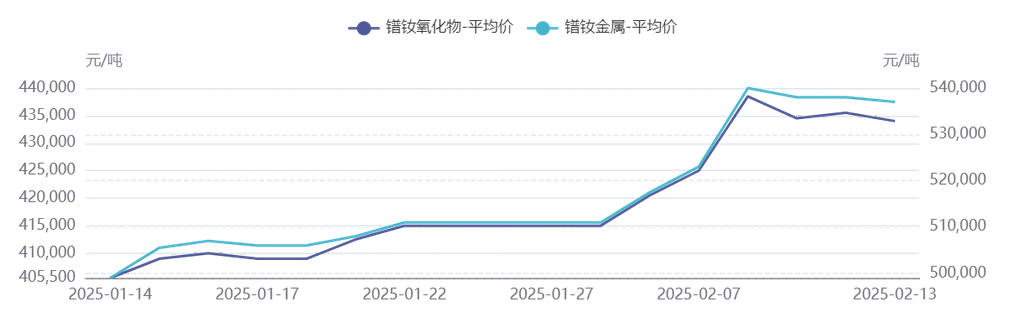
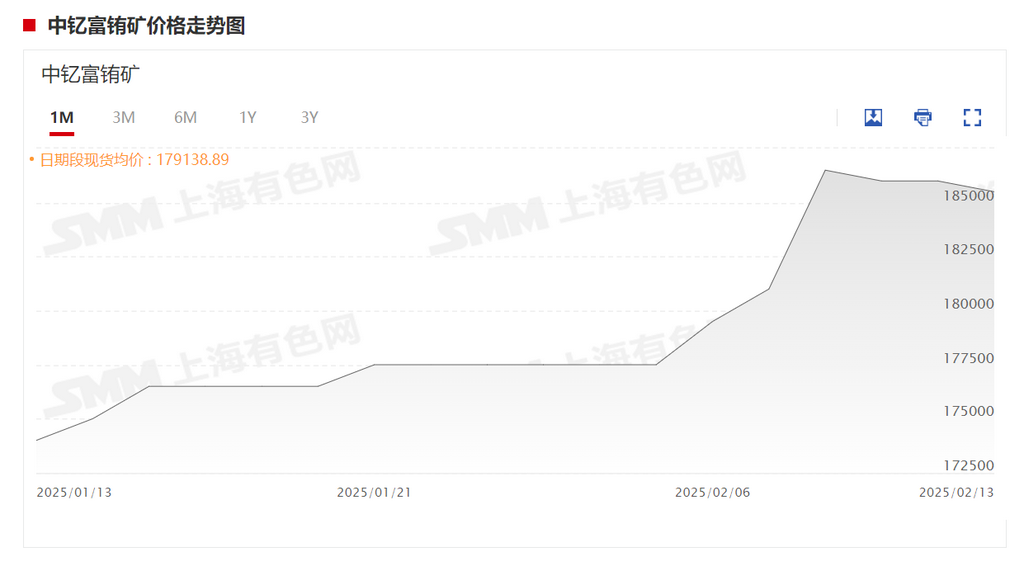
What is the current supply situation of Myanmar ore? According to multiple ore trading companies, the current cost of Myanmar ore is relatively high: the tax-related costs for local operations and imports alone amount to 70,000 yuan per mt. Additionally, most mining sites rely on gasoline generators for power supply, and gasoline prices in Myanmar are significantly higher than those in China. Coupled with the high electricity consumption of mining sites, this has caused a substantial increase in the cost of Myanmar ore. Under the current circumstances of difficulties in importing Myanmar ore, miners are unwilling to sell at low prices, making the supply of ion-adsorption ore in the rare earth market tight and low-priced sources hard to find.
》Apply for a Free Trial of the SMM Metal Industry Chain Database

With the rapid surge in rare earth oxide prices, the market has shown evident concerns about high prices. It is understood that the order prices accepted by downstream magnetic material enterprises before the Chinese New Year were generally low, which has led buyers to adopt a wait-and-see attitude toward the soaring raw material prices, with relatively low acceptance. Meanwhile, some traders have taken advantage of the price surge to sell off inventory, which caused rare earth prices to pull back slightly after a brief spike this week. However, most industry insiders believe that the likelihood of a significant drop in rare earth prices is relatively small, and they predict that prices are expected to gradually stabilize in the near term. Furthermore, considering the sustained global demand for rare earths and the complexity of the supply chain, rare earth prices are likely to remain supported for some time to come.


Data Source Statement: Except for publicly available information, all other data are processed by SMM based on publicly available information, market communication, and relying on SMM‘s internal database model. They are for reference only and do not constitute decision-making recommendations.

For any inquiries or to learn more information, please contact: lemonzhao@smm.cn
For more information on how to access our research reports, please contact:service.en@smm.cn
Related News
India to build a six-month strategic stockpile of lithium, cobalt and rare earths as demand rises
May 1, 2026 07:00
India to build a six-month strategic stockpile of lithium, cobalt and rare earths as demand rises
Read More
India to build a six-month strategic stockpile of lithium, cobalt and rare earths as demand rises
Amid sustained demand growth, India plans to build a strategic reserve of critical minerals including lithium, cobalt, nickel, copper and rare earths. The stockpile will be sized to cover six months of domestic consumption, aiming to guard against risks of global supply disruptions and sharp raw material price volatility. Led by India’s Ministry of Mines and Ministry of Heavy Industries, the reserve covers key raw materials essential for new energy vehicles, energy storage and the electronics sector, fields where India currently relies heavily on imports. At present, the United States, China, South Korea and other countries have already established strategic reserve systems for critical minerals.
May 1, 2026 07:00
Brazil's Rare Earth Development: Strategic Transition from Reserves to Industrial Chain【SMM Analysis】
Apr 30, 2026 22:07
Brazil's Rare Earth Development: Strategic Transition from Reserves to Industrial Chain【SMM Analysis】
Read More
Brazil's Rare Earth Development: Strategic Transition from Reserves to Industrial Chain【SMM Analysis】
Apr 30, 2026 22:07
NdFeB Output Hits Yearly High in April, Yet Profit Recovery Hampered by Cost Inversion【SMM Analysis】
Apr 30, 2026 21:46
NdFeB Output Hits Yearly High in April, Yet Profit Recovery Hampered by Cost Inversion【SMM Analysis】
Read More
NdFeB Output Hits Yearly High in April, Yet Profit Recovery Hampered by Cost Inversion【SMM Analysis】
In April 2026, the output of NdFeB blanks reached 32,603 metric tons, representing a significant month-on-month increase of 8.73% and a year-on-year rise of 9%. The industry-wide average operating rate climbed to 76.37%, indicating an accelerated expansion. According to SMM's frontline research, production is expected to further increase to 34,097 tons in May, a month-on-month growth of approximately 5%. If this forecast materializes, it will mark the highest production level since January 2025.
Apr 30, 2026 21:46