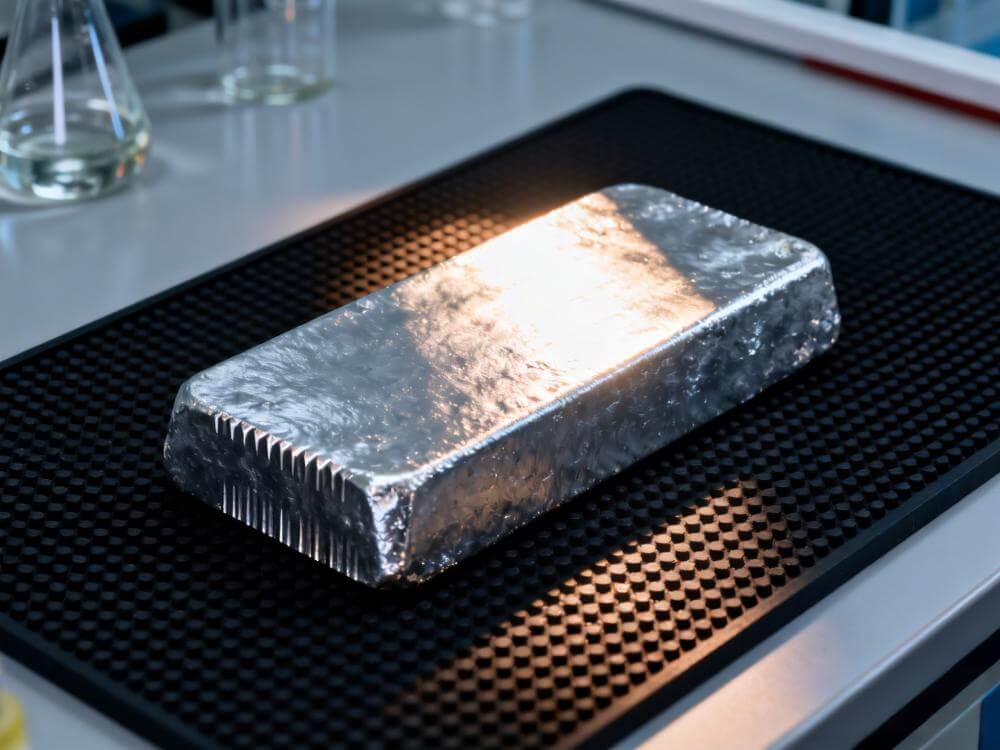
Yulin City announces annual output of magnesium metal

[Yulin City announces annual metal magnesium output] according to the Yulin Municipal Bureau of Statistics, the cumulative output of metal magnesium in Yulin City, the main producer of metal magnesium in the country, was 511200 tons in 2021, down 8.6 percent from 561100 tons in 2020. According to the Yulin Municipal Bureau of Statistics, Yulin produced 500900 tons of magnesium in 2019, 420200 tons in 2018, 466600 tons in 2017 and 455900 tons in 2016.

According to the Yulin Municipal Bureau of Statistics, the cumulative output of magnesium in Yulin, the main producer of magnesium in the country, was 511200 tons in 2021, down 8.6 percent from 561100 tons in 2020. According to the Yulin Municipal Bureau of Statistics, Yulin produced 500900 tons of magnesium in 2019, 420200 tons in 2018, 466600 tons in 2017 and 455900 tons in 2016.

The output of magnesium metal in Yulin City in December 2021 was 37200 tons, an increase of 5600 tons from November, 11600 tons from 25600 tons in October, 2300 tons from 34900 in September, and a decrease of 37.6 percent from 59600 tons in December 2020. According to Shangjian.com 's official statistics, the highest monthly output of magnesium in Yulin in 2021 was 55800 tons in June. According to the above statistics, the monthly output of Yulin in December is equivalent to 66.7% of the peak in June. The monthly figures released above are somewhat beyond market participants' previous and current expectations. At the same time, Shenmu Municipal Bureau of Statistics announced that Shenmu produced 60900 tons of magnesium in 2021, down 19.9% from the same period last year. Magnesium production statistics in Fugu County have not yet been released.

According to statistics of Yulin City, in 2021, industries above the scale of Yulin City were affected by the rise in the prices of coal and other commodities, and the total industrial output value increased by 55.9% compared with the same period last year, and the added value increased by 9.3% year-on-year, which was 0.3% lower than that of the whole country and 1.7% higher than that of the whole province. ranking third among the ten districts and cities in the province. By category, the mining industry accounts for 81.4% of the city's regulated industry, and is the pillar industry of the city's industrial economic development. over the past year, the mining industry has always played the role of economic "ballast stone", laying a solid foundation for the city's regulated industrial growth, with an increase of 9.2% over the same period last year, driving the growth rate of the city's regulated industry by 7.1 percentage points.

Since the goal of "double carbon" was put forward, Yulin City has resolutely curbed the blind development of the "two high" projects and promoted the transformation of energy conservation and consumption reduction in key areas such as coking and metallurgy. As a result, the manufacturing industry has dropped 0.1% year on year and the international market energy prices have risen sharply since this year. Domestic electricity and coal supply and demand continue to be tight. In accordance with the arrangements of the CPC Central Committee and the State Council, the city has taken a series of measures to strengthen energy supply and security. The role of "stabilizer" in the energy industry is further revealed. The added value of the city's energy industry increased by 9.7% over the same period last year, driving the regular industrial growth by 8.8 percentage points, providing an important support for the city's industrial growth. Among them: coal mining and washing industry, oil and gas mining industry, electric power, thermal production and supply industry drove the regulated industrial growth by 6.9%, 0.2% and 1.9% respectively. Among them, the output of coal, natural gas, electricity generation and other industrial products reached another record high under the influence of national policies such as ensuring energy supply and stabilizing commodity market prices, with 552 million tons of raw coal for the whole year, an increase of 6.2 percent over the same period last year; 21.415 billion square meters of natural gas, an increase of 1.9 percent; and electricity generation of 144.814 billion kilowatt-hours, an increase of 15.2 percent. The oil, coal and other fuel processing industries are affected by policies such as double control of energy consumption, which play a reverse role in pulling the industry of the whole city. In 2021, Yulin polyolefin, metal magnesium and other non-energy industries are faced with multiple internal and external complex factors, such as tight international energy supply, tighter domestic "energy consumption" double control policy, sharply higher upstream raw material prices, repeated epidemic situations in the fourth quarter, and so on. Enterprise production and operation is more difficult. Nevertheless, under the effect of various policies and measures taken by the Yulin municipal government to actively adapt to the new normal of external economic development, make full use of various favorable internal factors, constantly overcome new problems and difficulties in economic operation, and vigorously promote the optimal development of industry, the city's non-energy industry operated smoothly, achieving an annual increase of 5.4% compared with the same period last year.
Déclaration sur la source des données : À l'exception des informations publiques, toutes les autres données sont traitées par SMM sur la base d'informations publiques, d'échanges avec le marché et en s'appuyant sur le modèle de base de données interne de SMM. Ils sont fournis à titre indicatif uniquement et ne constituent pas des recommandations décisionnelles.

Pour toute demande d'information ou pour en savoir plus, veuillez contacter : lemonzhao@smm.cn
Pour plus d'informations sur l'accès à nos rapports de recherche, veuillez contacter :service.en@smm.cn
Actualités Connexes
Le marché du magnésium rompt sa tendance baissière alors que les prix du charbon flambent, les producteurs font face à des coûts en hausse
il y a 2 heures
Le marché du magnésium rompt sa tendance baissière alors que les prix du charbon flambent, les producteurs font face à des coûts en hausse
Lire la suite
Le marché du magnésium rompt sa tendance baissière alors que les prix du charbon flambent, les producteurs font face à des coûts en hausse
Début août, le marché du magnésium semblait pris dans une impasse prolongée. L'élan des réductions de production de juillet s'est estompé et l'offre de magnésium primaire s'est progressivement rétablie. Parallèlement, avec la pause estivale à l'étranger et la basse saison nationale de la fonderie sous pression, les commandes en aval étaient rares et le sentiment d'achat a atteint son plus bas niveau.
il y a 2 heures
La flambée du charbon enflamme le marché du magnésium, la consolidation de deux mois est enfin rompue, les réductions de production et le déstockage annoncent le prochain rallye [Analyse SMM]
il y a 3 heures
La flambée du charbon enflamme le marché du magnésium, la consolidation de deux mois est enfin rompue, les réductions de production et le déstockage annoncent le prochain rallye [Analyse SMM]
Lire la suite
La flambée du charbon enflamme le marché du magnésium, la consolidation de deux mois est enfin rompue, les réductions de production et le déstockage annoncent le prochain rallye [Analyse SMM]
[SMM Analyse du marché du magnésium : la flambée des prix du charbon enflamme le marché du magnésium, la consolidation de deux mois finit par céder, les réductions de production et le déstockage préparent la prochaine reprise] En août, le marché du magnésium semblait être tombé dans une impasse prolongée. L'effet des réductions de production de juillet s'est estompé, l'offre de magnésium primaire s'est progressivement rétablie, tandis que les vacances d'été hors de Chine, combinées à la basse saison nationale de la fonderie sous pression, ont laissé les commandes en aval clairsemées et le sentiment d'achat à un point de congélation. Avec une offre et une demande toutes deux faibles, les prix du magnésium sont restés fermement bloqués dans une fourchette étroite de 15 800 à 15 950 yuans/tonne, avec peu de marge de manœuvre dans un sens comme dans l'autre. De la mi-août à la fin août, les prix ont même brièvement reculé à 15 750 yuans/tonne, le marché adoptant largement une attitude attentiste. Le moment où cette consolidation de bas niveau, qui durait déjà depuis deux mois, connaîtrait un tournant restait inconnu.
il y a 3 heures
Prix du magnésium dopés par les coûts, la faible demande rend la reprise insoutenable [Revue hebdomadaire du magnésium SMM]
il y a 6 heures
Prix du magnésium dopés par les coûts, la faible demande rend la reprise insoutenable [Revue hebdomadaire du magnésium SMM]
Lire la suite
Prix du magnésium dopés par les coûts, la faible demande rend la reprise insoutenable [Revue hebdomadaire du magnésium SMM]
[SMM Revue hebdomadaire du magnésium : la hausse des coûts pousse les prix du magnésium à la hausse, la faible demande limite les gains] Cette semaine, les cotations courantes du lingot de magnésium 99,90 % dans les principales zones de production s'établissaient entre 16 050 et 16 150 yuans/tonne, en hausse de 300 yuans/tonne en glissement hebdomadaire, avec des prix FOB entre 2 280 et 2 380 dollars/tonne et une moyenne de 2 330 dollars/tonne. Les prix du lingot de magnésium ont fortement augmenté au cours de la semaine, portés par la hausse des coûts du charbon et du ferrosilicium, ainsi que par un certain réapprovisionnement à des prix plus élevés dans le commerce extérieur. Cependant, le marché dans son ensemble est resté caractérisé par une offre abondante et une demande faible, avec des transactions peu dynamiques à des prix élevés et des signes de repli apparus en fin de semaine. La demande à l'étranger n'a montré aucune reprise substantielle, l'activité du marché étant dominée par des demandes exploratoires, des volumes de commandes réels limités et une pression évidente des acheteurs pour des prix plus bas, maintenant des échanges peu soutenus. Les prix de la poudre de magnésium et des alliages de magnésium en aval ont suivi la hausse du lingot de magnésium induite par les coûts, mais la demande finale pour la poudre de magnésium est restée faible, certaines entreprises réduisant leur production ou suspendant leurs activités, les exportations étant limitées et les niveaux de stocks en hausse. Les stocks disponibles d'alliages de magnésium étaient abondants, la concurrence entre pairs était intense et les entreprises de moulage sous pression faisaient face à des commandes insuffisantes et à des taux d'utilisation en baisse, maintenant les frais de transformation sous pression. À court terme, le soutien des coûts et la faible demande sont engagés dans un bras de fer, et la dynamique haussière des prix du magnésium s'essouffle, le marché étant susceptible de revenir à une phase de consolidation. À l'avenir, il conviendra de suivre de près la publication des commandes nationales et étrangères.
il y a 6 heures
Yulin City announces annual output of magnesium metal - Shanghai Metals Market (SMM)