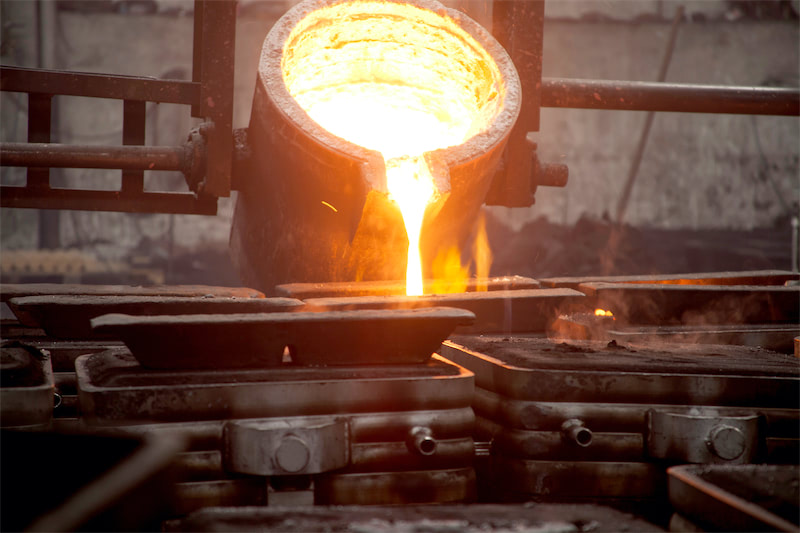
There is no doubt that chips and paint are two kinds of items that are not related to each other in the eyes of many people. However, the global "core shortage" crisis, which has been simmering since the beginning of the year, has gradually begun to affect the performance of companies that do not directly rely on semiconductor products like the "butterfly effect". Sales of paint, glass and industrial sandpaper have all been affected as a result, according to financial data recently disclosed by a number of US companies.
Big users of chips, including car, smartphone and appliance makers, are also often major buyers of materials such as paint and glass. According to executives from the suppliers, these companies have cut their purchases of many parts as a result of chip shortages that have led to a decline in the production of finished products.
3M, Ester paint (Axalta Coating Systems Ltd.) And Corning (Corning Inc.) All said last week that their sales had been affected by reduced production of cars, washing machines and electronics from their major customers.
The influence of lack of core is "everywhere".
3M, a multinational integrated manufacturing company, recently said that chip shortages had spread to a wide range of customers, including car and smartphone makers. 3M's business includes the production of grinding wheels for grinding metal and thin films for improving the brightness of electronic displays.
"these areas are key markets for us," said Mike Roman, chief executive of 3M. "We have noticed the shortage of semiconductors."
Corning (Corning), a global leader in special glass and ceramic materials, said the semiconductor shortage cost the company about $40 million in sales in the most recent quarter because of a sharp drop in car production for its main customers. TV sales are down about 10% year-on-year, resulting in a drop in revenue, the company said. "the decline in production began to affect us in the third quarter, and we expect it to continue in the fourth quarter," Tony Tripeny, Corning's chief financial officer, said of the impact of car production.
Some companies also say the situation is worse than they had expected. Dana (Dana Inc.), a supplier of automotive powertrain products On Tuesday, it cut its full-year revenue forecast by $100m to about $8.9 billion because of a shortage of chips. Jonathan Collins, chief financial officer of Dana, said, "We had expected a modest improvement in the supply chain and a gradual easing of the chip shortage. Unfortunately, none of this has come true. "
Ecolab (Ecolab) is a well-known company that helps manufacturers manage water use, operate car painting rooms and produce cleaning products. The company also said recently that its performance had been affected by falling demand. Christophe Beck, CEO of Ecolab, said, "the chip shortage outside has nothing to do with our own operations, but it is leading to a reduction in demand for our products." This is obviously something beyond our control. "
(PPG Industries Inc.), PPG Industrial Co., Ltd., which produces paints and paints. It also said earlier this month that the semiconductor shortage had spread beyond its main automotive customers and affected the production of heavy construction equipment and appliances. The Pittsburgh-based company doesn't expect things to return to normal until the second half of next year. Michael McGarry, the company's chief executive, said, "in products such as electrical appliances, there are much more chips than people think."
When will the chip supply take a turn for the better?
In fact, as the shortage of computer chips affected factory production, General Motors (General Motors Co., GM (GM) and Ford Motor Company ((Ford Motor Co., F) reported a sharp drop in third-quarter profits last week. Both companies said they thought the semiconductor supply situation would gradually ease next year.
Since the end of last year, the world's leading automakers have begun to cut production. Us carmakers' assembly volume fell further to an annualised rate of 7.78 million in September from 8.82 million in August, the lowest since April 2020, according to US official data. In addition, the production of household appliances has also continued to decline in recent months.
"No one expected things to be as challenging as they are now," said Ambrose Conroy, founder of supply chain consulting firm Seraph. "We may not be able to make progress on this issue for quite a long time," Conroy said.
The waiting time for global chip delivery is now continuing to extend, far beyond the normal range of 9-12 weeks in the past. According to Susquehanna Financial Group, the waiting time extends to an average of 19 weeks in the summer. Since October, however, the waiting time has lengthened to 22 weeks. Among them, the waiting time for the most scarce components is longer, with 25 weeks for power management components and 38 weeks for automotive-grade microcontrollers.
(United States Steel Corp.), an American steel company Friday's latest announcement may be one of the few good news in the entire supply chain that revolves around chips. The company said on Friday that some of its car customers were planning to increase productivity over the next six months, starting as soon as November. "We are pleased to hear from a number of car customers who indicate that the trough of chip shortage may be over," said David Burritt, the company's chief executive.
![Le contrat d'étain SHFE le plus négocié SN2611 a clôturé à 375 980 yuans/tonne lors de la séance de nuit, en baisse de 0,37 %. L'étain 3M du LME a clôturé à 50 384 dollars/tonne, en hausse de 0,52 %. Les stocks du LME ont poursuivi leur baisse pour atteindre 4 110 tonnes [Compte rendu de la réunion matinale de SMM sur l'étain]](https://imgqn.smm.cn/usercenter/pwiFP20251217171752.jpg)
![[Les 5 premières entreprises de robots humanoïdes en termes de revenus sont toutes chinoises ; les exportations de robots de Shenzhen bondissent de plus de 1 200 % au cours des 8 premiers mois]](https://imgqn.smm.cn/usercenter/pyewj20251217171752.jpg)
![[Mingyi Electronics lance un équipement d'électrodéposition en ligne à portique à rapport d'aspect élevé pour serveurs IA et substrats de circuits intégrés]](https://imgqn.smm.cn/usercenter/CaDcj20251217171711.jpg)