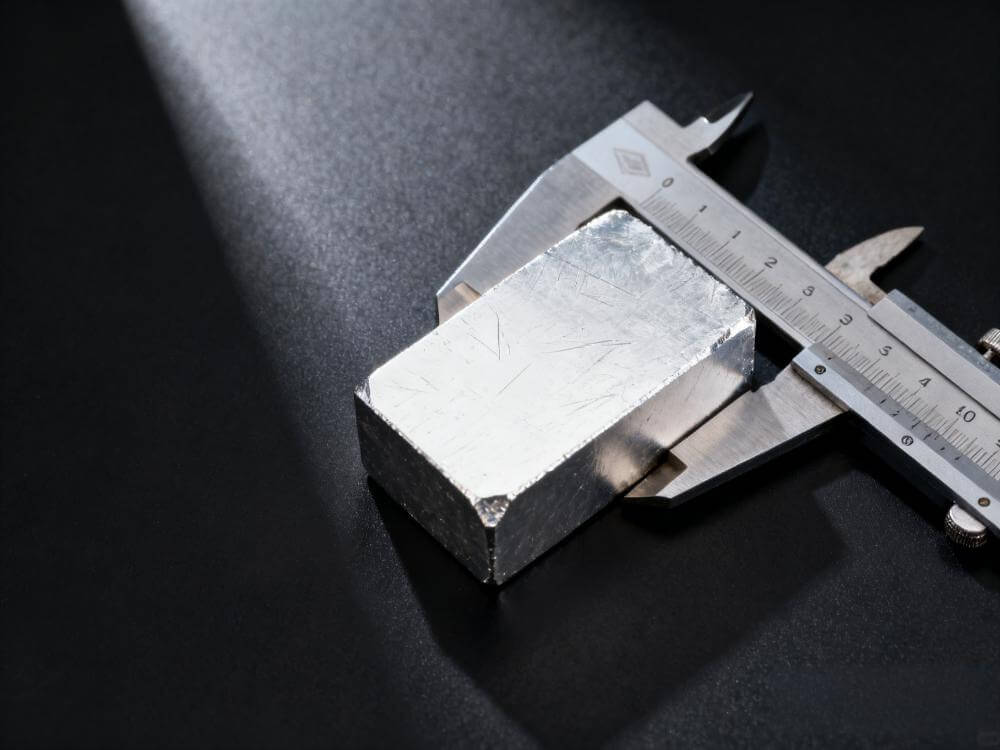
The main reason is that the price of silicon wafer increases by up to 15% capacity or is tight to accelerate the expansion of contract factories in 2023.

[the main reason is that the price of silicon wafers has increased by up to 15% or the contract factories have accelerated production until 2023.] according to the Taiwan media "Industrial and Commercial Times", as Shin Yue and Shenggao and other Japanese silicon wafer manufacturers signed long contracts with customers in 2022 and successfully increased their prices, Taiwan silicon wafer factories have also signed 2022 long contracts with customers, of which 6-inch and 8-inch silicon wafer contract prices have increased by about 10% and 12-inch silicon wafer contract prices have increased by about 10%. 12-inch silicon wafer contract prices have increased by about 15%.

According to the Taiwan media "Industrial and Commercial Times", as Shin Yue and Shenggao and other Japanese silicon wafer companies signed 2022 long contracts with customers and successfully increased their prices, Taiwan silicon wafer factories have also signed 2022 long contracts with customers one after another. among them, the contract price of 6-inch and 8-inch silicon wafer has increased by about 10% and 12-inch silicon wafer by about 15%.

According to SEMI, the global silicon wafer shipping area grew 6% in the second quarter of 2021 from the same period last year, up 12% from a year earlier to 3,534 million square inches, surpassing the all-time high set in the first quarter.

However, this is still not enough to meet the demand. According to SUMCO, the global demand for Q2 12-inch wafers alone exceeds 7.1 million wafers per month. Industry insiders pointed out that considering that the current capacity utilization of silicon wafer factories has reached 100%, but the opening of new capacity in the next 2-3 years is very limited, it is expected that there will be a shortage of silicon wafers in the second half of 2022, and the shortage will be even more serious in 2023. Including Japan's Shin-Etsu, Japan's Shengo (SUMCO), Taiwan's global globe crystal, Germany's Siltronic (Siltronic) and other four major silicon wafer manufacturers in the world, all believe that the silicon wafer market will be in short supply until 2023.

Silicon wafer mills are reported to have received advance payments from customers to expand silicon wafer production capacity in response to strong demand in 2023-2024.

Silicon wafer is the core raw material of semiconductor manufacturing. According to SEMI statistics, the global wafer manufacturing materials market totaled US $34.9 billion in 2020, of which silicon wafers accounted for the highest proportion of sales, reaching 36.64%. The supply and demand situation and price trends of silicon wafers also largely reflect the prosperity of the semiconductor industry.

Contract manufacturers such as TSMC, SMIC and Huahong Semiconductor have sharply increased capital expenditure this year. According to the latest data from market research firm IC Insights, the contract manufacturing market will exceed the $100 billion mark for the first time this year, up 23% from a year earlier, driven by applications such as 5G smartphone processors, networks and data center processors. The new capacity will be launched one after another in the second half of next year, during which the purchase of wafers is bound to be increased.

From the perspective of the market pattern, due to the high threshold of purification and processing technology, the global silicon wafer market is highly monopolized. At present, the top five wafer manufacturers in the world account for nearly 90% of the global market share. Fang Jing, an analyst at Cinda Securities, said that China's related industries started relatively late, and the accumulation of technology is not as good as overseas. In recent years, domestic manufacturers have accelerated their R & D investment and construction of silicon wafers, and many manufacturers have achieved breakthroughs from 8-inch to 12-inch silicon wafers. In the future, domestic manufacturers are expected to fully benefit from the high-profile demeanor of silicon wafers.

Among the A-share related listed companies, the Shanghai silicon industry is the first to achieve large-scale sales of 12-inch silicon wafers, and the size of silicon wafers is expanding rapidly. Lion Micro's large-size silicon wafers were obvious in the first half of this year. Among them, the production capacity of the 8-inch silicon wafer production line has been fully released, and the 12-inch silicon wafer has achieved large-scale production and sales. With the coordinated development of photovoltaic and silicon wafers, Central is also in a leading position in the field of semiconductor large-size silicon wafers in China.

In addition, Jingsheng electromechanical Jingsheng has successfully developed silicon epitaxial equipment and silicon carbide epitaxial equipment, and the company's semiconductor monocrystalline silicon equipment industry chain is becoming more and more complete.

Déclaration sur la source des données : À l'exception des informations publiques, toutes les autres données sont traitées par SMM sur la base d'informations publiques, d'échanges avec le marché et en s'appuyant sur le modèle de base de données interne de SMM. Ils sont fournis à titre indicatif uniquement et ne constituent pas des recommandations décisionnelles.

Pour toute demande d'information ou pour en savoir plus, veuillez contacter : lemonzhao@smm.cn
Pour plus d'informations sur l'accès à nos rapports de recherche, veuillez contacter :service.en@smm.cn
Actualités Connexes
[SMM Éclair Chrome] Les prévisions de la demande mondiale d'acier s'annoncent stables en 2026 en raison de l'affaiblissement de la Chine, une reprise étant attendue en 2027
16 Oct 2026 22:28 (GMT+8)
[SMM Éclair Chrome] Les prévisions de la demande mondiale d'acier s'annoncent stables en 2026 en raison de l'affaiblissement de la Chine, une reprise étant attendue en 2027
Lire la suite
[SMM Éclair Chrome] Les prévisions de la demande mondiale d'acier s'annoncent stables en 2026 en raison de l'affaiblissement de la Chine, une reprise étant attendue en 2027
[SMM Éclair Chrome] Les prévisions de la demande mondiale d'acier s'annoncent stables en 2026 en raison de l'affaiblissement de la Chine, une reprise étant attendue en 2027
L'Association mondiale de l'acier (worldsteel) a révisé ses perspectives de demande mondiale d'acier le 12 octobre, prévoyant une demande globalement stable à 1,722 milliard de tonnes en 2026, avant une hausse de 1,7 % à 1,752 milliard de tonnes en 2027. Cette révision à la baisse reflète principalement une demande plus faible que prévu en Chine, où la demande d'acier devrait se contracter de 2,0 % en 2026 puis de 1,0 % supplémentaire en 2027. Hors Chine, la demande devrait croître de 1,5 % en 2026 puis accélérer à 4,0 % en 2027. Pour le marché du chrome, ces perspectives mondiales modérées pour l'acier suggèrent qu'une reprise généralisée de la demande liée à l'acier pourrait prendre plus de temps à se concrétiser, bien que les perspectives varient selon les régions. La demande d'acier en Inde devrait croître de 7,9 % en 2026, tandis que celle des États-Unis devrait augmenter de 2,0 %. Ces tendances régionales divergentes fournissent un contexte important pour les producteurs de minerai de chrome et de ferrochrome évaluant les conditions des marchés finaux. Toutefois, ces prévisions portent sur la demande totale d'acier plutôt que spécifiquement sur l'acier inoxydable, et ne quantifient donc pas directement la consommation future de chrome.
16 Oct 2026 22:28 (GMT+8)
[SMM Éclair Chrome] Les exportations sud-africaines de minerai de chrome chutent de 11 % en août, tandis que les expéditions de ferrochrome rebondissent de 20 %
16 Oct 2026 22:13 (GMT+8)
[SMM Éclair Chrome] Les exportations sud-africaines de minerai de chrome chutent de 11 % en août, tandis que les expéditions de ferrochrome rebondissent de 20 %
Lire la suite
[SMM Éclair Chrome] Les exportations sud-africaines de minerai de chrome chutent de 11 % en août, tandis que les expéditions de ferrochrome rebondissent de 20 %
[SMM Éclair Chrome] Les exportations sud-africaines de minerai de chrome chutent de 11 % en août, tandis que les expéditions de ferrochrome rebondissent de 20 %
Les exportations de minerai de chrome de l'Afrique du Sud ont chuté de 10,75 % en glissement mensuel pour atteindre 2,36 millions de tonnes en août 2026, tandis que les exportations de ferrochrome à haute teneur en carbone ont augmenté de 20,0 % pour s'établir à 117 180 tonnes, mettant en évidence des tendances divergentes dans le commerce du chrome du pays. La Chine est restée la première destination du minerai de chrome, recevant 1,67 million de tonnes, soit 70,8 % des expéditions totales, malgré une baisse mensuelle de 6,09 %. Les exportations de ferrochrome, quant à elles, ont été soutenues par des expéditions plus importantes vers l'Amérique du Nord, le Canada recevant 26 373 tonnes et les États-Unis 26 029 tonnes, représentant ensemble 44,7 % des exportations de ferrochrome de l'Afrique du Sud. Ces mouvements contrastés indiquent un affaiblissement de la demande étrangère de minerai de chrome brut parallèlement à une reprise des expéditions de ferrochrome, en particulier vers l'Amérique du Nord. Toutefois, le rebond mensuel des exportations de ferrochrome ne permet pas encore d'établir une reprise durable de la fonderie nationale, tandis que la part dominante de la Chine dans les exportations de minerai expose les expéditions sud-africaines aux variations de l'activité d'achat chinoise.
16 Oct 2026 22:13 (GMT+8)
[SMM Revue hebdomadaire du chrome] Les flux d'exportation rebondissent alors que les stocks portuaires chinois augmentent et que les prix africains divergent
16 Oct 2026 21:43 (GMT+8)
[SMM Revue hebdomadaire du chrome] Les flux d'exportation rebondissent alors que les stocks portuaires chinois augmentent et que les prix africains divergent
Lire la suite
[SMM Revue hebdomadaire du chrome] Les flux d'exportation rebondissent alors que les stocks portuaires chinois augmentent et que les prix africains divergent
[SMM Revue hebdomadaire du chrome] Les flux d'exportation rebondissent alors que les stocks portuaires chinois augmentent et que les prix africains divergent
Publié : 16 octobre 2026.
16 Oct 2026 21:43 (GMT+8)